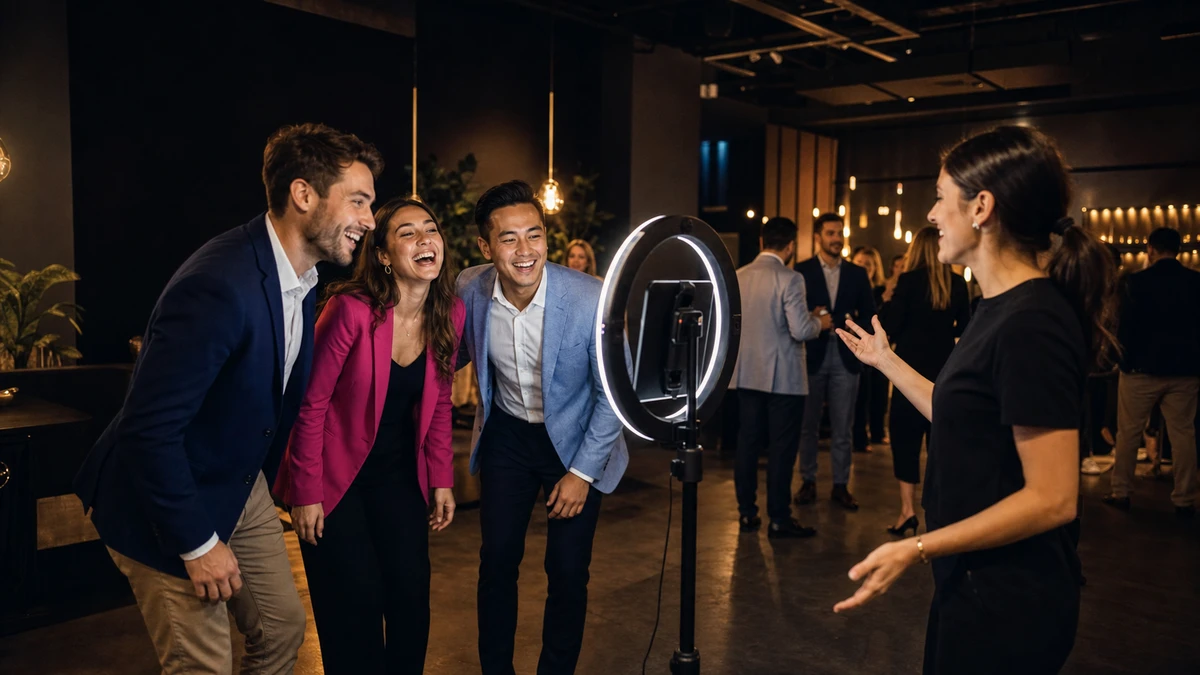
A commercial photo booth costs roughly $4,000 to $12,000 in hardware plus $1,200 to $5,000 per device per year in software and consumables. The spread is driven less by which vendor you pick than by which feature tier you actually need and how many devices you run. Most pricing pages skip the parts that compound: the per-device license multiplier when you scale a fleet, the tier-gated features that brand campaigns require, and the per-event consumables that show up long after the headline quote.
Below: a three-year total-cost-of-ownership model, the four cost lines commercial buyers consistently underestimate, and a worked scenario you can adapt to your own fleet and event calendar.
Three buyers, one confused market
The reason “what does a commercial photo booth cost?” returns a $69-per-month answer in one tab and a $25,000 answer in another is that “commercial” describes three different buyers, each buying a different thing.
- The rental operator. Owns one to ten booths, runs 50 to 300 events per year, sells time on the booth. Cares most about software cost per device, per-print COGS, and rental rate floors.
- The venue or multi-location brand operator. Owns a permanent install or a small fleet across stores. Cares about hardware durability, branding control, data capture into a CRM, and three-year TCO per location.
- The marketing team or agency procurement lead. Books a unit-and-attendant package for a single brand activation, multi-city tour, or pop-up. Measures earned media, lead capture rate, and cost per lead. Pays a per-event invoice that bundles everything above into one number.
Treating these as one question is what produces the misleading $69-per-month or $400-per-event headlines.
Hardware: what the box actually costs
Commercial-grade hardware sits in five form factors, each with a realistic price band and a use case it actually fits.
| Form factor | Hardware-only band | Best use |
|---|---|---|
| iPad open-air enclosure | $3,000 to $6,000 | The dominant commercial format. Light, fast to deploy, app-driven. |
| DSLR open-air enclosure | $5,000 to $8,500 | Print-heavy events, premium image quality. |
| 360 video platform | $3,000 to $8,500 | Short-form video activations, social-first content. |
| Mirror booth | $5,000 to $12,000 | Higher-ticket retail and corporate installs with a branded chassis. |
| Cinematic / robot-arm | $30,000+ | Glambot-class red carpet and tier-one brand activations. |
Within the dominant iPad open-air format, the price band breaks down across enclosure, stand, iPad, ring light or strobe, optional DSLR upgrade, optional dye-sub printer, travel cases, and backdrop. Two live-market reference points, April 2026: Photo Booth Supply Co.’s Salsa 2 ships at $2,999 for an entry-tier all-in-one DSLR unit, while Selfie Booth Co.’s S5 lists at $8,990 for a premium open-air enclosure with integrated lighting. Between them sit multiple OEM and white-label rigs in the $3,500 to $6,000 range. Photo Booth International cites a broader industry band of $5,000 to $20,000 for commercial-grade hardware once you fold in custom installs and 360 platforms.
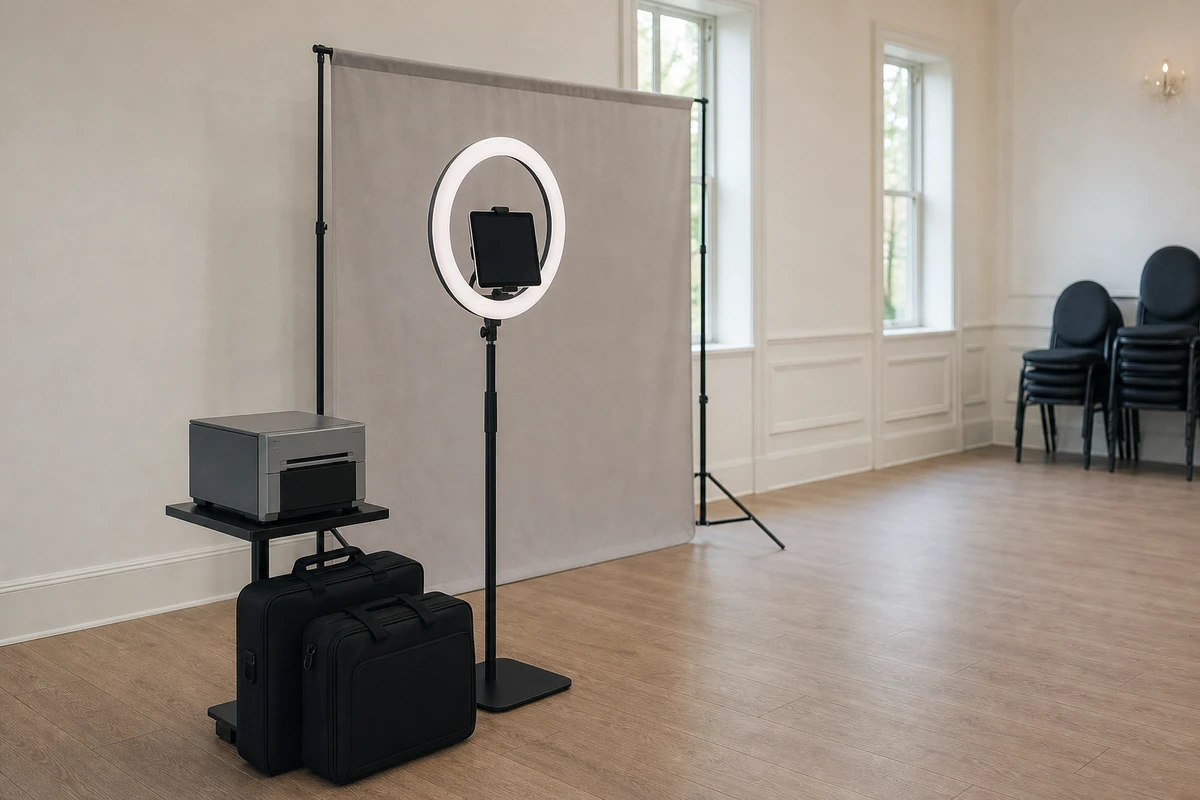
A second hardware truth most articles bury: commercial operators commonly refresh on a roughly three-year cycle, well short of the five- to six-year iOS support window for an iPad. Warranty coverage, app feature parity, and battery degradation push the practical replacement cadence faster than the technical one. Build that into the model.
Software: the line that doubles when you scale
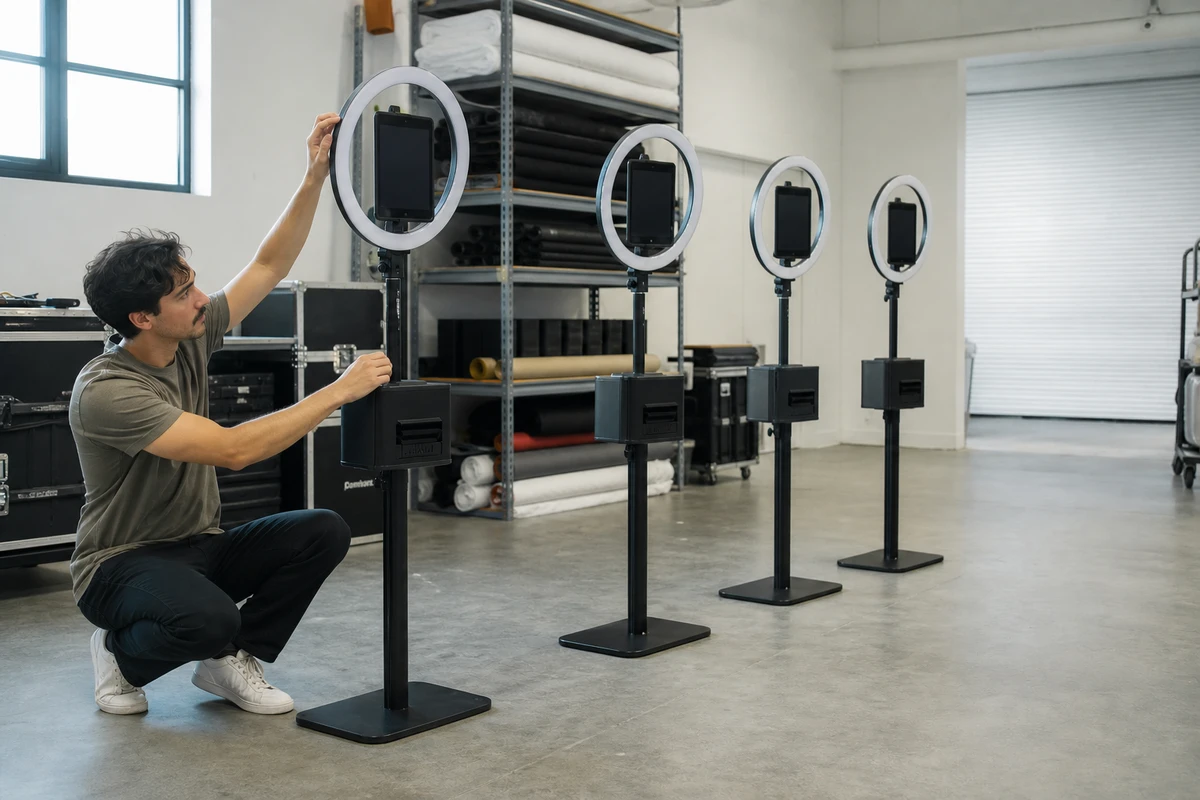
Photo booth software is priced per device license. A four-booth fleet on the same plan pays roughly four times the headline rate, not one. This is the single largest pricing surprise in the category, and vendor pricing pages rarely lead with it.
Three Pricing Models
Three pricing models dominate.
Per-Device Subscription
Per-device subscription is the standard. Numbers below are confirmed from live pricing pages in April 2026.
Simple Booth Pricing
Simple Booth runs five tiers. The weekly Lite, Core, and Plus plans range from $9 to $34 per week per device. The monthly Pro plan is $149 per month with $111 per add-on device, and Select is $249 per month with $186 per add-on device. Lead capture, the single feature any brand activation needs, sits in Pro. GDPR-style data compliance, age gates, and custom legal terms sit in Select.
Snappic Pricing
Snappic runs Starter at $69 per month, Business at $189 per month, Premium at $279 per month, and Scale at $399 per month. Data capture starts at Business, white-label at Premium, and multi-client management (the agency and rental-fleet use case) at Scale. Add-on devices cost $39 per month at Starter and $109 per month at Business. The per-device cost rises at the tier where useful features arrive.
Fiesta Pricing
Photo Booth Supply Co.’s Fiesta lists Plus at $49 per month or $490 per year, and Pro at $99 per month or $990 per year, with surveys and advanced analytics gated to Pro.
dslrBooth and LumaBooth
dslrBooth and LumaBooth take a different shape. The Windows version at $17 per month (annual billing) includes two device licenses in the base plan. The iPad version is $18 per month for a single device. The two-license inclusion gives small operators a real per-device advantage, but the platform leans local-first and lacks the cloud data-capture tooling brand-activation buyers rely on.
Per-Event Pricing
Per-event pricing is offered by several vendors for operators with sporadic calendars, typically in the $30 to $60 range per event. The decision rule is simple arithmetic: if the booth runs more than roughly six events per month, monthly subscription beats per-event; if it sits in storage for entire months, per-event wins.
Perpetual Licensing
Perpetual licensing is rare and shrinking. The Darkroom Booth and dslrBooth Windows perpetual options trade a one-time fee for limited cloud features.
Per-Device Fleet Math
The practical consequence of per-device pricing: a five-booth operator on Simple Booth Plus pays $34 + (4 × $34) = $170 per week, or $8,840 per year for software alone. The same operator on Pro for lead capture pays $149 + (4 × $111) = $593 per month, or $7,116 per year. Those are real recurring lines, not “from $34 per week.”
The tier-gating tax
The second software trap is that the features a commercial buyer actually needs are not in the entry tier. The pattern is consistent across the major vendors above, and it explains why buyers feel quoted prices double on contact with a sales rep.
| Feature the marketer needs | Simple Booth tier | Snappic tier |
|---|---|---|
| Branding removed | Core, $16 per week | Starter, $69 per month |
| Custom branding and props | Plus, $34 per week | Business, $189 per month |
| Lead capture | Pro, $149 per month | Business, $189 per month |
| API and CRM integration | Pro, $149 per month | Business, $189 per month |
| White-label microsite | Select, $249 per month | Premium, $279 per month |
| Age gate, GDPR, custom legal | Select, $249 per month | Premium, $279 per month |
| Multi-client separation (agency) | Select, $249 per month | Scale, $399 per month |
Read across, not down. A brand activation that requires lead capture and branded microsites starts at Simple Booth Select ($249 per month) or Snappic Premium ($279 per month), not at the $9 or $69 headline. For a single device that is roughly $3,000 per year before consumables. A four-booth fleet on Snappic Premium clears $10,000 to $13,000 per year in software alone, depending on add-on licensing.
The mechanism is not a vendor conspiracy. It is the standard SaaS land-and-expand playbook applied to a category where the tier most buyers need is two or three rungs up the ladder. Recognizing the pattern is what lets you map your real software floor before you sit down to negotiate.
Per-event consumables: the cost that scales with bookings
Consumables are the line operators model wrong because they do not appear on any vendor pricing page.
Print Media
The DNP DS-RX1HS, the dominant entry-tier dye-sub printer, lists at $695 from Event Printers. A standard 700-print 4×6 media kit lists at $219, which works out to $0.31 per print. The faster DS-620A trades a smaller 400-print roll for an 8.3-second print versus 12.4 seconds on the RX1HS, useful at high-throughput activations where queue time is the constraint.
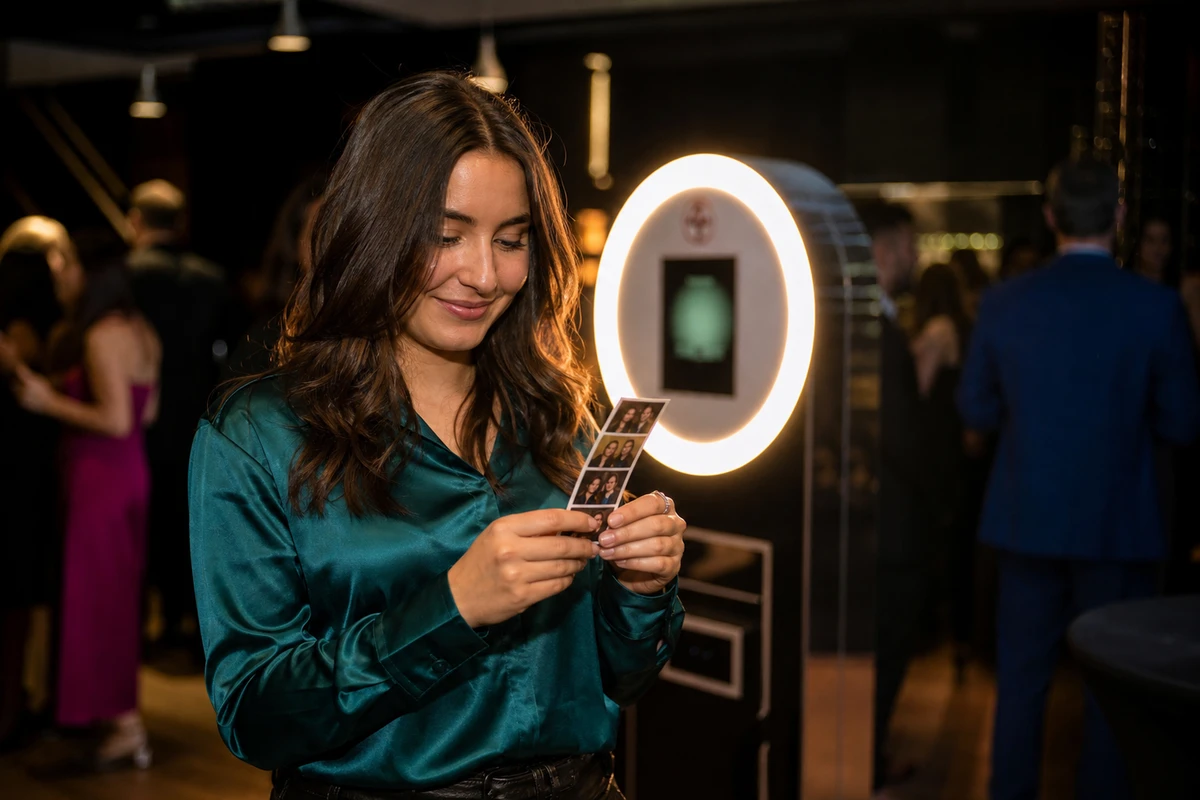
A 4-hour event with 200 guests printing once each costs about $62 in media. On a $1,500 booking that is roughly 4% of revenue. On a $600 booking with the same print volume that is 10%. Print COGS scales with guest count, not booking value, which is why operators who let print volume run unmetered on lower-priced bookings erode margin fast.
Other recurring consumables to budget per device per year:
- Thermal printer head amortization (rated for roughly 5,000 to 10,000 prints depending on model)
- iPad battery service or replacement on the three-year refresh
- LED ring light or strobe bulb replacement
- Backdrop wear (one to two per year on a touring fleet)
- Props refresh
- Travel: van or trailer fuel, parking, tolls, freight
- Attendant labor at $150 to $300 per event when staffed
Translate these into a per-event cost-of-goods-sold figure before you set a package price. A rough rule for an iPad open-air commercial unit running corporate activations: assume $80 to $200 in true variable cost per event before software amortization.
Annual maintenance and the costs that don’t ride a calendar
The fixed annual line beyond software and consumables is longer than buyers expect.
- Software renewal: device licenses × tier × 12 (modeled above)
- AppleCare for Business or extended hardware warranty
- Printer service contract or repair float
- General liability insurance: median $350 per year for $1M / $2M coverage on photography and videography businesses, per Insureon’s published cost data
- Equipment insurance: median $516 per year on the same Insureon dataset, bringing the GL + equipment baseline to roughly $866 per year before commercial auto
- Storage and van or trailer lease, where applicable
- Trade memberships and conference spend
- A repair-and-replace float, typically 10 to 15% of hardware capex per year for a working fleet
Thimble offers per-event policies for operators who would rather buy coverage by the day, a useful structure if your event calendar is concentrated in a few months. For most full-time operators the annual policy beats the per-event rate; for occasional commercial activations the reverse holds.
Contract minimums, surcharges, and other line items marketers actually pay
The “hidden fees” framing belongs to the buyer side: what shows up on the invoice that was not on the headline quote. For the operator, every item below is a legitimate cost-recovery line. For the marketer commissioning the activation, every item is something to ask for in writing before the contract is signed, not after the post-event invoice arrives. Common line items on commercial operator invoices:
- Minimum service hours, usually 3 to 4 (2-hour minimums exist but are rare for commercial)
- Travel and mileage fees, often free within 20 miles, then a per-mile rate beyond
- Outdoor surcharge, typically around 10%
- Weekend premium
- Overtime beyond contracted hours
- Idle or standby time for activations with breaks
- Print overage when the package caps prints
- Custom design and template fee, one-time per campaign
- Data delivery or full-lead-export fee
- Per-city or per-stop surcharges on multi-city tours
- Power, networking, or wifi requirements at venues that do not supply them
- Additional insured endorsements and certificates of insurance naming the venue
- Date-change and cancellation fees
The prevention is procedural, not technical. Ask for the full schedule of surcharges in the original quote, not the contract addendum. Operators who refuse to itemize these are usually planning to invoice them later.
A three-year TCO you can plug your own numbers into
Two scenarios, both grounded in the figures above.
Scenario A: Two Booths, 80 Events
Year 1 capex (one-time):
- 2 × ($4,200 enclosure + lighting + $800 iPad + $695 DNP RX1HS printer + $400 cases and backdrop) = $12,190
Year 1 software (Pro tier on Simple Booth for lead capture):
- ($149 base + 1 × $111 add-on device) × 12 months = $3,120 per year
Year 1 consumables:
- 80 events × 75 prints average × $0.31 per print = $1,860 in media
- Props and backdrop wear, $400
- Total: $2,260
Year 1 fixed:
- GL + equipment insurance, $866 (Insureon median)
- AppleCare or warranty extensions, $200 across both units
- Storage or van lease, $0 to $3,600 depending on setup
- Total: $1,066 to $4,666
Year 1 Fully Loaded
$18,636 to $22,236, or roughly $9,300 to $11,100 per booth.
Year 2
software ($3,120) + consumables ($2,260) + fixed ($1,066 to $4,666) = $6,446 to $10,046. No capex.
Year 3
Same operating costs plus a likely iPad refresh at $800 per booth = $1,600. Total: $8,046 to $11,646.
Three-year all-in for a 2-booth operator running 80 events per year: roughly $33,000 to $44,000. Per booth per year averaged across three years: $5,500 to $7,300.
Across 80 events, the variable cost floor (consumables + amortized software per event) is roughly $66 per event before labor and travel. A booking under $400 tightens margin to the point where, once a $150 to $300 attendant and a travel leg land, the operator can finish the event break-even or behind. This is the math behind the consistent $400 to $800 budget tier and the $1,500-and-up commercial tier in the Feature Booth 2025 benchmarks.
Scenario B: Four-City Activation Tour
From the marketer side, the same math runs in reverse.
- 2,000 guests × 65% opt-in = 1,300 captured leads
- All-in commercial buy from agency procurement signals: $15,000 to $45,000 across the four cities, depending on whether the package includes branded microsite, custom hardware wrap, on-site attendant, and turnkey data delivery
- Cost per captured lead: $11.50 to $34.60
Compare against your other paid channels. For most B2C brands, $11 to $35 per opted-in lead with a photograph and a brand interaction attached is competitive with paid social CPL benchmarks and materially better than cold display. For high-ticket B2B with a five- or six-figure deal size, the same math looks even more favorable.
Why commercial pricing diverges from social
Why commercial pricing looks nothing like social-event pricing comes down to what each booking buys, not what it costs to deliver. Future Market Insights’ Photo Booth Market Outlook 2025-2035 sizes the photo booth category at $584.7 million in 2025 and projects $1.56 billion by 2036 at a 9.3% CAGR, and estimates that corporate brand activations carry margins three to five times higher than social-event rentals.
The margin gap does not come from a lower cost structure on the commercial side. The hardware is similar, the consumables are similar, the software floor is higher (because lead capture and compliance tiers cost more). The gap comes from revenue: a corporate booking pays for branded experience, lead data, earned media, and attendant service rolled into one number, while a private-event booking pays mostly for the photo. Articles that lump the two together in one pricing range are mixing two markets with different unit economics.
What to ask before you sign
A short checklist for any commercial buyer walking into a sales call. Each item maps to a cost line above.
- Is the license per device or per organization? What does adding a fifth device cost on the plan I need?
- Which features sit behind which tier? Specifically: lead capture, analytics dashboard, custom branding, API integration, white-label URL, custom legal or age-gate language, GDPR compliance.
- What is the per-print COGS at my expected volume, including thermal head amortization?
- What is the contract minimum and what counts as service time? Does setup and teardown count?
- Are travel, outdoor, weekend, overtime, and per-stop fees disclosed in writing on the original quote?
- What is the cancellation, date-change, and force-majeure language?
- Which insurance certificates are included and which add-ons cost extra (additional insured endorsements, COIs naming the venue)?
- What is the data export format and is there a per-export fee?
- What is the hardware service path and turnaround if a unit fails mid-event?
- What is the upgrade path if the activation succeeds and we want to scale to more cities or more devices?
Print this list. Run it before you take the first call.
FAQ
How much does a commercial photo booth cost per year, all-in? Roughly $5,500 to $11,000 per booth per year fully loaded, including amortized hardware on a three-year cycle, software at the tier that supports lead capture, consumables at typical event volumes, and standard insurance. Heavier feature requirements (white-label, compliance, multi-client agency separation) push the upper end past $13,000 per booth per year.
Is photo booth software priced per device or per business? Per device on every major platform. The headline rate is for one device. Adding a second device adds the same rate again (Simple Booth and Photo Booth Supply Co.) or a discounted per-device add-on (Snappic at $39 to $109 depending on tier, dslrBooth Windows at two devices included in base).
What’s the difference between consumer rental pricing and brand activation pricing? Consumer and social-event rentals run $400 to $2,000 per event in most U.S. markets. Brand activations and corporate bookings run $1,500 to $3,000+ per event and frequently more for multi-city tours. Future Market Insights estimates corporate margins at three to five times social-event margins. The gap is in revenue, not cost: branded experience, lead data, and attendant service compound on the corporate side.
Are there contract minimums for a single-event commercial booking? Almost always yes. 3 to 4 hour minimums are standard. 2-hour minimums exist for some operators but are rare for full-package commercial bookings.
What’s the average cost per captured lead from a brand activation photo booth? Plug your own numbers in: total event spend ÷ (guest count × opt-in rate). Realistic agency packages clear $11 to $35 per captured lead at 60 to 80% opt-in rates on activations of 500 to 2,000 guests. Lower at scale, higher at small or short-format events.
How long does a commercial photo booth last before it needs replacing? Hardware typically refreshes on a three-year commercial cycle, even though iPads and DSLR bodies last longer in absolute terms. The driver is warranty coverage, app feature parity, and battery degradation, not catastrophic failure.
What’s the lowest-cost way to run a commercial photo booth fleet?
Buy the entry-tier hardware (PBSCO Salsa 2 at $2,999 or equivalent), run dslrBooth Windows for the included two-license advantage, print on a DNP DS-RX1HS for the $0.31 per print floor, and skip cloud data capture if your bookings do not require it. Expect roughly $4,500 in year-one all-in for a single booth doing 30 to 40 social bookings per year. The model breaks the moment you take a brand activation that requires lead capture or branded microsites: software jumps to the Pro or Business tier and the calculus changes.
Sources
- Future Market Insights (2025). “Photo Booth Market Outlook 2025-2035.” https://www.futuremarketinsights.com/reports/photo-booth-market
- Simple Booth (2026). “HALO Plans and Pricing.” https://www.simplebooth.com/plans
- Snappic (2026). “Pricing.” https://www.snappic.com/pricing
- Photo Booth Supply Co. (2026). “Fiesta Pricing.” https://www.photoboothsupplyco.com/pages/fiesta-pricing
- Photo Booth Supply Co. (2026). “Salsa 2 Pricing.” https://www.photoboothsupplyco.com/pages/salsa-2-pricing
- dslrBooth (2026). “Pricing.” https://www.dslrbooth.com/pricing
- Event Printers (2026). “DNP DS-RX1HS Photo Printer.” https://www.eventprinters.com/products/dnp-ds-rx1hs-photo-printer
- Feature Booth (September 2025). “How Much Does It Cost to Rent a Photo Booth?” https://www.featurebooth.com
- Photo Booth International (2026). https://www.photoboothint.com
- Selfie Booth Co. (2026). “Selfie Booth S5.” https://www.selfieboothco.com
- Insureon (2026). “Photography & Video Business Insurance Cost.” https://www.insureon.com/photography-video-business-insurance/cost
- Thimble (2026). “Event Business Insurance.” https://www.thimble.com/industry/event-business-insurance