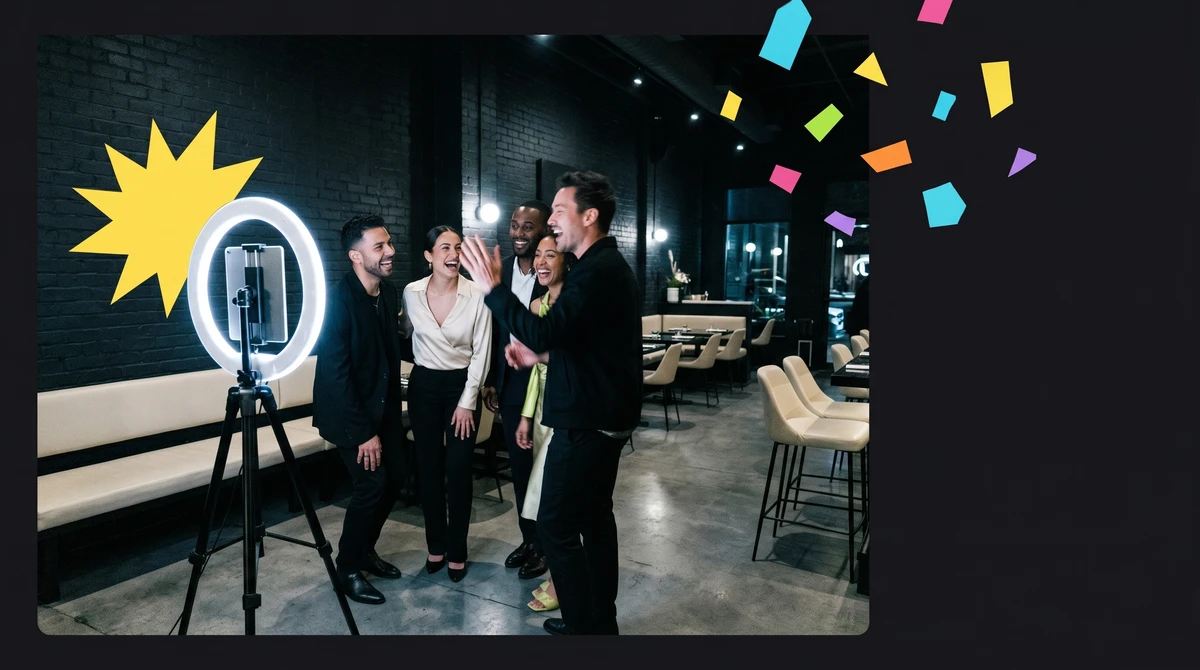
Brand activations do not work because they are flashy. They work because they convert ambient consideration into a specific commitment moment, and the commitment moment is measurable. Everything else is decor. The 15 activations below are organised by that single test: does the format produce a tracked, attributable next step, or does it just rent a crowd?
The most common failure pattern across retail and hospitality forums is identical: an operator spends three to five thousand dollars on opening night, packs the room, and watches week-two revenue revert to baseline. The activation generated noise. It did not generate a list, a redemption code, or a return visit. EventTrack 2026, the experiential industry’s largest annual benchmark from Event Marketer and Sparks, found that 61% of consumers are more inclined to purchase after a live brand experience and 57% of event programs plan to increase attendance in 2026. (Event Marketer, 2025) The ceiling is real. Capture is the mechanism that collects it.
What “drives foot traffic” actually means
Foot-traffic lift is the incremental walk-ins attributable to the activation, not ambient traffic that would have walked in anyway. Capture rate is the percentage of walk-ins retained as a measurable asset (email opt-in, redeemed code, phone number on a waitlist). Durable lift is the difference between a grand opening (one night, gone) and a recurring Tuesday format (compounding every week). An activation that puts 100 people in the door and captures zero of them returns zero. An activation that puts 30 people in the door and captures 20 emails at $50 lifetime value returns $1,000.
The 3-axis scorecard
Three things decide whether any activation is worth running. Cost in dollars and staff-hours including teardown. Traffic lift profile, which decides whether day-one attendance is a vanity number or a real indicator. Capture mechanism, the specific thing that turns a walk-in into a tracked asset. If the operator cannot name it, the activation is not measurable.
The baseline scenario the article will repeat: 100 incremental walk-ins, 40% capture rate, $50 LTV per captured contact equals $2,000 in attributable pipeline per activation day. The $50 LTV is conservative. Litmus’ 2025 State of Email data shows 35% of marketing teams earn $10–$36 per dollar spent on email and 30% earn $36–$50 (Litmus, 2025), the channel ROI evidence behind treating a captured email as a real asset rather than a vanity metric.
The 15 activations, ranked by foot-traffic ROI
Ranking is by the product of traffic lift, capture rate, and durability, not by creativity. The top of the list is boring on purpose.
1. The recurring weekly format (the compounding play)
Repetition becomes habit. A Tuesday trivia night, Sunday brunch, or Thursday workshop, executed every week for six-plus months until the neighbourhood treats it as a calendar fixture. Independent bookshops run First-Friday author readings, brewery taprooms run weekly trivia, yoga studios run Saturday community classes. Verticals: restaurants, bars, fitness studios, retailers with workshop space, salons running educational nights.
Cost: $100–$500 per week. Capture: a weekly RSVP landing page with its own UTM. Weeks 1–4 draw 30 incremental walk-ins each at 40% email opt-in. By week 24 the operator has captured roughly 300 emails. At $50 LTV, that is $15,000 in acquired list value before counting margin. Failure mode: quitting before week 12. The curve is flat for two months and operators read flat as failure, cancelling exactly when the pattern is about to set.
2. The branded photo station with first-party data capture
A photo is the guest’s reward for giving an email, phone, or postal code. The activation operates as both spectacle and lead-capture device in the same square footage and runs unattended once installed. Ole Red, the six-venue country-music entertainment chain owned by Opry Entertainment Group, reports an 89% opt-in rate paired with email and zip code across its lobby installations, used to allocate digital ad spend by market. (Opry Entertainment, 2024) Treetop Golf, with five UK locations, reports that 90% of its 150,000-plus newsletter list came from a station placed at the 19th hole. Arizona Opera captured 1,000 email addresses across the first few performances after installing one in the lobby. 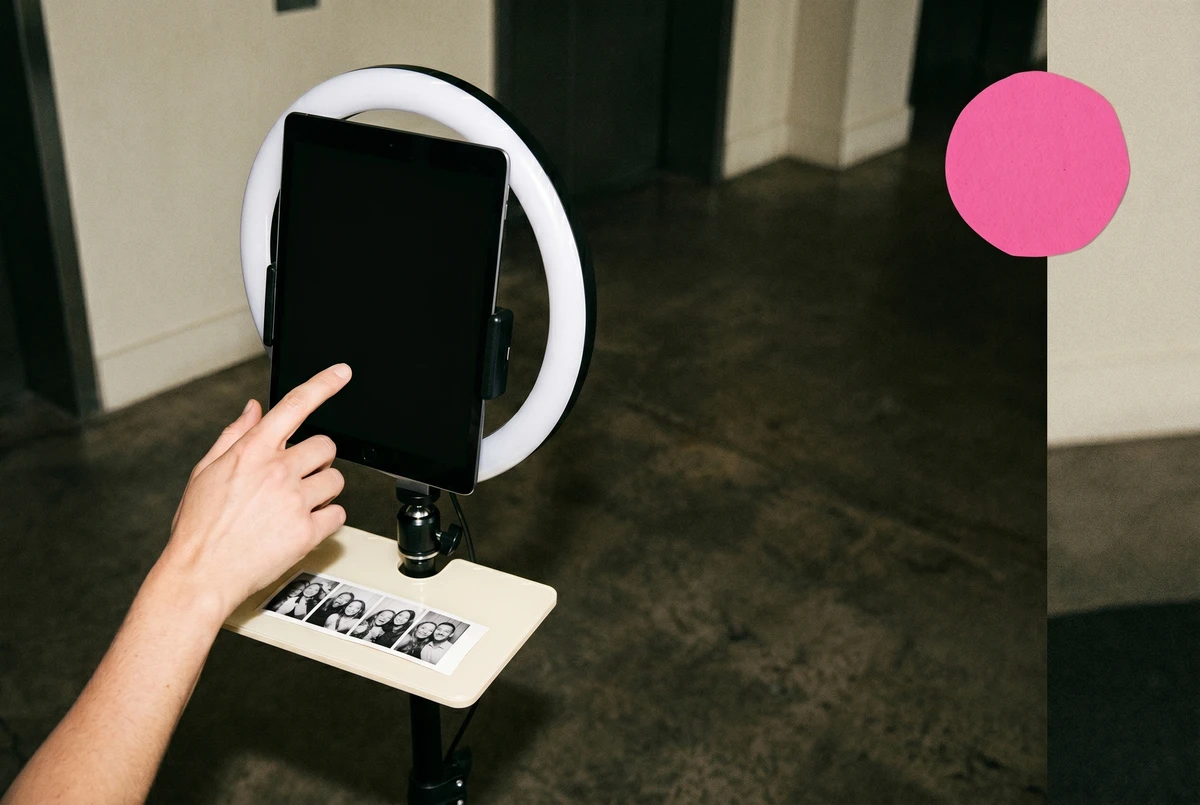
Simple Booth HALO fits this activation type when the operator wants the photo station to handle both branded output and first-party data capture without adding staff to the floor.
Verticals: hotel lobbies, entertainment venues, retail post-purchase, restaurants on private dining nights, salons after service, wineries at the tasting-room exit. Cost is $1,500–$3,000 for a permanent installation. Operator-published opt-in rates from venues placing the station at the moment of peak emotional engagement cluster in the high 80s to low 90s. ROI: 100 session starts, 85% opt-in, $50 LTV equals $4,250 in captured pipeline per night. Failure mode: placing the station at the entrance before guests are emotionally invested, or installing the hardware and never exporting the CSV.
3. The educational workshop or branded class
Time-for-attention. A guest who pays with 90 minutes of presence is closer to a future purchase than one who absorbs an ad impression, and registrants self-select into the consideration set. IKEA runs free in-store workshops on small-space living, drawing thousands of registrations per market and converting attendees into same-day basket buyers at higher rates than walk-ins. Sephora’s in-store Beauty Classes operate on identical logic.
Verticals: cookware, hardware, beauty, and sporting-goods retail; restaurants (cooking demos); fitness studios; salons; wineries and breweries. Cost: $200–$1,500 per session. Capture is the registration list itself. Twenty registrants, 100% email capture, 30% in-store purchase rate, $80 basket equals $480 in same-day revenue plus 20 emails at $50 LTV equals $1,000 in list value. Failure mode: letting the workshop drift into a thinly veiled sales pitch. The class has to be good on its own terms; the conversion is the by-product.
4. The grand opening with a two-touch return mechanism
A launch event is not the activation. The activation is the second visit. A return code engineered into opening night converts a one-night crowd into a measurable customer. Casper’s early retail expansion paired pop-up openings with mattress-trial appointments scheduled at the door for 7–14 days later, treating opening night as top-of-funnel and the second-visit appointment as the conversion moment. At a corner restaurant the same logic looks like a tear-off card good for a free appetiser on the second visit.
Verticals: restaurants, retail (furniture, electronics, beauty), fitness studios, salons, hospitality openings. Cost: $2,000–$10,000. Capture: a return code on the receipt, time-limited to 7–14 days. 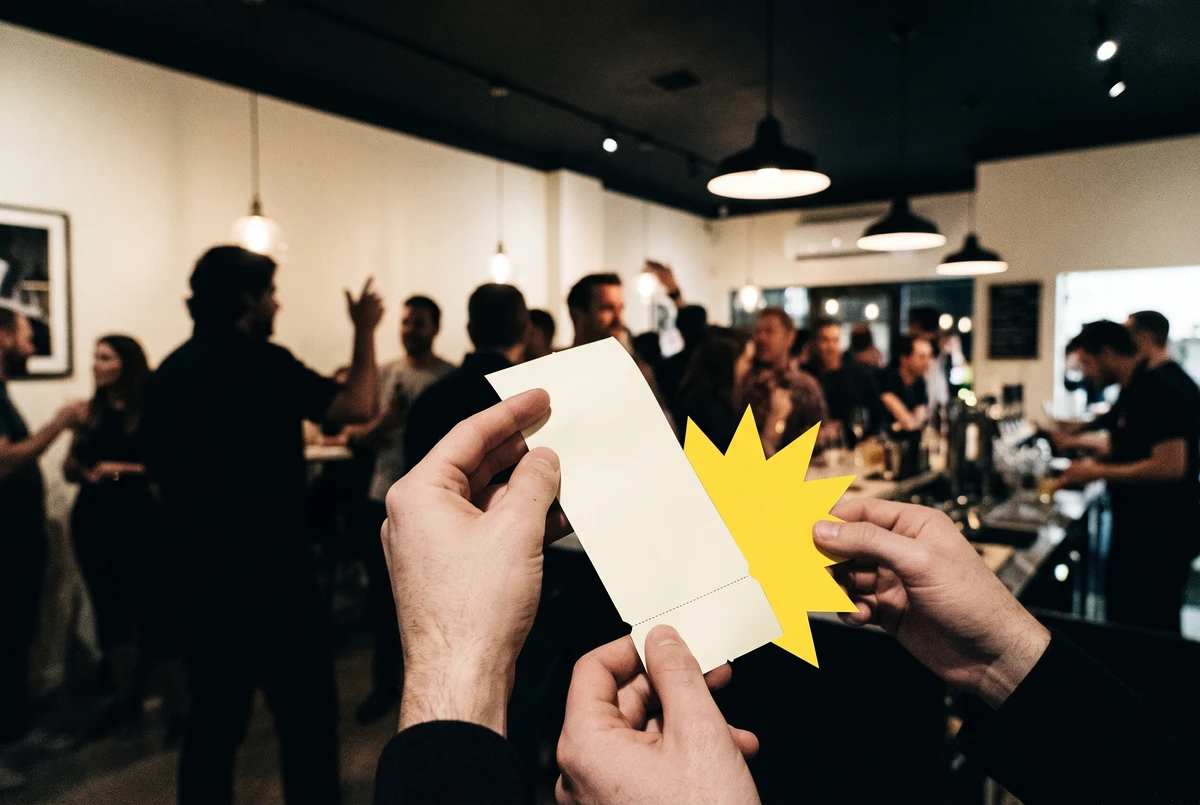 Four hundred walk-ins day one, 60% accept the code, 25% redeem within 14 days equals 60 returning customers at $45 ticket equals $2,700. Day-one traffic is a vanity number if week-two traffic flatlines.
5. The local collaboration or co-branded event
Each partner brings its own list. Two operators split the cost and double the warm audience, and the cross-conversion number (how many of partner A’s customers redeemed partner B’s offer) becomes a clean ROI proof. Allbirds and Shake Shack ran a limited co-branded sneaker tied to in-store activation events. Independent versions (a bookshop with a coffee roaster, a wine shop with a cheese counter) work at a fraction of the cost.
Verticals: retail, restaurants, bars, wineries, fitness, hospitality. Cost: $300–$1,500 per partner, split. Capture: each partner issues a unique QR or promo code. One hundred fifty attendees, 30% cross-email capture, 45 emails per side at $50 LTV equals $2,250 per partner. Failure mode: mismatched audiences, or the partner who does not promote.
6. The micro-influencer flash event
A scheduled, in-store, 2–4 hour event with the creator physically present and actively driving attendance. The mechanism is geographic density. Micro-influencers (10k–100k local followers) outperform macro creators because their audience can actually walk through the door. Glossier’s early retail strategy leaned heavily on local creators co-hosting in-store hours, with creator-specific promo codes attributing same-day basket revenue back to each post.
Verticals: beauty retail, fashion, fitness studios, restaurants and cafes, wellness brands. Cost: $500–$5,000 fee plus production. Capture: a creator-specific promo code, a UTM on story links, email at the door. Eighty attendees driven by the creator, 50% email capture, $60 LTV equals $2,400 plus same-night revenue. Failure mode: treating the influencer fee as a social-media buy instead of a foot-traffic buy. Without a contract requiring the creator on site with output tied to a UTM’d page, the operator is buying impressions at a foot-traffic price.
7. The scavenger hunt or QR trail
Gamified exploration with waypoints inside the store or across a district. Each waypoint is a QR scan that double-duties as attribution. Drop-off between waypoints becomes a diagnostic: if scans collapse at waypoint three, that waypoint needs relocation. Selfridges’ London flagship has run multi-floor digital trails tying QR scans to product reveals, with completion gates capturing email at the prize step. Smaller operators run district-wide versions: five neighbouring shops, one trail, one shared landing page.
Verticals: multi-floor retail, malls, walkable retail districts, museums, large hospitality footprints. Cost: $150–$1,000. Capture: QR scans per waypoint, completion rate, email at the prize step. One hundred twenty starters, 60% completion, 80% email at the prize equals roughly 58 emails at $50 LTV equals $2,900 plus ambient basket lift. Failure mode: prizes not worth the friction. If the reward for five scans is a 10% coupon, completion collapses.
8. The limited-window pop-up (the FOMO engine)
Scarcity compresses decision time. A three-day or one-week installation with a visible, aggressive end-date converts ambient consideration into committed visits because the next-week option does not exist. Refinery29’s 29Rooms tour ran multi-city limited-window installations that sold out tickets in advance and used scarcity itself as the marketing engine. Warby Parker’s “Class Trip” school-bus pop-ups compressed local awareness into 48-hour windows on the same principle.
Verticals: direct-to-consumer brands going physical, beauty and apparel, lifestyle goods, food and beverage seasonal launches. Cost: $2,000–$15,000. Capture: a unique landing page with geo and UTM tracking, door foot-count, POS-tagged SKUs exclusive to the window. Eight hundred visits over five days, 25% POS conversion, $40 average basket equals $8,000 in revenue plus email capture at a gated giveaway station. Failure mode: announcing too far in advance without a visible countdown. Guests assume the pop-up is permanent and never return.
9. The seasonal local-anchor activation
Co-locate with an existing traffic anchor and capture overflow. The anchor (parade day, festival, game day, farmers’ market Saturday) does the work of pulling crowds. The operator pulls them three doors down. Local restaurants near MLB stadiums on game days and small retailers along parade routes are the textbook version.
Verticals: restaurants, bars, retail, salons, hotels, fitness studios with sidewalk presence near event corridors. Cost: $200–$3,000. Capture: a geo-UTM on the event-specific offer, walk-in counts vs. a control period, a promo code that only works that day. Two hundred event-window walk-ins (vs. 60 on a normal Saturday), 35% email capture, $50 LTV equals $2,450 plus incremental same-day revenue. Failure mode: running the offer on days with no anchor.
10. The community-partnership event
Borrow the partner organisation’s turnout machine and attach a capture step. A pet-adoption day, school fundraiser, or neighbourhood cleanup after-party imports an audience the operator could not reach with paid media, and the brand-halo lift compounds. Petco’s in-store adoption days with local rescues consistently outperform standard weekend traffic, and the rescues bring committed audiences with high purchase intent.
Verticals: retail (pet, family, home), restaurants, hospitality, fitness studios, salons. Cost: $300–$2,500. Capture: door attendance count, a donation-matching code, an email station with a charity-themed prize. One hundred fifty attendees, 40% capture, $50 LTV equals $3,000 in list value plus the durable asset of a local partner that will promote the operator next time. Failure mode: treating it as a PR play and skipping the capture step. The photo with the kids is not the outcome. The 60 new emails are.
11. The interactive window display
The only activation that keeps working after staff goes home. A touchscreen, AR experience, or motion-triggered installation visible from the sidewalk converts pedestrian dwell time into scans, and the cost amortises over months of 24/7 operation. Selfridges and Bloomingdale’s flagship windows have run motion-triggered AR installations with QR-to-offer, treating the window as a media unit. Independent retailers do smaller versions with motion-triggered video and a window-specific landing page.
Verticals: high-foot-traffic retail streets, restaurants on main thoroughfares, salons, gyms with street-facing windows, hotel lobby windows on hospitality corridors. Cost: $500–$8,000. Capture: a QR-to-offer on the window. 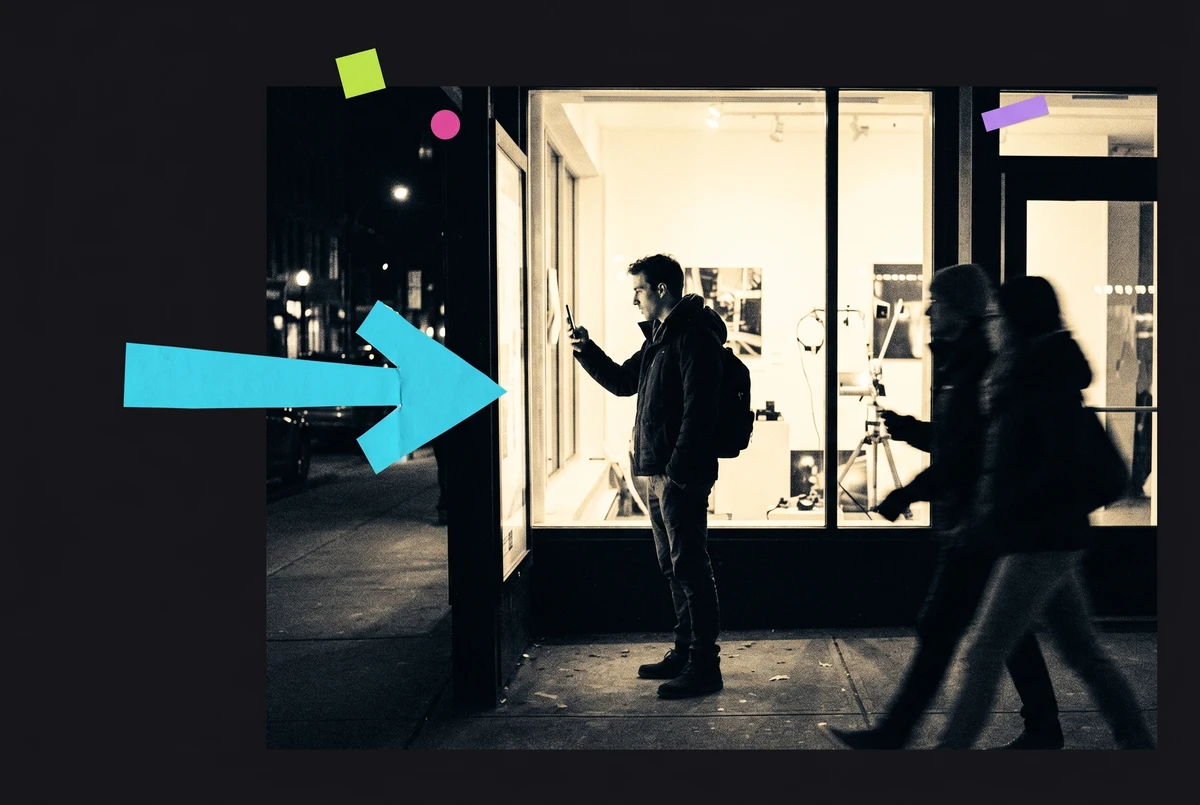 Ten thousand passersby per week, 0.5% scan rate, 50 scans, 60% email capture, $50 LTV equals $1,500 per week at zero per-week variable cost. Failure mode: a clever installation with no QR, no offer, no next step. Pedestrians stop, look, take a photo, walk on. The stop was real. The capture was zero.
12. The VIP or loyalty-first activation night
Inverts the public-facing model. Invite-only preview for top loyalty members. The economics work because retaining and deepening the 20% of customers who produce 60%-plus of revenue returns more per dollar than acquiring strangers. Sephora’s Beauty Insider and Rouge tier preview events run on this logic, with attendance conditioning future tier qualification and per-attendee spend running well above the average ticket. Independent restaurants run a smaller version with regulars-only chef’s-table nights.
Verticals: beauty and fashion retail, restaurants with a regulars base, hotels with elite-tier loyalty, fitness studios, wineries with club members. Cost: $500–$3,500. Capture: attendance-to-invite ratio, average spend per attendee, a referral code for “member plus one.” Forty VIPs, 70% attendance, $150 average spend equals $4,200 same-night revenue plus 10 referred new customers at a customer acquisition cost of $0. Failure mode: treating it as a discount event. VIPs do not need a discount. They need access, exclusivity, status. Offer the unreleased SKU, not a coupon.
13. The trackable sampling station
The oldest activation in the book, made measurable. A product sample carries a QR code that points to a UTM’d landing page, gating a first-order discount with email opt-in. Scan rate becomes the diagnostic: high scans with low emails means the landing page is broken; low scans means the packaging call-to-action is. Liquid Death’s early field-marketing tour paired free can sampling with QR-coded discount codes for online reorder, treating sampling as the top of a measurable acquisition funnel rather than a vanity giveaway.
Verticals: food and beverage, beauty and skincare, supplements, packaged consumer goods. Cost: $300–$1,500 per sampling day. 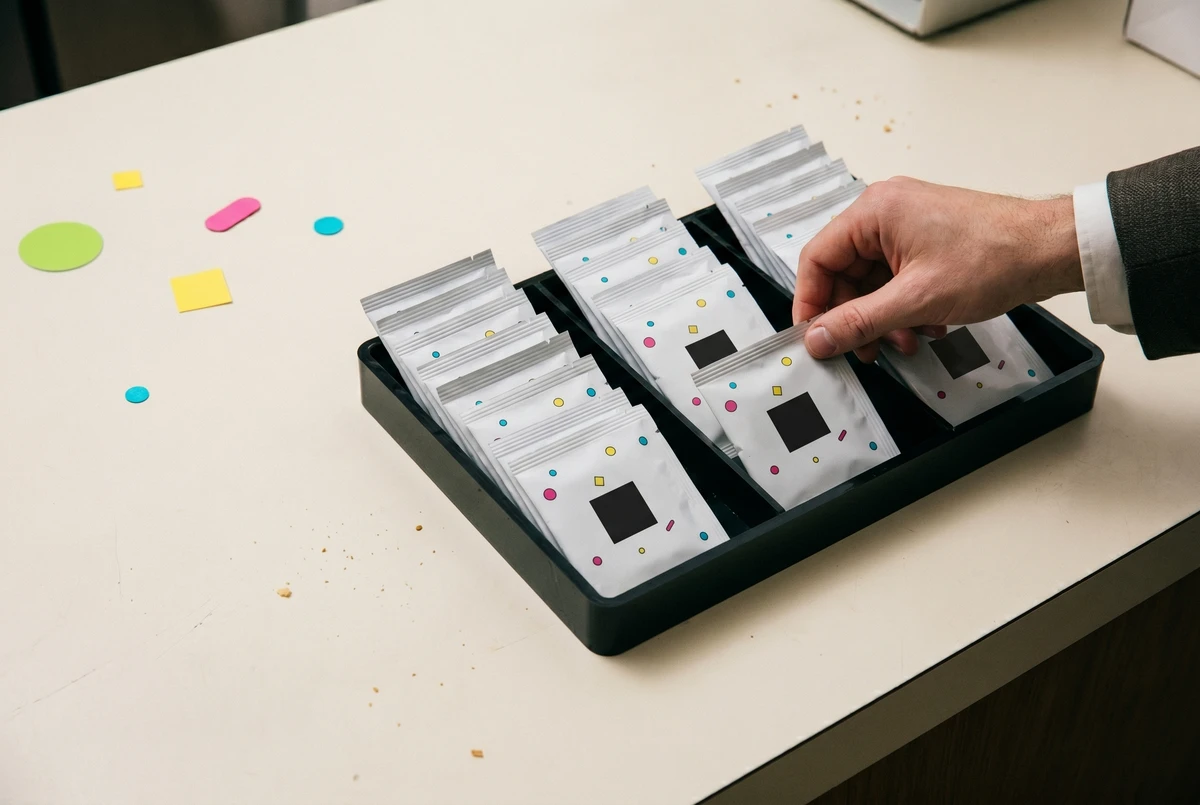 Two hundred samples, 30% QR scan, 50% email opt-in, $60 LTV equals $1,800 per sampling day. Failure mode: sampling without capture. The taste is forgotten by the time the guest crosses the street. Every sample must carry a scan.
14. The live music or performance night
Atmospheric traffic draw. Live music alone is ambiance, not activation. Brewery taprooms and restaurants that pair Friday-night music with an SMS waitlist or a “vote for the next set” interaction outperform venues running music alone. Arts institutions with intermission programming use the social moment between acts to capture email at a lobby station.
Verticals: bars, restaurants, breweries, retail with patio space, hotels with lobby bars, wineries with weekend programming. Cost: $200–$2,000 per night. Capture: a QR on the bar top tied to an exclusive set-break announcement, a merch giveaway requiring email, an SMS “vote for the next set,” or a branded photo station alongside. Two hundred extra walk-ins, 10% capture without a dedicated capture point, $50 LTV equals $1,000. Pair with idea #2 in the same night and the rate rises substantially. Failure mode: the DJ brings a crowd, nobody signs up for anything, foot traffic becomes free entertainment for people who never return.
15. The guerrilla stunt
High variance, high ceiling. A well-executed stunt produces outsized earned media and traffic spillover. A bad one is invisible. IKEA’s surprise installations of fully furnished rooms in Paris Métro stations and on London Tube platforms produced earned media that dwarfed paid-media equivalents and drove store visits for weeks afterward. The underlying principle (one unexpected moment, multiplied by earned attention, captured at a destination URL) scales down.
Verticals: brand-led retail expansion, hospitality launching new markets, restaurants with PR teams, lifestyle brands at consideration stage. Cost: $2,000–$25,000. Capture: earned-media mentions, geo-tagged social check-ins, a capture-specific URL on stunt collateral. Treat it as a portfolio bet. Three attempts at $8,000 each, with one hit producing $50,000-equivalent earned media plus 500 captured emails ($25,000 list value), justifies the series. Operators who cannot afford three swings should not take one. Failure mode: spectacle without a destination. The stunt trended. Nobody showed up.
Picking the right activation by operator type
Single-Location Operators
Prioritise #1, #3, #4, #13. All four are capture-heavy and compound. Skip the high-variance plays (#6, #8, #15) until a baseline email list and measurement rhythm are in place.
Multi-Location Brands
Prioritise #2, #5, #7, #8, #12. These scale because the capture mechanism is templated. Each activation produces comparable data that makes cross-location learning possible.
PR and Agency-Led Brands
Combine #6, #11, and #15 with #2 bolted on for lead capture. High-ceiling activations need a capture station behind them or the reach does not compound into owned assets.
The anti-pattern across all three tiers is picking the most novel idea on the list. The compounding plays generate more foot traffic per dollar than any stunt. They get skipped because they are boring. That is the bet.
Measuring any activation (not just these 15)
- Every activation gets a unique UTM-tagged landing page before it launches. Build the URL first, the creative second.
- Every on-site touchpoint redirects through a counter. QR, printed code, kiosk, branded photo station. If it does not fire a pixel or log a capture, it is invisible.
- The capture mechanism is designed first, the creative second. An activation that cannot be measured is an expense. An activation that can be measured is an investment.
- Run one activation at a time for the first three. An Instagram push and a new activation in the same week guarantees nobody knows which one moved the needle.
- Review week-two numbers, not day-one numbers. Grand opening attendance is a vanity number. Redemptions on day 10 are the ROI number.
The honest test is what the operator can show finance two weeks after the event. Photos and energy is decor. A list, a redemption count, and a return-visit number is a foot-traffic engine. Operators who run the activation and never export the list have not run an activation. They have hosted a party.
Sources
- Event Marketer (2025). “Exclusive Research: EventTrack 2026.” https://www.eventmarketer.com/article/exclusive-research-eventtrack-2026/
- Litmus (2025). “The ROI of Email Marketing.” https://litmus.com/blog/email-marketing-roi
- Sparks (2025). EventTrack 2026 research partnership. https://www.wearesparks.com/
- BizBash (2025). “Experiential Marketing Trends and Case Studies.” https://www.bizbash.com/event-production-planning/experiential-marketing
- Opry Entertainment Group (2024). Ole Red customer-database growth case study, reported via vendor case-study disclosure. https://www.simplebooth.com/blog/ole-red-venue-photo-booths-grow-customer-database/