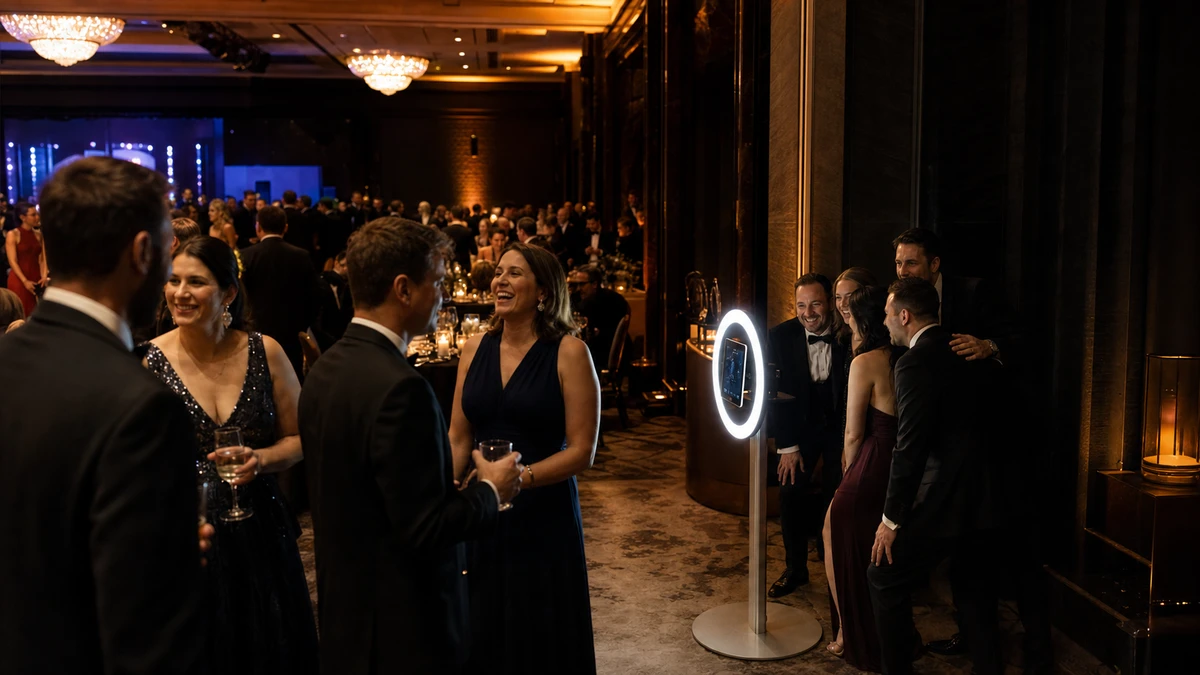
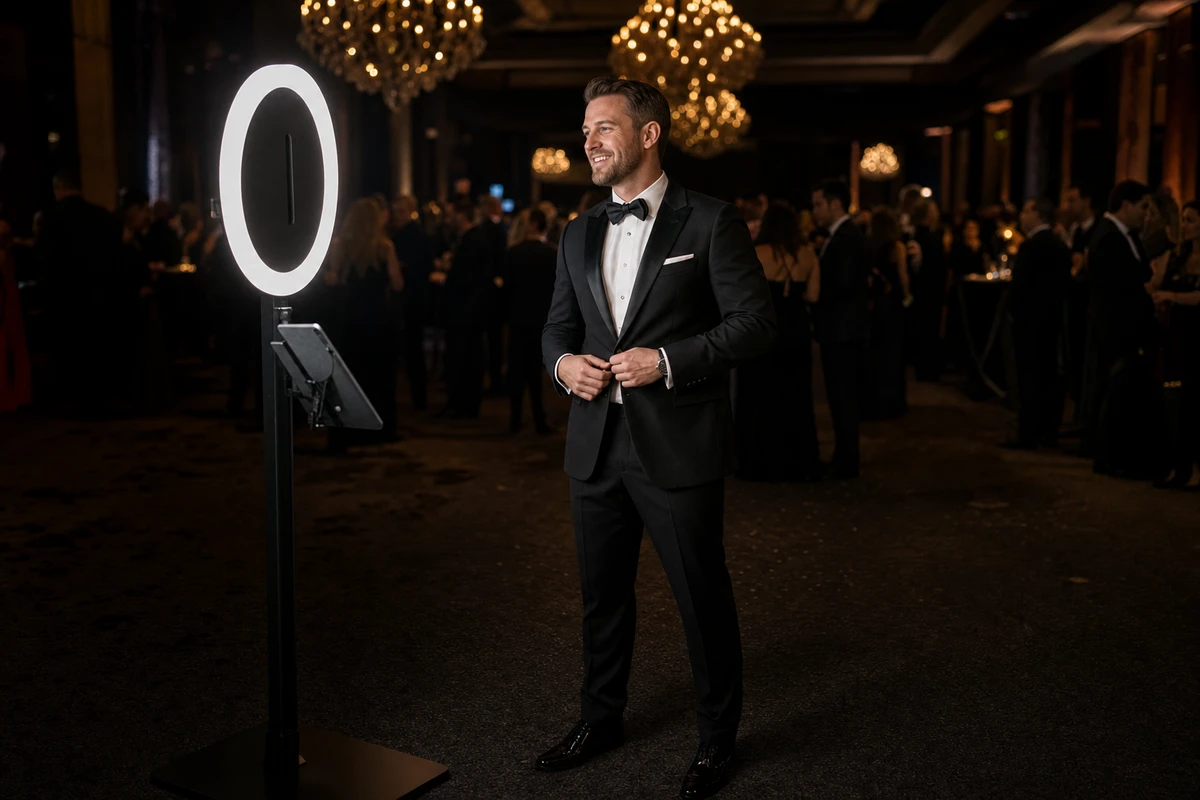
The room is ready by six. Name cards arranged, centerpieces assembled, a signature cocktail lined up at the bar. In ninety minutes, three hundred guests will arrive. The keynote is at nine. The charity auction closes at ten. Nobody on the planning team will be able to say, at next year’s budget meeting, whether any of it worked.
That is the problem most corporate gala advice never addresses. Every list of gala ideas treats the night as something to fill. The better question is what the night should leave behind. The gap between those two approaches explains why the best galas get rebooked and the average ones get smaller budgets the following year.
This article maps the strongest corporate gala ideas onto the shape of an evening, and ends with a way to put a number on what the night produced.
Guest Engagement Is an Outcome, Not an Activity
Most gala advice uses “engagement” and “entertainment” as if they mean the same thing. They do not.
Consumed engagement is what happens when a guest watches an aerialist, enjoys the performance, and leaves. The value disappears at midnight. The company has nothing to show the following morning beyond a room full of people who had a nice time.
Produced engagement is what happens when a guest does something that leaves a trace: creates a photo the brand can distribute, opts into a contact list, or carries a story about the night back to their office on Monday. The value continues after the venue lights go off.
Both have a place at a gala. Consumed engagement often enables produced engagement, because guests who are genuinely enjoying themselves are more willing to participate in an opt-in or share a photo. The distinction matters not as a moral judgment on entertainment but as a planning filter: an idea that only consumes time is the first one to cut when the run sheet gets crowded.
The budget stakes make this practical
The budget stakes make this practical. The Cvent Planner Sourcing Report 2026 found that 34% of event planners name attendee engagement as a top KPI, tied with event feedback and ahead of simple attendance. Markletic’s analysis of B2B event data found that 49% of marketers surveyed considered audience engagement the biggest contributing factor in a successful event. Engagement is what the room is being judged on. The question is how to generate it deliberately rather than hoping the catering is good enough.
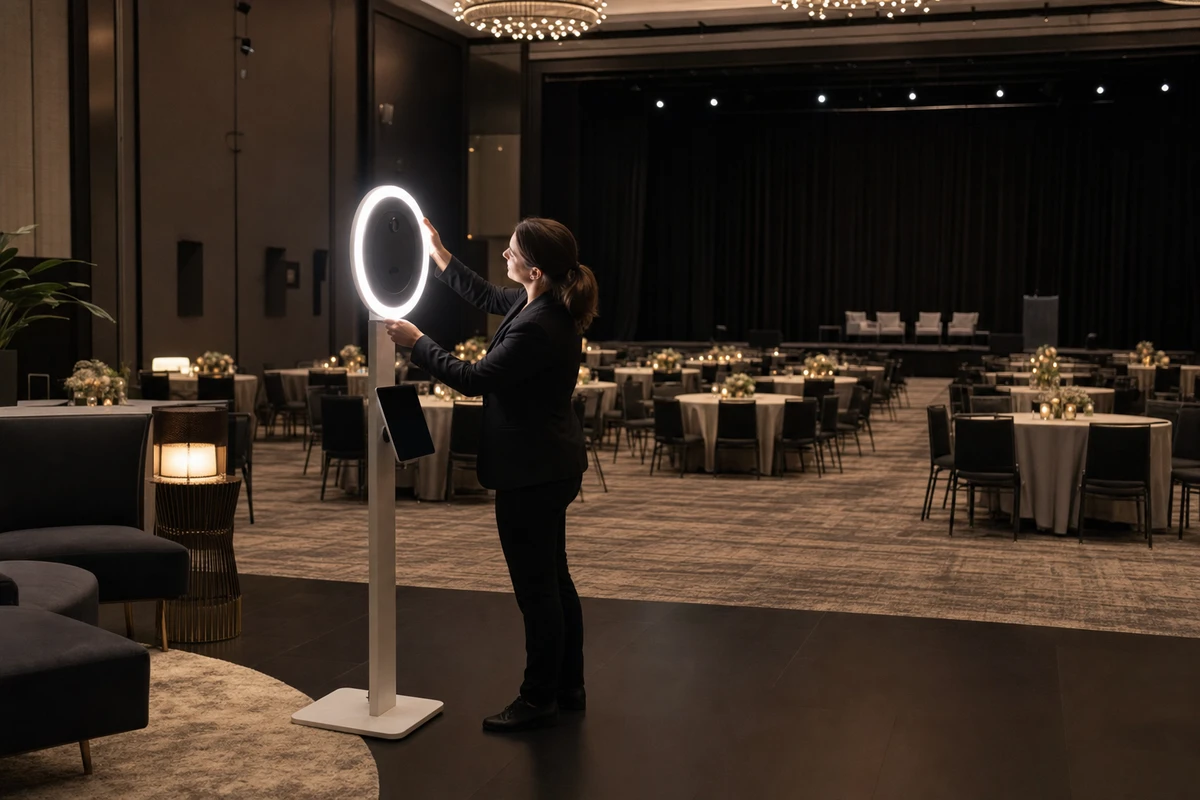
Venues have a direct stake here too. A venue that helps a corporate client run a gala that demonstrably paid back is the venue that gets rebooked. A venue that was just a well-lit backdrop is the one the client considers replacing when costs go up.
Map the Gala’s Engagement Curve Before Picking a Single Idea
A gala is not a flat block of time. It has a predictable shape, and the ideas that actually deliver engagement are the ones placed where the curve sags. Adding more entertainment to a flat run sheet does not fix a curve problem. It adds acts to a night that is already losing its audience on schedule.
A standard corporate gala or awards dinner moves through
A standard corporate gala or awards dinner moves through five segments, and each one behaves differently:
Arrival and reception is when energy peaks. Guests are fresh, dressed, curious, and unhurried. Most galas spend this window on drinks and ambient music and ask nothing more of it.
Seated dinner is when energy starts to settle. Conversation is easiest here because guests are in fixed groups, and a well-designed table creates its own programme.
The program and awards block is the danger zone. Tom Elliott, a corporate event host who has run hundreds of awards evenings in the UK, describes it precisely: “Somewhere between the main course and dessert, energy drops off a cliff. Guests check phones, side conversations start, and the room feels flat just when it should feel electric.” (hellotom.co.uk, October 2025). The cause is physiological as much as structural. In a separate piece on the post-lunch slump at conferences, Elliott points out that body temperature falls slightly after eating and alertness drops with it, which is why polished slide design does not fully compensate for a post-dinner awards segment.
The transition out of the program is when guests decide whether to stay or leave. Misread this moment and the room empties before the keynote or the auction.
Late-night is self-sustaining if the earlier segments landed. A room that trusts the night will stay.
Knowing this shape converts the planning question from “what ideas look good?” to “which idea belongs where, and what is it there to do?” Elliott’s practical rule offers a useful upper bound: most successful awards dinners run three to four hours including the reception; beyond that, engagement drops significantly. Planning backward from that arc, rather than forward from a list of ideas, is the structural change that makes everything else work.
Arrival and Reception Ideas That Start the Night With Momentum
Most arrival experiences are designed to be photographed. A better arrival is designed to work.
The reception is the highest-energy window of the night, and it is also the most underused for anything that produces a return. Guests are in their best clothes, socially open, and moving between tables rather than fixed in a seat. A content activation placed at 11 pm competes with fatigue and loosened ties. The same activation placed at 6:30 pm reaches guests who are composed, glad to be there, and in their best mood of the evening.
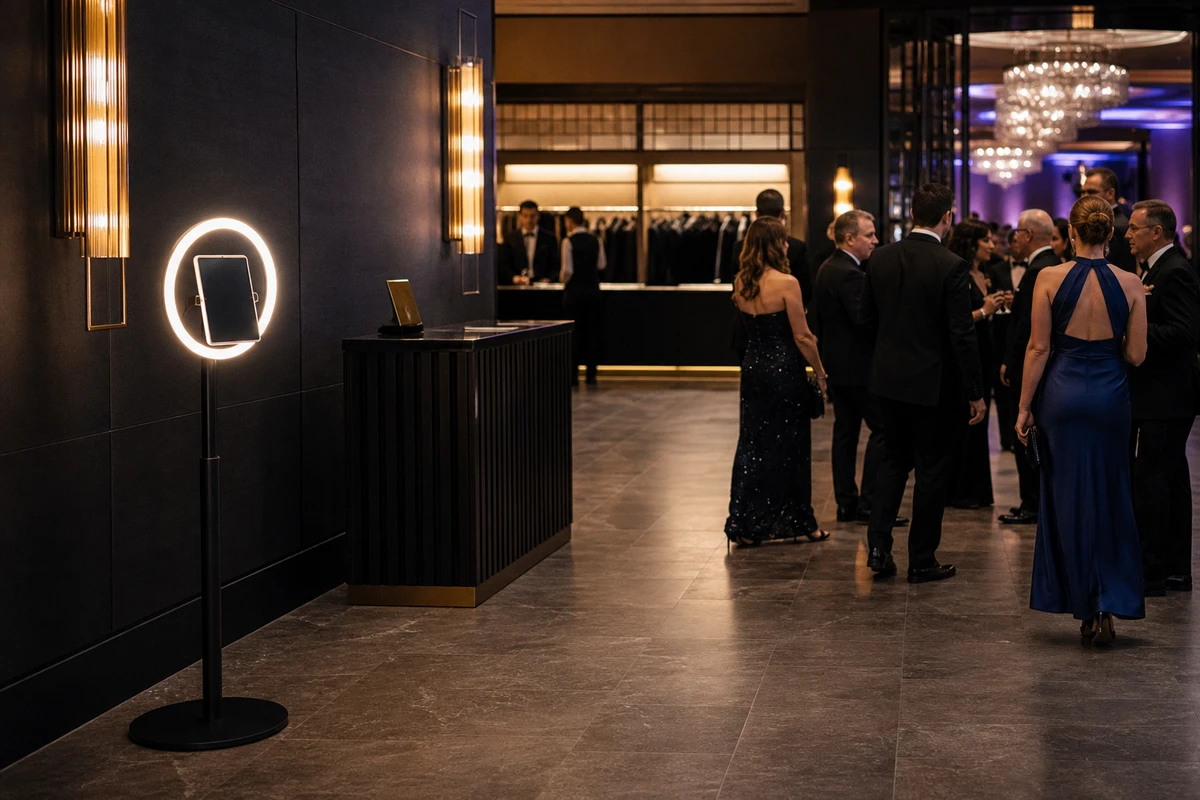
A branded entrance moment with a print-or-deliver photo experience
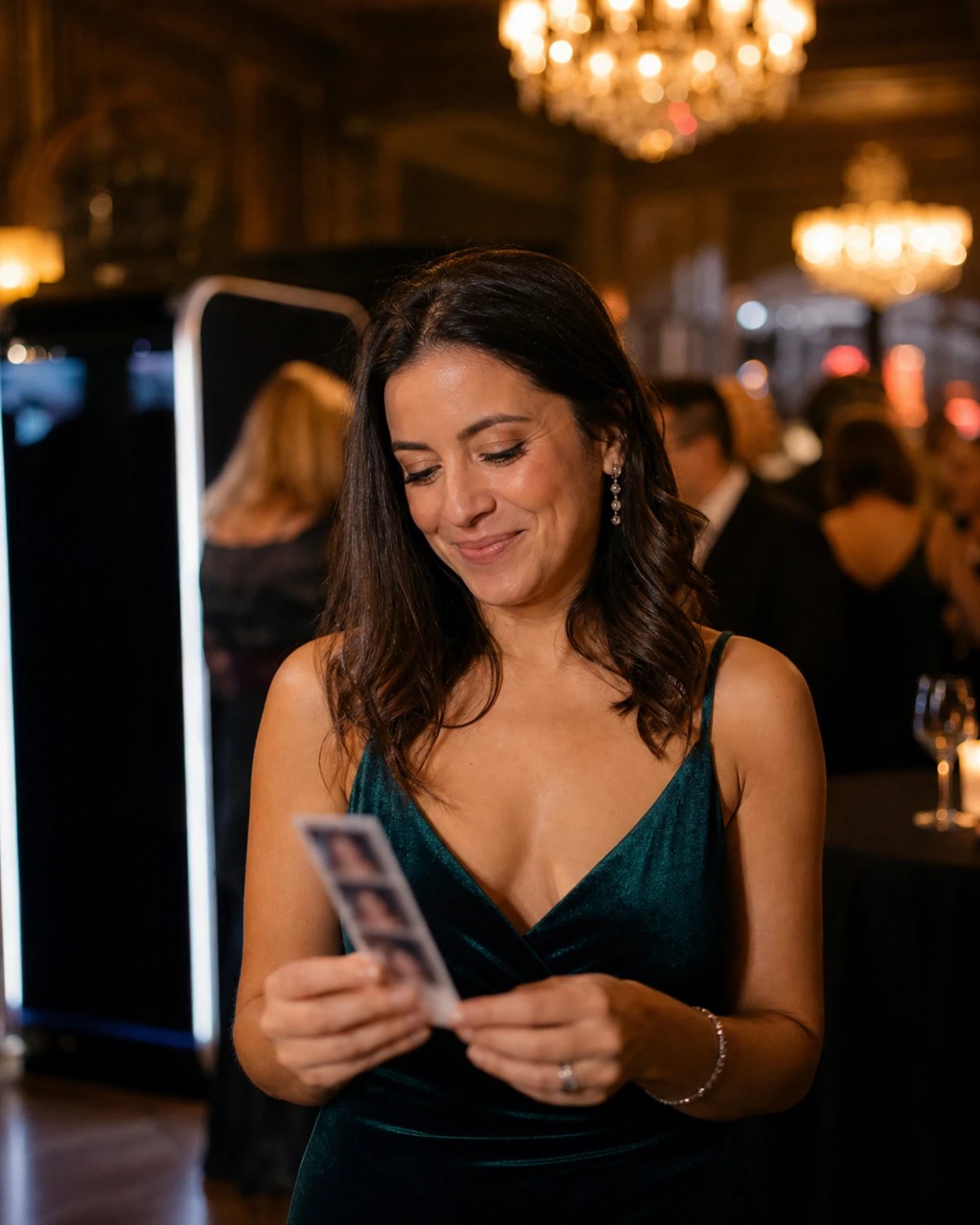
The consumed version is a photogenic backdrop that only the company photographer documents. The produced version delivers the image to the guest’s phone by SMS during the reception itself, so the guest shares it and the company captures a consented contact at the same time. Same physical setup. Different return.
Walkabout entertainment that breaks stranger-silence and seeds table conversations for the rest of the night. Close-up magic, a live caricature artist, a comedian working the room. These work best when they move rather than perform, because the goal is to give two guests a shared experience and a reason to talk rather than a performance they watch and then forget.
A signature welcome drink tied to the event theme
This is consumed engagement, and it earns its place. A well-chosen welcome drink signals that the rest of the night has been thought through. Guests who trust the arrival tend to trust the program.
Once guests sit down, capturing anything means interrupting dinner. During the reception, the same ask is just part of arriving. That is why a content activation belongs at 6:30, not at 11.
Seated Dinner and Program Ideas That Survive the Energy Cliff
During the dinner service, guests sit for sixty to ninety minutes at a fixed table with eight or ten other people and nothing structured to do together. A tablescape or theme that builds in a conversation starter fixes that by giving the table a shared task instead of leaving the talk to chance. Prompt cards, a table challenge, a small team task with a visible outcome all do the same job: when guests have something to do together, they stop depending on the stage to carry them.
The program block is where most galas lose the room, and the solution is not more entertainment but better structure.
As veteran awards-night hosts consistently advise, short speeches read as generous and long ones as punishing. In practice that means capping individual speeches at two minutes, reserving full remarks for the top three or five recipients, and giving the emcee real authority over pacing rather than courtesy-holding the microphone while an executive runs long.
Signposting the agenda is the second fix. Elliott states it plainly: “When guests know there are three awards left before dessert, they relax. When they don’t know, they assume it will go on forever.” Telling the room how much is left removes the “when will this end” anxiety. The phone-checking that planners read as disengagement is often just that anxiety surfacing. It is not a performance problem. It is an information problem.
Two structural adjustments consistently recover energy during a long awards block.
A pattern break every five or six awards
The first is a pattern break every five or six awards: a two-minute video, a short performance, a live poll, a visual reveal. The brain switches off when the delivery format is identical for the twelfth time in a row. Elliott observes that “varying the delivery, adding unexpected moments, and giving people permission to laugh changes the entire experience.” Laughter in particular reduces cortisol and moves the audience toward a state closer to genuine alertness, which is part of why a comedy beat mid-program can reset attention rather than simply pause it (hellotom.co.uk, April 2026).
The second uses the course transition as a reset
The second uses the course transition as a reset. The dessert or coffee service is a natural break that most planners treat as a logistics interruption. A short entertainment beat or announcement placed there lands better than the same beat squeezed between the ninth and tenth award, because the room has already shifted, and the planner can ride that shift rather than fight it.
Ideas That Turn the Room Into Content and Contact Data
Three hundred people walk into a ballroom on a Friday night. They are dressed better than on any other work occasion this year. They are in a good mood. They have already decided to be photographed. It is easy to read that as atmosphere. It is actually a data-capture condition, and it closes at midnight.
The ideas that use that condition share one structure: the guest gets something they want, and the host gets something it can use after the night is over.
A photo or content experience that delivers the image
The act of receiving the photo is the opt-in. The guest gets content they want. The host gets a consented, contactable lead. Go2 Productions, a live-events production company, describes the mechanism as it is already being used in practice: “email capture points tied to raffles or photo experiences that share content via branded microsites, opening the door to follow-up communication after the event.” (Go2 Productions, 2025) The point is not novelty but intentional design. Events that build this into the arrival flow make the return systematic rather than incidental. Simple Booth’s HALO kit is one concrete version a venue team can run on the night: the guest enters a phone number or email to receive their photo, and the kit records that as a consented contact the host can export afterward. Arizona Opera used HALO this way to add roughly 1,000 email addresses across a handful of events.
A QR-driven flow that turns a quick phone scan into a record the host keeps. A code on the table tent or program can open a photo gallery, a donation receipt, or an RSVP for next year’s event. The flow works because it asks for almost nothing: the guest already has the phone in hand, the scan is a single motion, and each scan arrives tied to a known guest at a known table. Participation stays high because the value is immediate and the guest controls what they hand over.
A live social wall that displays guest posts on a screen in the room. When a guest sees their own photo appear on the wall, that small public reward prompts the next guest to post. The wall also keeps the event’s handle and hashtag in plain sight, so posts are tagged correctly and stay findable after the night, and it gathers the guests most willing to share into one feed the host can revisit later.
A branded post-event gallery that keeps generating impressions after the venue is dark. Spiro Agency’s Experiential Marketing Impact Report, based on a survey of 2,000 event attendees conducted by an independent research firm, found that receiving post-event communications was associated with up to a 45% higher rate of high purchase intent. Social sharing was associated with up to 61% higher purchase intent among guests who shared. The content and contacts created on the night keep working after the event closes, which changes the ROI calculation for the gala from a single-night cost into an asset with a tail.
A Simple Way to Put a Number on Gala Engagement
The gala ends, the room agrees it was a success, and next year’s budget conversation starts from zero. The Splash Events 2025 Outlook Report, drawing on a survey of 1,000 U.S. marketers, found that 41% of marketers struggle to measure event ROI, and 35% of those who lack event data have no attribution model in place at all.
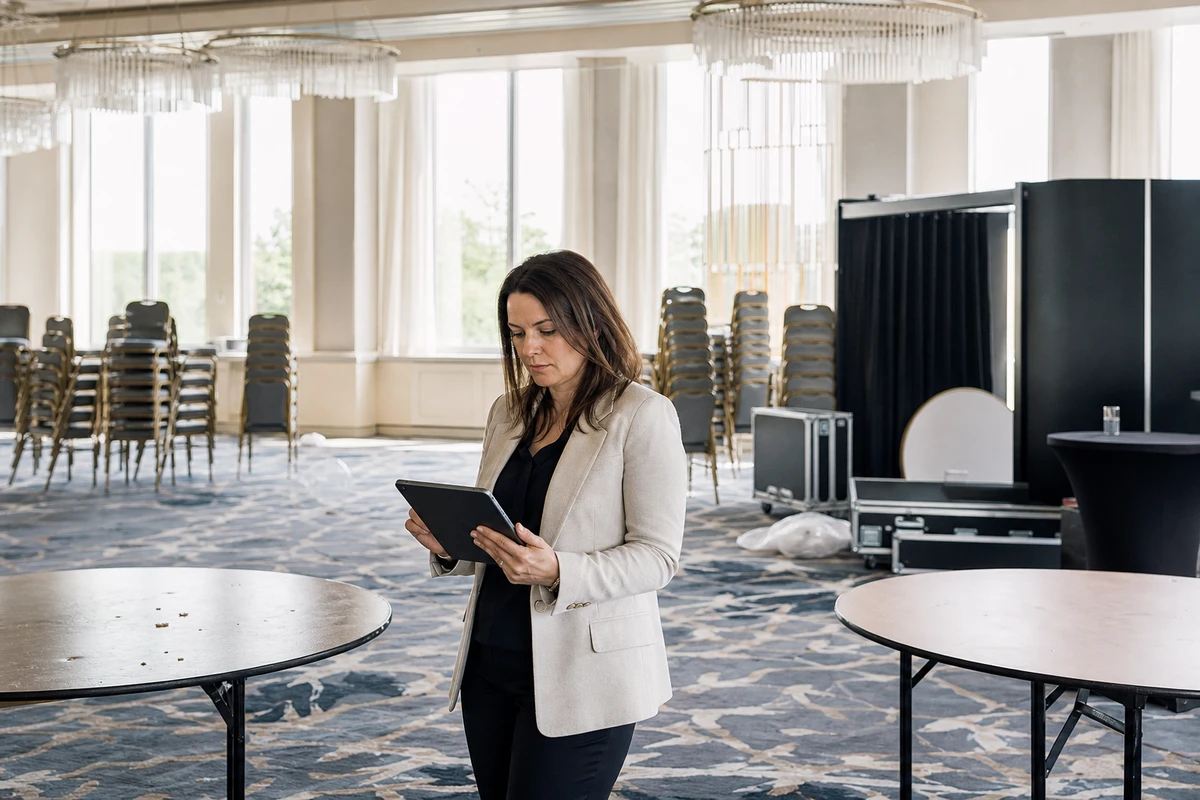
A proxy model built from the night’s own data requires no marketing technology stack to run.
Take a gala with 200 guests
Take a gala with 200 guests. Sixty percent engage with the content or photo activation: 120 participants. Of those, a portion opt into marketing contact when they receive their photo by SMS or email. What share that is depends on how the opt-in is structured and how much friction stands between the guest and their photo; there is no published industry benchmark for this specific mechanism, so the input should come from the planner’s own conversion rates at comparable opt-in touchpoints. At a conservative illustrative assumption of 35%, that is 42 consented new contacts generated in a single evening, each with a documented connection to the event through attendance, donation, or ticket purchase.
The reach line adds a second return. Each guest who shares branded content from the night carries it to their own network. The Spiro data cited earlier suggests the guests who share are also, by a wide margin, the guests most likely to buy. That is a correlation, not proof that sharing causes the purchase, but it is a correlation worth designing the night around.
Setting the estimated value of a net-new consented contact (drawn from the organization’s own LTV divided by average contacts per close) against the gala’s total cost, then adding an earned-media estimate for guest-driven reach, turns the gala from a line item with goodwill attached into a line item with a defensible return. The value of the model is not the specific figure it produces. It is the discipline of asking the question before the night begins, so there is something concrete to point at in the morning.
Which Ideas Earned a Place on the Run Sheet
Three questions make the decision concrete.
Test the Engagement Curve
Does the idea sit against a real dip in the engagement curve, or does it simply add to a run sheet that is already too long? Entertainment stacked into a program that is running long deepens the curve problem rather than solving it.
Does the idea produce something the organization keeps, whether a contact, a piece of content, or a story guests retell in the weeks after, or does it only consume time? Anything that fails this test is decoration, and decoration is the first thing a tightening budget should question.
Can a result be pointed to the following morning? A participation count, a contact total, a folder of distributable content.
The gala people still describe at the following year’s awards night is not the one with the most ideas. It is the one designed backward from what it needed to produce.
Sources
- Cvent / Hope Salvatori (2026). “390 Event Statistics Shaping the Industry in 2026.” https://www.cvent.com/en/blog/events/event-statistics (aggregates Cvent Planner Sourcing Report 2026, Amex GBT 2026, Spiro EMIR, and others)
- Markletic (2025–2026). “60 Virtual Event Statistics.” https://markletic.com/blog/virtual-event-statistics/
- Splash (2025). “An Outlook on Events in 2025.” https://splashthat.com/resources/2025-events-outlook-report-lp
- Spiro Agency (n.d.). “Experiential Marketing Impact Report (EMIR).” https://spiro.com/nspiro/experiential-marketing-impact-report [vendor-commissioned primary research, independent methodology disclosed]
- Tom Elliott (October 6, 2025). “How to Keep Guests Engaged During Awards Dinner.” https://hellotom.co.uk/2025/10/06/how-to-keep-guests-engaged-during-awards-dinner/
- Tom Elliott (April 1, 2026). “How do I keep my audience engaged after lunch at a full-day conference?” https://hellotom.co.uk/2026/04/01/how-do-i-keep-my-audience-engaged-after-lunch-at-a-full-day-conference/
- Go2 Productions / Ramiro Rodriguez (April 21, 2025). “Ideas to Make Your Next Corporate Gala Unforgettable.” https://go2productions.com/blog/ideas-to-make-your-next-corporate-gala-unforgettable/ [vendor-published]