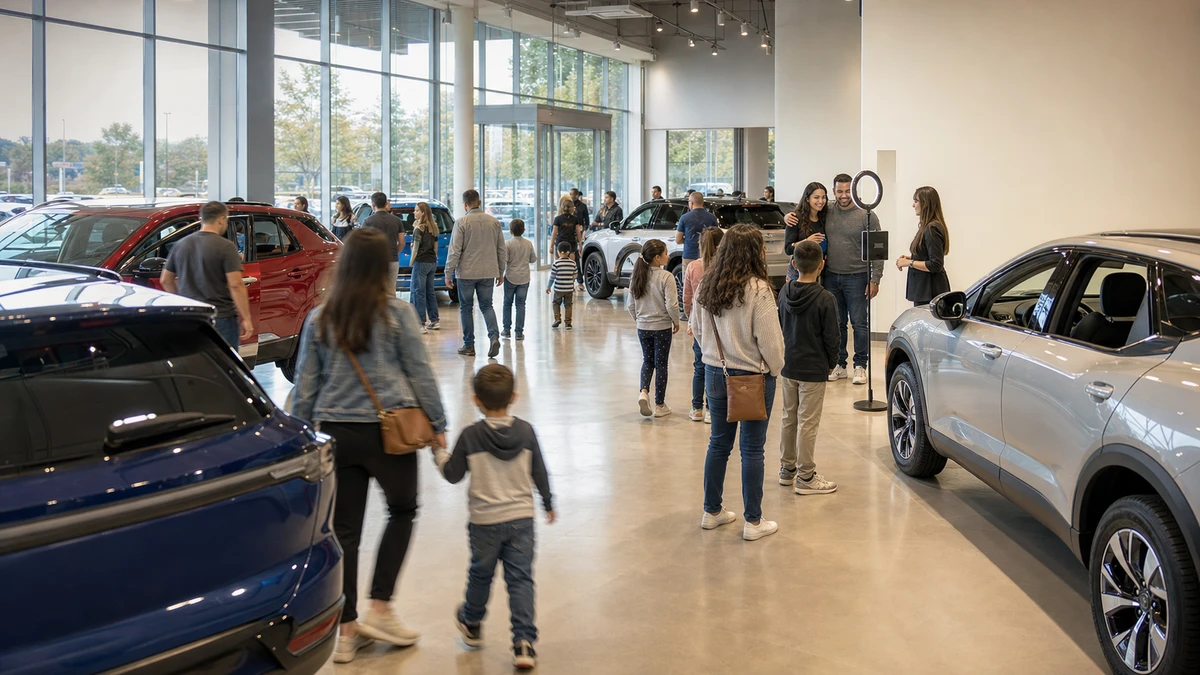
By eleven on a Saturday, the lot looks like the plan worked. A food truck is parked near the service drive, a bounce house bobs at the back of the showroom, and forty or fifty families walk the rows of new inventory with paper plates in hand. The sales floor counts heads and feels good about the turnout. Then Monday arrives, and nobody can say who a single one of those people was.
That gap is the real problem with most car dealership showroom event ideas. A showroom event increases foot traffic in a way that matters only when the dealership can name the people who showed up and reach them again afterward. The events below do two jobs at once: pull a genuine crowd onto the lot, and leave that crowd behind as a list of contacts the sales team can work for a month. A 250-person family day that collects zero contact records is not marketing. It is a party the store paid to host. The ideas come first below. The capture, the follow-up, and the arithmetic that decide whether any of it paid for itself come second, and that second half is the part most lists of showroom event ideas skip.
Why a Packed Lot Isn’t the Same as a Productive Event
On the DealerRefresh operator forum, a marketing director at a multi-brand store described a familiar pattern. His general manager likes to run at least one event a month as a “shot in the arm,” supported by direct mail and outsourced social campaigns. His complaint was blunt: “Mail just hasn’t been hitting for us lately and I feel like the Facebook campaigns are starting to slow down too.” He runs the events every month. He cannot explain why the results keep sliding.
Part of the answer is that the channels propping
Part of the answer is that the channels propping up those events are getting more expensive. The Association of National Advertisers’ 2023 Response Rate Report, summarized by Postalytics, put automotive direct mail at a 3.84% response rate, so a 10,000-piece mailer produces only a few hundred responses, most of them cold. The event itself is the asset worth improving, because the people who walk onto the lot arrived warm and chose to be there. The deeper confusion, though, is measuring the wrong thing about that event. A packed lot is an input, not a result. Attendance tells the dealership the promotion worked. It says nothing about whether the event produced a sale, and treating the crowd as the finish line is how a store ends up repeating its weakest events.
Two facts about how people buy cars explain why. First, the modern shopper visits few dealerships in person. Cox Automotive’s 2023 Car Buyer Journey Study found that buyers typically considered two vehicles and visited two dealerships, down from the four or five visits common a decade earlier. A visitor who leaves without giving the store a way to reach them may simply never come back, because there is no longer a long list of stores left to try.
Second, the sale rarely closes on the day of the event. CDK Global’s 2024 research on test drives, a survey of 1,048 new-car buyers published by the dealership-technology vendor, found that 78% of buyers said the test drive alone ultimately sold them on the vehicle they bought. The emotional decision happens at the dealership; the signed deal happens days or weeks later, after a final comparison and financing.
So the event has two jobs, and only two: get a qualified local in the door, and make sure that person leaves a way to be reached. Everything else (the bounce house, the balloon arch, the taco truck) exists to serve those two outcomes. The funnel from here is plain: draw a crowd, capture contacts, follow up, measure the result.
Showroom Event Ideas That Actually Pull a Crowd
The ideas below fall into four types, so a dealership can match an event to a goal and a budget. Each group notes who it tends to draw, a rough effort and cost band, and the natural moment to capture a contact.
Community Events
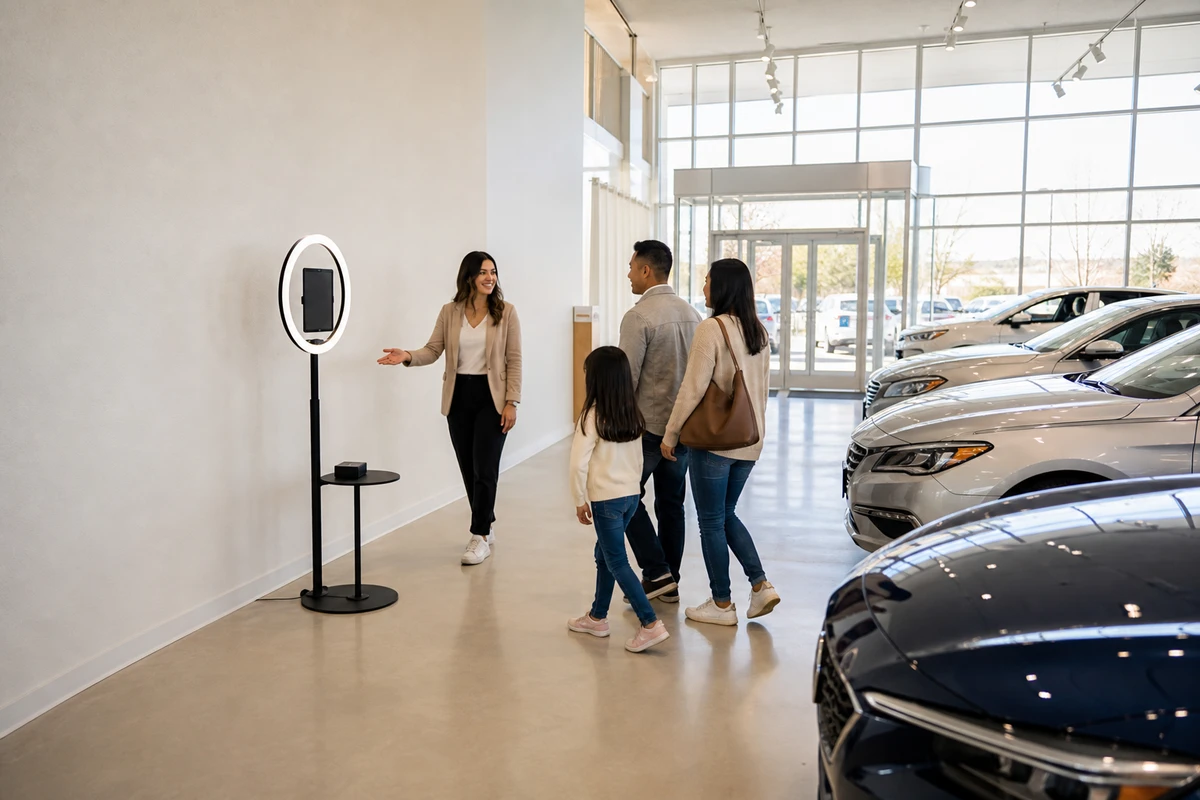
Community-anchored events draw the surrounding neighborhood and build goodwill with people who are not shopping yet. A food-truck rally, or a recurring weekly food-truck night, turns the lot into a destination on an otherwise dead evening. A charity drive (canned food, winter coats, school supplies) or a pet-adoption day run with a local shelter brings in families who would never respond to a sales ad. A block party or a pop-up market featuring nearby small businesses does the same. Effort and cost run low to medium. The capture moment is the entry point: a raffle or a text-to-enter code at the food line, a sign-in at the donation table.
Family-day events draw households and keep them on the lot longer, which buys the sales team time. A kids’ zone with crafts and games occupies children while parents wander the inventory. A child car-seat safety check is a strong, genuinely useful draw, but it has to be done correctly. Safe Kids Worldwide, which coordinates more than 8,000 free car-seat inspection events a year, requires a nationally certified Child Passenger Safety technician to run them, so a dealership hosts the event and partners with a certified technician from a local coalition, fire department, or hospital program rather than assigning a staff member. A seasonal photo moment (a Halloween trunk-or-treat, a holiday backdrop) gives families a reason to stop and pose. Cost is medium. The capture moment is an activity sign-in or a photo handoff.
Product-centric events draw people who are actually in the market. A new-model first-look or preview night creates urgency around fresh inventory. A VIP evening for existing owners offers early access and on-the-spot trade appraisals. A test-drive challenge or drive-and-decide weekend, with a small completion incentive, puts in-market shoppers behind the wheel, which matters because CDK Global’s data found 54% of buyers said the chance to take a test drive was the top reason they chose a dealership over buying online. Cost is medium. The capture moment is the RSVP list and the test-drive check-in, where a license scan becomes a clean contact record.
Service and retention events draw existing owners back through the door, where the next sale and the next referral live. A free safety-inspection or service clinic gives owners a low-pressure reason to return. A customer-appreciation day with food and giveaways rewards the existing base. An owners’ club meetup or a cars-and-coffee morning gathers enthusiasts who talk about the brand on the dealership’s behalf. Cost runs low to medium. Capture is the easiest of the four, because a service check-in already pairs a name with a vehicle.
The pattern across all of them is worth noticing. The strongest ideas create a natural reason for a visitor to stop moving, stand in one place, and hand something over: a name at a sign-in, a phone number for a raffle, a license at a test-drive desk. That pause is where capture happens.
Every Event Needs a Capture Moment
A visitor spends an hour at the Saturday family day. A child bounces, a taco gets eaten, three new SUVs get a slow walk-around, and then the family drives home. The dealership has no record the visit ever happened. Multiply that by 250 people and the event is unmeasurable, by definition. Without knowing who attended, the store cannot follow up, cannot attribute a sale, and cannot decide whether the event is worth running again.
The mechanism is human, not technical
The mechanism is human, not technical. Almost nobody walks up to a clipboard at a party and writes down a phone number for a salesperson. The contact exchange has to be wrapped inside something the visitor already wants. Capture works as a trade, not a request.
A few capture hooks, ordered roughly from lowest friction to highest:
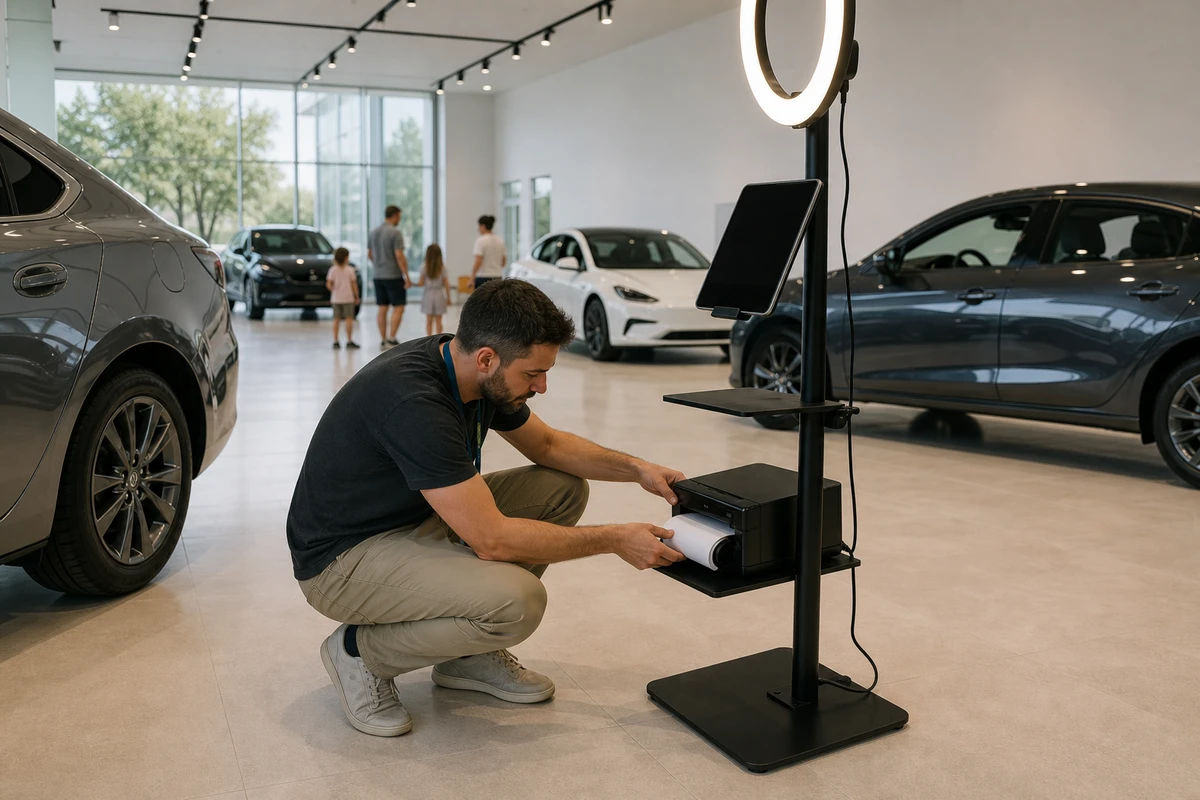
- A branded photo experience or photo station. The visitor gets a fun photo of their family; the dealership gets a name, an email or phone number, and a marketing opt-in, plus a piece of content the attendee often shares themselves. A purpose-built photo station such as Simple Booth’s HALO kit asks for those fields before it releases the photo, and its offline upload queue holds each session when the lot’s Wi-Fi drops, then delivers it once a signal returns.
- A prize draw or spin-to-win that requires a quick registration to enter.
- A test-drive check-in, where the license scan needed to take a car out doubles as a contact record.
- Lower-tech versions that still work: a kids’-activity sign-in sheet, a raffle for a free service package, a “text to enter” short code printed on event signage.
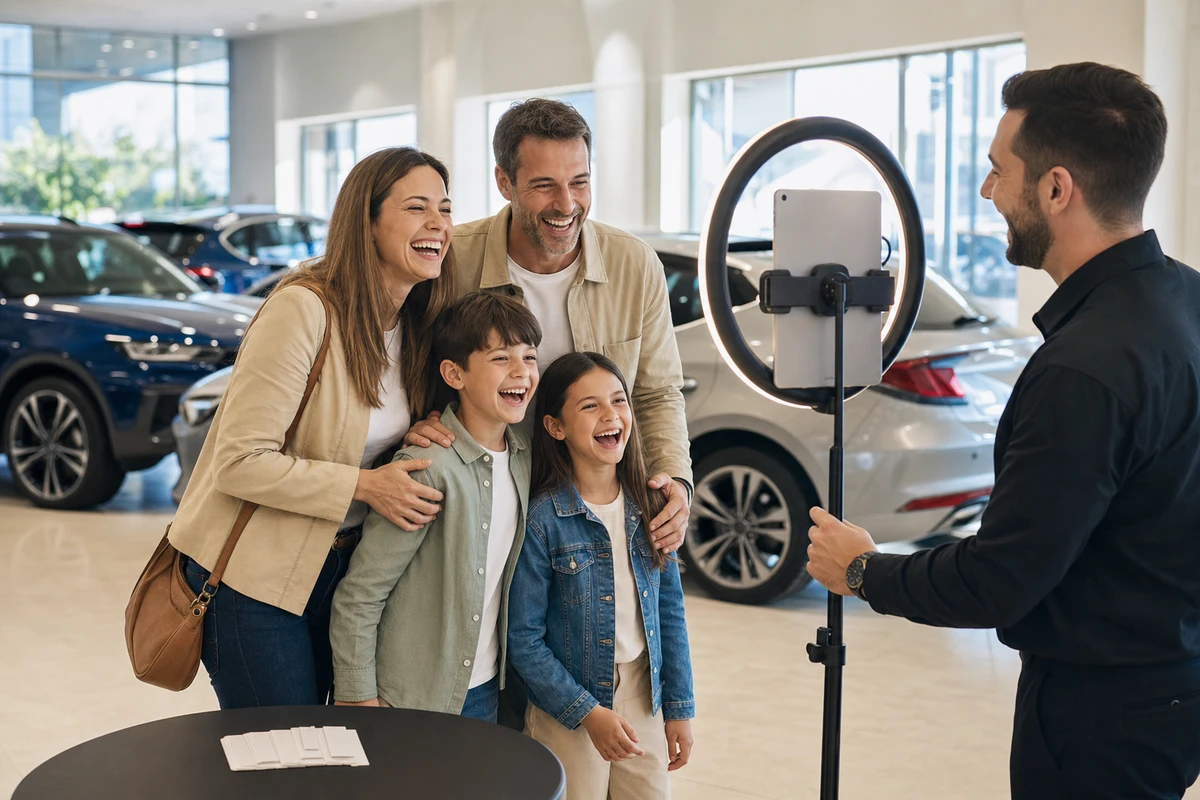
Whatever the hook, the dealership should decide in advance what counts as a captured contact and track one number: the capture rate, contacts collected divided by estimated attendees. No industry body publishes a benchmark for this, so the store sets its own target before the event and measures against it. A capture rate in the single digits means the event ran as entertainment. Naming the metric is what turns a vague feeling about turnout into a number a manager can actually work on.
The 14-Day Follow-Up Is Where Cars Get Sold
A salesperson arrives Monday morning to a spreadsheet of 100 names collected at Saturday’s event. By itself, that spreadsheet is worth nothing. The event does not sell the car; the follow-up does, and most event-attributed sales close one to three weeks later, once the buyer has compared options and arranged financing.
The DealerRefresh moderator who runs a dealership event-tracking platform
The DealerRefresh moderator who runs a dealership event-tracking platform drew the distinction that separates a working follow-up from a list-burning one. “We are not sending ‘Hey there come to a tent sale’ messages,” he wrote. “These are personalized, ‘are you interested in having a conversation about’ type conversational messages.” A generic blast to a fresh event list trains those contacts to ignore the dealership. A specific, conversational message about a trade, a lease-end, or a particular model earns a reply.
A sequence an operator can run with a CRM and a business development center:
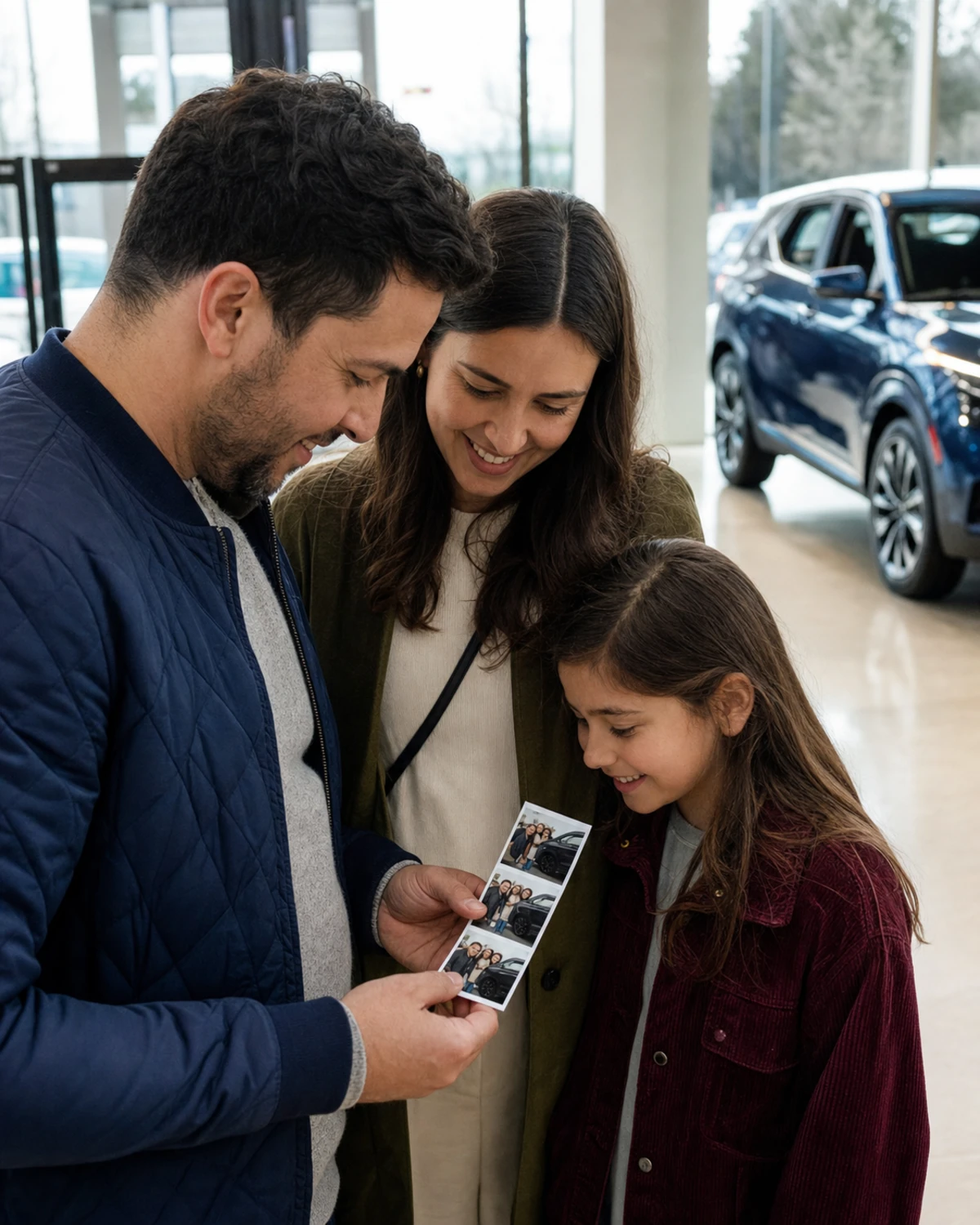
- Day 0 to 1: a same-day or next-day thank-you that includes the visitor’s event photo or prize result, plus one soft, specific offer.
- Day 2 to 5: a BDC call aimed at booking a test drive or an appraisal, not closing a sale. The same moderator warned this “sometimes takes a scary number of attempts,” so the call list needs real staffing, not one round of voicemails.
- Day 6 to 14: a segmented email or SMS touch. In-market visitors get inventory and pricing; owners and browsers get service offers and a longer, lighter nurture.
Segmentation is not optional, because an event list is always mixed. In-market buyers, current owners, and families who came only for the bounce house sit on the same spreadsheet, and treating them as one audience is the most common reason follow-up fails. The channel matters too. Klaviyo’s 2026 email benchmarks, drawn from more than 183,000 brands, show automated, triggered email flows earning a 5.45% click rate against 1.83% for one-time campaign blasts, roughly three times the engagement. SMS runs higher still, though it requires explicit opt-in consent collected at the event and about two weeks of setup lead time. None of this is reachable without the capture moment. No contact, no follow-up, no attributed sale.
The Event ROI Math: A Worked Example
Take a single-rooftop dealership running a weekend family day. No trade source publishes a reliable cost figure for an event like this, so treat the budget as an illustrative band: food trucks, entertainment, promotion, and staff hours land somewhere around $5,000 to $8,000. Call it $6,000 for the example.
Suppose promotion brings 250 people onto the lot. With a photo station and a raffle doing the capturing, assume a 40% capture rate. That is a target the store set in advance, not a benchmark, and it produces 100 named contacts.
Run the 14-day follow-up against those 100 contacts. Assume the sequence converts 15% of the list into a booked test drive or appraisal: 15 test drives. The test-drive-to-sale rate is the softest number in the chain, because no automotive research firm publishes a clean one, so treat it as an illustrative assumption of 20%, to be calibrated against the store’s own CRM history. That yields 3 sold units.
Now the gross
Now the gross. The Presidio-NCM dealership benchmark, reported by Digital Dealer in February 2025, put average front-end gross at $2,247 per new vehicle and $1,399 per used vehicle for full-year 2024. Haig Partners’ Q4 2024 Haig Report added $2,501 in average F&I gross per vehicle retailed, which puts combined gross on a new unit near $4,748. Blend the 3 sold units conservatively at $3,200 each, well below the new-vehicle combined figure, and the event is attributed $9,600 in gross profit against a $6,000 cost. The event paid for itself, with most of the 100 captured contacts still in the CRM as pipeline for the following months.
Then collapse one variable
Then collapse one variable. Run the identical event (250 people, the same $6,000) with no capture mechanism. Capture rate: zero. Contacts: zero. Booked test drives from the list: zero. Attributed sales: unknowable. Some of those 250 people may buy later, but the dealership cannot prove it, cannot attribute it, and cannot decide whether the event is worth repeating. Same crowd, same spend, and the entire measurable return falls to nothing. The variable that decided the outcome was never the size of the crowd. It was whether anyone wrote the crowd down.
Five Mistakes That Quietly Kill Dealership Events
Each of these is quiet by nature. The event still happens, the crowd still comes, and the damage only surfaces in the numbers weeks later.
- No capture mechanism. The event runs, the crowd comes, and not one contact is recorded. Fix: build the capture into something the visitor wants to do, and do it before the event is promoted, not after.
- Too little lead time. Promotion needs room to work. Operators on DealerRefresh put the floor at roughly two weeks for an SMS or registered-number push, and less than that leaves the event under-attended. Fix: lock the date and start promotion at least two to three weeks out.
- The same event every month. A “shot in the arm” stops working once the audience has seen it four times running. Fix: rotate event types across the four categories above so the calendar stays unpredictable.
- A consumer-fun skew with no in-market hook. A bounce house and a taco truck with no test-drive path, no appraisal table, and no inventory in clear view draws a crowd that has no reason to buy. Fix: every event needs a visible road to a test drive or an appraisal.
- No attribution tagging. Contacts get collected but are never labeled with the event that sourced them, so the dealership cannot compare one event against another. Fix: tag every captured contact in the CRM with the event name, and review which events produced sold units before booking the next one.
A showroom event is the top of a funnel, and foot traffic is only its first step. The dealerships that win with events are not the ones with the biggest bounce house. They are the ones that can name, three weeks later, exactly how many cars the bounce house sold.
Sources
- Cox Automotive (2024). “Car Buyer Journey Study Shows Satisfaction With Car Buying Improved in 2023 After Two Years of Declines.” https://www.prnewswire.com/news-releases/cox-automotives-car-buyer-journey-study-shows-satisfaction-with-car-buying-improved-in-2023-after-two-years-of-declines-302049541.html
- CDK Global (2024). “The Test Drive’s Enduring Value for Dealers.” https://www.cdkglobal.com/insights/test-drives-enduring-value-dealers
- Digital Dealer (2025). “Auto Dealership Profitability Improved at End of 2024” (citing the Presidio-NCM Average Dealership Performance Benchmark, Q4 2024). https://digitaldealer.com/news/auto-dealership-profitability-improved-at-end-of-2024/163923/
- Haig Partners (2025). “F&I Gross Profit Growth Resumes in Q4 2024” (Q4 2024 Haig Report). https://haigpartners.com/resources/fi-gross-profit-growth-resumes-in-q4-2024-haig-partners-insight/
- Postalytics / Association of National Advertisers (2024). “Direct Mail Statistics” (citing the ANA Response Rate Report 2023). https://www.postalytics.com/direct-mail-statistics/
- Safe Kids Worldwide (2026). “Get a Car Seat Checked.” https://cert.safekids.org/get-car-seat-checked
- Klaviyo (2026). “Email Marketing Benchmarks: Open, Click, and Conversion Rates.” https://www.klaviyo.com/products/email-marketing/benchmarks
- DealerRefresh Forum (2023). “Sales Events” discussion thread. https://forum.dealerrefresh.com/threads/sales-events.9931/