
A guest wraps up at a photo station at a Saturday brand activation, taps the screen to send the picture, and types in a phone number. A few feet over, another guest at a second station types an email address instead. Both have their photo within seconds, and both walk off happy. Nothing about the experience separates the two choices.
From the operator’s side, those two guests just entered two different marketing pipelines. SMS and email are not two versions of the same convenience. They carry different per-message costs, sit under different consent laws, and produce contact lists worth sharply different amounts three weeks after the event ends. The photo booth SMS vs email question gets framed as a guest-preference setting. It is a decision about which marketing list the business is building.
Every modern booth can text and email, so the operator’s real question is which channel to set as the default. The honest answer turns on one thing: what the business plans to do with the contact afterward. What follows compares the four things that actually decide it (cost, delivery mechanics, consent, and list value) and corrects two ideas most photo booth coverage leaves standing.
What “Delivery” Actually Means: A Link, Not an Attachment
Watch the send screen on a busy booth and it looks like the photo itself flies to the guest’s phone. It usually does not. Most photo booth texts are short messages containing a link to a hosted web gallery, not an image embedded in the message. Email behaves the same way: a branded message with a thumbnail and a link, rarely a raw file attachment.
The reason is cost and physics. Sending an actual image by text means using MMS, and MMS is the expensive cousin of SMS. Twilio’s published US rates (2026) put outbound SMS at $0.0083 a message and outbound MMS at $0.0220, a premium of more than 160 percent before carrier surcharges, which also run higher for MMS. MMS carries a size cap of roughly 1.2 MB per carrier, while a photo booth image commonly runs 3 to 6 MB, so the file would not pass intact. MMS also renders inconsistently across Android handsets and older carrier stacks, and the GIFs, boomerangs, and short video clips that booths now produce cannot travel by MMS at all. A link sidesteps every one of those problems. It is small, it renders identically everywhere, and it can point at any media type.

This removes a false difference from the comparison. Both channels typically deliver a link, and the photo lands in the same kind of web gallery either way. The choice is not the payload. It is the envelope: how the link reaches the phone, what each send costs, and what permission the contact carries.
How Each Channel Reaches the Phone
A photo booth operator arrives at an event, runs the first few sessions, and the texts never land. The booth screen shows no error, and the photos appear to send. The operator finds out something is wrong only when the client asks where the pictures went. That failure has a specific cause, and it is why SMS is the more fragile of the two channels.
When a booth sends a text, its software hands
When a booth sends a text, its software hands the guest’s number to an SMS gateway. Twilio is the common one, though some booth software now ships its own internal SMS server. In the United States, that traffic has to route through a registered A2P 10DLC campaign (application-to-person messaging over a standard 10-digit number) or carriers filter it. Photo Booth Solutions, a booth-software vendor, described the 2023 rollout in plain operator terms: unregistered numbers were blocked from sending after August 31, 2023, and many booth owners discovered their SMS had simply stopped. The dangerous part is that the filtering is silent. A carrier drops the message and returns a filtering code rather than a hard delivery failure, so nothing surfaces on the booth screen.
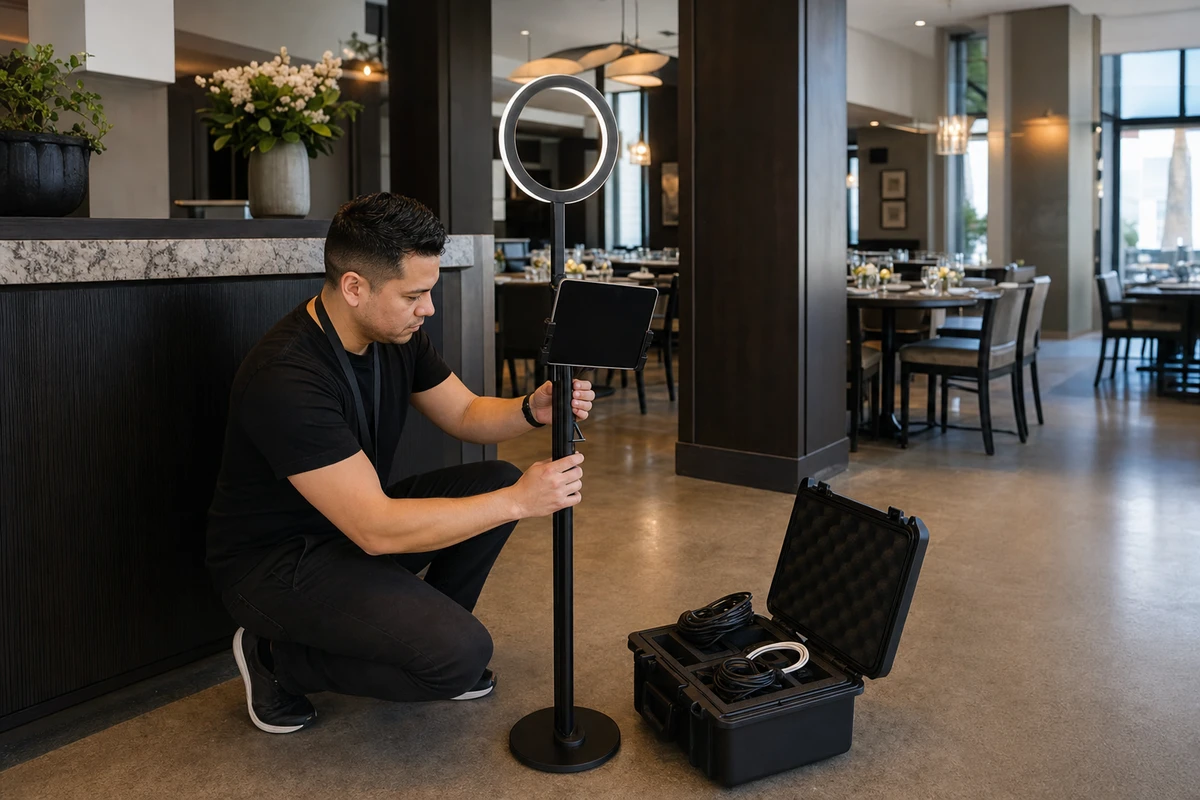
Email reaches the phone by a different road. Booth software sends through SMTP or an email service provider; Breeze Software’s setup, for one, runs on a standard SMTP account. There is no carrier registration. Whether the message lands depends on sender reputation, authentication records (SPF, DKIM, DMARC), and the receiving provider’s spam filtering.
Those two paths produce starkly different odds of being seen. SMS open rates sit between 90 and 98 percent across industry reporting (Omnisend and SimpleTexting, 2025), and Omnisend reports 90 percent of texts are read within three minutes. Email is sorted before it is read. EmailToolTester’s 2026 deliverability study, which tested placement across 15 providers, found an average inbox-placement rate of 83.1 percent (86.8 percent for US senders), so roughly one in six marketing emails never reaches any inbox.
Of the emails that do arrive, a meaningful share land in Promotions or Social tabs that recipients open less often. Reported open rates flatter email further, because Apple’s Mail Privacy Protection pre-loads tracking pixels whether or not a message is opened, and Apple Mail now drives 45.5 percent of all email opens (Litmus, 2026). Campaign Monitor’s pre-Privacy-Protection benchmarks (2021) are a cleaner read: a 21.5 percent average open rate, and 18.5 percent for food and beverage. The short version: SMS gets seen, email gets sorted.
The Cost Model: Free to Send vs. Metered
An operator pricing a recurring activation contract eventually line-items delivery, and on paper SMS and email look nothing alike. SMS is metered: every text costs money. Email, at event volumes, is effectively free.
The Twilio rate (2026) for an outbound text is $0.0083, plus a per-message carrier surcharge that brings the blended all-in cost to roughly $0.011 to $0.013. On top of that, A2P 10DLC registration carries one-time setup fees for the brand and the campaign plus a small recurring monthly campaign fee; total setup typically runs under $50, with a modest monthly charge after. A booth-software internal SMS server is the other route: Photo Booth Solutions built one priced at $0.02 a message with no registration required, trading a higher per-send rate for zero compliance overhead. Email is usually bundled into booth software through an SMTP account or covered by a free email-service tier, so the marginal cost of a send is close to nothing.
Event Delivery Cost
Put real numbers on it. Take a four-hour brand activation running 50 sessions an hour, 200 photos delivered. Sent by Twilio SMS, that is about $2.40 in per-message cost; add amortized 10DLC setup and the monthly fee, and an operator running ten events a year lands near $5 to $6 for a session-heavy event. Sent through an internal SMS server at $0.02, it is a flat $4.00. Sent by email, it is close to $0.
The gap between the highest-cost and lowest-cost path is a few dollars per event. For an activation that bills the client somewhere between $500 and $2,000, a $2-to-$6 delivery cost is not worth optimizing. This is the first place competitor coverage misleads operators, by treating “SMS costs money, email is free” as the headline. The send fee is real, but it is the smallest variable in the decision. The expensive part of SMS is not the message. It is the consent.
Consent and Compliance: TCPA vs CAN-SPAM
A guest hands over a phone number to get a photo. Six weeks later the operator’s client wants to text that guest a return-visit offer. That second message, not the photo, is where the legal exposure lives, and most operators never notice the line they just crossed.
The consent workflow
US text marketing falls under the Telephone Consumer Protection Act. Sending a promotional text to a mobile number requires prior express written consent, a specific and disclosed opt-in rather than a pre-checked box. The statute sets damages at $500 per violating message, rising to as much as $1,500 if a court finds the violation willful. The FCC has continued to tighten how that consent must be collected, and parts of the rule have been in flux, so the safe course is for an operator to check current FCC guidance or qualified counsel before a campaign launches.
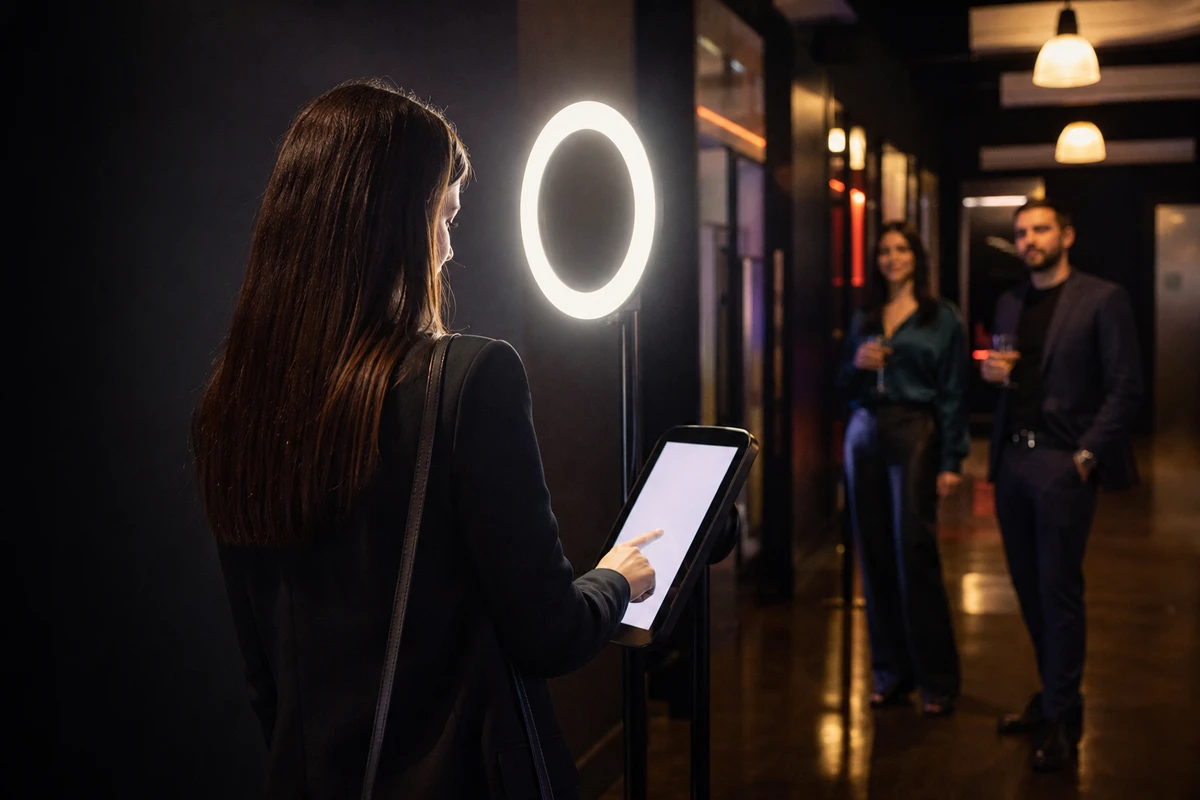
Commercial email sits under a lighter US regime, the CAN-SPAM Act. The FTC’s compliance guide sets the requirements: honest header and subject lines, clear identification that the message is an ad, a valid physical postal address, a working opt-out, opt-outs honored promptly, and responsibility for anything a contractor sends on the business’s behalf. Penalties are steep on paper (up to $53,088 per email), but the structural difference matters more than the number. CAN-SPAM does not require prior opt-in before the first commercial email, while the TCPA requires written consent before the first marketing text. That asymmetry is the whole compliance story. It is also US-specific: under the UK and EU rules the ICO enforces, both texts and emails need explicit prior consent, so email’s lighter path does not exist there.
Here is the second idea most photo booth coverage gets wrong. A guest who enters a phone number or email to receive a photo has given transactional consent, permission to be sent that photo. That is not permission to be marketed to. For SMS the gap is a hard legal line: the TCPA requires separate written consent before any promotional text, so a delivery number is not a marketing number. For US email it is softer, because CAN-SPAM lets a business send a first commercial message without prior opt-in, but emailing someone who never agreed to hear from the brand invites spam complaints that drag down email deliverability. Either way, a list the business can actually use needs a separate, explicit marketing opt-in captured at the booth, a distinct checkbox that discloses what the guest will receive and from whom. Without it, every line in the contact export is a delivery address, not a subscriber.
Which Contact Is Worth More Later
Three weeks after an activation, the operator’s client wants to send a follow-up offer to everyone who visited the booth. The contact export answers a question that was settled back at the event: the guests who chose text are an SMS list, the guests who chose email are an email list, and the two behave nothing alike.
Consent
An SMS list is smaller. The written-consent bar adds friction at the booth, so fewer guests opt in. But the contacts that do opt in are reachable. Texts are read at 90-percent-plus rates within minutes, and SMS click-through runs well above email (Omnisend, 2025). That makes the SMS list the right tool for anything time-sensitive: a return-visit offer, a flash event, a reminder.
An email list is larger and costs less to build. Lower opt-in friction and the lighter CAN-SPAM regime mean more guests join, and the list drops cleanly into a CRM or email platform for segmentation, automation, and longer follow-up sequences. Open rates are lower, but volume and tooling compensate.
The number worth optimizing is not the send fee. It is the delivered-and-opened reach of the list the business keeps. Run it through one event. Two hundred photos delivered, with a clearly offered marketing opt-in converting 30 to 50 percent of that base, leaves a marketing list of 60 to 100 contacts. Broadcast to 100 SMS subscribers and roughly 90 will read the message, most within minutes. Broadcast to 100 email subscribers and about 83 reach an inbox, of which perhaps 18 to 35 percent open, so 15 to 30 genuine reads. The SMS contact costs more to acquire and more to operate, and it is read several times more often.
Vendor figures on opt-in volume should be read with care. MDRN Photo Booth Company, a brand-activation operator, reports its booths average 80 opt-in emails an hour, or 320 over a four-hour event. That is a vendor-published number, not an independent benchmark, and real rates swing with booth placement, audience, and whatever incentive the operator offers. The directional point holds either way: SMS buys reach, email buys scale.

Choosing a Default, and the Hidden Cost of “Offer Both”
At the end of a session the booth shows the guest a delivery screen. Many operators fill it with every option, text and email and a QR code, and let the guest pick. At a busy activation that instinct costs more than it looks.
Channel Choice Costs Taps
Every extra option on the send screen adds a tap, and taps add up when a line is forming behind the booth. The larger cost is invisible: offering both channels splits the contacts across two lists, so the business ends with a half-size SMS list and a half-size email list, neither big enough to do much. Lists work on critical mass. Two thin ones are worth less than a single solid one.
The better setup is one primary channel chosen for the goal, a second channel as a quiet fallback, and a QR code or gallery link as the offline-resilient backstop for venues with unreliable Wi-Fi. Booth software can also cover that gap at the capture layer: Simple Booth’s HALO app holds sessions captured offline in an upload queue and sends them once the connection returns, so a venue dead spot delays a delivery instead of losing the contact. Default to SMS when the follow-up is time-sensitive and promotional (return-visit offers, reminders) and event volume is modest enough to justify the A2P registration. Default to email when the contact feeds a CRM or a nurture sequence, when the activation runs across many events and has to scale, or when the audience is largely in the UK or EU, where the consent rules are identical for both channels and email’s US advantage disappears.

The delivery channel is not a guest-convenience setting. It is the front door to a marketing list, and it should be chosen for the contact the business actually wants to own, with consent collected and disclosed properly at the booth, and the second channel kept as a fallback rather than a co-equal.
Sources
- Twilio (2026). “SMS Pricing in the United States.” https://www.twilio.com/en-us/sms/pricing/us
- Photo Booth Solutions (2023). “Using SMS for Your Booth: Register for A2P 10DLC Now.” https://www.photoboothsolutions.com/blog/2023/06/using-sms-for-your-booth-register-for-a2p-10dlc-now
- Photo Booth Solutions (2023). “An Alternative to Twilio for SMS.” https://www.photoboothsolutions.com/blog/2023/10/alternative-to-twilio-for-sms
- Breeze Software. “Sending Emails: The Basics.” https://www.breezesoftware.com/lessons/sending-emails-1-basics
- Omnisend (2025). “SMS Marketing Statistics.” https://www.omnisend.com/blog/sms-marketing-statistics/
- SimpleTexting (2025). “SMS Marketing Statistics.” https://simpletexting.com/blog/sms-marketing-statistics/
- EmailToolTester (2026). “Email Deliverability Statistics.” https://www.emailtooltester.com/en/blog/email-deliverability-statistics/
- Litmus (2026). “Email Client Market Share.” https://www.litmus.com/email-client-market-share
- Campaign Monitor (2021). “Email Marketing Benchmarks.” https://www.campaignmonitor.com/resources/guides/email-marketing-benchmarks/
- Federal Trade Commission. “CAN-SPAM Act: A Compliance Guide for Business.” https://www.ftc.gov/business-guidance/resources/can-spam-act-compliance-guide-business
- Legal Information Institute, Cornell Law School. “47 U.S.C. § 227, Restrictions on use of telephone equipment.” https://www.law.cornell.edu/uscode/text/47/227
- Information Commissioner’s Office. “Electronic and Telephone Marketing, Guide to PECR.” https://ico.org.uk/for-organisations/direct-marketing-and-privacy-and-electronic-communications/guide-to-pecr/electronic-and-telephone-marketing/
- MDRN Photo Booth Company. “How Experiential Marketing Agencies Use Photo Booths to Prove ROI.” https://mdrnphotoboothcompany.com/blog/how-experiential-marketing-agencies-use-photo-booths-to-prove-roi