
A guest at a company’s customer-appreciation evening walks past the photo station near the bar, steps in with two colleagues, picks a frame, and taps the screen. A few seconds later a text arrives with a link. The guest opens it on the walk to the parking lot, saves the photo, and taps a button to share it. The page that link opens, with the company logo across the top, the event name, and a tidy custom URL, is the microsite.
Most operators put their planning energy into how that page looks: logo placement, frame design, a URL that matches the campaign. That work is real, and it is the least important part. A branded photo booth microsite is the web destination a guest lands on to view, customize, and share a photo they just took, and its branding is only the surface. The value sits underneath, in what the page does after the event ends. That is the part most operators never instrument.
What a branded photo booth microsite actually is, and what it is not
Ask three event vendors what a microsite is and the answers will not line up. The word gets used for the screen a guest taps at the booth, for the page a delivery link opens, and for the gallery where every photo from the night collects. A marketer comparing two booth providers cannot make a clean decision when one feature word covers three separate things.
It helps to name them apart. The first is the capture microsite: the branded screen or web page a guest uses at or near the booth to pick an effect and take the shot. That is an experience layer, and it ends when the photo is taken. The second is the delivery message, the email or text that hands the guest a link to their photo. That is a trigger, not a destination. The third is the post-event microsite, often called the gallery: the persistent, branded URL where the photos live and where the guest lands after tapping the delivery link. That third thing is the data layer, and it is what this article means by a branded photo booth microsite.
The common misconception is that a microsite is a skin on a photo album, a nicer-looking place to download pictures. In ordinary marketing usage, a microsite is a small, campaign-bounded website with its own URL and a single goal. That definition is the useful one here. A branded microsite has more in common with a campaign landing page than with a photo gallery. As one operator put it, the print strip is no longer the final product, it is the starting point. Treat the microsite like a landing page, and every decision that follows gets easier.
The post-event window is the moment that matters
The booth itself is a bad place to ask a guest for anything. Picture the scene at a busy activation: three people crowded into the frame, an attendant hovering, a short line forming behind them, music loud enough that nobody wants to read a screen. A guest in that moment will tap through whatever it takes to get the photo and step away. They will not weigh a marketing opt-in or think carefully about a survey question.
The delivery moment is the opposite
The delivery moment is the opposite. The guest opens the message alone, by choice, because they want one specific thing: their photo. For a few seconds the brand has their undivided, self-directed attention on a screen they chose to open.
That difference explains why a delivery message outperforms a promotional one, and it matters more than any single open-rate statistic. Mailchimp’s December 2023 benchmark put the all-industry average email open rate at 35.63 percent, and even that figure is inflated, because Apple’s Mail Privacy Protection pre-loads tracking pixels whether or not a person actually opens the message. A photo delivery message is different in kind. The guest handed over a contact detail minutes earlier for the express purpose of receiving it. It is transactional and wanted, not promotional and unsolicited, and that is why it gets opened.
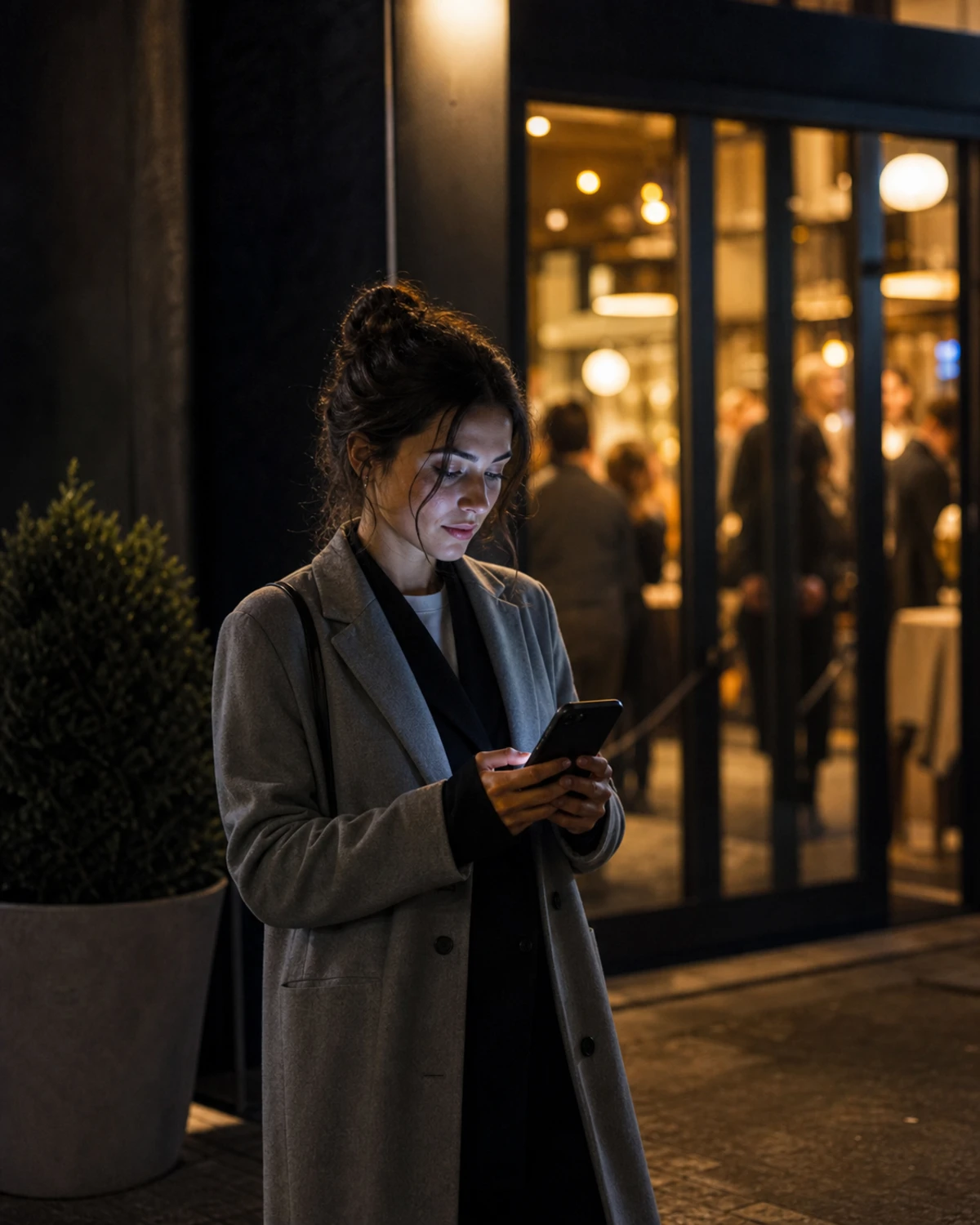
The consequence is practical
The consequence is practical. The realistic place to land a marketing opt-in, a survey answer, or a single call to action is the microsite visit, not the booth screen. Intent also fades. No reliable public timeline exists for how fast post-event attention drops, but the direction is not in question: a microsite opened the night of the event reaches a guest who still remembers the conversation, and the same page opened a week later reaches someone who has moved on. The window is real and short, which is the argument for setting up automation before the event rather than chasing follow-up by hand after it.
The three kinds of data a microsite captures, and where most of it leaks
An operator finishes a corporate event, exports a file, and feels productive. The useful question is what is actually in that file, and what is not.
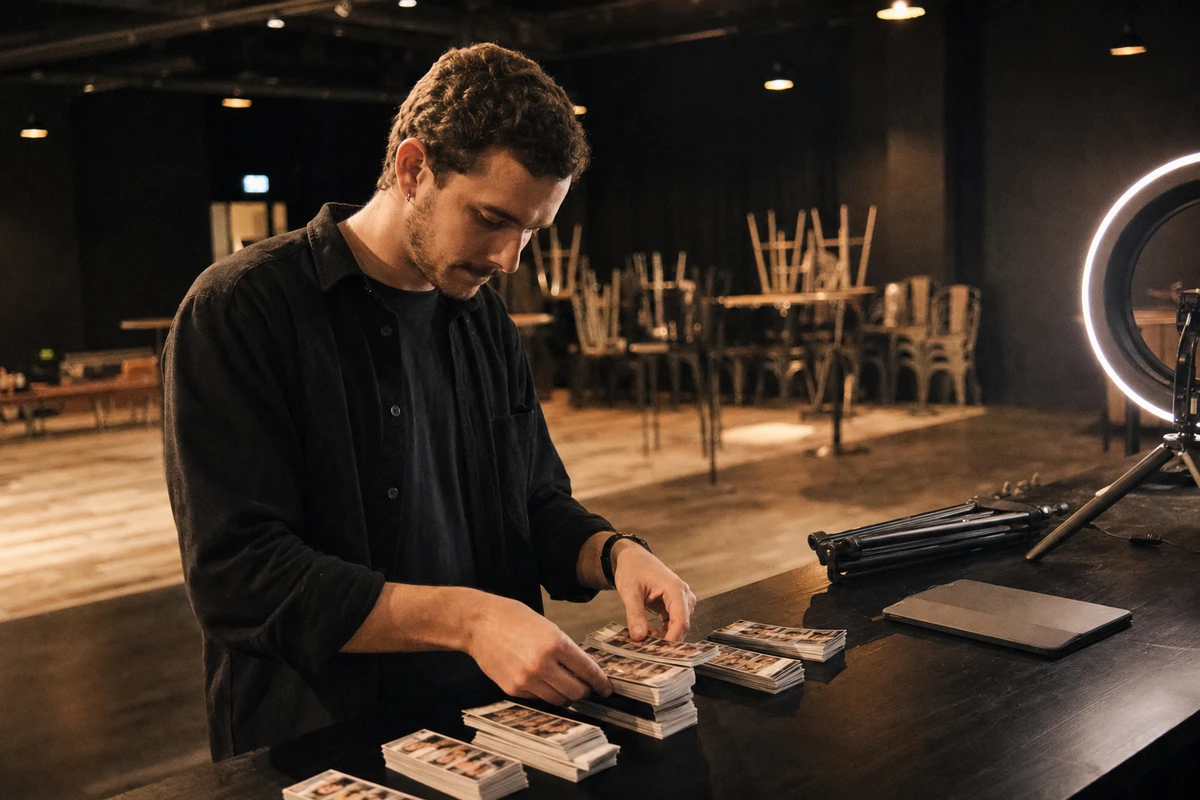
The consent workflow
A microsite can capture three kinds of data, and they are not equal. The first is contact data: an email address or phone number. It is the obvious layer, and it is also the one most exposed to fake entries. The second is zero-party data, a term Forrester analyst Fatemeh Khatibloo coined and Salesforce defines plainly as information a customer intentionally and proactively shares with a brand. On a microsite, that is the answer to an optional question: a job role, an interest, what brought the guest to the event. It is worth more than a raw email because the guest chose to declare it. The third is behavioral data: page visits, gallery revisits, shares, QR scans, clicks on an embedded CTA. It is the layer almost nobody collects.
Here is the failure mode, stated plainly. Most operators capture the first layer, ignore the second and third, and then strand even the first in a spreadsheet that never reaches a CRM or an email platform. The evidence is the market itself: an entire sub-category of photo booth CRM software exists specifically because event lead data reliably fails to reach a follow-up workflow. Operators capture; they do not connect.
The fake-email leak deserves its own mention. When a microsite gates the photo behind a hard form, “enter your email to unlock your picture,” guests type throwaway addresses to get past it. The list looks full and performs like dead weight. Delivering the photo first and then inviting an opt-in on the microsite produces a smaller list, but one made of guests who actually want to hear from the brand again. That is an honest tradeoff, and the smaller list is the better asset.
Consent is the part that makes the rest usable. Under GDPR Article 7, consent must be freely given and cannot be bundled as a condition of service, so “tick this box to receive your photo” is not valid consent for events in EU jurisdiction. Article 7 also requires a controller to demonstrate that consent was given, which is the practical reason to log the opt-in state and a timestamp with each contact record. (The legitimate-interest basis is sometimes used for follow-up instead, but it requires a documented balancing test and is regularly contested, so it is no blanket substitute.) For enterprise activations run in California, the CCPA sets a parallel expectation: collect transparently, and use the data only for what the guest agreed to. A logged, explicit opt-in is not legal box-ticking. It is what makes the contact list safe to send to.
Instrumenting the microsite: turning content into measurable data
Two operators run the same activation on the same night. Afterward, one tells the brand the event drove 14 visits to a product page and three demo requests. The other reports how many photos were downloaded. Same booth, same guests, same photos. The difference is entirely instrumentation, and most of it is configuration the second operator simply never did.
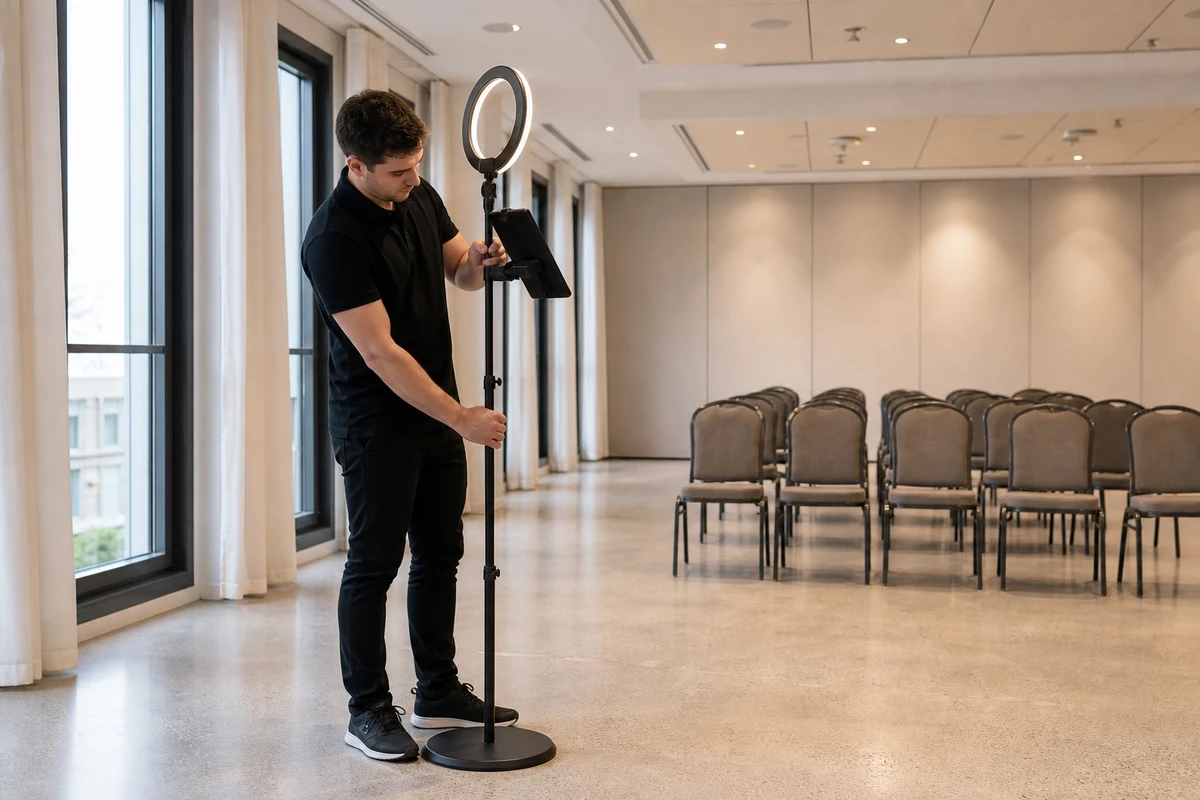
Four things turn a microsite from a download page into a measurable asset.
UTM tagging
The first is UTM tagging. UTMs are short labels appended to a link’s URL, and Google’s campaign URL documentation defines the ones that matter: utm_source (where the traffic came from), utm_medium (the channel, such as email or QR), and utm_campaign (the specific event). Without them, a guest who taps from the microsite to the brand’s website lands in analytics as “direct” traffic, or gets credited to the social platform they shared from, and the event’s contribution becomes invisible. Tag every outbound link in the delivery message and the microsite, and the brand can trace exactly how many visitors a given event sent onward.
Microsite analytics
The second is microsite analytics: total visits, unique visitors, the share who returned more than once, dwell time, share events by network, QR scans counted by physical placement, and click-through on the CTA. None of this needs special software beyond standard web analytics configured on the gallery URL. The gap is not capability. It is that most operators never set it up.
Consent Logging
The third is consent logging, the opt-in state and timestamp stored with each record, as covered above.
The Data Handoff
The fourth is the data handoff, and it is the step that closes the leak. Contact data has to leave the photo booth platform and enter the system where follow-up actually happens, by one of three routes: a native CRM or email-platform integration, an automation connector, or a structured export on a defined schedule. Booth platforms differ in how much of that route they build in. Simple Booth’s HALO app, for example, exports its captured contacts and can sync them straight to Mailchimp rather than leaving them parked in a download file; the entertainment chain Treetop Golf used that lead capture to build 150,000 unique email addresses across its venues. The common failure is that this route is never decided before the event. The data sits in an export queue, intent decays, and by the time someone retrieves the file it is worth less than it was the morning after.
A short pre-event checklist covers it: a branded, persistent URL; an opt-in invited after delivery, with consent logged; UTMs on every outbound link; one CTA matched to the event’s goal; analytics configured on the microsite URL; and the export or sync path decided before the doors open, not after.
What one event’s microsite is actually worth
After the event, the brand asks the operator a blunt question: what was that worth? A photo download count does not answer it. Arithmetic does. Take a 300-guest corporate open house with a staffed photo station near the entrance.

Of those 300 guests, suppose 220 use the booth and reach the microsite. Staffed booths at a contained event tend to see high participation, open-format events much less, so 220 is an illustrative figure rather than a benchmark. Of those 220, suppose 55 percent accept a marketing opt-in on the microsite. A branded delivery page with a clear reason to opt in tends to land somewhere in a wide band; an unbranded link that expires lands near zero. Take 55 percent as the working number, and the event produces about 121 opted-in, consented contacts.
Put a value on a contact
Put a value on a contact. At an estimated $50 per qualified contact, a figure that swings hard depending on what the brand sells, those 121 contacts represent roughly $6,050 in pipeline value from a single evening. The arithmetic is deliberately in the open: 300 guests, 220 to the microsite, 55 percent opt-in, $50 a contact. The three inputs that change from one event to the next are participation, opt-in rate, and contact value, and an operator who knows their own events can set all three honestly.
Then there is the part competitors leave out. Opt-in contacts are not the whole return. Gallery revisits and shares keep the brand in front of people for weeks after the night ends, and an instrumented microsite also builds a retargeting audience the brand can reach through paid channels later.
Run the same 300-guest event the other way. An unbranded gallery, no opt-in, no analytics, and a delivery link that expires in 48 hours returns a handful of social shares and zero owned data. Same booth, same guests, same photos. The only difference is whether anyone instrumented the microsite.
Designing for the return visit, not just the first click
Most microsites get treated as a one-time download link. A guest taps it, saves the photo, closes the tab, and the URL becomes dead weight by the next morning. The more valuable design treats the microsite as a place a guest has a reason to come back to.
Four design choices make that happen
Four design choices make that happen. The first is a persistent URL that does not expire a few days after the event, so later revisits and shares keep landing on a live page instead of an error message. The second is a reason to come back: a gallery that fills in over the following days, an event recap, or a follow-up offer that was not there on the first visit. The third is a single soft CTA matched to the event’s goal rather than a wall of links, because a page that asks for one thing tends to get that one thing. The fourth is a retargeting pixel, which lets the brand reach the microsite audience again through paid channels, including the visitors who never opted in.
Each of these widens the short window described earlier. A microsite built only for the first click slams that window shut the moment the guest saves their photo. A microsite built for return visits keeps it open for weeks.
Branding makes the microsite look like the brand’s. Instrumentation and return-visit design are what make it worth something. The operators who get real value from the post-event window are not the ones with the cleanest logo placement. They are the ones who decided, before the doors opened, exactly where every email address, opt-in, and survey answer would be the morning after. Sources
- Salesforce (n.d.). “What Is Zero-Party Data, and Why Does It Matter?” https://www.salesforce.com/resources/articles/what-is-zero-party-data/
- Mailchimp (2023). “Email Marketing Benchmarks and Statistics by Industry.” https://mailchimp.com/resources/email-marketing-benchmarks/
- gdpr.eu (n.d.). “Article 6: Lawfulness of processing.” https://gdpr.eu/article-6-how-to-process-personal-data-legally/
- gdpr.eu (n.d.). “Article 7: Conditions for consent.” https://gdpr.eu/article-7-how-to-get-consent-to-collect-personal-data/
- California Office of the Attorney General (n.d.). “California Consumer Privacy Act (CCPA).” https://oag.ca.gov/privacy/ccpa
- Google (n.d.). “Collect campaign data with custom URLs — Analytics Help.” https://support.google.com/analytics/answer/1033863
- Studio Z Photo Booths (2025). “Top 10 Photo Booth Trends: What’s Next in Event Experiences.” https://www.studiozphotobooths.com/blog/top-10-photo-booth-trends-for-2025-whats-next-in-event-experiences