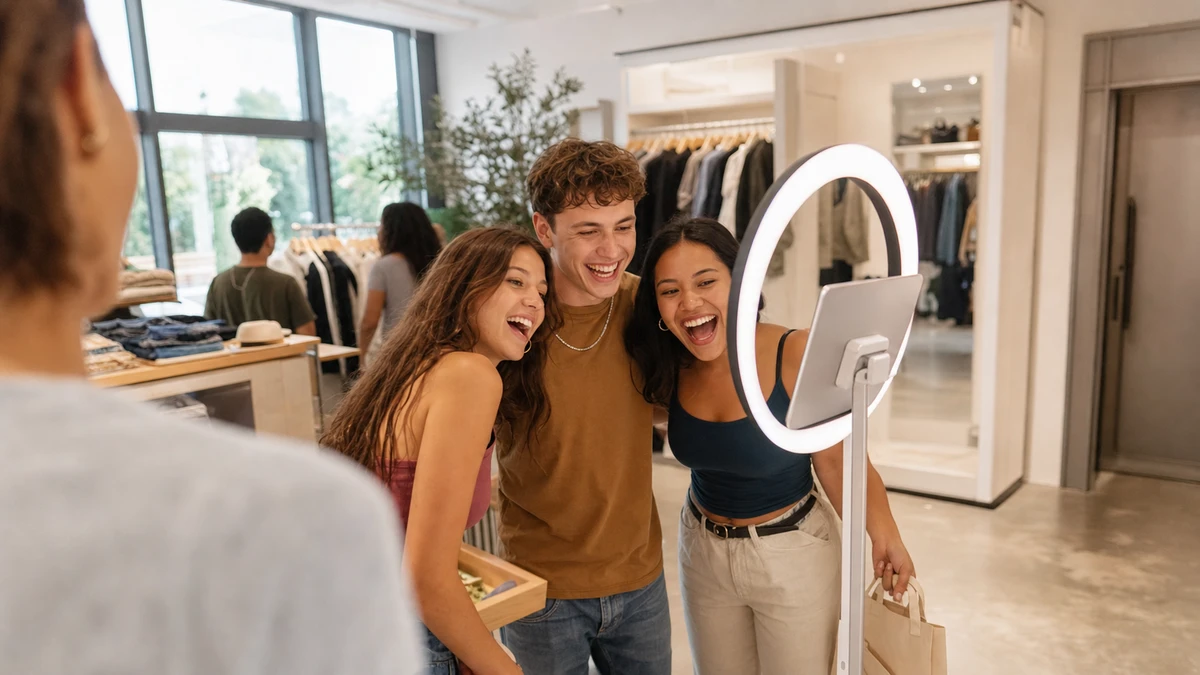
A shopper finishes a loop of a clothing store on a Saturday afternoon, stops at a branded photo station near the fitting rooms, snaps a picture with two friends, and reaches the screen that asks where to send it. That screen is the photo booth consent form. It is where an in-store visitor agrees to be photographed and, in a separate step, agrees to hear from the brand again.
Most operators build that screen as a single legal checkbox, copied from a model release a booth vendor handed them. That is the mistake worth correcting. In a retail activation the consent form is not a liability shield bolted onto the fun. It is the opt-in step of a data-capture funnel. How its checkboxes are split decides two things at once: whether the consent holds up legally, and how much of the day’s foot traffic becomes a contact list the brand can actually use. The visitor’s working model is a fair trade, their photo for their data. That trade only holds up if the form is built to carry it.
The Three Documents Operators Call a “Consent Form”
Search “photo booth consent form” and the results contradict each other. Some are lease agreements. Some are booking forms. One or two are model releases. The phrase covers three different documents, and operators routinely deploy the wrong one.

The rental or booking contract
The first is the rental or booking contract. It sits between the booth vendor and the event host or brand client, and it covers fees, delivery dates, setup, and who is liable if the equipment fails. It says nothing about the visitor.
The model or likeness release
The second is the model or likeness release. It grants the operator the right to use a person’s image in the operator’s own marketing, and it protects against a publicity-rights or likeness claim. It is about the photo, not about contacting the person.
The guest marketing consent, the opt-in
The third is the guest marketing consent, the opt-in. This is the visitor agreeing that the brand running the activation may email or text them later. It is the only one of the three that builds a marketable list.
This article is about the third document, and about how it should also carry the second. The confusion is expensive in a specific way. An operator who deploys only a model release has legal cover to use the photo but no valid basis to email anyone who used the booth. An operator who collects email addresses under a booking contract has a spreadsheet of data with no consent attached to it at all. The in-store form has to do two jobs, and one checkbox cannot do both.
Why a Single “I Agree” Checkbox Fails Twice
The default booth setup is one box: “I agree to the terms and to receive my photo.” It feels efficient because nearly everyone ticks it. It fails on two fronts at the same time.
Consent
It fails legally. Under the UK GDPR, valid consent must be specific and unbundled, and consent for one purpose cannot ride along on agreement to something else (Information Commissioner’s Office). The same regime adds a conditionality rule: a service cannot be made dependent on consent the service does not need. Delivering a photo does not require marketing permission, so a brand cannot withhold the picture unless the visitor accepts marketing. A box that is pre-ticked or on by default is not consent either. GDPR Recital 32 is blunt about it: “Silence, pre-ticked boxes or inactivity should not therefore constitute consent” (GDPR.eu).
Marketing texts are a separate regime again. In the United States, the Telephone Consumer Protection Act requires prior express written consent before a promotional text goes out (Cornell Law, 47 CFR 64.1200), and “I agreed to get my photo” does not cover a promotional SMS.
It also fails commercially, which operators feel faster than they feel the legal exposure. A wall-of-text legal checkbox at the booth depresses participation. Corporate counsel have noted that asking everyone to sign a release is “often a turn-off for people” (Association of Corporate Counsel, 2023). Worse, the bundled box produces a list nobody can use. There is no way to tell who wanted marketing from who only wanted a photo, so the entire export is tainted. A 95% tick rate on an invalid, undifferentiated box is worth less than a 45% tick rate on a clean, specific one. The first number is vanity. The second is a list.
The Four Consents a Photo Booth Form Should Separate
A visitor steps out of the booth, photo taken, and reaches the screen. In the few seconds before tapping “send,” they are potentially agreeing to four separate things, and most forms ask about only one of them. Each has a different legal basis, a different appropriate default, and a different party it protects.
The consent workflow
| Consent | What it covers | Correct default | Why it stands alone |
|---|---|---|---|
| Likeness capture | Being photographed or recorded at all, plus the reuse rights a model release grants | Often covered by clear signage plus the act of stepping in | It is about the image, not about contact; signage can carry it, an opt-in cannot |
| Public / gallery display | The photo appearing on a live gallery wall, a microsite, or the brand’s social channels | Separate, opt-in, unchecked | Display is a different use than delivery; a visitor may want the photo without wanting it on a screen |
| Email marketing | The brand emailing the visitor after the activation | Separate checkbox, unchecked, names the sender | A different purpose under GDPR, so specificity requires its own tick |
| SMS marketing | Promotional texts from the brand | Separate checkbox, unchecked, with its own express-consent language | The TCPA standard is stricter than email’s; an SMS consent cannot be inherited |
One thing is deliberately not on that list: delivering the photo itself. When a visitor types an email address or phone number to receive the picture, that is implied consent for delivery, and for delivery only. Sending the photo once is the service. It must never be conditioned on any of the four consents above, and it must never be quietly treated as permission for the marketing that follows.
This is where standard templates fall down. Common photo consent forms grant likeness and display permission but leave the email and SMS opt-in fields out entirely (Pembee, 2023). An operator who adopts one of those templates has covered the photo and captured nothing marketable. The separation is the whole point: when every contact in the export carries its own flags for likeness, gallery, email, and SMS, the brand can market precisely to what each person agreed to. Bundle the four and the export becomes a single undifferentiated blob no email or SMS platform can safely send to.
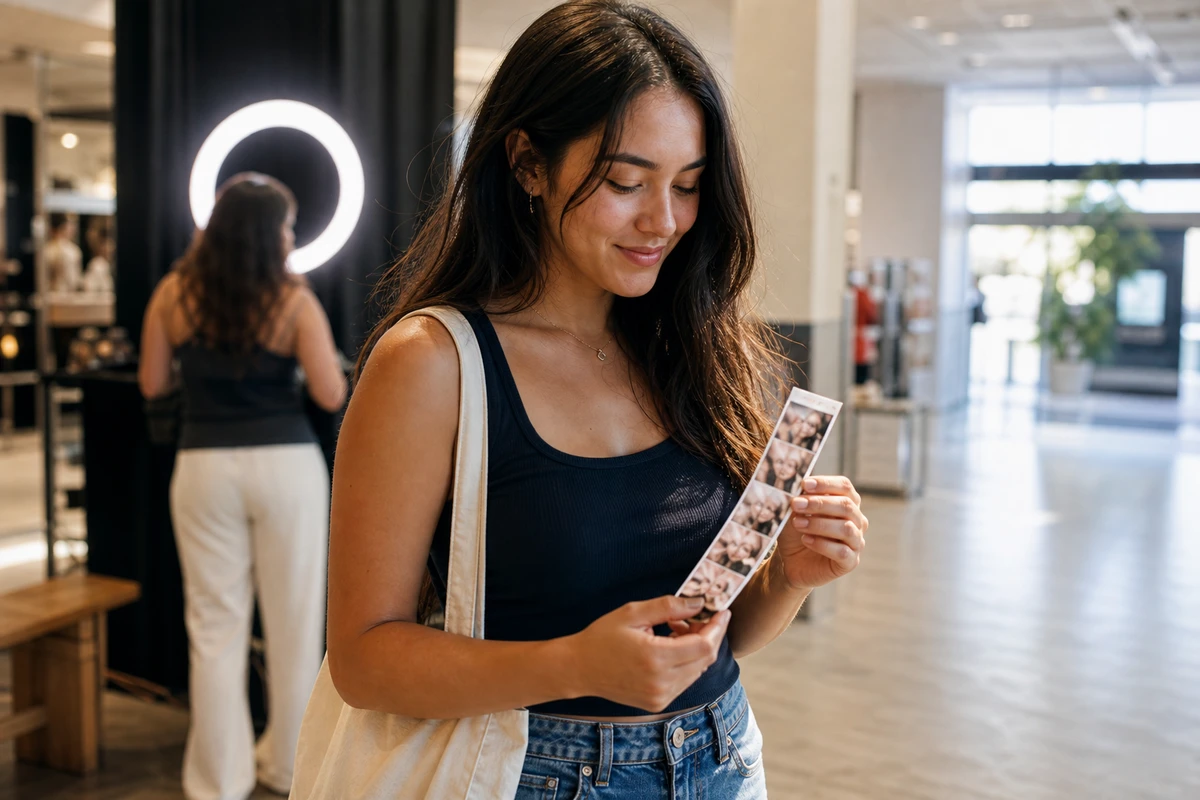
What Makes Each Consent Legally Valid
Picture a booth whose form already has a clean, separate, unchecked email box. The copy beside it reads, “Tick to hear from us and selected partners about future offers.” The box is separated correctly. The consent is still invalid, because it is not specific: a visitor cannot consent to a roster of unnamed partners. A separate checkbox is necessary. It is not sufficient. Each box still has to clear five tests.
Freely given
Photo delivery cannot be conditional on a marketing opt-in. If the visitor has to accept email to get the picture, the consent is void.
Specific
The box must name the brand that will make contact and what it will send. “Our partners” or “selected third parties” fails. A visitor consenting to hear from one named brand has not consented to a list broker.
Informed
At the point of the tick, in plain language, the form states who is collecting the data, why, and how to withdraw. A buried privacy policy is not informing anyone.
Unambiguous
Consent is an affirmative act. Boxes start unchecked. No pre-ticked boxes, no opt-out logic, no “by continuing you agree.”
Documented
Store the timestamp, the exact wording shown on screen, and what was ticked. That record is what survives an audit, a brand-client request, or a complaint. A consent the operator cannot reproduce is, in practice, a consent that did not happen.
The jurisdictions differ, and a multi-location operator should know the spread without drowning in it. GDPR across the EU and UK is the strict opt-in baseline. The US TCPA governs marketing texts specifically, with statutory damages of $500 per message and up to $1,500 for a willful violation (Cornell Law, 47 USC 227). California’s CCPA and CPRA lean opt-out for email but still require a clear notice at the point of collection (California Attorney General). Build the form to the strictest of these once, separate, unchecked, specific, and logged, and the same screen clears every market a brand operates in. (One development to track: a stricter FCC “one-to-one consent” rule was set to take effect but was vacated by the Eleventh Circuit in January 2025, in Insurance Marketing Coalition Ltd. v. FCC. The underlying requirement for prior express written consent before a marketing text stands unchanged.)
The Opt-In Math: What Form Design Earns or Costs
The form design fork has a number attached to it. Take a regional apparel brand running a two-day photo activation in one flagship store. Roughly 800 people pass through the activation zone over the weekend. Seventy percent of them take a photo, which is 560 photo sessions. From here the two form designs split.
Bundled vs Granular Consent
The bundled form posts a tick rate near 95%, so about 530 “agreements” land in the export. Headline number: 530. Legally usable marketing contacts: zero. The brand cannot demonstrate who gave specific, unbundled consent to email or text, because the box never asked separately. An email platform that ingests that list and sends to it invites spam complaints, and the complaints degrade deliverability for every future send.
The granular form puts a separate, unchecked email box on the delivery screen. Suppose 45% of the 560 sessions tick it. That figure is the operator’s to measure, not a published benchmark, but it stands in here: 45% gives 252 documented, segmentable, legally usable email contacts, each carrying proof of what it agreed to. Two columns, then. Bundled: 530 agreements, 0 usable contacts. Granular: 252 agreements, 252 usable contacts. “Everyone agreed” turns out to be the worse outcome.
The value of those 252 depends on the brand’s own email program. Industry email returns commonly land between $10 and $36 per dollar spent (Litmus, 2025), and segmented sends to a list like this outperform bulk ones, with roughly 30% more opens than unsegmented campaigns (HubSpot, 2025). The separate SMS box, captured cleanly, opens a second channel whose reported marketing returns run even higher than email’s (Omnisend, 2025). The lever is small and cheap: a few words of clearer micro-copy and better placement can lift the opt-in rate, and across a chain of locations even a modest lift compounds into the difference between an activation that pays for itself and one that does not.
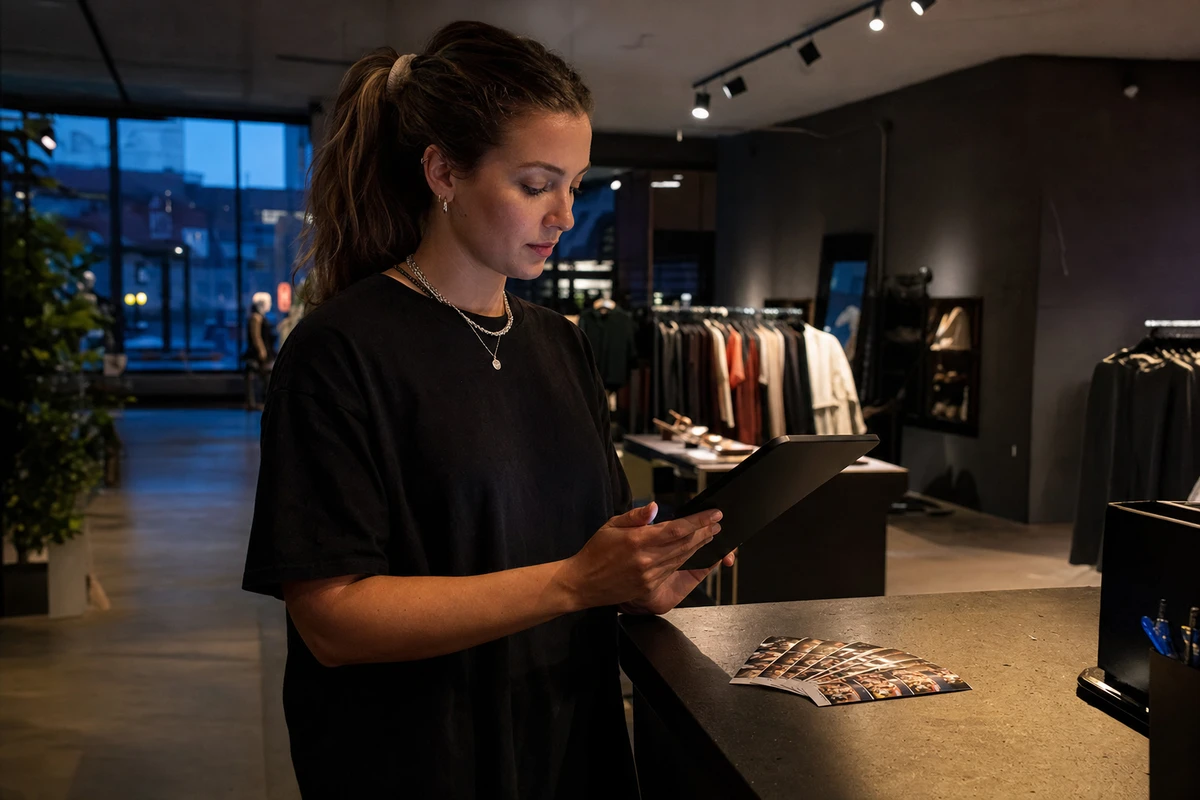
Designing the Form So It Reads Like Photo Delivery, Not a Contract
A visitor who has just taken a fun photo and a visitor faced with a legal form are in two different moods. The form’s job is to keep the first mood and still collect valid consent.
Placement does most of that work
Placement does most of that work. Collect consent on the delivery screen, after the photo is taken, when the visitor already wants something. The screen asks “Where should we send this?” with the marketing checkboxes sitting quietly beneath the email and phone fields. That reads as a delivery step. A contract presented before the photo, as a gate to entry, reads as a legal hurdle and thins out participation.
Micro-copy carries the rest
Micro-copy carries the rest. One short line per consent, in plain language, naming the brand, with a visible way to withdraw. No wall of legal text on the screen itself; link out to the full policy for the few who want it. The on-screen experience should be readable in the five seconds a visitor will actually give it.
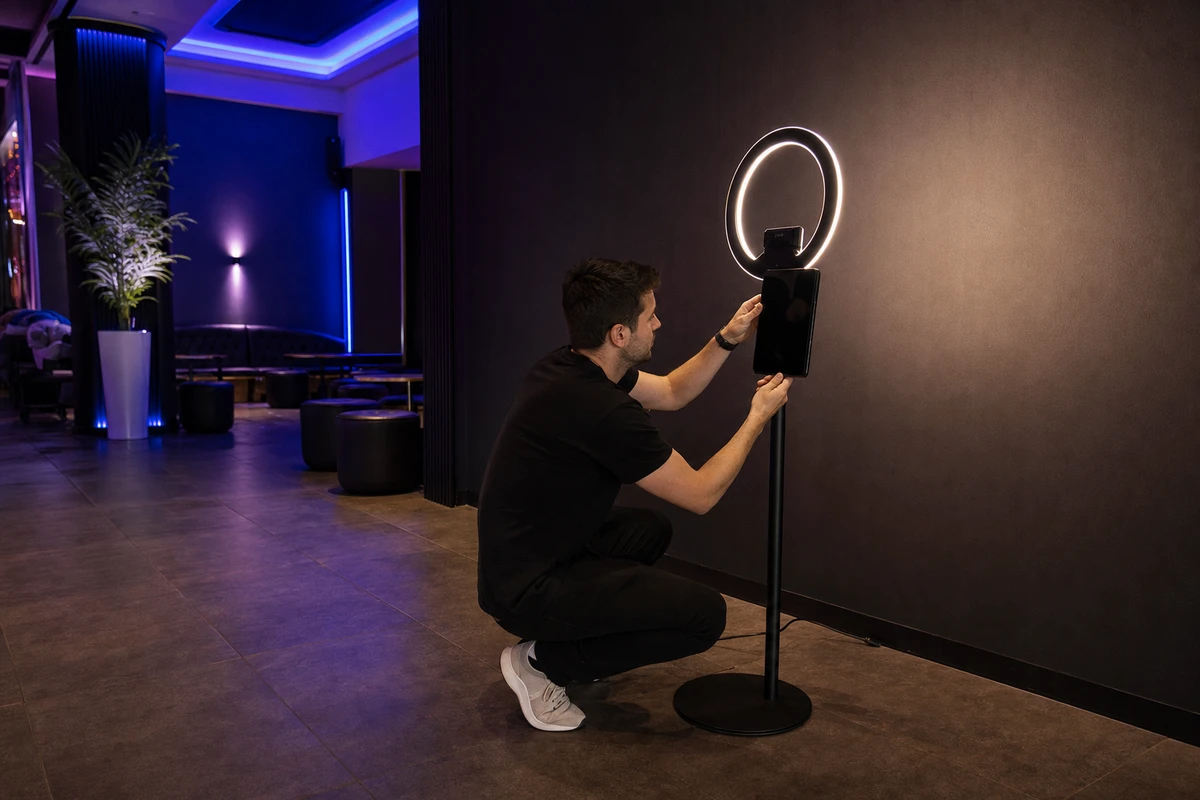
Digital beats paper here for a structural reason. A tablet checkbox timestamps and logs itself, and the export segments cleanly. A paper release sits in a box and segments into nothing. For a franchise or multi-site brand, one configured form deployed identically across every location means one defensible standard and one clean combined export, rather than each location improvising its own wording. Simple Booth’s HALO app is one tablet version of this setup: an operator configures the data fields and checkboxes once and exports each session as a segmentable row. The entertainment chain Treetop Golf used that lead capture across its locations to build a list of 150,000 unique email addresses.
One trap deserves a direct warning
One trap deserves a direct warning. When a brand client or venue hands the operator an attendee list, that is not consent the operator collected, and it cannot be marketed to as if it were. The contact gave an address to the organizer, not to the operator’s brand. Consent has to travel with the data: every export row should carry per-contact flags for likeness, gallery, email, and SMS, so whoever owns the list next knows exactly what each person agreed to, and can prove it.
Frequently Asked Questions
Is posting a visible “photography in progress” sign enough, or do I still need a consent form? A sign can cover likeness capture in many settings, and corporate counsel treat conspicuous signage as a reasonable approach for the act of photographing people (Association of Corporate Counsel, 2023). But a sign is never consent to market to someone. You still need an explicit, separate opt-in before you email or text a visitor.
Is a single “I agree to the terms” checkbox enough? No. Bundled consent is not valid for marketing under GDPR, because each purpose needs its own specific tick. Marketing SMS needs its own consent again under the TCPA. A bundled box also destroys your ability to segment, so you cannot tell who actually wants to hear from you.
Can I require a marketing opt-in before I send someone their photo? No. Consent must be freely given, and a service cannot be made conditional on consent it does not need. Delivering the photo is the service; marketing is separate. If you withhold the photo until someone accepts marketing, the consent is void.
Does texting someone their photo count as marketing consent? No. Sending the photo once is implied consent for that delivery only. A promotional text after it needs separate prior express written consent under the TCPA, where statutory damages run from $500 to $1,500 per message.
How long should I keep consent records, and what should they contain? Keep them for as long as you market to the contact, in line with your retention policy. A usable record includes the timestamp, the exact consent wording shown on screen, and which boxes were ticked. If you cannot reproduce it, you cannot rely on it.
I only operate in the US. Does GDPR apply to me? GDPR applies if you handle the data of EU or UK visitors, regardless of where you are based. Even if you do not, US rules still bind you: the TCPA governs marketing texts nationwide, and state laws such as California’s CCPA and CPRA require a clear notice at collection. Build to the strictest standard and you cover all of them.
Sources
- Information Commissioner’s Office (n.d.). “What is valid consent?” UK GDPR Guidance and Resources. https://ico.org.uk/for-organisations/uk-gdpr-guidance-and-resources/lawful-basis/consent/what-is-valid-consent/
- GDPR.eu (n.d.). “GDPR Consent Requirements.” https://gdpr.eu/gdpr-consent-requirements/
- Association of Corporate Counsel (2023). “Consent for Photos Taken at a Company Event.” https://www.acc.com/resource-library/consent-photos-taken-company-event
- Cornell Law School, Legal Information Institute (n.d.). “47 U.S. Code § 227 — Restrictions on use of telephone equipment.” https://www.law.cornell.edu/uscode/text/47/227
- Cornell Law School, Legal Information Institute (n.d.). “47 CFR § 64.1200 — Delivery restrictions.” https://www.law.cornell.edu/cfr/text/47/64.1200
- California Office of the Attorney General (2024). “California Consumer Privacy Act (CCPA).” https://oag.ca.gov/privacy/ccpa
- Pembee (2023). “Photo Consent Forms for Activity Organizers.” https://pembee.app/blog/photo-consent-forms-for-activity-organizers
- Litmus (2025). “Email Marketing ROI: What Every Marketer Needs to Know.” https://www.litmus.com/blog/email-marketing-roi
- HubSpot (2025). “Marketing Statistics.” https://www.hubspot.com/marketing-statistics
- Omnisend (2025). “SMS Marketing Statistics.” https://www.omnisend.com/blog/sms-marketing-statistics/
- United States Court of Appeals for the Eleventh Circuit (2025). Insurance Marketing Coalition Ltd. v. FCC, No. 24-10277, January 2025.