
Search “best photo booth for casinos” and the results describe a party. Green-felt backdrops, oversized foam dice, playing-card frames, plastic top hats: décor for a host throwing a casino-themed night in a rented hall. For anyone who actually runs a gaming floor, that is the wrong guide. Picture instead a Friday night at a regional property. The headliner’s set ends, and two thousand people file out of the showroom, past a quiet stretch of carpet, back toward the floor. Or the players club desk at 7 p.m., three guests deep, each waiting for a host to key a driver’s license into the system. Those are the moments a casino photo booth is built for, and they have nothing to do with foam dice.
The best photo booth for a casino is the one that captures opt-in guest contact information and routes it into the players club and casino CRM, holds up on a floor that never closes, sits in a zone where photography is actually permitted, and outputs branded content a guest will share within the minute. Those are four tests, and the rest of this guide applies them. It is written for the people who own that decision: casino marketing directors, VPs of player development, casino hosts, and events and entertainment managers.
What “Best Photo Booth for Casinos” Actually Means
The keyword collides two unrelated searches. One is a host planning a casino-themed party who needs a backdrop and props for a single night. The other is a casino property equipping its building for the year. This guide is for the second reader, and the distinction is not pedantic. It changes every line item in the decision.
A party host measures a photo booth in fun. A casino measures it in something narrower and countable: carded players, enrolled loyalty members, reactivated lapsed accounts, and theoretical win per visit. A booth that produces delighted guests but no contact records has, by a casino’s own accounting, produced almost nothing. That is the standard this article holds every recommendation to. A casino photo activation is a player-data tool first and an entertainment amenity second. Reverse that order and the spend is hard to defend at budget time.
The vertical is broader than the Las Vegas Strip. Commercial casinos, tribal gaming properties, racinos, card rooms, slot parlors, and casino resorts all face the same question, and they share one fact the party-rental market does not: a casino is a fixed property, not a touring event. The booth lives in one building, in front of a known guest population, every day. That single fact reshapes the rent-versus-buy math, the staffing model, and the integration requirements covered further down. A touring event operator optimizes for a booth that packs into a van. A casino optimizes for a booth that becomes part of the building.
Why Casinos Are Adding Photo Experiences Now
The financial backdrop explains the timing. U.S. commercial gaming reached $78.7 billion in gross gaming revenue in 2025, up 9.2 percent over 2024, the sixth consecutive annual record, according to data compiled by the American Gaming Association and reported by CDC Gaming in March 2026. National revenue set a record. Las Vegas, the industry’s largest single market, shows the trend in sharper relief: visitation there fell 7.3 percent in the first half of 2025 year over year, with monthly declines steepening past 11 percent by June, per Las Vegas Convention and Visitors Authority data, even as gaming revenue held up.
Fewer people walked in, and the ones who did spent more. National foot-traffic figures are not broken out the same way, so the careful reading is the narrow one: where the data exists, revenue is rising faster than the crowd. That points an operator in one direction. The guest already inside the building is worth more attention than ever.
The strategy follows the money
The strategy follows the money. At the Global Gaming Expo in October 2025, a panel on non-gaming amenities described the shift in plain terms. Oliver Lovat, who moderated, summarized it: “Las Vegas used to be the gaming capital of the world. Now it’s the entertainment capital.” Angie Dobney of RiseUp Revenue Optimization was more specific about budgets: “Non-gaming amenities are not just an add-on anymore. They’re part of the business model.” John Raczka of Autumn Light Entertainment put the competitive logic bluntly: “Casino and hotel products are commoditized. It’s the non-gaming side that sets you apart and attracts the audience you want.” Those quotes come from CDC Gaming’s coverage of the session.
A photo booth is one of the lower-cost ways to act on that strategy, because it does three jobs in one footprint. It captures opt-in contact data. It manufactures branded content the guest then distributes for free. And it gives a host or a player-development representative a natural reason to start a conversation with a guest who has not yet been carded. On the panel, Dobney pointed to data-driven personalization as the way to “win the next generation,” and that is the function a booth quietly performs: it turns a fun moment into a named record the marketing team can act on.
The age problem makes the case sharper. Operators have watched slot play lose its pull with younger guests: sitting at a machine and pushing a button does not draw them the way it drew their parents. An interactive, photographable moment is a low-stakes way to get a non-carded younger visitor to engage with the property and identify themselves without committing to a session at a slot. A residency or a marquee act can do that too, but at far higher cost and with real risk. As the same panel noted, big entertainment bets can reshape a property’s profile and can also miss. An evergreen photo activation is the safer line on the budget.
Where a Photo Booth Can Actually Go in a Casino
The instinct is to put the booth where the energy is, on the gaming floor itself, in the noise and the lights. That instinct is almost always wrong, for three concrete reasons. Guests expect a degree of anonymity while they gamble, and the floor’s “no cameras” culture exists to protect that expectation. Minors are barred from the gaming floor, so a booth meant to serve the whole property cannot live where part of the audience cannot stand. And the floor is a surveillance-sensitive, regulated environment where cameras near tables, the cage, and dealer positions are universally restricted.
That said, the most common objection to a casino
That said, the most common objection to a casino photo activation rests on a myth. Photographing inside a casino has never been illegal. As Casino.org’s Corey Levitan documented in 2025, camera bans are self-imposed operator policy, not statute. Scott Roeben, a longtime Las Vegas writer for the site’s Vital Vegas vertical, named the cost of being heavy-handed about it: “Rigid rules alienate customers and create unnecessary tension.” Enforcement is uneven in practice. Forum threads on Wizard of Vegas show patrons genuinely unsure what is allowed, with policy varying from property to property and even from one floor supervisor to the next. That ambiguity is itself the argument for a sanctioned booth. It gives the guest one unmistakable “yes” zone and gives the operator full control of the content that results.
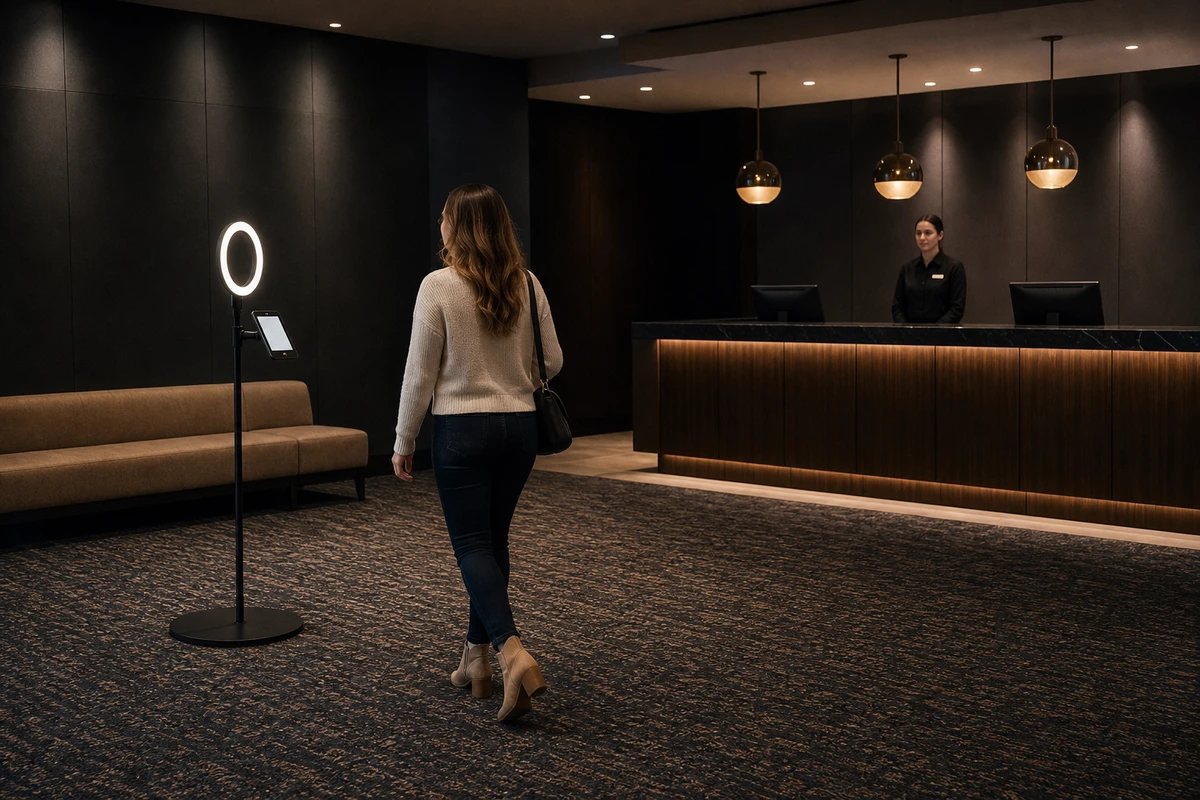
Once the floor is off the table, the placement options are clear, and each zone does a different job:
- Players club and rewards enrollment area. The highest-value placement. A booth here turns into the enrollment hook, capturing contact data within steps of where carding happens.
- Lobby and main entrance. Captures arriving guests and sets the property brand before a guest reaches the floor.
- Event center, showroom, and concert venue. The highest-volume capture on entertainment nights, when a large crowd passes through a narrow window.
- VIP lounge and high-limit host areas. Low volume, high lifetime value. Premium capture aimed at the property’s most valuable guests.
- Restaurants, bars, and the food court. All-ages dwell zones with no gaming-floor restriction, where guests already wait and linger.
- Promotional and seasonal activation spaces. Tied to giveaways, tournaments, and holidays, where the booth amplifies a campaign already running.
Placement off the floor carries a second advantage worth naming. A booth in a non-gaming zone works for the entire property audience, including resort guests, diners, and concertgoers who never gamble at all. The floor-bound activation reaches only the people on the floor. The off-floor activation reaches everyone in the building. Keep the imagery and copy sober throughout. A regulated gaming property has every reason to keep an activation clear of anything that glamorizes problem play, and a sanctioned non-gaming zone keeps the experience well away from the floor, where responsible-gaming sensitivity is highest.
The Non-Negotiable: Data Capture That Feeds the Players Club and CRM
Here is the single line that separates a casino-grade booth from a party booth: where the data goes. A party-rental booth’s photos live on a guest’s phone, and the operator never sees them again. An operator-grade booth treats the moment it sends the photo, by email or text, as a consent-based capture that hands a clean contact record to the casino’s own systems. Same guest, same smile, entirely different outcome for the marketing team.
This is not a new idea for casinos. The industry invented data-driven loyalty marketing. In 2003, Gary Loveman, then running Harrah’s Entertainment and later CEO of Caesars, described in Harvard Business Review’s “Diamonds in the Data Mine” how the company built its competitive moat not on towers and fountains but on tracking individual player behavior across properties and acting on it with personalized offers. The Total Rewards program, now Caesars Rewards, became the template the rest of the industry copied, and peer-reviewed research on the gambling industry documents how large and central casino loyalty programs have grown in the decades since (Wohl, 2017). The HBR article predates the smartphone. The point for an operator today is that a casino loyalty database is table stakes, not innovation. The only modern question is how to feed it at more touchpoints with higher-quality contact information.

The friction in the existing front door is what the booth fixes. Industry marketers note that loyalty databases accumulate stale records over time: contact details gathered from self-reported information at a kiosk degrade as guests change phone numbers and email addresses. And the standard enrollment path asks something of the guest. At a property like Foxwoods Resort Casino, a guest signs up at an enrollment kiosk or the rewards booth, a deliberate detour from whatever brought the guest in. Full carding adds an identity check, another step the guest has to choose to make. A photo booth captures a fresh, opt-in email or phone number at the moment a guest is happiest, standing in front of a backdrop, rather than at the back of a line at a desk.
“Feeds the CRM” has to mean three specific things, and an operator should treat all three as buying questions, not afterthoughts. First, consent language at the point of capture, so the guest opts in to marketing contact on the record. Second, a clean handoff into the casino’s email platform, SMS tool, CRM, or customer data platform, not a static spreadsheet someone exports by hand. Third, ownership: the contact list belongs to the casino, not to the booth vendor’s cloud.
One distinction keeps the activation honest
One distinction keeps the activation honest. Capturing a marketing contact is not the same as formal players-club enrollment. Regulated card issuance requires identity verification and follows rules a photo booth does not satisfy. The booth seeds a marketing-contact record and warms the guest toward enrollment. It is the friendly front door, not the registry. An operator who understands that difference deploys the booth correctly and never oversells what it does.
How to Choose: The Casino Photo Booth Evaluation Checklist
Generic booth advice does not survive contact with a regulated gaming floor. Each criterion below is stated with the reason it matters in a casino specifically.
1. Data ownership and integration
- Data ownership and integration. The first question is whether the booth exports captured contacts into the property’s email platform, SMS tool, or CRM, and whether the casino owns that list outright. A booth that locks contact records inside a vendor portal fails the only test that finally matters. If the answer is no, the evaluation ends there.
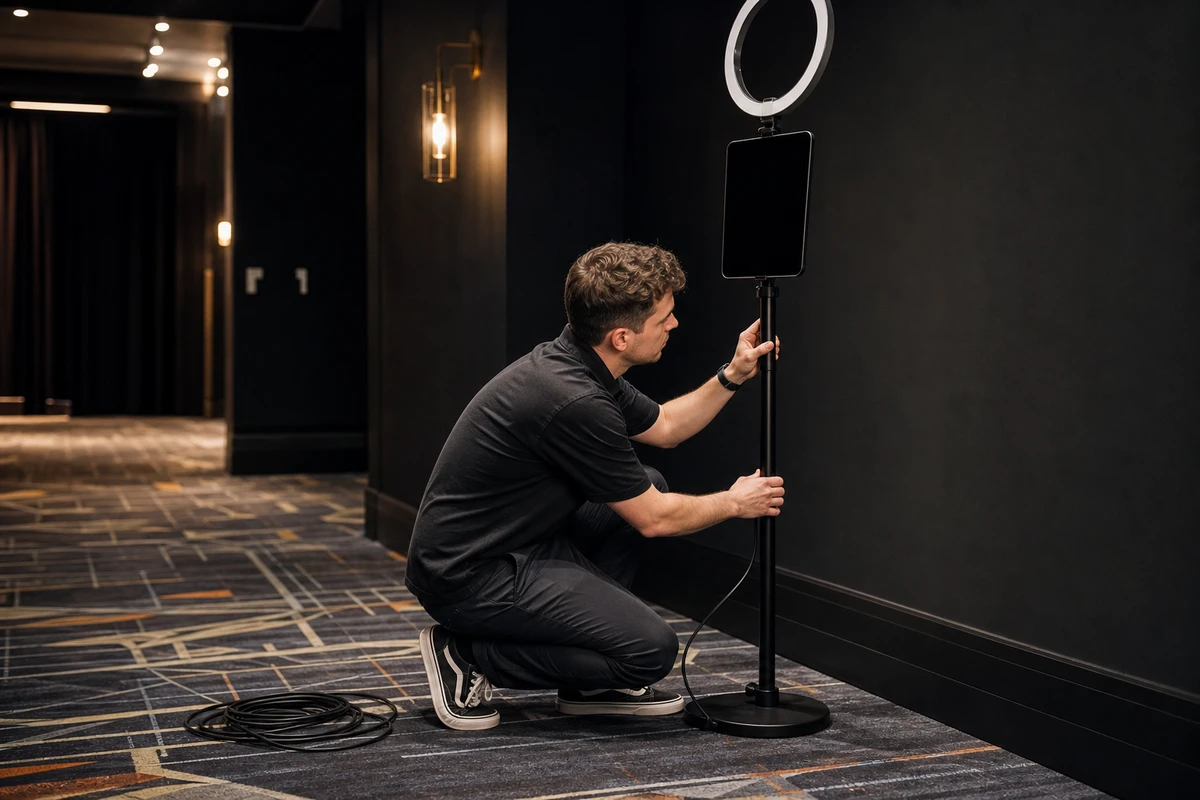
- Hardware durability and a premium footprint. The floor runs 24 hours a day, and the booth sits beside polished surfaces, deliberate lighting, and a brand that spent heavily to look expensive. Consumer-grade plastic on a flimsy stand reads as off-brand the moment a guest sees it.
- Attended and unattended operation. Casinos never close, but staffing a booth around the clock rarely pays. The right unit runs safely unattended through off-peak hours and supports a clear staffing model for the windows that justify a host’s attention, such as the enrollment desk at peak or the showroom on a concert night.
- Branding and theming control. The photo a guest shares is an advertisement, so the operator must control what it says. Property-logo placement, custom overlays, and co-branding with a concert sponsor or tournament partner all matter. A generic “casino night” template advertises a theme, not the venue.
- Sharing and delivery. Instant delivery by text and email is the capture step and the content step in one motion: the guest gets the photo, the casino gets the contact. A booth that only prints paper gathers no data and does not belong in this use.
- Reliability and offline mode. Event nights congest casino Wi-Fi exactly when capture volume peaks. A booth that stalls in front of a line of guests damages the brand it was bought to build. It should keep capturing locally when the network drops and sync once it recovers. Simple Booth’s HALO app builds this in as an offline upload queue, holding each session on the iPad through a network drop and uploading it once the connection returns.
- Security and lockdown. A tablet-based booth in a high-traffic public space is a theft target. Kiosk lockdown stops a guest from exiting the app, and physical mounting stops the hardware from walking off. Both belong in the specification, not on a list of optional extras.
- ADA accessibility. A casino is a regulated public accommodation, and the activation has to be reachable and usable by guests who use wheelchairs or have limited reach. An activation a seated guest cannot use is both a compliance exposure and a lost capture.
- Analytics and reporting. The operator needs session counts, opt-in rate, and share rate to tie the booth to enrollment and capture numbers. Without reporting, the activation cannot be defended at budget time.
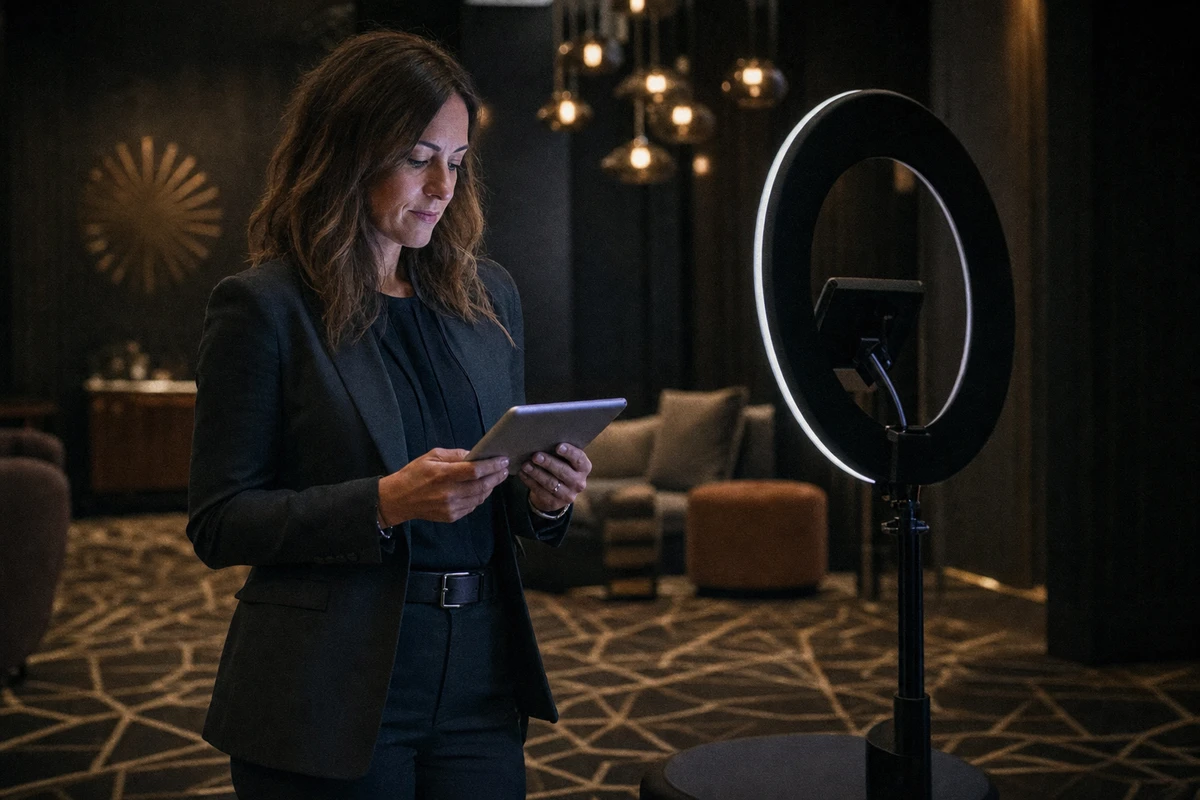
- Form factor matched to the zone. An open-air booth with a ring light suits a lobby or enrollment area. A 360 platform earns its space on a high-volume concert night. A roaming setup fits a VIP lounge where staff bring the experience to the guest. The best form factor is the one matched to the placement, not the one that looks most dramatic in a demo.
Rent or Buy: The Right Model for a Casino Property
The touring-rental mental model is the wrong fit for a casino, because a casino is not a touring event operator. The booth has a fixed home and a known audience that walks past it every day. That changes the buying logic.
Renting makes sense for genuinely one-off use: a single headline concert, a tournament weekend, a grand reopening, a seasonal promotion that runs for two weeks and stops. The cost is contained and the booth leaves when the event does.
Buying makes sense for the permanent activation, the players club or lobby booth that runs every operating day. That is where the data capture compounds. Each day adds opt-in records to the database at a fixed cost, while a rental fee would recur every time. The rough decision threshold is straightforward: once an activation runs more than a handful of days a year, recurring rental fees overtake the cost of ownership. Beyond that fee math, the permanent booth also captures opt-in data on every operating day in between, and the next section puts a dollar figure on what that daily capture is worth.
What a Casino Photo Activation Is Actually Worth
A worked example makes the math concrete. Take a booth stationed beside the players club desk at a regional casino. In a typical week it records 200 sessions. Suppose 55 percent of guests opt in to a marketing email or text. That is 110 consent-based contact records a week. Suppose 40 percent of those are net-new, meaning the guest was not already in the database. That is 44 fresh records every week. Across a 50-week operating year, the booth produces roughly 5,500 opt-in contacts and about 2,200 net-new records from one fixed position on the property. The operator then multiplies the net-new figure by its own value-per-enrolled-member or per-reactivated-player number to land on annual pipeline.
The structure is the useful part, not the placeholder
The structure is the useful part, not the placeholder percentages. Session count, opt-in rate, net-new share, and per-member value are all numbers a casino either already knows or can measure within the first month of operation. A property that runs the calculation with its own figures gets a defensible answer rather than a vendor’s promise.
The concert night runs the same arithmetic at a different scale. Take a sold-out 2,000-seat showroom and a booth set up in the pre-function lobby. Over a single evening it records 600 sessions, and at a 60 percent opt-in rate that is 360 consent-based contacts captured in one night. A staffed host desk processes a fraction of that in the same window. One entertainment night seeds the database at a rate the daily floor cannot match, which is exactly why the showroom ranks among the strongest placements.
Every figure above collapses to zero without CRM integration. A booth that captures 5,500 opt-ins into a vendor cloud the casino cannot export has produced a number on a slide and nothing in the marketing system. That is the reason data ownership leads the checklist and is not negotiable. The booth is only worth what the casino can actually do with what it captures.
Common Mistakes Casinos Make With Photo Activations
The failure modes are predictable, and most trace back to ignoring one of the four tests:
- Putting the booth on the gaming floor. It collides with photography norms, excludes minors and resort guests, and lands in a surveillance-sensitive zone. Off the floor, those problems disappear.
- Treating the booth as décor. No delivery step, no opt-in, and the photo dies on the guest’s phone. A beautiful booth that captures nothing is an expense, not an asset.
- Skipping the CRM handoff. A booth that captures contacts into a system the marketing team cannot reach feeds nothing.
- Renting a consumer casino-party booth. Those units cannot brand to the property or integrate with a casino’s CRM, because they were never built to.
- Omitting consent language. Capturing contact data without a clear opt-in is a compliance and trust failure with exactly the guests the property most wants to keep.
- Leaving the enrollment-area booth unstaffed at peak. Without a host prompting guests to step in, capture rate at the most valuable placement craters.
- Using generic “casino night” overlays. When the output carries dice and felt instead of the property logo, the guest’s shared photo advertises a theme rather than the venue that paid for the booth.
The four tests at the start of this guide, opt-in data capture, durability on a floor that never closes, placement in a sanctioned zone, and branding the operator controls, decide whether a photo activation becomes a recurring line in the marketing system or a prop in a storage closet. Every page that ranks for this keyword sells a look, and a casino does not buy a look. The properties that get this right treat the booth as the friendliest enrollment desk in the building, and they ask one vendor question before anything about overlays or props: can the casino export the contact list, and does it own it outright?
Frequently Asked Questions
Can you take photos inside a casino? Yes. Photographing inside a casino has never been illegal in the United States. The “no cameras” signage and culture reflect self-imposed operator policy meant to protect other guests’ privacy and the security of the gaming floor, not any statute. That is exactly why a sanctioned photo booth in a non-gaming zone is the clean solution: it gives your guests a clear, approved place to take and share photos while keeping cameras away from tables, the cage, and other patrons.
Where should a casino put a photo booth? Keep it off the gaming floor. The strongest placements are non-gaming zones: the players club or rewards enrollment area, the lobby and main entrance, the event center or showroom, the VIP lounge, and restaurants, bars, or the food court. Each captures a different audience, and all of them avoid the floor’s photography, age, and surveillance restrictions.
Can a photo booth connect to our players club or loyalty system? An operator-grade booth captures an opt-in email or phone number with consent language at the point of capture, then hands that record to your email platform, SMS tool, or CRM. Confirm during evaluation that the booth exports cleanly and that your property owns the list. One caveat: the booth seeds a marketing-contact record and warms the guest toward enrollment, but it does not replace regulated, ID-verified players-club card issuance.
Should a casino rent or buy a photo booth? Rent for genuine one-offs, a single concert, a tournament weekend, or a short seasonal promotion. Buy or own for a permanent activation in the enrollment area or lobby that runs every operating day, because the daily data capture compounds at a fixed cost while rental fees would recur. Once an activation runs more than a handful of days a year, ownership is usually the better number.
Do photo booths work for casino concerts and events? Yes, and entertainment nights are among the highest-volume placements. A large crowd passes through a narrow window, so a booth in the showroom lobby can capture several hundred consent-based contacts in a single evening, far more than a staffed desk processes in the same time.
Are photo booths appropriate for an 18+ or 21+ gaming venue? Placed in non-gaming zones, a booth serves the whole property audience, including all-ages resort, dining, and concert guests who are not gambling. Keep the imagery and copy sober and clear of anything that glamorizes gambling, and the activation stays appropriate for a regulated venue.
Sources
- CDC Gaming (2026). “Commercial gaming revenue was record $78.7 billion in 2025.” https://cdcgaming.com/commercial-gaming-revenue-was-new-record-78-7-billion-in-2025/
- CDC Gaming (2025). “G2E: Trends in non-gaming amenities for casino growth.” https://cdcgaming.com/g2e-trends-in-non-gaming-amenities-for-casino-growth/
- Harvard Business Review (2003). Gary W. Loveman, “Diamonds in the Data Mine.” https://hbr.org/2003/05/diamonds-in-the-data-mine
- Las Vegas Convention and Visitors Authority (2025). “Visitor Statistics,” Year-End Summary for 2025. https://www.lvcva.com/stats-and-facts/visitor-statistics/
- Foxwoods Resort Casino (2026). “Foxwoods Rewards.” https://www.foxwoods.com/foxwoods-rewards/
- Casino.org (2025). Corey Levitan, “Vegas Myths Re-Busted: It’s Illegal to Take Photos in a Casino.” https://www.casino.org/news/vegas-myths-re-busted-its-illegal-to-take-photos-in-a-casino/
- Wohl, M.J.A. (2017). “Loyalty programs in the gambling industry: Potentials for harm and possibilities for harm reduction.” Journal of Gambling Issues, 36. https://www.greo.ca/Modules/EvidenceCentre/files/Wohl%20(2017)%20Loyalty%20programs%20in%20the%20gambling%20industry.pdf