
A customer stands at the counter, card already back in a wallet, half-turned toward the door. Taped to the register is a small placard: text JOIN to a five-digit number, get 10% off the next visit. Maybe one customer in twenty does it. The number lands on a list, a coupon goes out the following week, the customer buys at a markdown, and the list is one subscriber larger.
That placard is the most common piece of SMS list-building advice handed to local businesses, and it works. It works in the narrow sense that it produces opt-ins. It fails in the sense that matters: it builds a list of people who joined for a discount, and a list assembled that way keeps asking to be paid. An operator on r/smallbusiness put the underlying doubt plainly: “Does anybody actually have any luck with text message marketing or is it just bs?” (r/smallbusiness, 2026). The honest answer is that the channel works, with SMS open rates measured consistently above 97% (EZ Texting, 2025), and that a list built on the wrong incentive is what makes it feel like it doesn’t.
SMS list building for local businesses is usually treated as a mechanics problem: which keyword, which short code, where to mount the QR placard. The harder question is what the business offers in exchange for the number, because that offer decides who joins and how long they stay. What follows is what the 10% discount actually costs, and four ways to earn an opt-in that cost close to nothing per subscriber.
What the 10% discount actually costs
An operator who offers 10% off for an opt-in sees the payoff immediately: the customer signs up while still standing at the counter. That visible, same-day result is why the discount is the default incentive everywhere. It is also what hides the bill, and the bill arrives in three parts.
The first part is margin, not list size
The first part is margin, not list size. Consider a business running a 40% gross margin. A $100 sale costs $60 in goods and returns $40 in gross profit. Offer 10% off and the same sale rings up at $90: the goods still cost $60, and gross profit drops to $30. The business did not give away 10% of the sale. It gave away a quarter of the profit on it, and earning that profit back at the discounted price takes roughly a third more volume.
The Discount Expectation
The second part is that the discount does not end at the opt-in. A subscriber acquired with a markdown has learned something about the business: it texts deals. Every later message is read against that expectation. J.C. Penney is the documented version of where this leads. When the retailer moved to replace its constant promotional calendar with everyday low prices in 2012, Harvard Business Review flagged the risk as it happened: customers trained over years to wait for a sale might simply stop shopping (Harvard Business Review, 2012). They did. Sales fell roughly 25% in the first year, the CEO was dismissed the next year, and the chain filed for bankruptcy in 2020. A discount used to acquire a subscriber is not a one-time cost. It becomes a standing term of the relationship.
Subscriber Quality
The third part is the one most list-building advice never mentions. The common assumption, that an opt-in is an opt-in, is false: the reason a customer joins shapes what that customer is worth and how soon they leave. Klaviyo’s 2024 consumer survey found that 39% of SMS subscribers signed up because it was a brand they loved, while 38% signed up because they were about to buy and wanted a discount (Klaviyo, 2024). The survey records why people joined, not what they did next, but the implication is not subtle: those are two different customers, and a discount recruits the one whose reason for being on the list is the discount itself. A reply on that same Reddit thread, written from the receiving end, was blunt: “As someone on the receiving end, I delete and block with reckless abandon” (r/smallbusiness, 2026). Klaviyo’s data also shows that 17% of people who unsubscribe from SMS leave specifically because all they ever received was discounts and sales (Klaviyo, 2024).
The pattern is not unique to SMS. A startup that analyzed more than two thousand messages from its most active users found that its best acquisition offer promised one thing while the customers who stayed valued something else; the offer, in the founder’s words, “got them in the door” but did not describe the relationship that kept them (r/smallbusiness, 2026). A discount works the same way. It earns the opt-in and sets the terms of a discount-only relationship. That does not make the discount wrong. It makes it a weak foundation.
An incentive is a trade, and cash is only one currency
A customer handing over a phone number is making a trade. The number is worth something; people guard it more carefully than an email address, and a business has to put something of equal value on the other side. A discount is one thing to put there. It is the most expensive, and the only one drawn straight out of margin. There are four others, and each costs a business close to nothing per subscriber.
Utility Messages
The first is utility, where the text itself is the thing the customer wants: order-ready alerts, a “your table is up” message, restock notifications, appointment reminders, a “your car is finished” text. The subscriber is opting in to receive a service, not a coupon. This is the strongest evidence against the discount-first assumption. SimpleTexting’s 2025 survey of 1,000 U.S. consumers found the top two reasons people sign up for business texts are appointment and reservation reminders (76%) and order tracking (68%), with promotions and sale alerts a distant third at 58% (SimpleTexting, 2025). EZ Texting similarly reports that 71% of customers subscribe to business texts without any purchase attached (EZ Texting, 2025). Utility also lasts longest as a currency, because the value recurs with every useful message.
The second currency is access: first notice on limited
The second currency is access: first notice on limited releases, members-only hours, waitlist priority, early entry. It runs on scarcity and status rather than price. Even a vendor’s own list-building guide concedes the point, advising that “exclusive or VIP offers will have the strongest impact” on customers deciding whether to join (TextRequest, n.d.). Access costs nothing to grant and signals confidence instead of desperation.
Identity and belonging
The third is identity and belonging: a named insider group, a “founding members” list, notes from behind the counter, the sense of being on the inside of something. It is pure positioning and carries no marginal cost. The fourth is experience and content, a tangible thing the customer wants in hand, such as the photo from an in-store event, a recap, a guide, or a set of results. Attentive’s research notes that non-promotional incentives genuinely work, with loyalty and rewards perks ranking among consumers’ preferred reasons to opt in (Attentive, 2022). None of these four currencies conditions the customer to wait for a markdown, so the list they build converts later at full margin.

The in-person moment is the highest-yield channel, and most operators underuse it
Most SMS list-building advice tells a local operator to add a pop-up to the website, an exit-intent overlay, an opt-in box at online checkout. A tasting room, a hardware store, a salon, or a rental counter does not have the website traffic those surfaces quietly assume. The real acquisition asset for a local business is the floor: the counter, the chair, the front desk, the table, the event space, the place where the customer is already present and already paying attention.
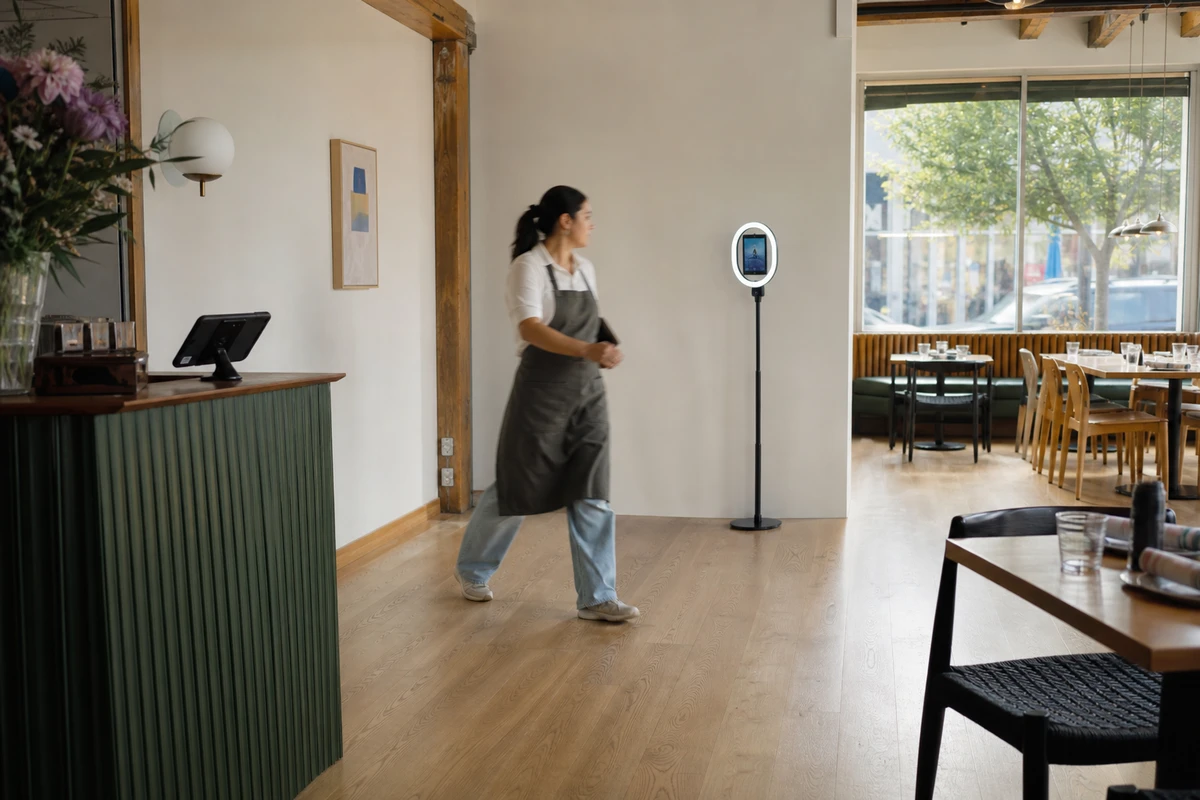
There is a mechanism behind why the in-person moment outperforms, and most advice skips it. Opt-in conversion follows the customer’s emotional state. It is highest at the point of delight and lowest at the point of friction. Asking for a number in the middle of the transaction, wallet out and ready to leave, competes with the friction of paying. Asking just after, when the customer is visibly satisfied with what they received, lands far better. Klaviyo’s data supports the timing: 62% of people are more likely to subscribe to SMS after they have made a purchase, up from 50% in 2022 (Klaviyo, 2024).
The detail almost every guide omits is who asks, and how. A QR placard taped to the register is a poster hoping to be read. EZ Texting found roughly 30% of opt-ins come through QR codes (EZ Texting, 2025), so the surface has its place, but a placard cannot read the room or choose its moment. A trained staff member can. The ask that converts is specific and one step: name the list, name the payoff, and make joining a single action. “Text PHOTOS to this number and we’ll send yours over” outperforms “scan to join our texts” because it tells the customer exactly what arrives and exactly what to do. This is why SMS list building for local businesses depends more on staff training than on signage. The placard is a fallback; the person at the counter is the channel.

Capture the number while the customer is enjoying themselves
The single strongest opt-in moment is often not the transaction at all. A tasting, a class, a demo, an in-store activation, a branded photo moment: each of these gives the customer a reason to exchange a number that has nothing to do with buying something. The customer is relaxed, the interaction is not about money, and the request does not compete with the friction of a purchase.
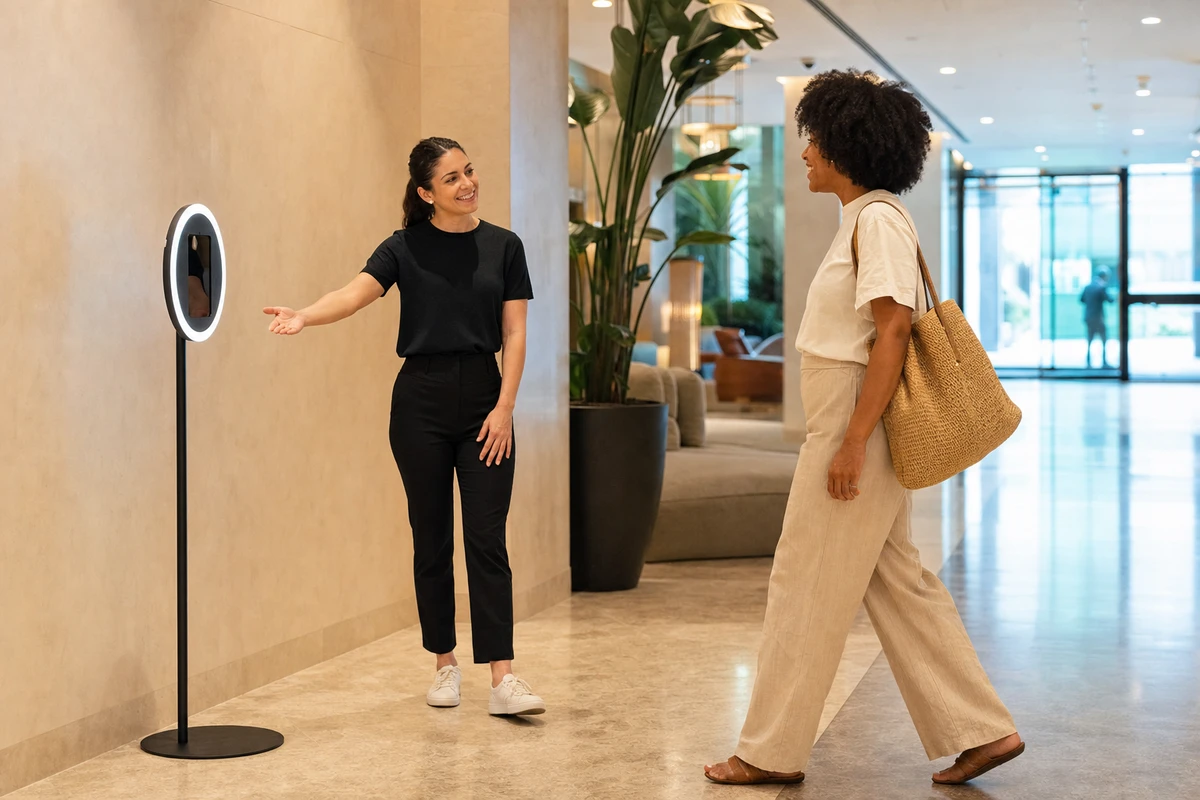
The cleanest way to run this is to make the deliverable itself the opt-in. “We’ll text you the photo.” “We’ll text you the recap.” “We’ll text your results.” “We’ll text you when your spot opens.” The customer wants the thing; the phone number is simply how the thing gets delivered. No discount is offered, no margin is touched, and the consent is unusually clean because the customer is the one asking the business for something. A branded photo station is one concrete way to run this: Simple Booth’s HALO kit, an iPad photo booth used at in-store activations and events, delivers each guest’s photo by text, so the phone number a guest enters to receive the photo is the opt-in itself.
The arithmetic is worth making concrete. Take an in-store event with 100 attendees where the only way to receive the photo, the recap, or the results is to opt in. A 40% opt-in rate is reasonable when the opt-in is the delivery method for something the customer actively wants, which leaves the operator with 40 new subscribers and zero margin spent acquiring them. If the average customer spends $500 a year and the business runs a 40% gross margin, those 40 subscribers represent roughly $8,000 in annual gross profit the business can now reach directly, on a channel where nearly every message is read. An operator with different attendance, opt-in, spend, or margin figures can run the same arithmetic and reach a number that fits the business.
Make the list worth joining, then keep the promise
A placard that reads “join our texts” asks a customer to sign a blank contract. They do not know what arrives, how often, or whether it will be worth the interruption. A specific promise converts better and churns less: “two messages a month, first notice on new arrivals and a heads-up when a table opens” tells the customer exactly what they are agreeing to.
The frequency expectation should be set at signup, because
The frequency expectation should be set at signup, because that expectation, not the raw message volume, is what governs churn. Subscribers leave when reality breaks the deal they were given. Klaviyo’s data shows the top reasons people unsubscribe from SMS are receiving too many messages (61%), the same message repeated too often (57%), and messages with no clear purpose (53%) (Klaviyo, 2024). Notably, 72% of people are willing to receive a text at least once a week, so the problem is rarely frequency in the abstract. It is frequency that exceeds what was promised.
The welcome message is where the contract is proven. If the incentive was a photo, the photo arrives in that first text. If it was access, the first access perk arrives. A welcome message that delivers the promised thing immediately confirms the customer made a sound trade.
One more step turns a list into something useful: capture intent at the moment of opt-in. Which keyword the customer texted, which list they chose, which product or service drew them in. A number that arrives with context is a segment the business can message precisely. A number with no context is just a number. That is the difference between a list that is merely large and a list that is worth messaging.
Compliance is a list-quality feature, not a tax
An operator who exports phone numbers from an email signup form, or types in a stack of business cards collected at the front desk, and starts texting them is breaking the law and degrading the list in the same motion. Compliance and list quality are the same problem viewed from two angles.
In the United States, marketing texts require prior express written consent under the Telephone Consumer Protection Act, and that consent has to be specific to texting. A customer who gave an email address, or handed over a phone number for a different reason, has not consented to SMS marketing; consent does not transfer across channels (Klaviyo, 2025). A business also cannot require SMS consent as a condition of a purchase, and every message needs a clear opt-out, the standard being a reply of STOP. Delivery now depends on registration as well: U.S. carriers filter or block traffic from unregistered numbers, so a business sending from a standard 10-digit local number has to register its brand and campaign with The Campaign Registry before messages reliably arrive (TextRequest, 2026).
The part worth reframing is double opt-in, the confirmation reply a subscriber sends to finish signing up. It is usually sold as legal cover. It is also a quality filter. The confirmation step removes mistyped numbers, screens out bots, and drops the customers who were only half-interested to begin with. What remains is a list of people who took two deliberate actions to be there. A compliant list is, mechanically, a higher-intent list, which is the same outcome the incentive ladder is built to produce.
What a non-discount list is actually worth
Two operators each spend a month building an SMS list. Both finish with 1,000 subscribers, and both put in the same staff hours. One built the list on a 10% welcome discount. The other built it on utility, access, identity, and experience. On paper the lists are identical. Their economics are not.
Margin Changes the Math
Take the same business running a 40% gross margin, with an average subscriber who spends $500 a year. The subscriber from the value-built list buys at full price, so the business earns $200 in gross profit from that customer over the year. The subscriber from the discount-built list has been conditioned to expect a deal and tends to buy only when one is offered; at a standing 10% discount, the margin on those sales falls to about 33%, and the business earns roughly $167. The gap is $33 per subscriber per year. Across 1,000 subscribers that is $33,000 in gross profit foregone annually, and that figure does not yet count the higher churn in the discount-acquired segment, where subscribers leave as soon as the discounts they joined for slow down.

This does not retire the discount as a tool. A discount is a legitimate, sharp instrument when used deliberately and rarely: to reactivate a segment that has gone cold, to clear specific inventory, to mark a real occasion. The error is using it as the foundation of how a business acquires subscribers, because the foundation is permanent and a one-time tool should not be.
The number on the list is not the asset. The reason the customer gave it is. A list built on a reason that survives the customer’s next purchase keeps paying long after a discount-built list would have gone quiet.
Sources
- Attentive (2022). “SMS Marketing by the Numbers: 30+ Texting Statistics.” https://www.attentive.com/blog/texting-statistics
- EZ Texting (2025). “2025 Consumer Texting Behavior Report.” https://www.eztexting.com/report/2025-consumer-texting-report
- Harvard Business Review (2012). “Understanding J.C. Penney’s Risky New Pricing Strategy.” https://hbr.org/2012/01/understanding-jc-penneys-risky
- Klaviyo (2024). “100+ SMS Marketing Statistics.” https://www.klaviyo.com/blog/sms-stats
- Klaviyo (2025). “Your Complete Guide to SMS Compliance.” https://www.klaviyo.com/products/sms-marketing/compliance/guide
- Reddit, r/smallbusiness (2026). “Text marketing.” https://old.reddit.com/r/smallbusiness/comments/1qvrjgq/text_marketing/
- Reddit, r/smallbusiness (2026). “We analysed 2,000+ messages from 3 power users and realised our marketing attracts the wrong people.” https://old.reddit.com/r/smallbusiness/comments/1so1tke/we_analysed_2000_messages_from_3_power_users_and/
- SimpleTexting (2025). “2025 Texting and SMS Marketing Statistics.” https://simpletexting.com/blog/2025-texting-and-sms-marketing-statistics/
- TextRequest (n.d.). “How to Build an SMS Subscriber List.” https://www.textrequest.com/insights/build-sms-subscriber-list
- TextRequest (2026). “10DLC Registration & Regulations: Your Complete Guide.” https://www.textrequest.com/insights/10dlc