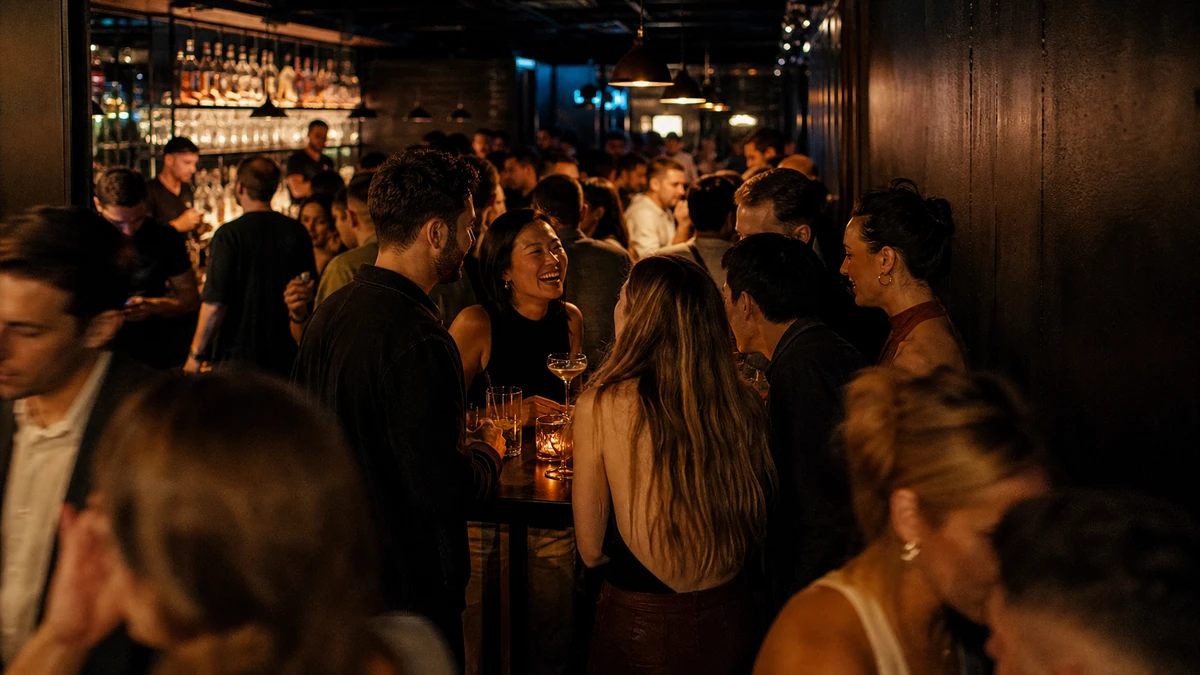
It is 11:40 on a Saturday and the room is loud. Six people are three rounds deep at a table near the back. On the wall by the bathroom hangs a flyer: text LIGHTS to 90407 for a free shot. Not one of them will text it. They came out to have fun, not to join a marketing list, and the flyer is asking a tired, half-drunk person to type a keyword and a five-digit code with no payoff in front of them.
That flyer is most of what passes for nightlife lead generation, and it is why most bars have no marketing audience they can count on. A venue’s SMS and email lists are the only crowd it truly owns. Social followers belong to the platform. Foot traffic is rented from the neighborhood and the feed. The list is what stays.
Two moves separate a list worth having from that flyer. The first is giving SMS and email separate jobs instead of running them as one channel. The second is knowing where in a guest’s night a contact actually changes hands. Good bar SMS email capture is not a software purchase. It is the design of that one moment.
Why a Bar Needs Both an SMS List and an Email List
Most operators run one channel and call it covered. The owner of a multi-venue nightclub interviewed by Betwext in 2016 put it bluntly: nobody likes a sales call, and few people open the emails a business sends, so he used SMS only. He was half right.
SMS carries the night-of message
SMS is built for urgency. In SimpleTexting’s 2025 SMS Marketing Statistics report, a vendor survey of 1,000 consumers and 400 businesses, 82% of people said they check texts within five minutes and 32% within a minute. For a venue, that speed is the whole point. A text that reads “doors at nine, no cover before ten” or “two bottle tables left for tonight” lands while the guest is still deciding where to go. But every SMS carries a carrier cost, and an opt-out is one word away. Frequency has to stay disciplined, or the list bleeds subscribers faster than it grows.
Email carries the weekly drumbeat
Email opens far less often. Campaign Monitor’s 2022 benchmarks put the restaurant and food-and-beverage segment at an 18.5% average open rate and the travel, hospitality and leisure segment at 20.2%, against a 21.5% all-industry average. Lower, yes. But an email send costs effectively nothing per message, holds photos and event recaps and a season’s worth of programming, and the list sits in a database the venue controls outright with no platform in between. SMS is the alert. Email is the memory.
The “email is dead for bars” mistake
The nightclub owner who dropped email was comparing a well-run SMS program to a neglected email list. That is not a fair test. Email is not weaker than SMS for nightlife; it does a different job, and a venue that abandons it leaves an owned, near-zero-cost asset unused. A simple channel-split rule keeps both honest: SMS for anything time-sensitive or high-value, such as tonight’s event, a VIP table, or a last-minute lineup change, and email for the steady rhythm, such as next month’s calendar, a recap with photos, or a birthday-month perk.
The Capture Moment: Why “Text KEYWORD to 90407” Barely Works
The standard nightlife playbook has not changed since roughly 2016. TXT180’s guide for nightclubs and bars lays it out plainly: print a keyword and shortcode on fliers in the bathrooms, on the tables, walls and doors, promote a free drink, and collect opt-ins. The guide cites real numbers, with TAO Nightclub building 2,000 subscribers in three weeks and PACHA NY driving a 15% return rate, both figures vendor-reported. The mechanic clearly moves volume. The problem is what kind of volume.
The friction nobody counts
Walk through the actual moment. A guest at 11pm, in a dark room, with music loud enough to shout over, is asked to pull out a phone, open the messaging app, type a word, type a five-digit number, and send. Each step sheds people. The flyer that carries the offer hangs in a bathroom or on a table, far from any staff member who could nudge the action. And the guest has no real reason to push through the friction, because a free drink stays abstract until the moment they are actually at the bar ordering one.
Three conditions for a contact to change hands
Capture works when three things are true at once. First, it is tied to something the guest already wants right then, not a perk they have to imagine. Second, it happens while the guest is stationary and waiting, in a door line, holding an open tab, or standing for a photo, rather than mid-dancefloor. Third, it costs one tap, not a typed keyword and shortcode. Miss any of the three and the opt-in rate collapses into low single digits. The capture surfaces that follow are ranked, in effect, by how well they satisfy all three.
Where the Contact Actually Changes Hands: Capture Surfaces Compared
A bar has more than one place to capture an SMS or email contact, and the surfaces are not equal. The table below rates the common ones on the three conditions that matter: friction, how likely a guest is to opt in, and the quality of the contact that results.
| Capture surface | Friction | Opt-in likelihood | Contact quality | Best fit |
|---|---|---|---|---|
| Door or cover line | Low, guests are waiting | Moderate to high | Good, real intent to enter | SMS and email |
| Bar tab or POS receipt | Very low | High | Mixed, consent is limited (see below) | |
| Wi-Fi splash page | Very low | High | Low, no intent toward the venue | |
| Reservation or bottle-service booking | Built into the booking | Near total | Highest, spend tier is known | SMS and email |
| Photo or experience moment | Low, one tap for the photo | High | Good, guest opted in to get something | SMS and email |
| Text-to-win contest | High, a typed keyword | High volume | Lowest, prize-driven and one-time | SMS |
Read the table by contact quality, not volume
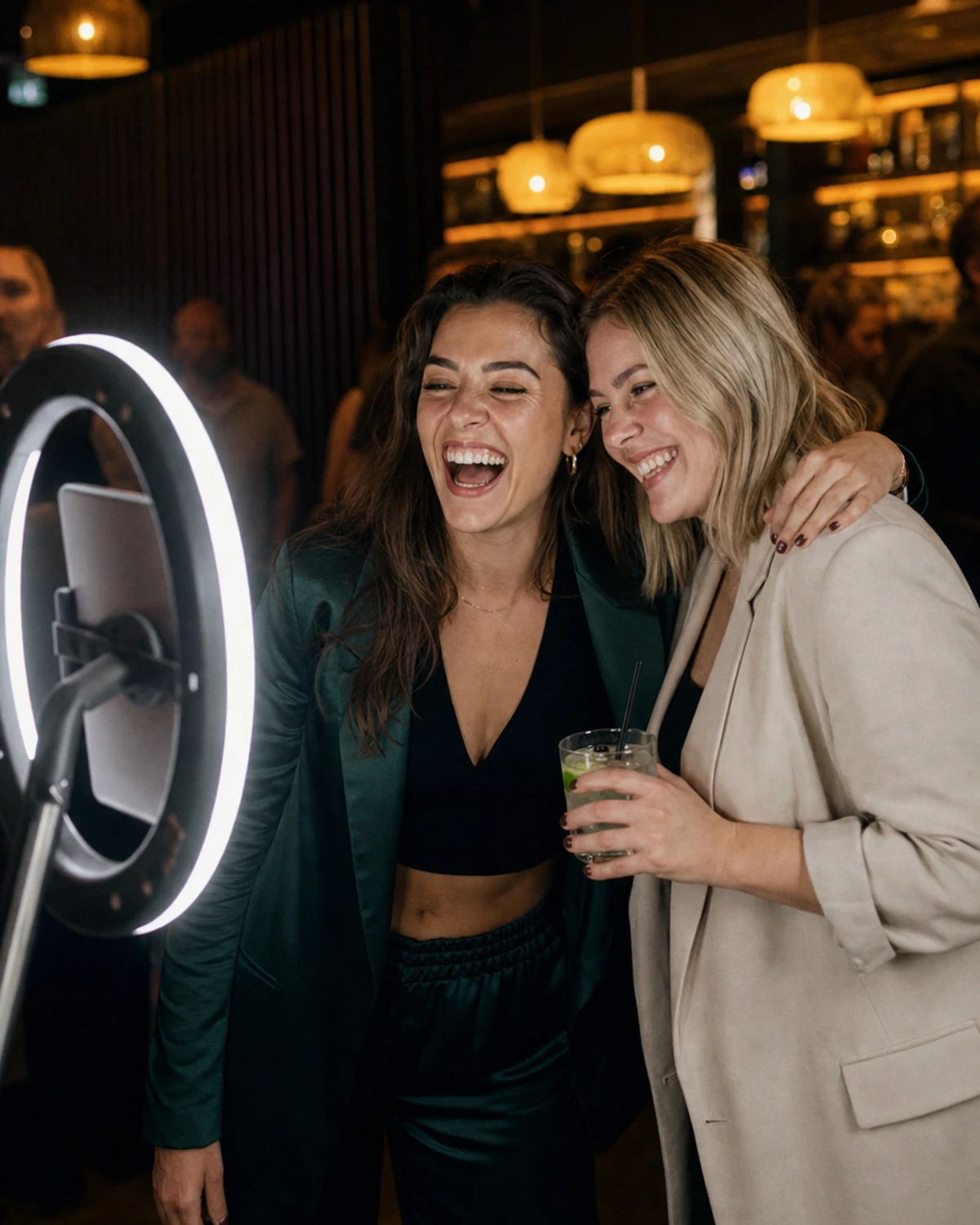
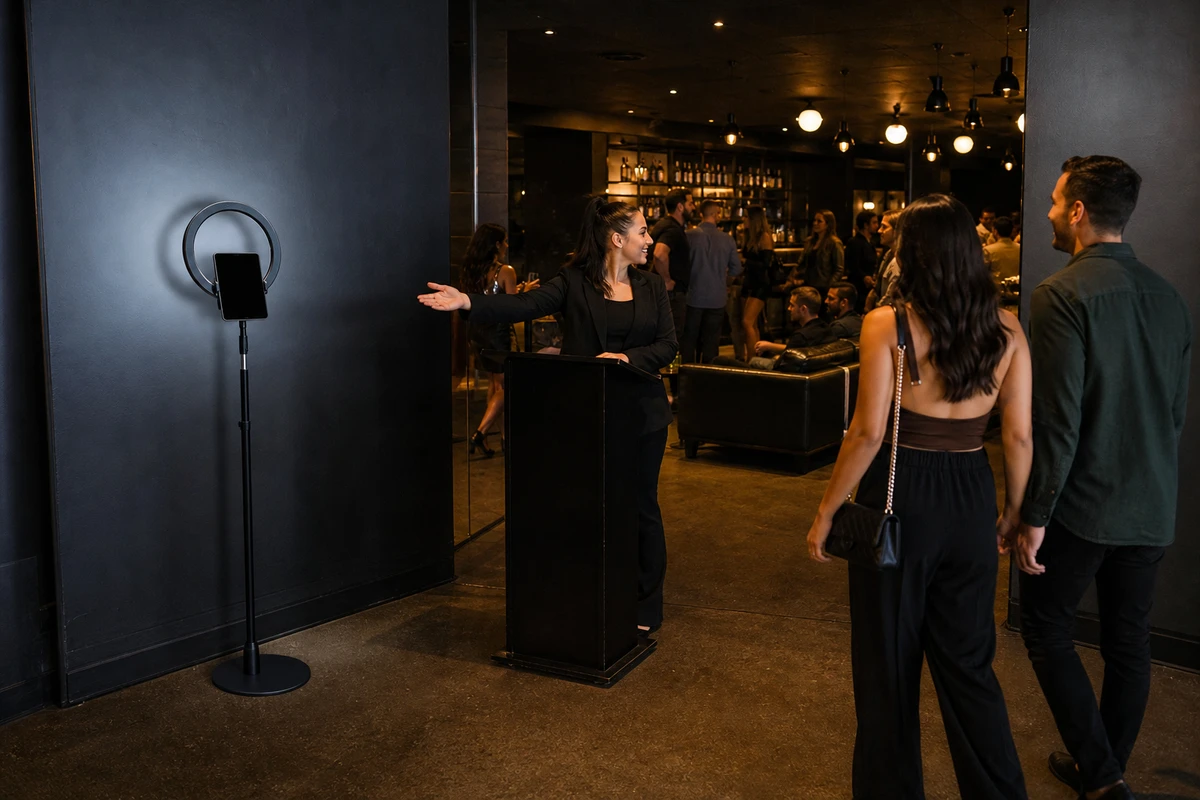
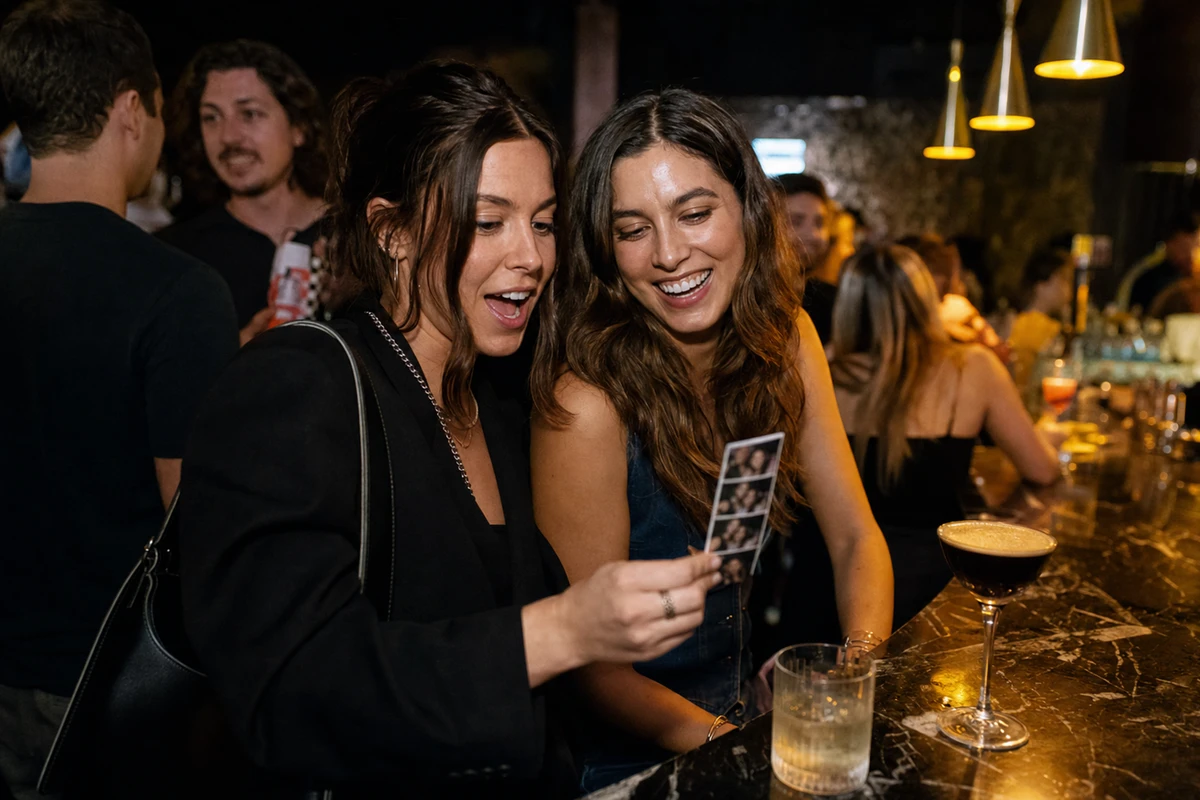
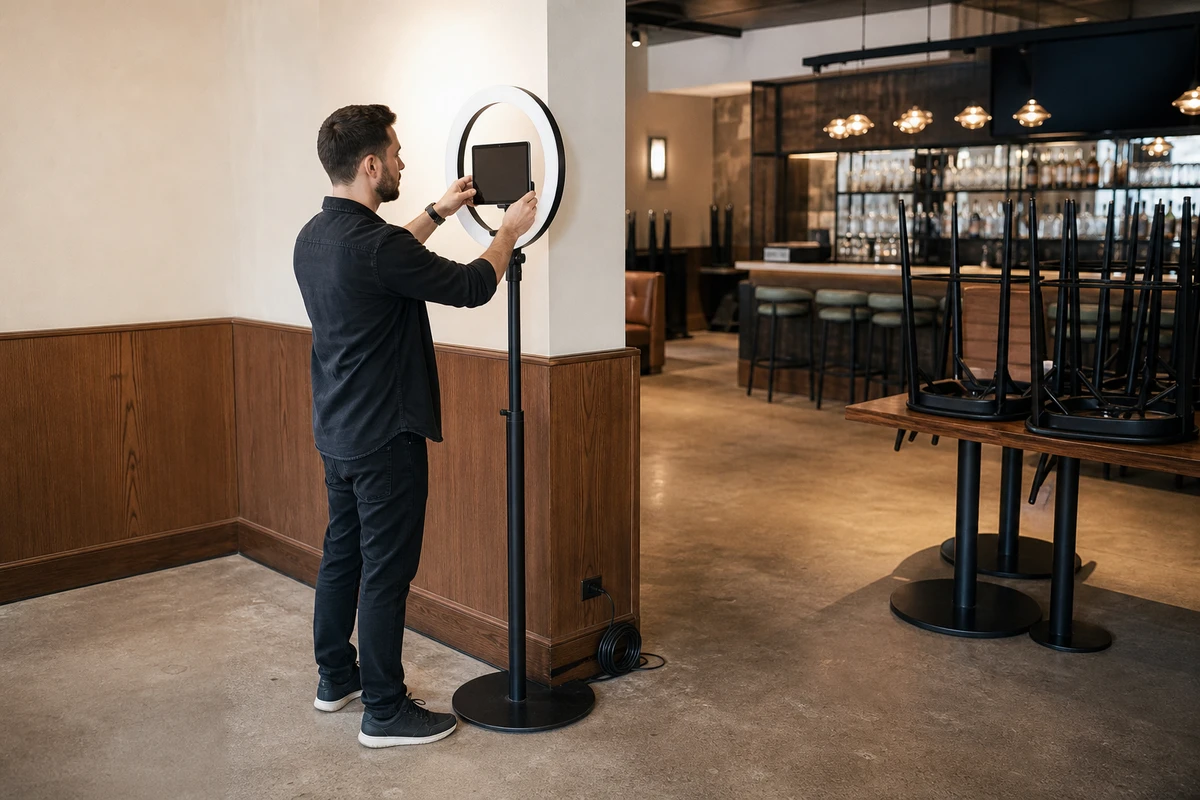
The door or cover line is the workhorse. Guests are already standing still, already waiting, and already intent on coming in, and a QR code for a guest list or a cover waiver is a one-tap action a host can point at directly. Reservation and bottle-service bookings produce the fewest contacts and the best ones, because the venue learns each guest’s spend tier at the moment of capture. A photo or experience moment works for a different reason: the guest opts in to get something they actually want, the photo, and the contact is the byproduct rather than the ask. A purpose-built photo station turns that byproduct into routine capture: with Simple Booth’s HALO kit, the guest stands for a photo, picks email or text to receive it, and a custom opt-in checkbox on the same screen records marketing consent while the photo sends. The entertainment chain Treetop Golf built 150,000 email addresses across its locations on captures like these. The Wi-Fi splash page and the text-to-win contest sit at the bottom of the table because the contacts they collect arrived for free internet or a prize, not for the venue.
The incentive decides who shows up
The offer attached to the capture does more than lift the opt-in rate. It selects the customer. A free shot tonight pulls in the most price-driven guest in the room, the one who came for the giveaway and will not return without another discount. The nightclub owner in the Betwext case ran a smarter version: a banner at the front of the club offered a waived cover charge on the guest’s next visit, and they just had to show up a bit early. That offer filters for people willing to come back, and it pulls them in off-peak, when the room actually needs bodies.
Other incentives select just as deliberately. First access to ticketed events and bottle RSVPs appeals to guests who plan their nights ahead, and a birthday-month perk captures the date alongside the contact, which hands the venue a built-in, high-spend reason to message that guest later.
Staying Legal: Consent, TCPA, and Alcohol-Ad Rules
Competing guides treat the legal question as an afterthought. Messente’s list of bar texting ideas, a genuinely useful piece on what to send, compresses the entire compliance question into a single line: read up on alcohol ad laws to avoid fines. That is not enough to keep a venue out of trouble. Two guests on the same list are not equal in the eyes of the law, and the difference is whether each one knowingly agreed to marketing.
Prior express written consent, in plain terms
US marketing texts are governed by the Telephone Consumer Protection Act (47 U.S.C. § 227), enforced by the FCC, which requires prior express written consent before a business sends them. In practice, per SimpleTexting’s compliance guide, the opt-in has to disclose four things: who is sending the messages, roughly how often (for example, up to four messages a month), that message and data rates may apply, and how to stop. A one-word STOP reply must always work as an opt-out, and a HELP reply must return help. A QR code or keyword opt-in can carry all of this in the fine print on the landing screen, which is exactly where a bathroom flyer cannot.
The POS receipt is not consent
Here is the mistake that quietly exposes the most venues. A phone number or email a guest hands over so the bar can text or email a receipt is collected for a transaction. It is not consent to send marketing. Moving that contact onto a promotional list, without a separate marketing opt-in, is a TCPA violation regardless of how friendly the guest seemed at the register. The receipt surface still belongs in the capture mix, but the marketing consent has to be asked for separately and explicitly, with its own checkbox on the same screen, or not collected at all.
10DLC registration and the alcohol age gate
Since February 1, 2025, every US business sending marketing texts through a standard ten-digit number must register through what the industry calls 10DLC: the business registers its identity once, then registers each campaign use case. Alcohol counts as an age-gated topic, so a bar’s campaign description has to disclose it, and age-gated campaigns draw extra carrier review. Unregistered traffic gets throttled or blocked outright. This is now a cost of doing business, not optional paperwork.
State liquor-advertising rules
Consent governs who can be messaged. A separate layer governs what can be said. The federal Alcohol and Tobacco Tax and Trade Bureau reviews alcohol advertising, including industry websites and social media, for compliance with the Federal Alcohol Administration Act, and most states layer their own liquor-advertising restrictions on top, often limiting promotions like all-you-can-drink offers or certain price claims. An operator should check the state liquor authority’s rules before building a promotional message, because an opted-in subscriber does not make an illegal offer legal.
What a Nightlife List Is Actually Worth
Every competing page explains how to build a list and stops there. None of them shows what the list earns, which is the number that justifies the work.
A worked example
Take a bar that serves 300 guests on a busy Saturday. (Guest counts vary widely by venue and city, so treat this as an illustrative model, not a benchmark.) Suppose a one-tap QR capture at the door, plus a photo moment inside, opts in 35% of them. That is roughly 105 contacts in a single night. Run the same capture across a year of weekends, remove duplicates and the regulars who only need to join once, and the list settles somewhere in the low thousands. Call it 3,000 engaged contacts.
What one message returns
Now picture a slow Tuesday. The venue sends one SMS to those 3,000 contacts. At a 4% conversion rate, modest for an engaged list, 120 guests come in. At a $40 average tab (again, a labeled assumption, since real checks vary by venue), that is about $4,800 in revenue from a single message that cost a few dollars in carrier fees. SimpleTexting’s 2025 report found that 69% of hospitality businesses see conversion improvements of 20% or more from SMS. That is directional support, not a guarantee, but the direction is clear enough.
The cost of not owning the list
The flip side is the real lesson. A venue without a list still has to fill that slow Tuesday. It does so by buying reach, paying for ads or boosting posts to rent an audience it does not keep. A list converts that recurring spend into a fixed cost paid once, at capture, after which every message is nearly free. A venue that skips list-building is choosing to re-rent its own customers, week after week, at full price.
Keeping the List Warm: Segmentation and the Decay Problem
A list decays whether or not it is used
A nightlife list goes stale faster than most. Phone numbers change, guests move away, and a venue’s crowd ages out of it within a few years. Email lists lose a meaningful share of valid contacts every year as people change addresses and providers; the exact annual rate is widely quoted but poorly sourced, so it is safer to treat the decay as a direction than as a figure. The practical response is to prune. A contact who has not opened or clicked in months is no longer an audience member, and continuing to message them drags down deliverability for everyone else on the list.
Segment at the moment of capture
The owner in the Betwext case did one thing exactly right: every guest who bought bottle service went onto a separate VIP list, because, in his words, these were premium customers who spend more money than average. That instinct generalizes. A list is worth more split three ways: by recency (when the guest last visited), by spend tier (bottle and table service versus general admission), and by event interest (the techno crowd is not the live-music crowd). Segmented messages land as relevant. Unsegmented ones land as spam.
Rhythm beats blasts
The same operator sent his texts around 9pm on weekend nights, the window when groups are deciding where to go. Timing that sharp only works on a list that already expects to hear from the venue. A list messaged on a consistent weekly rhythm, a Tuesday email with the week’s calendar and a Friday text with the night’s plan, stays warm and responsive. A list that hears from the venue twice a year, for New Year’s Eve and St. Patrick’s Day, is already dead: the contacts have forgotten they opted in, and the blast reads as spam from a stranger.
A list built one tap at a time, segmented at capture, and messaged on a steady rhythm is the closest thing a bar has to a guaranteed crowd. The keyword on the bathroom flyer never was.
Sources
- SimpleTexting (2025). “2025 SMS Marketing Statistics.” https://simpletexting.com/sms-marketing-statistics/
- SimpleTexting. “SMS Compliance Guide.” https://simpletexting.com/sms-compliance/
- Campaign Monitor (2022). “Email Marketing Benchmarks and Statistics for 2022.” https://www.campaignmonitor.com/resources/guides/email-marketing-benchmarks/
- Betwext (2016). “SMS Marketing Ideas: From a Night Club Owner.” https://www.betwext.com/case-studies/sms-marketing-ideas-night-club-owner/
- TXT180 (2021). “Text Message Marketing for Nightclub and Bars.” https://www.txt180.com/article/text-message-marketing-for-nightclub-bars/
- Messente. “Bar Texting: 7 Creative SMS Marketing Ideas.” https://messente.com/blog/bar-texting
- U.S. Alcohol and Tobacco Tax and Trade Bureau (TTB). “Market Compliance Office.” https://www.ttb.gov/business-central/advertising/market-compliance-office