
Walk into an independent restaurant, salon, or shop that has been trading for a few years and there is a good chance a glass bowl sits near the register, half full of business cards. A handwritten sign on the side promises a free lunch, a free service, a gift basket. Customers drop a card on the way out. Once a month a manager fishes out a winner, makes the call, and quietly adds the rest of the cards to an email list.
That bowl is finished. Not because glass looks dated next to a tablet, and not because customers stopped carrying cards. It is finished because a card dropped in a bowl fails at all three jobs a capture method has to do: it does not collect permission to market to the person, it does not produce data a business can actually use, and it does not give the customer anything they genuinely wanted. Operators searching for a business card fishbowl alternative are usually solving the wrong problem. They are shopping for a better container when the container was never the issue. What follows is a way to price what a counter bowl is really costing a business, and a framework for choosing a replacement that does more than put the same bowl behind a screen.
Why the Fishbowl Worked for Thirty Years
The bowl deserves some respect before anyone dismantles it. For a long stretch it worked, and it worked for a sound reason.
In 1988, Tim Berry, who went on to co-found
In 1988, Tim Berry, who went on to co-found the company behind Bplans, ran fishbowls at the MacWorld expo in San Francisco and came home with four bowls full of cards. The tactic was already common enough by then that nobody had to explain it, and it stayed standard on US retail and hospitality counters through the 1980s and 1990s and well beyond. As late as 2012, an Entrepreneur article still called the business-card drawing the best low-effort tactic in local marketing.
The reason it held up is straightforward. The bowl combined three things that make any capture method work: a customer who is already physically present, an action that costs almost nothing, and a reward that feels plausible. Nobody had to be persuaded to walk in; they were already at the counter with a card in their wallet. Dropping it took three seconds. The prize gave them a reason to bother. For a business operating before smartphones and before modern privacy law, that was a genuinely efficient way to turn a visit into a contact.
Everything that made the bowl work can be rebuilt without the bowl. But three things quietly broke, and none of them can be fixed inside a bowl, glass or otherwise.
The Three Things the Fishbowl Quietly Broke
A tablet screen changes the bowl’s surface, not its substance. Every one of these three failures survives the upgrade.
A dropped card is not consent
A business card is contact information a person handed over for one purpose. It is not permission to add them to a marketing list. How much that gap matters depends on where the business operates. Under UK and EU data protection law, valid consent has to be, in the ICO’s words, “freely given, specific, informed and unambiguous,” shown through a clear affirmative action and backed by a record. A card tipped into a bowl to enter a prize draw clears none of those bars, and the UK’s marketing rules add that a business must not send marketing emails to individuals without specific consent.
Canada’s anti-spam law, CASL, runs on the same opt-in principle, with a narrow “implied consent” carve-out for a business card handed over at a trade show, and only when the later message relates to the person’s job. The United States is the permissive exception: CAN-SPAM does not require prior opt-in at all, governing instead honest subject lines and a working unsubscribe link. The bowl is not automatically illegal everywhere. But across most of the world it leaves a business holding an email address with no defensible record that the person agreed to be marketed to. (This is a marketing article, not legal advice; checking the rules in the jurisdictions a business actually emails into is the safe move.)
The data is unqualified, and it decays
Most cards in the bowl come from people who wanted the prize, not the business. Sean Murphy, a startup consultant writing for Kromatic, put the genuine-interest rate of fishbowl entries at 5 to 20 percent, and noted that each unqualified lead costs “an hour or more of wasted effort” to chase down. Independent data leans the same way: research from the Center for Exhibition Industry Research has found roughly 4 in 10 trade-show leads qualify as real prospects even when a business actively screens them, so an unscreened bowl on a passive counter does worse. Then the list rots. ZeroBounce’s analysis of 11 billion addresses found that at least 23 percent of an email list goes stale every year. A bowl filled in January is producing dead contacts by December, and that is before counting the cards that are illegible, lost, or never typed into anything at all.
The customer got nothing they wanted
The prize is a lottery, and almost everyone loses it. The exchange is lopsided, and customers have learned to read it that way. Online, the recurring question about fishbowl promotions is whether they are a scam: a common example describes “winning” a free lunch-and-learn from a card dropped in a restaurant box and asks what the catch is. A capture method that customers experience as a trick does quiet damage at the counter every time it runs.
None of these are glass problems. They are exchange problems, and a screen does not touch a single one of them.
What a Counter Fishbowl Actually Costs
It helps to put a number on it. Take a store or front desk that collects 120 cards a month, a steady, unremarkable bowl. Over a year that is 1,440 cards, and 1,440 sounds like a healthy list.
Run it through what actually survives
Run it through what actually survives. Staff are busy, so a share of those cards never gets entered: they are illegible, they slip behind the register, they pile up on a desk that is slow to clear. Suppose 1,000 of the 1,440 actually get keyed in over the year, a fraction an operator can sharpen by watching one month closely. Hand-keying carries its own loss; data-quality benchmarks put a competent error rate around 1 percent, so call it 990 clean records. Of those, the genuine-interest rate from incentive-driven capture runs 5 to 20 percent, which leaves somewhere between 50 and 200 contacts who actually wanted to hear from the business. Apply the 23 percent annual list decay and, a year on, 38 to 154 of them are still reachable.
The formula underneath that is simple enough to reuse: cards collected, times the genuine-interest rate, times the share that gets entered cleanly, times the share that survives list decay, times whatever a reachable contact is worth. If a genuinely interested, consented, reachable contact is worth a modest $25 in eventual business, the bowl’s real annual output is roughly $950 to $3,850, not 1,440 leads.
Set against that, the costs the bowl hides. Sorting and typing 1,440 cards at even 30 seconds each is about 12 hours of paid staff time a year, spent producing a list that is mostly wrong. And the un-priced item is legal exposure: in any opt-in jurisdiction, mailing that list is marketing to people who never consented. The bowl never looks expensive because its costs never land on one line. The gap between the 1,440 leads it appears to deliver and the 38 to 154 consented, current contacts it really delivers is the cost.
Modern Business Card Fishbowl Alternatives, Compared
A real alternative is not defined by having a screen. It is defined by fixing all three failures at once: it captures genuine consent, it produces data a business can use, and it gives the customer something they actually wanted. That is the test. Here is how the honest in-store options score against it.
A QR code at the counter that opens a short hosted sign-up form costs almost nothing to run and is strong on the first two counts. The customer opts in explicitly on the form and types their own details, so consent is recorded and the data is clean. QR scanning is ordinary behavior now rather than a novelty; industry data compiled by Barkoder puts the share of smartphone users who have scanned a code in the past year at roughly four in five. The weak point is the exchange: a bare “scan to join our list” is the bowl without the glass unless it is paired with a reason to scan.

POS or loyalty capture at the register collects an email or phone number as part of checkout or loyalty enrollment. This is where real operators already gravitate; in one Square community thread, a business owner asking the “smartest way to collect Email addresses and to be legally compliant” is steered toward exactly this. Consent is built into the enrollment, the data is tied to a real transaction, and it fits a flow the customer is already in. It only works where there is a transaction and a POS that supports it.
A standalone tablet sign-up form beats paper on legibility and on getting data into a system, but on its own it is the digital fishbowl trap: the same lopsided lottery exchange behind a nicer surface.
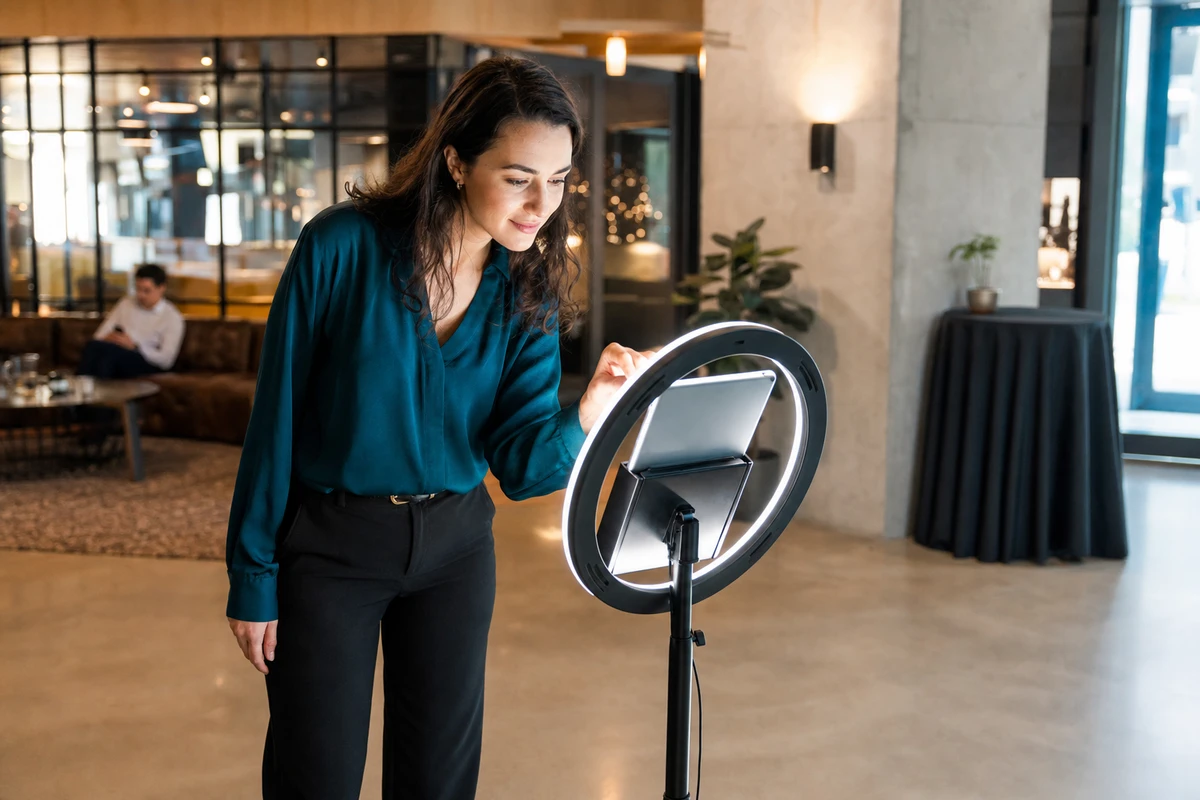
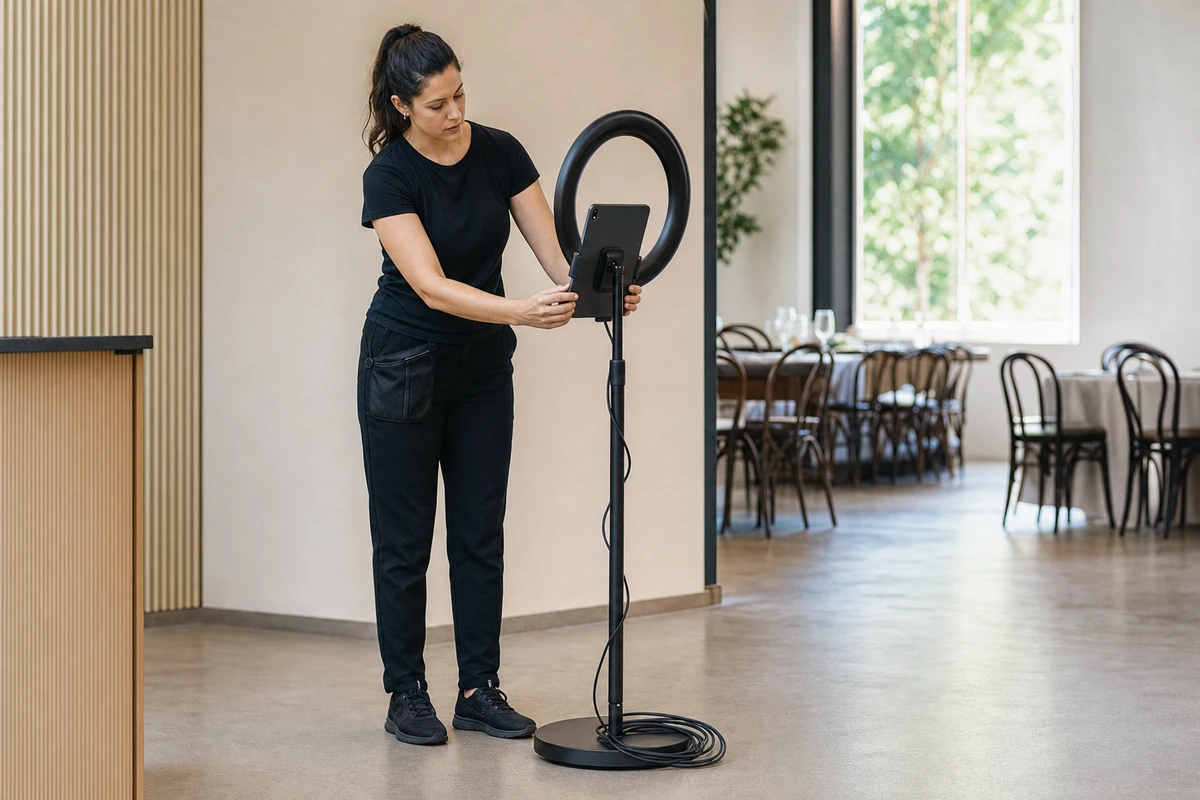
Experiential capture is strongest on the part everything else is weak on. The contact comes from something the customer wanted to do at the location anyway, and the email is simply where they receive the result. A guest steps up to a branded photo station, takes a picture, and types an email address to have the copy sent over. That address is not the price of a lottery ticket; it is the delivery label for something the guest asked for, so consent is freely given rather than traded for a chance to win. One concrete version for physical venues is the photo booth: with Simple Booth’s HALO kit, an iPad photo station, the entertainment chain Treetop Golf built a list of 150,000 unique email addresses across its locations, each one typed by a guest to receive their own photo. The trade-off is setup: experiential capture needs a moment worth building around, not just a form on a stand.
| Method | Captures consent | Produces usable data | Gives the customer something |
|---|---|---|---|
| QR code to a hosted form | Strong | Strong | Weak without a real incentive |
| POS or loyalty capture at checkout | Strong | Strong | Moderate |
| Standalone tablet sign-up form | Depends on the form | Moderate | Weak |
| Experiential capture | Strong | Strong | Strong |
The incentive question is not abstract
The incentive question is not abstract. In a 2022 study by Google and Boston Consulting Group, about 30 percent of consumers said they would hand over an email address with no incentive at all, while roughly 90 percent would do so for a clear benefit such as a discount or a free sample. Consent is not the hard part once the customer is getting something certain in return. The lottery was always the problem.
The Value-Exchange Test Most “Go Digital” Advice Skips
Most advice on replacing the bowl stops at “go digital.” Trade-show vendors sell a touchscreen “digital fishbowl” game; hospitality marketers gate the guest WiFi behind an email form; funnel-software blogs rebuild the fishbowl as an online giveaway page. Each one digitizes the container. None of them changes the exchange. An iPad whose only purpose is to harvest email addresses is still a fishbowl. The customer still hands something over and still gets a lottery ticket.
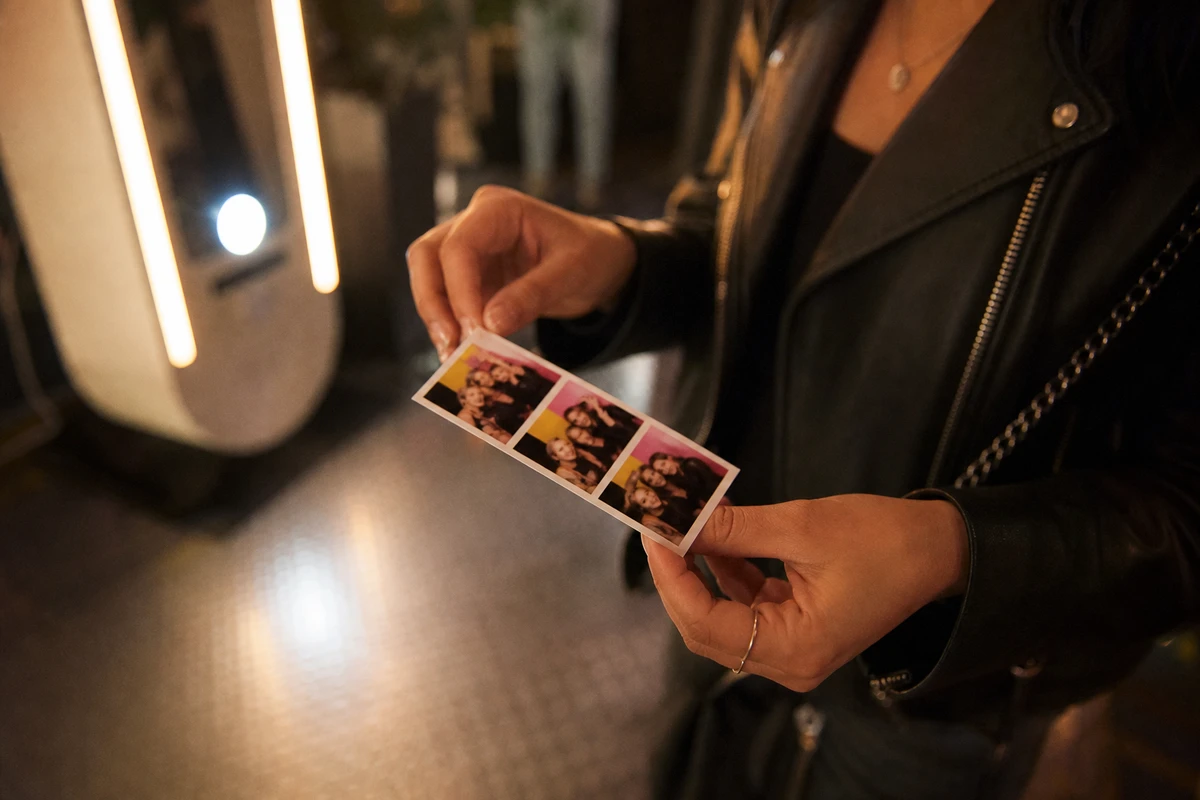
The upgrade is not the screen. It is making the email the delivery mechanism instead of the ask. When a customer gives an email address to receive something they wanted in that moment (their photo, their result, their pass, their reward), three things change at once. Consent becomes honest, because the customer is opting in to receive a specific thing they asked for, not surrendering an address to a draw. The data becomes accurate, because the customer is typing their own email for their own benefit, and a typo now costs them the thing they wanted, so they get it right. And the business stops looking grabby and starts looking generous, because the interaction gives before it takes.
There is a quieter benefit downstream. A contact captured in the middle of a real value exchange is self-qualified. The person did not enter a draw; they asked for something specific, which tells the business something true about what they want. That is a different grade of data from a bowl card, and it matters more every year. Salesforce’s State of Marketing report finds that first-party data, the information a business collects directly from its own customers, has become one of marketers’ most relied-upon sources as third-party data grows less dependable. A physical location sees customers in person every day. That is one of the best first-party data sources a business has, and the bowl was a poor way to tap it.
A 30-Day Plan to Retire the Bowl
Replacing the bowl needs a new sequence more than it needs new technology. A month is enough.
Week 1: Pick one method
Run the honest options through the test above and pick the one that fits the existing customer flow. Locations built on transactions lean toward POS or loyalty capture. Locations built on browsing, waiting, or visiting lean toward a QR code or an experiential moment. Pick one. One finished method beats two half-built ones.
Week 1: Define the real value exchange
Decide what the customer actually gets, in the moment, and make it worth an email address. Wherever possible, replace the lottery with certainty: an instant discount, a useful thing they keep, an experience they wanted anyway. A reward everyone receives converts far better than a prize one person wins.
Week 2: Write the consent line
One plain sentence at the point of capture, stating what the person is signing up for, with a genuine opt-in action and an easy way out. This single sentence is the largest upgrade over the bowl, and it costs nothing.
Week 2: Route the data
Connect the capture method straight into the email, CRM, or loyalty tool. The goal is no pile of cards and no manual typing step, because every manual step is a place data gets lost.
Weeks 3 and 4: Measure against the bowl
Track the opt-in rate and, where it can be traced, what those contacts are worth. Put that number next to the bowl’s real output calculated earlier, and the comparison settles the question.
The operators still searching for a better fishbowl are searching for a better container. The ones who get ahead stop asking what should replace the bowl and start asking what the customer at the counter actually wants in exchange for being marketed to. Answer that, and the bowl retires itself.
Sources
- U.S. Federal Trade Commission (2023). “CAN-SPAM Act: A Compliance Guide for Business.” https://www.ftc.gov/business-guidance/resources/can-spam-act-compliance-guide-business
- UK Information Commissioner’s Office (2024). “What is valid consent?” https://ico.org.uk/for-organisations/uk-gdpr-guidance-and-resources/lawful-basis/consent/what-is-valid-consent/
- UK Information Commissioner’s Office (2024). “Electronic mail marketing.” https://ico.org.uk/for-organisations/direct-marketing-and-privacy-and-electronic-communications/guide-to-pecr/electronic-and-telephone-marketing/electronic-mail-marketing/
- Canadian Radio-television and Telecommunications Commission (2024). “Canada’s Anti-Spam Legislation (CASL): Guidance on Implied Consent.” https://crtc.gc.ca/eng/com500/guide.htm
- ZeroBounce (2026). “The Email List Decay Report for 2026.” https://www.zerobounce.net/email-list-decay
- Sean Murphy, Kromatic (2015). “Business Card Fishbowl Leads: Why They Waste Startup Resources.” https://kromatic.com/blog/fish-bowl-leads/
- Center for Exhibition Industry Research (2015). “How Exhibitors Can Improve Lead Quality & Sales Conversion.” https://globalpetexpo.org/exhibitor-success/how-exhibitors-can-improve-lead-quality-sales-conversion
- Conexiom (2025). “What’s a Good Data Entry Error Rate? Benchmarks + How to Reduce Yours.” https://conexiom.com/blog/whats-a-good-data-entry-error-rate-benchmarks-how-to-reduce-yours
- Barkoder (2025). “30+ Shocking QR Code Statistics You Need to Know in 2025.” https://barkoder.com/blog/30-shocking-qr-code-statistics-you-need-to-know-in-2025
- Google & Boston Consulting Group (2022), reported by Search Engine Journal. “Google Study: 90% Of Customers Will Share Their Email For An Incentive.” https://www.searchenginejournal.com/google-study-90-of-customers-will-share-their-email-for-an-incentive/435661/
- Salesforce (2026). “State of Marketing Report, Tenth Edition.” https://www.salesforce.com/marketing/resources/state-of-marketing-report/
- Tim Berry (2007). “The Fish Bowl, the Free Prize, a Lesson.” https://timberry.com/the_fish_bowl/
- Entrepreneur (2012). “For Local Marketing, Nothing Beats the Simplicity of a Business-Card Drawing.” https://www.entrepreneur.com/growing-a-business/for-local-marketing-nothing-beats-the-simplicity-of-a/223946