A restaurant prints a table tent for every table. The card reads “Text TACOS to 55555 for a free appetizer,” and for the first weekend it works, sort of. Three weeks later the list holds nineteen numbers, almost all of them collected on day one, and the manager quietly files text marketing under things that do not work for restaurants.
The tactic failed, not the channel. Restaurant SMS list building is the patient work of collecting one opted-in phone number at a time, and the lever that decides how fast that list grows is not which sign-up tactic an operator picks. It is the moment in the guest’s visit when the restaurant asks.
Most operators treat the problem as a menu: a table-tent keyword, a QR code, a WiFi sign-in. They run one option, get a trickle, and conclude the channel is weak. The menu is real, but it treats every option as equal, and the options are not.
Why most restaurant SMS lists stall out
The table-tent keyword is the most common starting point because it looks free and effortless. Print the card, register the keyword, wait. The trickle that follows has a specific cause. A keyword opt-in asks a guest, in the middle of a meal, to stop a conversation, pick up a phone, type a word and a short code correctly, wait for a reply, and sometimes confirm a second time. That is unpaid work, and the restaurant is asking for it at the worst possible moment, when the guest came in to eat and talk, not to run an errand for the business.
Keep Signup Under Thirty Seconds
Operators comparing notes on this keep landing on the same threshold. When a sign-up runs much longer than about thirty seconds, most guests abandon it partway through, a pattern that surfaces repeatedly in operator discussions of loyalty and membership programs. A keyword flow with a reply-and-confirm step routinely runs past that.
The staff-pitch tactic fails in a different way. A plan that depends on a server remembering to mention the text club holds up on a slow Tuesday and collapses on a Friday rush, exactly when the dining room is full of the guests worth keeping. The method works, but its yield rises and falls with how busy the floor is.
None of this means texting is the wrong channel. As of early 2026, 89% of US consumers had signed up to receive texts from at least one business, up from 66% in 2021 (EZ Texting, 2026 Consumer Texting Behavior Report). Guests join SMS lists willingly. They will not fight friction to do it. A restaurant with a thin list did not pick a bad channel. It picked a tactic that asks too much at the wrong time.
The capture moment decides list quality, not the incentive
The instinct, once a list stalls, is to raise the offer. A free appetizer becomes a free entree. The reasoning is that a bigger reward pulls more sign-ups. It sometimes does, and it creates a worse problem than the one it solved.
Every opt-in is governed by two variables
Every opt-in is governed by two variables. The first is friction, the work the guest has to do. The second is motivation, what the guest gets, right now, in exchange. Most competing guides touch only the second one and tell operators to sweeten the deal. But a generous incentive sitting on a high-friction surface still converts poorly, because friction caps the rate no matter how good the reward is. A guest who will not type a keyword for a free appetizer will not type it for a free entree either.
The incentive does something else that is easy to miss: it selects who joins. A sign-up offer built on a free entree recruits guests whose main relationship with the restaurant is the discount, not the food or the room. That list looks healthy the day it is built and churns hard the moment the deals slow, for the same reason discount-led retailers struggle to build loyalty. The affinity was to the coupon, never to the brand. The restaurant has paid, in margin, to assemble a list of its least loyal guests.
This is the misconception worth stating plainly. Incentive size is the weakest of the available levers, and the capture moment is the strongest. Friction points, where the ask interrupts the guest (a printed keyword, a QR code to a form, a standalone sign-up card), convert poorly whatever reward is attached. Delight points, where the guest has just received something they wanted, let the ask ride along on a good feeling and an existing moment of trust. That trust carries more weight than the discount: in EZ Texting’s 2026 survey, 43% of consumers said that a business being one they already trust is what makes them comfortable opting in, a driver that outlasts any single offer.

A list assembled the wrong way also punishes the operator once messaging starts. One restaurant-marketing analysis found that pushing past a roughly two-to-four-message monthly cadence triggered a 50% jump in opt-outs (Call Loop, SMS Marketing for Restaurants). A list built on discounts has to be fed discounts, which means it burns down faster.
Capture surfaces, ranked by yield and intent
Walk a restaurant from the front door to the follow-up email, and the opt-in surfaces line up in a rough order. They are not equal, and the useful way to rank them is on three questions: how much work the surface asks of the guest, how deliberately the guest is choosing to join, and which guests the surface tends to collect.
Connectivity
At the bottom sit the surfaces that fail in one of two ways: they ask too much, or they collect too little real intent. The table-tent keyword and the printed QR code to a web form both ask the guest to interrupt the meal and run a multi-step task, so they trickle. The WiFi captive portal has the opposite problem. It can produce volume, because a guest will agree to almost anything to get online, but the consent it collects is weak. A guest who ticks a marketing box because the network will not load otherwise has agreed to get online, not to hear from the restaurant, and that thin intent shows up later as low engagement and fast opt-outs. A large WiFi list is not the same as a large asset.
In the middle are the receipt or POS-screen prompt and the reservation-confirmation checkbox. These reach the guest at a calmer moment and ask for less, but they still present the opt-in as a separate favor the guest is doing for the restaurant.
At the top are the surfaces where joining the list is folded into something the guest is already doing on purpose: a marketing checkbox inside an online order, loyalty enrollment, and a branded in-venue experience that returns a photo or a piece of content to the guest by text. These convert better, and more importantly they collect a guest who chose the relationship.
Two technical points decide how much a surface is worth. The first is consent quality. A checkbox the guest actively ticks, unchecked by default, is valid express consent; a pre-checked box is not, and never has been (SlickText, The Complete SMS Compliance Guide for 2026). The second is where the number goes. Each surface routes the phone number into a different system: a keyword drops it into an SMS platform, a loyalty sign-up into the loyalty database, an online-order checkbox into the ordering system. A number that lands somewhere a marketer cannot segment and send from is not a subscriber yet, only a digit string. Published opt-in rates by surface are thin and mostly self-reported, so the honest guidance is the ranking and the reason behind it, not a false-precision percentage for each tactic.
Make the opt-in a byproduct, not a favor
A guest placing a pickup order on a restaurant’s website is, in that moment, asking to be texted. They want to know when the food is ready. The transactional text is something the guest actively wants, which makes the order screen one of the rare places where a marketing opt-in costs nothing extra: a clearly worded checkbox sits beside a flow the guest already chose, and ticking it is one tap inside a task already underway. Half of consumers say order and delivery updates are a reason they opt into business texts at all (EZ Texting, 2026 Consumer Texting Behavior Report), so the marketing opt-in rides alongside a message stream the guest welcomes.
That is the property the strongest surfaces share
That is the property the strongest surfaces share. The guest hands over a number to get something they want in that exact moment, and the opt-in is a byproduct of the exchange rather than a separate request. Loyalty enrollment works the same way. When the phone number is the loyalty account, the identifier the guest uses to earn and check rewards, then joining the program and opting into messages are not two actions. They are one. A branded in-venue experience that hands the guest back a photo or a short piece of content by text has the same shape: the guest gives a number because that is how the content reaches them, and the delivery step is itself the capture.
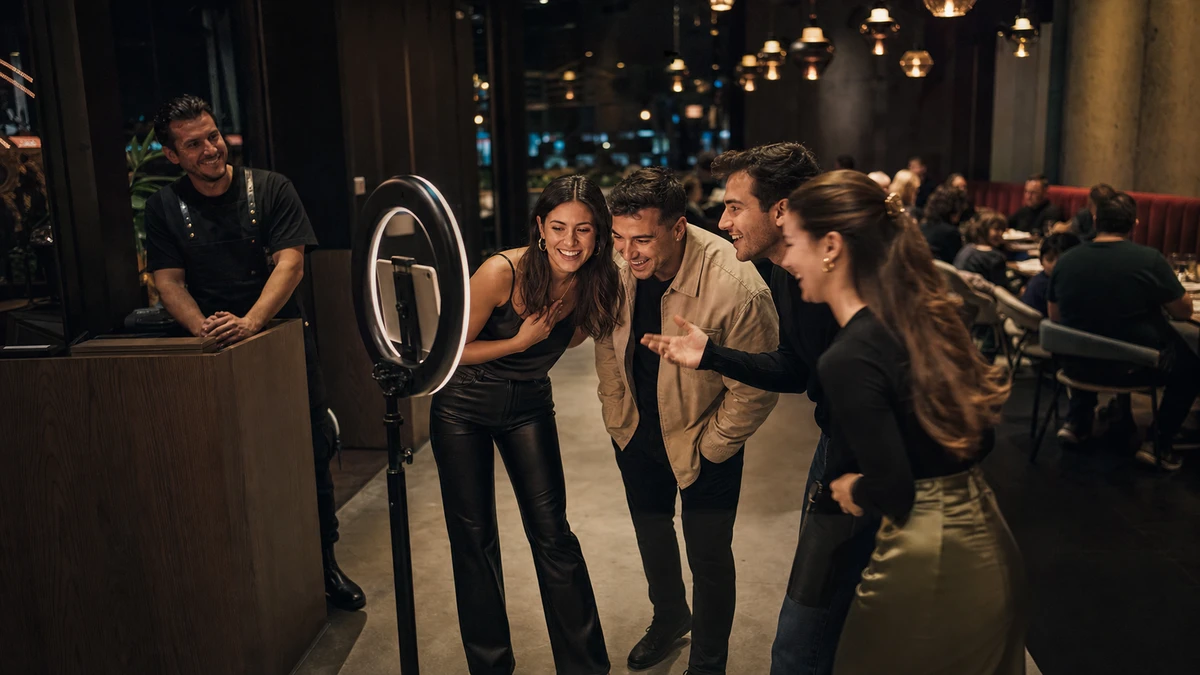
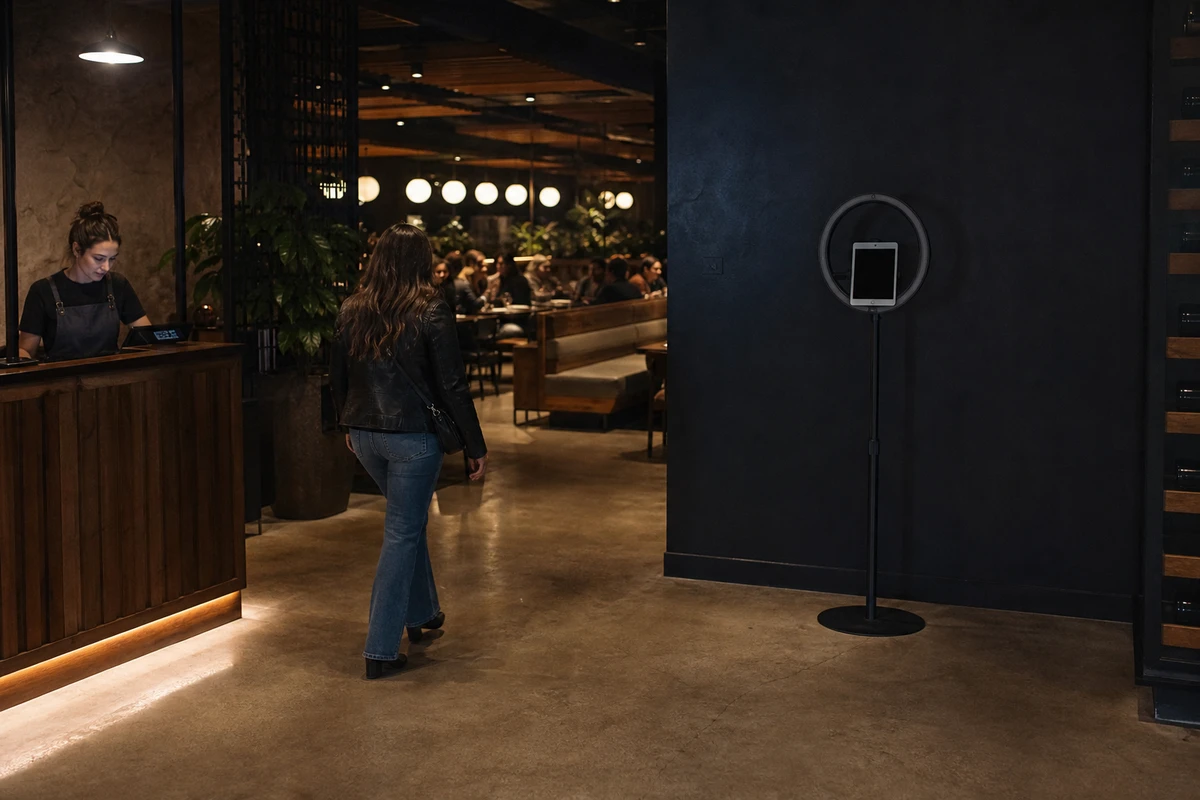
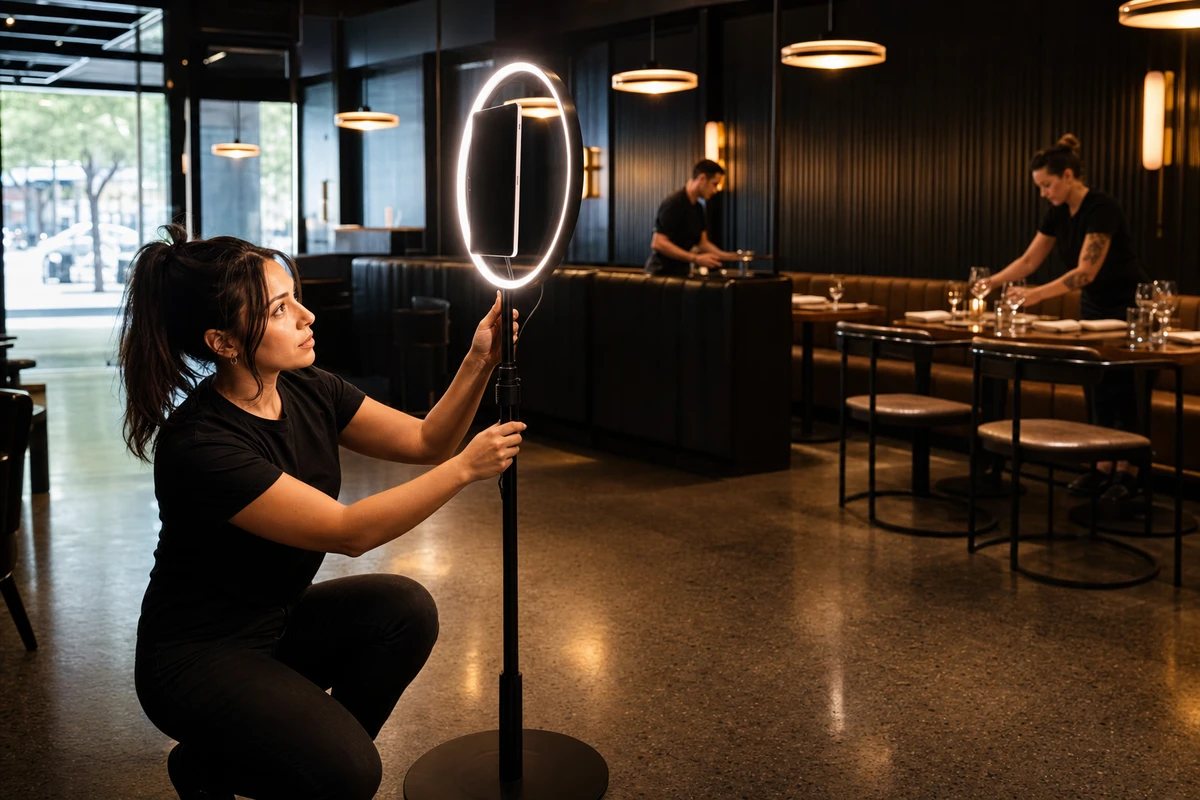
Simple Booth’s HALO kit is one concrete version of that surface for a restaurant: a guest poses at a branded photo station, chooses SMS as the way to receive the photo, and the opt-in is recorded in the same step, so the number arrives as a delivery detail rather than a separate favor. One ongoing HALO install at the W Hotel Austin logged 31,730 participants, a measure of how many guests will hand over a contact method when the reward is a photo they actually want.
The reframe an operator can act on is small and changes everything downstream. Stop designing the phone number as a favor the guest does for the restaurant, repaid with a coupon, and start designing a moment where giving the number is simply how the guest gets the thing they already came for. A favor has to be sold, and the selling is the friction. A byproduct does not. The list that results is larger, because the ask was easy, and steadier, because the guests on it joined while doing something they wanted to do.
Compliance that keeps a list deliverable
A mid-sized restaurant is already sitting on thousands of phone numbers, in the reservation system, the delivery records, the waitlist app. Texting a marketing offer to all of them looks like the fastest list a manager could build. It is also the fastest route to a lawsuit.
The consent workflow
Having a guest’s phone number is not consent to send that guest marketing texts. A number collected to confirm a reservation or route a delivery was given for that purpose and no other. Marketing SMS requires its own separate, explicit opt-in, and US law treats the gap seriously. Under the Telephone Consumer Protection Act, sending a promotional text without prior express written consent carries statutory damages of $500 to $1,500 per message (SlickText, The Complete SMS Compliance Guide for 2026). Across a few hundred wrongly texted reservation numbers, the arithmetic turns frightening fast. A 2023 FCC rule that would have narrowed consent to one specific business at a time was challenged and vacated by a federal appeals court in early 2025, so the long-standing prior-express-written-consent standard is what governs in 2026.
A compliant opt-in is not complicated, but it is specific. The disclosure a guest agrees to has to name the business and the type of messages, state a message frequency, note that message and data rates may apply, explain that replying STOP opts out and HELP gets help, make clear the agreement is not a condition of buying anything, and link to terms and a privacy policy. The consent checkbox stays unchecked by default. Double opt-in, where the guest confirms once more by reply, adds a step and earns it back: it filters typos and mistyped numbers and documents that the guest meant to join, which is the operator’s evidence if a complaint ever arrives.
One technical layer sits under all of this. A restaurant cannot send business texts at scale from an ordinary mobile number. Application-to-person traffic in the US has to be registered through The Campaign Registry, where brands and their messaging campaigns are recorded for the mobile carriers. Unregistered traffic gets filtered or blocked by carriers before it reaches a single guest (Call Loop, SMS Marketing for Restaurants). A perfectly consented list is worth nothing if the messages never arrive. Compliance, done properly, is not a tax on the list. It is what keeps the list deliverable and the operator out of court.
What a clean list is worth, and how to size one
Take a restaurant serving roughly 1,000 guests a week. A table-tent keyword, a friction surface, might pull in around 5% of the week’s guests, roughly 50 subscribers in a good week. A delight-point surface working on the same foot traffic, an online-order checkbox or loyalty enrollment, captures a far larger share of the guests it reaches. Same dining room, same week, and the list grows at a materially different speed depending only on where the ask was placed.
Attach a value to a subscriber and the gap starts to bite. Bloom Intelligence offers a clean scaffold for the math: a regular who spends $30 a visit and comes in once a month is worth $360 a year, and $1,800 in lifetime value across five years (Bloom Intelligence, Restaurant Customer Lifetime Value, 2023). The same three-number calculation works for any restaurant: a $52 check and a fortnightly regular produce a different annual figure from the identical structure. A list of 1,000 active, well-consented subscribers, sent one well-timed offer that one in five acts on, puts 200 covers on the books from a single message. A one-in-five response is conservative for the sector: Omnisend’s 2025 benchmarks put roughly seven in ten hospitality SMS programs above a 20% conversion rate. At a $30 average check, those 200 covers are $6,000 in revenue from one send, against a sending cost of a few dollars.
Recovered visits are worth more than they look, because restaurant profit is unusually sensitive to retention. The foundational loyalty research by Reichheld and Sasser found that lifting customer retention by 5% can raise profit by 25% to 95%, depending on the business (Bain & Company / Harvard Business Review, 1990). A text list that pulls a handful of slipping regulars back each month is working directly on that lever.
The figure operators miss is decay
The figure operators miss is decay. An SMS list is not a static asset. It loses subscribers every year to opt-outs, number changes, and disconnected lines, realistically somewhere in the range of 15% to 25%. Much of that loss is self-inflicted through over-messaging: among consumers who opt out, 40% say the reason is texts arriving too often (EZ Texting, 2026 Consumer Texting Behavior Report). A 1,000-person list shedding 20% is down 200 names within a year, so the restaurant has to capture at least 200 just to stand still. Monthly capture has to outrun monthly churn, or the list shrinks while the spreadsheet still reads 1,000.
A phone number in a spreadsheet column earns nothing until it lands in a system that can segment and send, an SMS platform, the loyalty database, or a guest-data platform, where a weekday-lunch regular and a lapsed weekend diner can be told apart and messaged differently. The operating instruction is short: pick one delight-point surface, wire it into that system, and track net list growth against a 20% annual churn assumption. That single number, rising or falling, tells an operator whether they are building an asset or refilling a leaking one.
Sources
- EZ Texting (2026). “2026 Consumer Texting Behavior Report.” https://www.eztexting.com/report/2026-consumer-texting-behavior-report
- Reelo. “Top 80 Reddit and Quora Questions on Restaurant Memberships and Loyalty, Answered.” https://reelo.io/blog/top-80-reddit-quora-questions-on-restaurant-memberships-loyalty-answered/
- Call Loop. “SMS Marketing for Restaurants: The Complete 2026 Guide.” https://www.callloop.com/blog/sms-marketing-for-restaurants
- SlickText (2026). “The Complete SMS Compliance Guide for 2026.” https://www.slicktext.com/sms-compliance
- The Campaign Registry. “About TCR.” https://www.campaignregistry.com/about/
- Bloom Intelligence (2023). “Restaurant Customer Lifetime Value.” https://bloomintelligence.com/blog/restaurant-customer-lifetime-value/
- Omnisend (2025). “SMS Marketing Statistics and Benchmarks.” https://www.omnisend.com/blog/sms-marketing-statistics/
- Harvard Business Review (1990). Reichheld, F. F. and Sasser, W. E. “Zero Defections: Quality Comes to Services.” https://hbr.org/1990/09/zero-defections-quality-comes-to-services