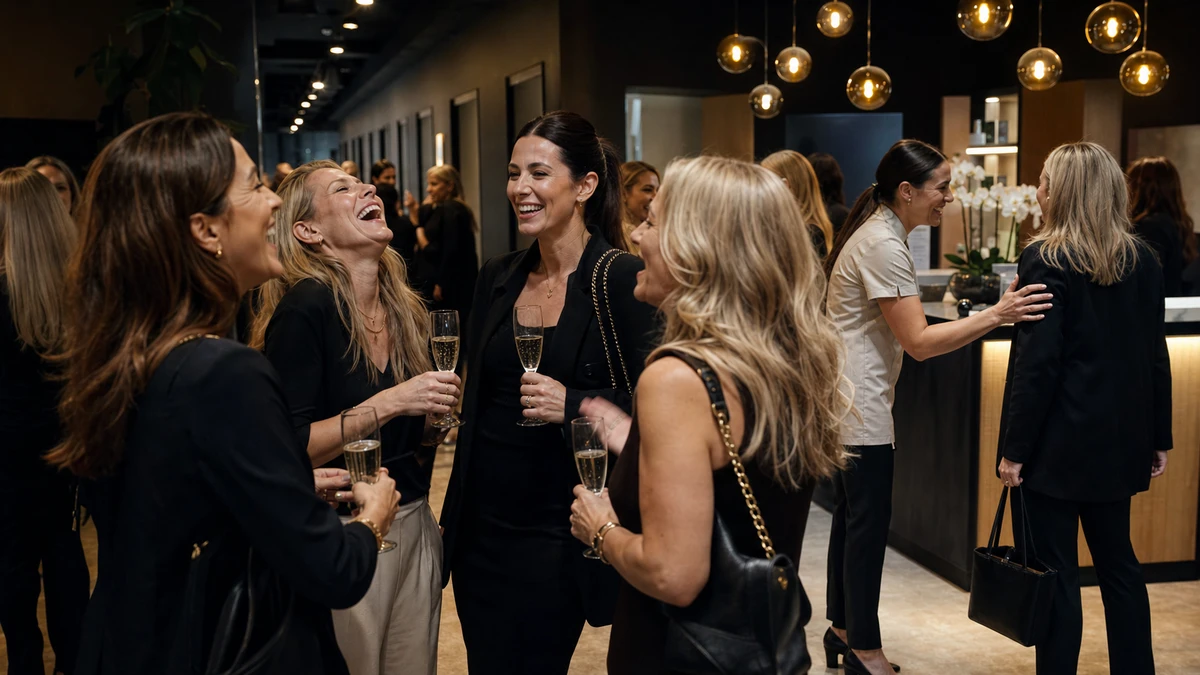
At 6 p.m. on a Thursday, the treatment rooms at a busy med spa go quiet and the lobby fills instead. The front desk has cleared its afternoon schedule, a provider is pouring sparkling water and prosecco, and the forty or so people walking in are not new prospects. They are the practice’s most valuable patients: the members, the regulars, the patients who have spent several thousand dollars over several years.
That evening is a VIP client night, and it is a different event than an open house. Most med spa VIP event ideas circulating online blur the two together, dropping open houses, launch parties, and member appreciation nights into one flat list. They do not belong there.
A VIP night and an anniversary event are retention events. They exist to reward, re-engage, and rebook the patients who already spend the most, and the return shows up in same-night packages, a 90-day rebooking lift, and the photos, testimonials, and consented contacts the night produces. What follows is a working definition of the guest list, concrete formats for both event types, a planning timeline, and a way to tell whether the night paid back.
A VIP Night Is Not a Smaller Open House
Two events, two different jobs
An open house is an acquisition event. The doors open, patients are encouraged to bring a friend, and the goal is to put new prospects in front of the practice. A VIP client night does the opposite. It is invite-only, capped at a number the space and the providers can host well, and built for patients who already trust the practice. Different guest list, different goal, different measure of success. An open house succeeds when strangers book a first consult. A VIP night succeeds when loyal patients rebook, buy a package, or pre-purchase a treatment they were already going to want.
Treating the VIP night as a smaller, fancier open house is the mistake nearly every ranking listicle makes. It leads operators to promote the night publicly, fill the room with bargain-hunters, and then wonder why the practice’s best patients felt like part of a crowd rather than guests of honor.
Who actually belongs on the VIP list
Operators tend to use “members,” “VIPs,” and “everyone on the email list” interchangeably, and that loose definition is why the guest list never gets built. A VIP list is narrower and queryable. Most practice-management software can filter on three things: lifetime spend, visit frequency over the last twelve months, and treatment history. A workable rule of thumb is the top 15 to 20 percent of patients by spend, plus every active membership holder, plus any patient with a high-ticket treatment history (a device package, recurring injectables) even if their visit count is modest.
That list is usually smaller than operators expect, and that is the point. A room of 30 to 50 genuine top patients is the event. A room of 200 names pulled from the full database is an open house wearing a VIP label.
Where the anniversary event sits
An anniversary event sits between the two. It is anchored on existing patients, like a VIP night, but the milestone framing gives it room to widen slightly. A controlled “bring one guest” mechanic works at an anniversary because the occasion is the practice itself, not a private thank-you. A pure VIP night should not carry that mechanic. The moment a top patient is asked to share the room with a friend’s plus-one, the evening stops feeling like recognition.
Why VIP and Anniversary Events Earn Their Keep
Operators are right to be skeptical of events. Many describe spending heavily on marketing with little booked to show for it, and they extend that suspicion to an evening of prosecco and discounted treatments. The case for a retention event is not that it feels nice. It is arithmetic.
The retention math
Acquiring a new med spa patient costs more than keeping an existing one, and the gap is large. The American Med Spa Association puts it at three to five times more for medical aesthetics specifically (AmSpa, 2018); across service industries generally, Harvard Business Review reports the range runs as wide as five to 25 times (Gallo, HBR, 2014).
Retention also compounds. Frederick Reichheld’s research at Bain & Company found that a five-percentage-point improvement in customer retention can lift profit by 25 to 95 percent, depending on the industry (Gallo, HBR, 2014; Reichheld, Bain & Company, 2001). The upper end of that range comes from banking and insurance modeling rather than aesthetics, so the figure is directional, not a promise. The mechanism holds across service businesses: a patient who stays longer spreads the original cost of winning them over more visits and more revenue.
Loyal patients also spend more per visit. A survey of small-business owners by Manta and BIA/Kelsey found repeat customers spend 67 percent more than new ones (Manta/BIA Kelsey, 2014), though that 2014 figure comes with an undocumented derivation method. A more current, med-spa-specific signal: Zenoti’s 2025 platform data reports that members visit 2.9 times more often and spend 35 percent more than non-members (Zenoti, 2025).
The revenue a VIP night actually defends
The sharpest argument for keeping the guest list short is revenue concentration. Zenoti’s 2025 platform data reports that 42 percent of loyal guests drive 80 percent of total med spa revenue (Zenoti, 2025, vendor platform data). Even if that ratio is only roughly true for a given practice, it reframes the event. A VIP night does not chase incremental new revenue. It is low-cost insurance on the revenue the practice already depends on. Reaching the top 30 to 50 patients costs almost nothing to promote, because the list is small and the relationships already exist.
In-person contact is also a stronger loyalty touch than another email. Research conducted by The Harris Poll for Freeman found that 95 percent of attendees trust a brand more after an in-person event (Freeman, 2025). For a practice whose patients are weighing where to spend on injectables and devices, an evening of face time with their provider is a retention act in itself.
A scenario worth running
Concrete numbers make the case better than adjectives. Take a practice whose average patient visit runs around $527, the 2024 industry benchmark (AmSpa, 2024). Suppose it invites its top 40 patients to a VIP night and 28 attend. If 18 of those guests book a treatment or buy a package on the night at roughly $500 each, that is about $9,000 in same-night revenue, before any 30-, 60-, or 90-day rebooking lift and before a single referral.
A practice with a larger patient base and higher average tickets will see a bigger number. One marketing agency reports VIP nights producing $30,000 to $50,000 in bookings (Pronk Med Spa Marketing, vendor-reported figures, not an independent benchmark), but those figures are a top-performer outcome, not a floor. The $9,000 evening is the more honest planning anchor, and it still clears the cost of prosecco and a few swag bags many times over.
VIP Client Night Ideas That Reward Top Patients
The formats below are the VIP event ideas worth running at a med spa. Each one has a clear goal and a perk that signals status rather than just a discount. That distinction matters: when Yotpo surveyed 3,800 consumers about loyalty programs, early access to sales (60.1 percent) and early access to new products (50.8 percent) ranked above generic discounts as the perks people actually wanted (Yotpo, 2021). Access costs the practice less than the biggest discount of the year, and it lands harder.
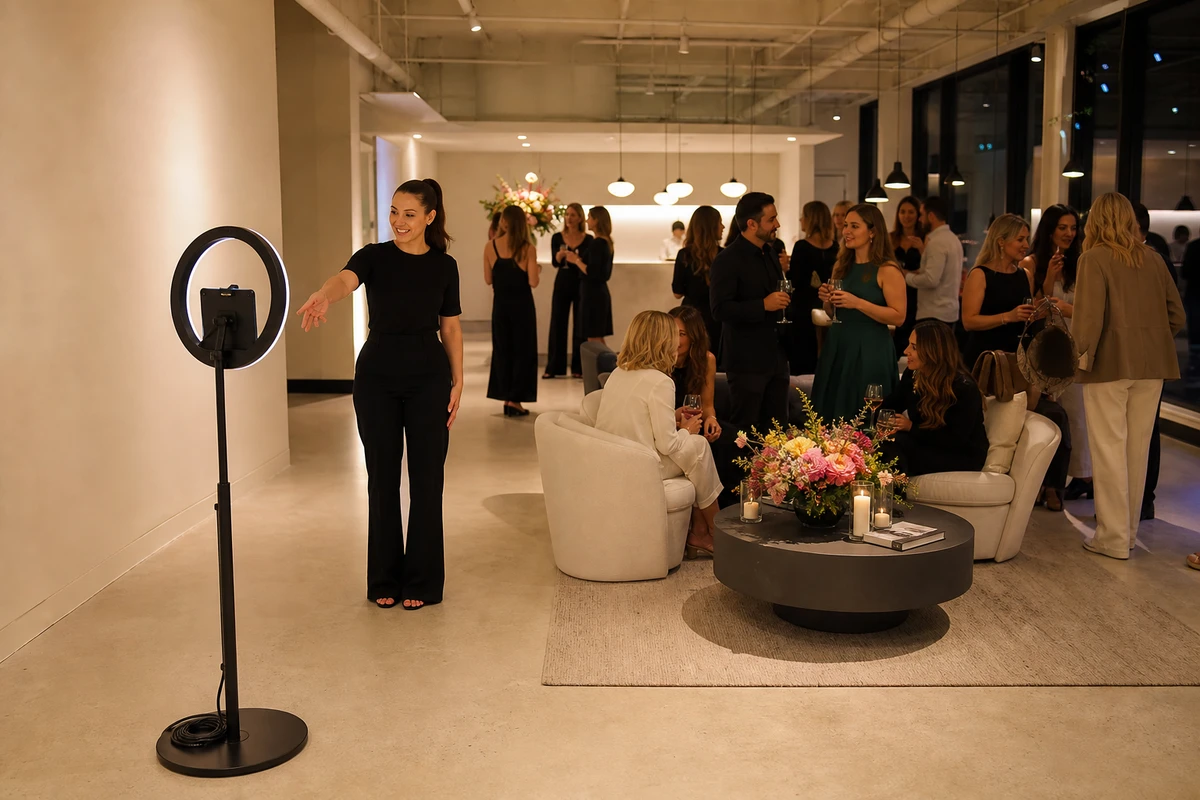
First-access treatment preview
The practice has booked a new device or a new injectable and has not yet put it on the public menu. The VIP night is where top patients try it first. The goal is package pre-sale: guests who like the new treatment book a series before anyone else can. The perk is being first, which costs the practice nothing and flatters the patient directly.
The injector’s-table evening
A small group, an unhurried provider, and consults that do not feel rushed. Day to day, top patients get the same 15-minute appointment slot as everyone else. An injector’s-table evening gives them a provider’s full attention, a touch-up, and a treatment plan for the year ahead. The goal is rebooking the next several visits in one sitting.
A members-only night with tiered perks
For practices with a membership program, a members-only night reinforces why the membership is worth keeping. Tiered perks (an earlier booking window for the busy season, a complimentary add-on, retail credit) make the tier visible. The goal is membership retention and renewal, the most direct lever on recurring revenue.
A VIP masterclass with a partner brand
A skincare or wellness masterclass led by a provider, often co-hosted with a product brand whose rep can fund samples and take-home product. Guests leave having learned something and holding a product they will finish and rebuy. The goal is retail revenue and education that drives future treatment interest.
A thank-you pampering night
Some VIP nights should not sell at all. A pampering night offers low-downtime treatments (LED therapy, dermaplaning, express facials) with explicitly no sales pressure, the “zero pressure or obligation” framing operators use to lower a patient’s guard. The goal is pure goodwill, and goodwill rebooks on its own later.
A referral-circle night
The one VIP format that blends retention with warm acquisition: each top patient may bring a single guest. The guests arrive pre-vetted by someone the practice trusts, and the room stays small. The goal is qualified referrals without the bargain-hunter crowd a public open house attracts.
Anniversary Event Ideas That Celebrate the Practice
An anniversary is once a year, brandable, and built on a story. That changes the framing. A VIP night says thank-you privately; an anniversary says it out loud, with the founding story, the team, and the patients who have been there from the start. The discount matters less than the gratitude.
A milestone night with the founding story
An evening built around a number: years in business, treatments delivered, patients served. The founder tells the origin story, the team is introduced, and long-term patients are recognized. Empire Aesthetic Center frames its yearly event as “our biggest patient appreciation event of the year,” now in its fifteenth edition (SimpleTix event listing, 2024). The story is the product; the event-only pricing is the supporting act.
A patient-spotlight evening
With consent, the practice features a few long-term patients and their history with the practice. This is the anniversary’s most powerful and most underused format, because it produces testimonial content while it celebrates the patient. The goal is social proof the practice can use all year, captured in a setting where the patient is flattered to take part.
A giveback anniversary
A charitable tie-in shows up at most anniversary events practices publicize, and it is not decoration. A local cause gives the practice press-release material, aligns the event with its community identity, and gives patients a reason to feel good about spending. A giveback anniversary pairs a treatment or retail promotion with a donation, and the goodwill outlasts the evening.
Why an anniversary compounds
An anniversary event run consistently becomes a fixture patients expect. Several practices have run the same annual event for seven to nineteen years, and operators report the same patients returning each year specifically for it. Dr. Kate Dee of Glow Medispa described patients who “have done RF microneedling every year for five years, and every year at the open house, they’re like, ‘Sign me up’” (Zenoti, 2025). A tradition compresses future marketing spend, because patients put the date on their own calendars.
Turn One Night Into a Month of Content and a Bigger List
Most event guides reduce the after-value to one line: take some photos. That wastes what the night actually is. A room of the practice’s best patients, present voluntarily and in a good mood, is the highest-quality source of marketing material the practice will see all year.
Photos and short clips, captured with consent
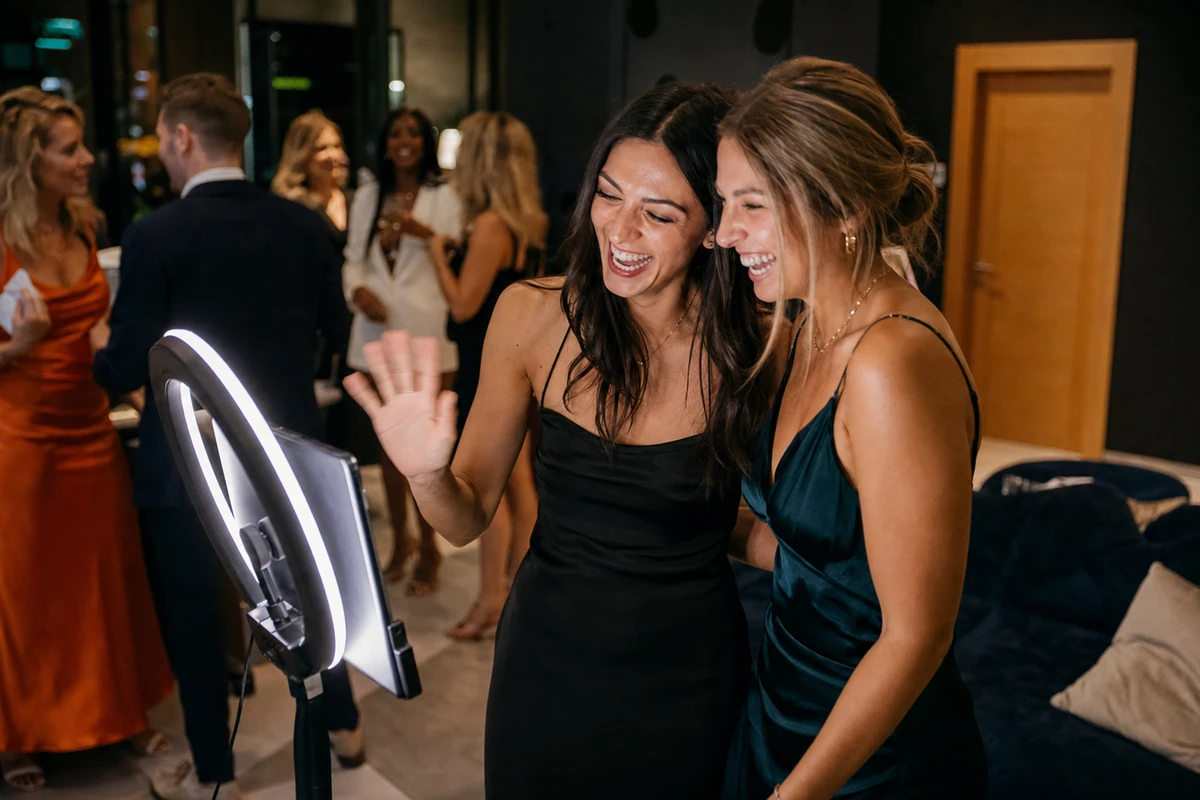
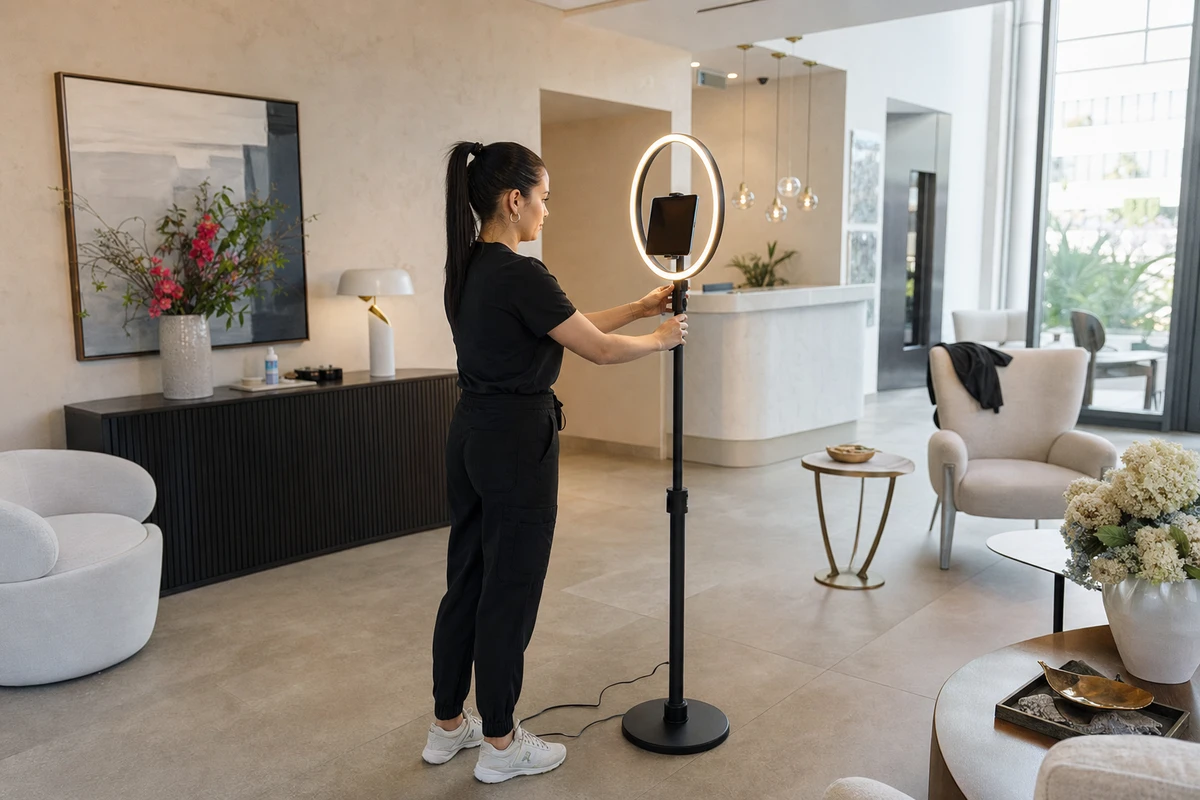
The practical problem is that good content does not happen on its own. A staff member chasing guests with a phone gets a few blurry shots and interrupts the evening. A better approach is to make capture a fixed part of the event: a small on-site photo experience or a branded photo station that guests walk up to themselves, where the image is taken, the patient receives a copy by text or email, and reuse permission is recorded at the same moment. The practice cannot pull a patient’s photo from social media and run it in an ad just because the patient was tagged. Permission has to be collected when the photo is taken, not found useful later. Simple Booth’s HALO kit is one self-serve version of that station: an iPad with a 2,100-lumen ring light where a guest taps a consent checkbox, has the photo taken, and gets a copy by email or text within seconds. The practice ends the night able to export every opt-in as a list, rather than reconstructing later who agreed to what.
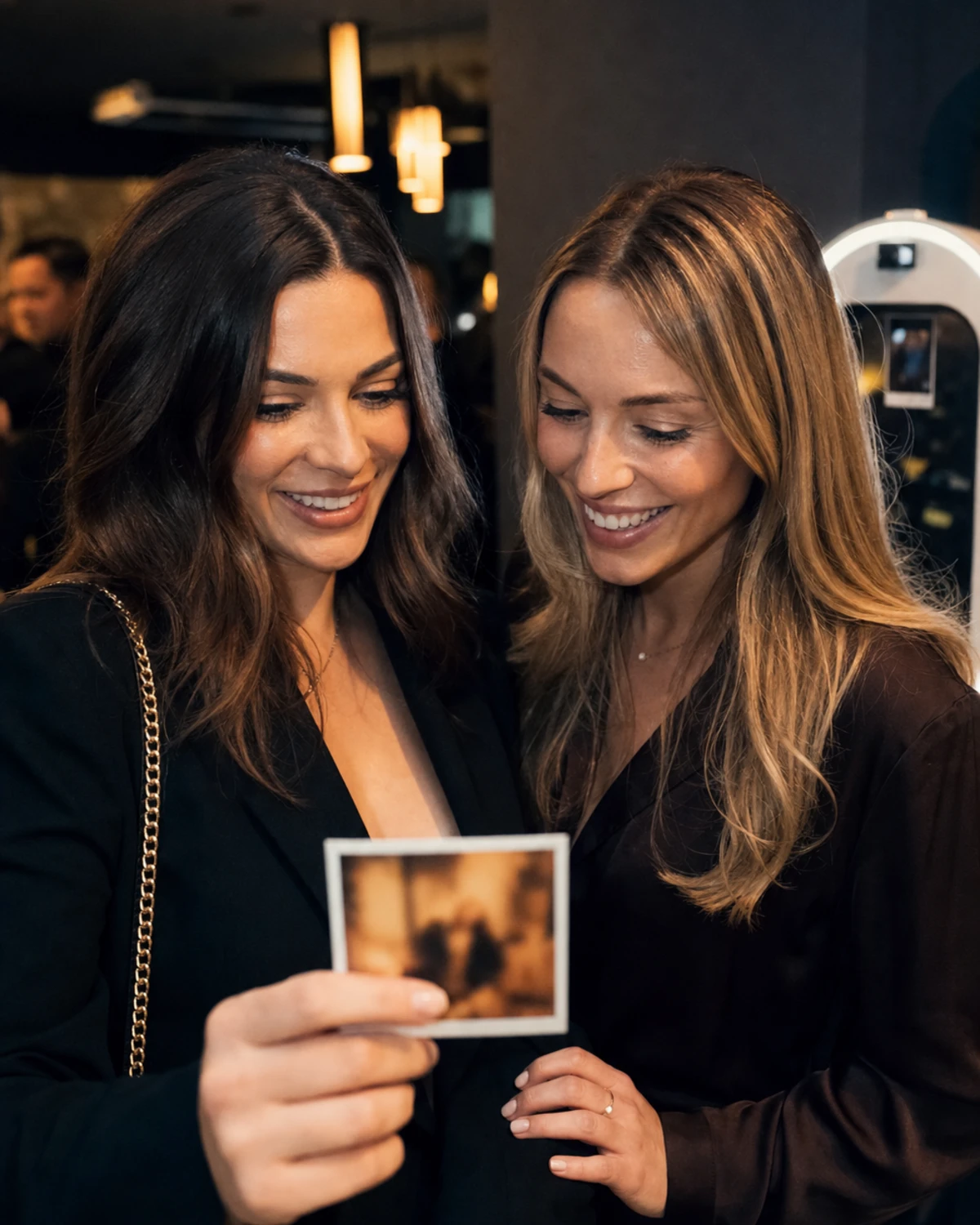
That same station does a second job. When the copy lands on a guest’s phone within seconds, some guests will post it themselves, and their followers see a trusted friend endorsing the practice. Lowering the friction is the whole trick: a fraction of the room markets the practice for free, without anyone on staff having to ask.
Testimonials while patients are happy and present
A patient who just had a great evening will say warm things about the practice on camera. The same patient, emailed a testimonial request three weeks later, usually will not. A short, low-pressure filmed or written testimonial station captures that goodwill while it is fresh.
Contacts and treatment interests, not just calendar bookings
The night is also a chance to grow the marketing list with quality, not just quantity. Capturing opt-in contact details and noting which treatments a guest asked about turns the event into a segmented list the practice can market to precisely. This matters because multi-channel patients are worth more: AmSpa reports that patients who engage across several channels (email, in-person, social) spend 18 to 36 percent more than patients who only come in for services (AmSpa, 2018).
Planning Timeline: From Guest List to Full Room
Turnout is the question operators ask most often. A great format in an empty room fails. The timeline below is what reliably fills it.
Six weeks out: list and offer
Promotion should start at least six weeks before the event (RxPhoto, 2024). At this point the operator pulls and segments the guest list and designs the event-only offer. The offer should include at least one access-based perk, not only a discount.
Four weeks out: invitations and RSVPs
Invitations go out across email and SMS, paired with a simple RSVP page so the practice can track expected attendance. For the top tier of patients, a hand-delivered, personally addressed invitation given at their next appointment signals individual appreciation in a way a mass email cannot (RxPhoto, 2024).
The final two weeks: reminders decide attendance
Reminders are the single biggest turnout lever. Operators who run events consistently cite the personal text or phone call as far more effective than another bulk email. Open rates explain why: SMS messages are read more than 90 percent of the time within three minutes, compared with roughly 10 percent for marketing email (RxPhoto, 2024). Reminders are not optional padding. Mangomint’s analysis of 20,000 med spa appointments found a 22.25 percent cancellation rate for ordinary booked appointments (Mangomint, 2024); an RSVP with no reminder behind it will leak at least that much.
Pick the right night
Most practitioners find Wednesday or Thursday evenings draw the strongest turnout. Mid-week builds momentum toward the weekend without competing with Friday and Saturday social plans, and it avoids Monday and Tuesday, which sit too early in the week (RxPhoto, 2024).
Day-of essentials
The night needs a staffed consultation area and an on-site booking station, so a patient who decides to act leaves with the next appointment on the calendar rather than a promise to call. Live treatment demos give guests a reason to book in the moment. One operational caveat worth building into the run-of-show: where treatments or consents happen on site, serve wine after consent forms are signed, not before.
Measuring the Return: What to Track After the Night
Set the target before the night
A number set before the doors open does more than enable a scorecard afterward. It shapes the event itself. A practice aiming for $12,000 in same-night bookings will design a sharper offer and a tighter guest list than one working without a figure in mind. The metric should match the format: a same-night revenue figure for a treatment preview, a count of membership renewals for a members-only night, a package-sales number for an injector’s-table evening.
Without a target, the default verdict on any event is that everyone had a great time, which is true of almost any open bar and tells the operator nothing. A defined number is what separates a $9,000 night from a $3,000 one in the practice’s own records, and it is what turns next quarter’s event into a revision rather than a fresh guess.
What to track
After the night, a handful of numbers tell the real story:
- Revenue booked on the night
- Attendance measured against RSVPs
- Patients who rebooked or bought a package
- The 30-, 60-, and 90-day rebooking lift, compared with a normal period
- New consented contacts captured
- Referrals or guest bookings generated
- Content assets produced: photos, clips, and testimonials
The rebooking lift is the figure most operators skip, and it is the one that captures the retention payoff. A night that books $9,000 on the spot but lifts 90-day rebookings by another $15,000 is a far better event than the same-night total alone suggests.

Follow-up is where the revenue is won
Operators describe two outcomes. One group sends a single thank-you email and stops, then reports disappointing event ROI. The other runs segmented follow-up: a rebooking sequence for guests who bought, a nurture sequence for attendees who did not buy yet, and a win-back sequence for dormant patients the invitation pulled back in. The follow-up converts the long tail of the room, and it is the difference between an event that breaks even and one that earns a permanent place on the calendar.
A VIP night and an anniversary event are not feel-good extras. They defend revenue the practice already depends on, and they hand it a month of photos, testimonials, and consented contacts along the way. The first move is the smallest one: pull the list of 30 to 50 patients who genuinely belong in the room. The format, the offer, and the run-of-show all follow from who is on it.
Sources
- American Med Spa Association (2018). “Medical Spa VIP Programs Increase Loyalty and Retention.” https://americanmedspa.org/blog/medical-spa-vip-programs-increase-loyalty-and-retention
- American Med Spa Association (2024). “2024 Medical Spa State of the Industry Executive Report Recap.” https://www.americanmedspa.org/news/2024-medical-spa-state-of-the-industry-executive-report-recap/
- Harvard Business Review (2014). Amy Gallo, “The Value of Keeping the Right Customers.” https://hbr.org/2014/10/the-value-of-keeping-the-right-customers
- Bain & Company (2001). Fred Reichheld, “Prescription for Cutting Costs.” https://www.bain.com/insights/prescription-for-cutting-costs-bain-brief
- Manta & BIA/Kelsey (2014). “Achieving Big Customer Loyalty in a Small Business World.” https://www.bia.com/press-releases/small-business-owners-shift-investment-from-customer-acquisition-to-customer-engagement-new-report-by-manta-and-biakelsey/
- Zenoti (2025). “The 4 Key Medspa Trends Driving Revenue Growth in 2025.” https://www.zenoti.com/thecheckin/the-4-key-medspa-trends-driving-revenue-growth-in-2025
- Freeman / The Harris Poll (2025). “New Research Shows In-Person Events Build Critical Brand Trust in an Era of Growing Consumer Skepticism.” https://www.freeman.com/about/press/new-research-shows-in-person-events-build-critical-brand-trust-in-an-era-of-growing-consumer-skepticism/
- Yotpo (2021). “The State of Brand Loyalty 2021: Global Consumer Survey.” https://www.yotpo.com/blog/the-state-of-brand-loyalty-2021-global-consumer-survey/
- RxPhoto (2024). “Throw an Unforgettable Med Spa Open House Resulting in Rave Reviews and Appointments.” https://rxphoto.com/resources/blog/throw-an-unforgettable-med-spa-open-house-resulting-in-rave-reviews-and-appointments
- Mangomint (2024). “Med Spa Booking Statistics.” https://www.mangomint.com/blog/med-spa-booking-statistics/
- Pronk Med Spa Marketing. “Med Spa Event Marketing.” https://pronkmedspamarketing.com/med-spa-event-marketing/
- SimpleTix (2024). “15th Annual Medical Aesthetics Bazaar.” https://www.simpletix.com/e/15th-annual-medical-aesthetics-bazaar-soci-tickets-179259