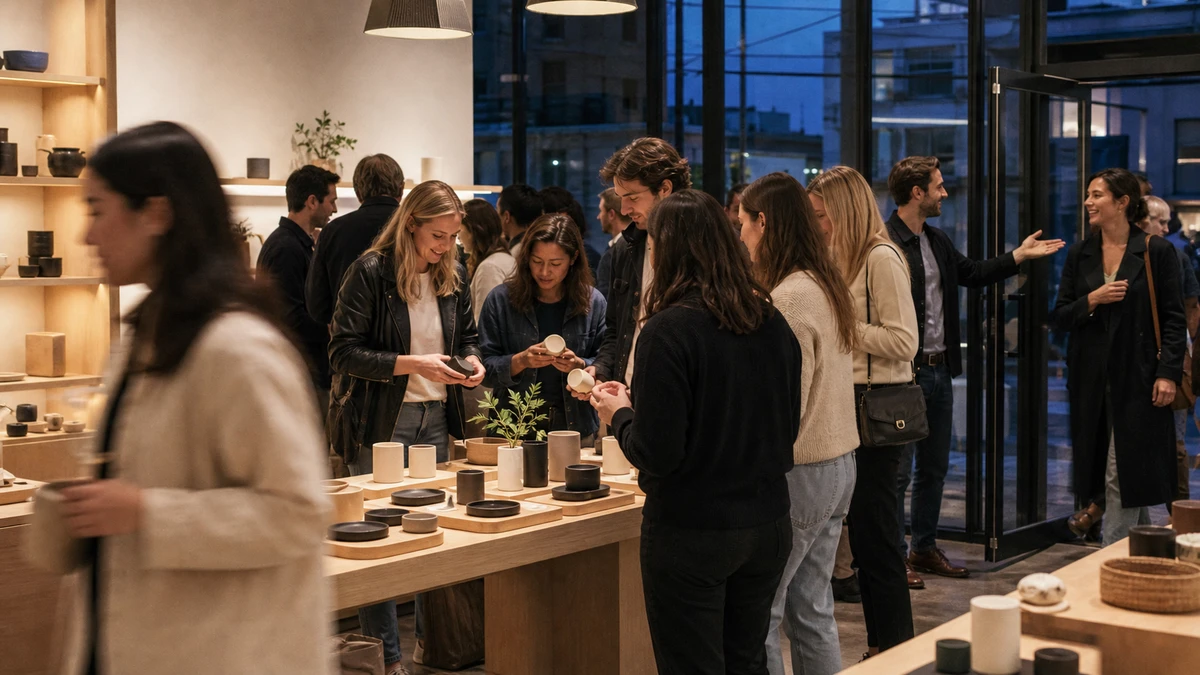
A boutique owner has forty units of a new product in the stockroom and a shelf cleared to receive it. The buyer waited months for this line. The shelf is ready. The problem is that nobody walking past the window knows the product exists, and a new item with no reviews and no word of mouth behind it tends to sit there.
Search “retail product launch ideas” and the advice splits in two. Neither half fits a store like that. One half explains how to pitch a product into someone else’s shops, with sell sheets, wholesale margins, and buyer outreach. The other half shows how Fenty stages a global pop-up or how Apple runs a keynote reveal. A single-location retailer is neither a wholesale brand nor Apple. It already has a store, a customer list, and a new product to debut to the people who live a few streets away.
This article covers three things the generalist advice skips: launch event formats scaled to one location and a modest budget, the on-the-floor mechanics that turn a night of attendance into customers and contact details the store keeps, and the arithmetic to tell whether the event paid for itself.
What a product launch event actually is (and what it isn’t)
Ask three store owners to describe a product launch event and the answers drift apart. One describes the week the shop first opened. One describes a plan to get a product stocked in other retailers. One describes a Friday evening with a cheese board and a playlist. Those are three different events with three different jobs, and planning the wrong one spends the budget on the wrong outcome.
A retail product launch event is a dated, in-store
A retail product launch event is a dated, in-store moment built around one new product or collection. Its job is narrow: concentrate attention, trial, and purchase into a short, defined window so a new product clears its cold-start period in days instead of months.
It is not a grand opening. The store already exists. A grand opening announces an address to people who have never been inside; a launch event re-activates customers who already know the store and gives them a reason to return.
It is not a wholesale go-to-market plan. There are no retail buyers to pitch and no sell sheets to build. The retailer sells direct, on its own floor, to its own customers.
It is not a generic launch party. A party measures success by the mood in the room. A launch event measures it in numbers: sales velocity on the new product, contact details collected, and content produced.
Two close neighbors also deserve separating out. A pop-up shop is a temporary store, often in a location the business does not normally occupy, and it carries its own playbook. A trunk show or client-appreciation evening is a recurring relationship event, not the debut of a single product. The launch event sits between them: fixed location, fixed product, fixed date. That precision matters, because it decides the budget, the guest list, and the metric.
Why a launch event outperforms an email blast or a discount
A new product arrives with a built-in disadvantage. The bestseller next to it has a year of reviews, a base of repeat buyers, and customers who recommend it without being asked. The new item has none of that, and the odds reflect it. Most new consumer products miss their first-year sales targets; commonly cited industry estimates put the share somewhere between half and the low-to-mid 80 percent, depending on the category and how failure is measured. The figure to distrust is the popular one, that 95% of new products fail.
Researchers who tried to trace it found that Clayton Christensen, the name usually attached to it, denied ever making the claim (Castellion and Markham, Journal of Product Innovation Management, 2013). The exact number is milder than the myth, but the direction is not in dispute. A shopper picks the new item up, finds nothing that reassures them, and sets it back down. An email announcing the product hits the same wall: it asks people to buy something unproven, sight unseen.
A launch event attacks that problem on several fronts at once.
A dated window creates urgency that a permanent shelf cannot. A product that will be there next week, and the week after, gives nobody a reason to come now. An event with a date, and optionally a limited first run, does.
In-person trial removes the risk of buying something unknown. More than half of consumers across 30 countries say they want to see, touch, and feel a product before they buy it (EY Future Consumer Index, 2024), and that preference is strongest for items a shopper has never encountered. A launch event is built around exactly that: handling, trying, sampling.
A full room is social proof a sign cannot fake. Other shoppers examining the product signal that it is worth examining, and most new products are first discovered not through advertising but through other people. 56% of consumers say they learn about new products from friends and family (G2, 2024). An event concentrates that recommendation engine in one place.
Attendees produce content
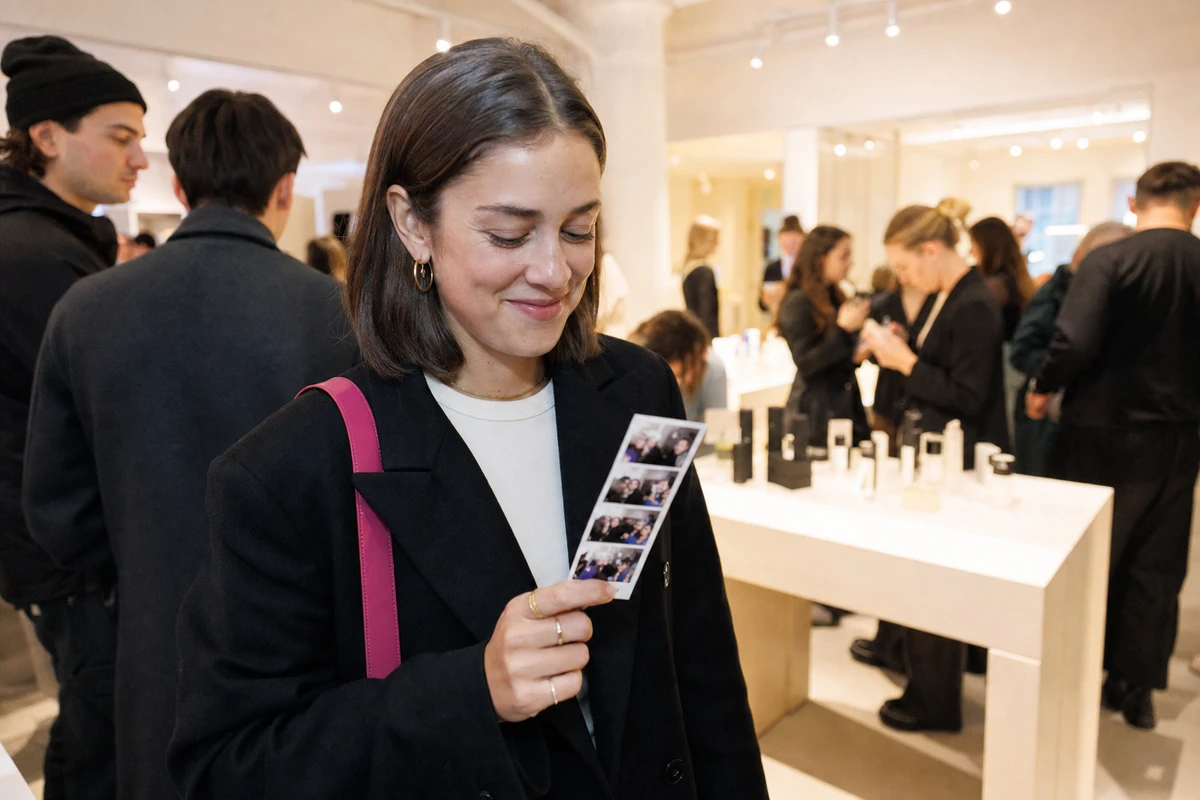
Attendees produce content. People photograph a moment they enjoyed and post it, which introduces the product to people who were never invited. That earned reach matters because shoppers act on it: 85% of shoppers prefer photos and videos from real customers over brand-made content when deciding what to buy (Bazaarvoice, Shopper Experience Index, 2023).
A storewide discount can also produce a sales spike, and it is the reflex many operators reach for. But a discount on a brand-new product trains customers to wait for the next markdown and erodes the margin on the item before it has established a full-price value. An event manufactures the same urgency without teaching anyone that the new product is a markdown waiting to happen.
Launch event formats that work in a single store
The launch ideas that fill search results were built for companies with travelling pop-ups and a press list. The retail product launch ideas worth copying are different: formats a single store can run with the staff already on the schedule and a budget in the high hundreds rather than the high thousands. Seven work reliably at that scale.
The preview night
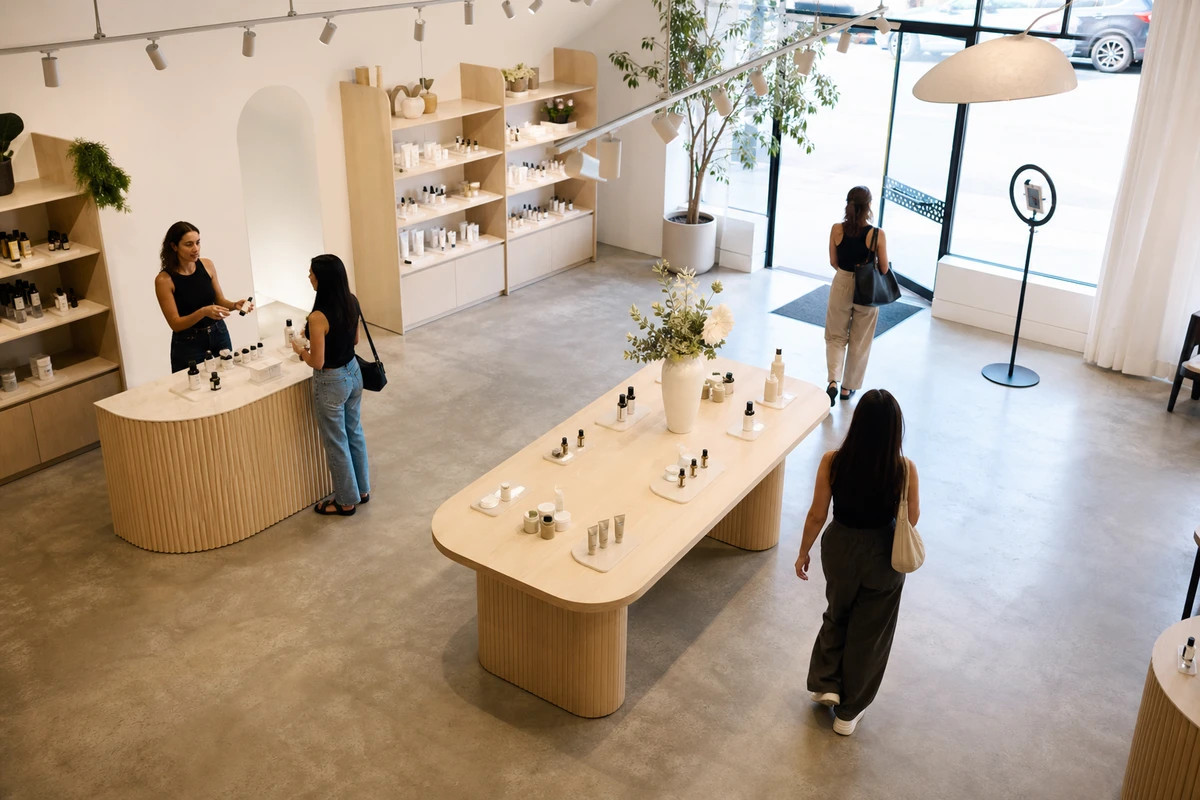
The store invites its existing customer list to see and buy the new product one evening before the public launch. It costs almost nothing, converts well because the guests already trust the store, and it rewards loyalty in a way customers notice. It suits almost any product, and it is the safest first event for a retailer who has never run one.
Try-it-first demo stations
Staffed stations where shoppers actually use the product: a skincare tester, a fabric to handle, a tool to hold, food to taste. This format suits anything that needs explaining or rewards sensory trial, and it generates the most useful content, customers caught mid-experience rather than posed.
The countdown drop
A timed reveal with a limited, optionally numbered first run. It borrows the mechanic behind sneaker releases and applies it at boutique scale. It suits products with a natural collectible or seasonal angle and creates genuine urgency, though it only works when the limited run is real.
A local creator or expert collaboration
A local stylist, chef, maker, or artist whose audience overlaps the store’s hosts or co-presents the launch. The retailer borrows that person’s reach for a modest fee or a product trade. It suits stores whose product benefits from demonstration or taste-making.
A personalization station
Monogramming, customization, or a build-your-own activity tied to the new product. It turns the launch into something a customer does with their hands, which photographs well and lengthens the time a shopper spends in the store.
Launch week or launch night
A single evening concentrates intensity, scarcity, and word of mouth, and it is easier to staff. A launch week spreads the traffic, lowers the per-day pressure, and catches customers who cannot make one specific evening. The decision rule: choose a night when the customer list is large and engaged enough to fill a room in one sitting, and choose a week when traffic is thinner and needs several days to accumulate.
Cross-promotion with a neighboring business
A non-competing local business (a coffee roaster, a florist, a bookshop) co-hosts the launch, and the two pool their customer lists and split the cost. It is the lowest-risk format for a store with a short list of its own, because the partner brings foot traffic the retailer could not generate alone.
Turn attendance into something the store keeps
The night goes well. Sixty people come through the door, the new product sells, the room feels busy and warm. The next morning the store has a sales figure and little else: no record of who attended, no way to reach them again, no content to show the people who missed it. The event happened, and then it evaporated.
That outcome is the default. Avoiding it takes four pieces of structure, all decided before the doors open.
Build one content moment worth sharing
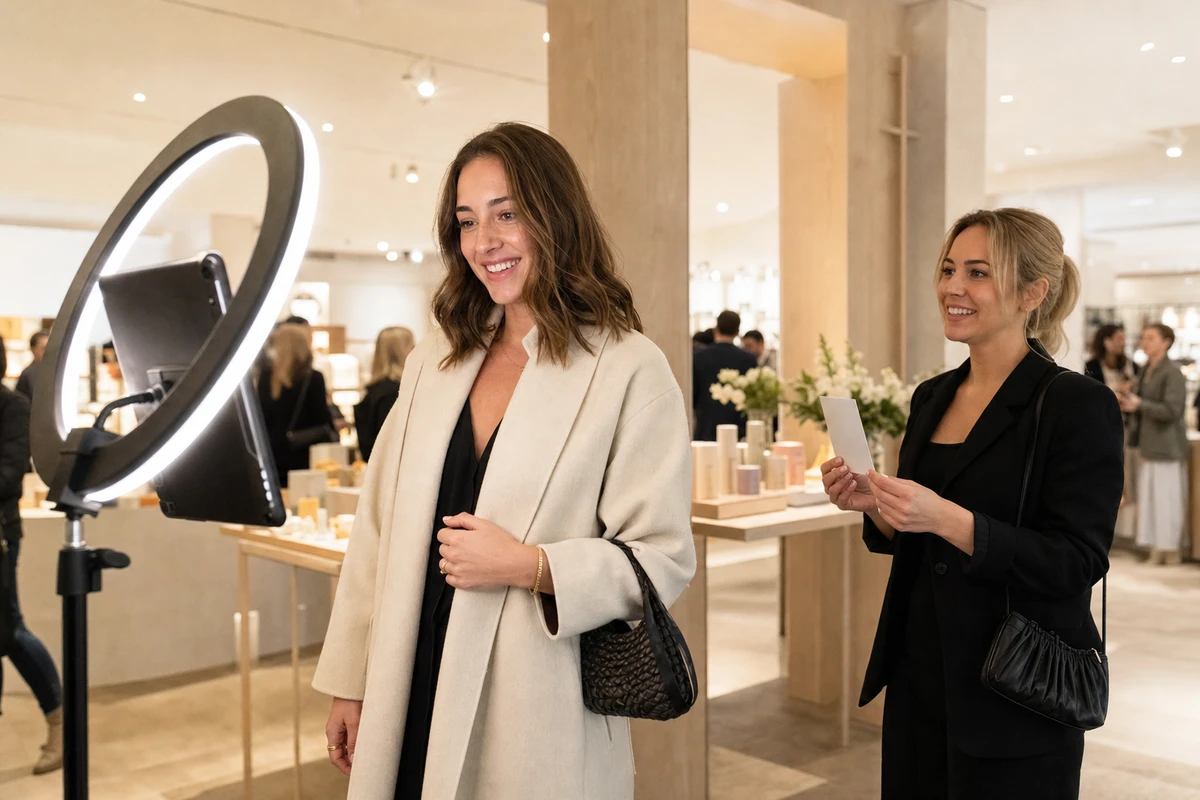
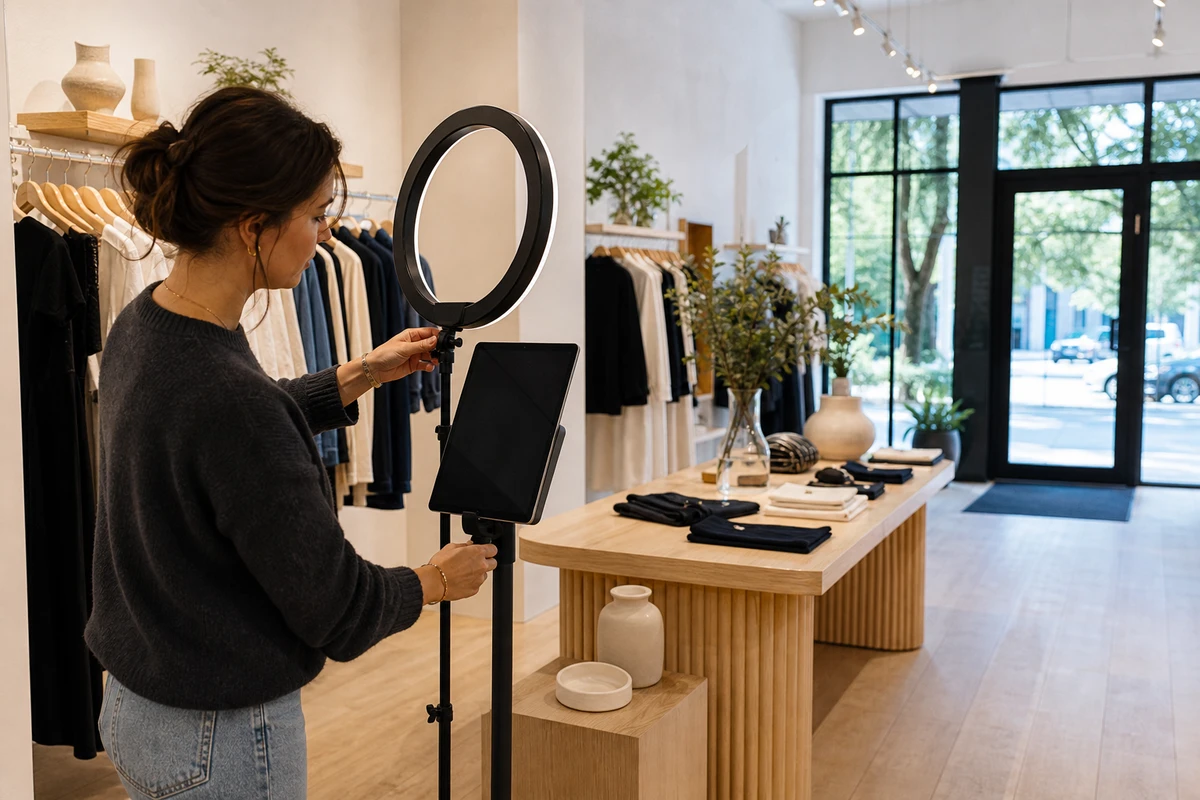
Build one content moment worth sharing. Not a backdrop nobody uses, but a single spot in the store, staged around the new product, that attendees actively want a photo from. When a guest takes that photo and posts it, the product reaches people who were not in the room. The same moment can double as the point where the store records a contact: the photo gets delivered digitally, and delivering it requires an email or a phone number. The equipment matters less than the idea: one spot that earns a photo and collects a contact in the same motion. One off-the-shelf version is an iPad photo station such as Simple Booth’s HALO kit, which sends each attendee their photo by email or text and records the address in the same step. Arizona Opera grew an email list of about a thousand addresses across a handful of events running that capture-on-delivery loop.
Make one clear opt-in ask
Make one clear opt-in ask. Not a cluttered clipboard with five fields and no reason attached. One reason a customer would hand over an email or phone number: early access to the next drop, the event photo sent digitally, a launch-night price held open for another 48 hours. A single ask with a single benefit collects far more than a generic newsletter sign-up.
Count the door
Count the door. A simple headcount, plus the ratio of people who said they would come to people who actually did, turns the event from a vague success into a measured one. That ratio is what makes the next launch plannable.
Plan the follow-up before the event, not after. A short sequence to the people who opted in but did not buy, sent while the product is still fresh in memory, is where a meaningful share of launch revenue actually lands. Shoppers act on customer content. 62% of shoppers say they are more likely to buy a product when they can see photos and videos from other customers (Bazaarvoice, 2022), so a follow-up that carries attendee photos of the product works harder than a plain reminder.
The event is the acquisition channel
The event is the acquisition channel. These four decisions are what let it compound instead of evaporate.
The launch event math: did it pay for itself?
The fear that keeps operators from running a launch event is specific and reasonable: spend on refreshments, staff, and promotion, then watch two people wander in and leave. The way to answer that fear is not reassurance. It is arithmetic.
Take an 1,800-square-foot boutique with a $100 average order value, planning a single launch evening. A realistic budget runs near $700: roughly $200 on refreshments and supplies, $150 in extra staff hours, $250 on printed signage and one paid local promotion, and $100 on the content setup. That sits at the low end of the $500 to $2,000 range Lightspeed cites for a single-location in-store event (Lightspeed HQ, 2023).
Attendance has to be planned against no-shows, not hoped for. Free events lose a large share of the people who RSVP: event organizers report no-show rates between 25% and 50%, with most planning around the higher end (Eventbrite, 2021), and free events specifically run a markedly higher no-show rate than paid ones (Glue Up, 2025). To put 80 people in the room, the store invites around 150.
The return arrives in two streams
The return arrives in two streams. The first is launch-night sales: 80 attendees, a 30% purchase rate, and a $100 average order produce $2,400 in revenue, and at a retail gross margin near half, about $1,200 in gross profit. The second is pipeline: if half the room opts in, that is 40 contacts. Retail email subscribers generate somewhere between $30 and $75 a year in attributable revenue, depending on order value and send cadence (Omnisend, 2026); at $40 each, 40 contacts is $1,600 in value the store did not have the day before.
Now the number that answers the empty-room fear. At $50 of gross profit per sale, the $700 event breaks even on 14 sales. At a 30% purchase rate, that is 47 people through the door. The event clears its cost at 47 attendees, well below the planned 80, and before a single captured contact is counted. A room that feels half empty has still paid for itself. Independent retailers running seasonal launch events report 2 to 3 times their normal daily revenue across the event window, with part of the lift landing in the days after, as attendees who did not buy on the night come back (Faire, 2024).
Filling the room: promotion before launch day
The thin-room fear is real, but it is a planning problem, not a luck problem, and most of it is solved in the four to six weeks before the doors open. Lightspeed’s guidance on lead time is blunt: two to three weeks is not long enough for RSVPs to accumulate (Lightspeed HQ, 2023).
The warmest invite list is the store’s own foot
The warmest invite list is the store’s own foot traffic. Signage, counter cards, and a line on the receipt, running for weeks before the date, reach people who have already chosen to walk in. They are far more likely to return for a launch than a stranger reached by an ad.
The existing email and SMS list does the heavy lifting. An RSVP request to that list gives the store a headcount, lets it over-invite against the expected no-show rate, and creates a natural reason to send a reminder sequence as the date approaches.
Local partnerships extend reach past the store’s own audience. A co-host brings their list. Neighboring businesses will often display a card. Community groups and local event calendars carry the date to people who would never otherwise have heard of it.
Timing is a lever many operators ignore. Placing a launch on a slow weekday or in a soft season lifts a weak traffic period rather than competing with the store’s own busy hours, and it gives staff room to actually talk to customers. The one timing rule that overrides the rest: do not schedule against a major local event that will pull the same crowd elsewhere.
A launch with a runway of anticipation behind it consistently outperforms one announced the same week it happens. The weeks of teasing are not filler. They are what converts a date on a poster into a room full of people.
Common launch event mistakes, and when to skip one entirely
Most launch events that disappoint fail in predictable ways. The store announces and hosts in the same week, leaving no time for anticipation to build. The budget goes to a sound system and elaborate décor while promotion and contact capture get whatever is left. There is no capture mechanism at all, so the night produces a sales bump and nothing durable. The opt-ins are never followed up, so they go cold within a week. And success gets measured only by how many people showed up, which ignores the contacts, the content, and the sales that land in the days afterward.
There is also an honest case against launch events worth taking seriously. Startups.co.uk has argued that a launch event is the first marketing mistake many businesses make: a free event tends to attract people there for the refreshments rather than the product, and the budget would often do more deployed on channels that reach actual buyers. For a brand-new business with almost no customer list and very little foot traffic, that critique holds. The room will be thin and the math will not clear, because the formats above all depend on an existing audience to draw from.
The fix is sequencing, not avoidance
The fix is sequencing, not avoidance. A store in that position should build the list first and run a small, low-cost preview night for the few dozen customers it does have before attempting anything larger. The preview night is the one format that works with a short list, because it is sized to one.
That points to the real reason to run a launch event at all. A store’s first one is the hardest and the smallest. Its most valuable output is not the night’s till total but the contact list it builds, and that list is what makes the next launch open in a fuller room.
Sources
- Bazaarvoice (2023). “Shopper Experience Index.” https://www.bazaarvoice.com/resources/research-shopper-experience-index/
- Bazaarvoice (2022). “The Power of User-Generated Content: UGC Statistics.” https://www.bazaarvoice.com/blog/ugc-statistics/
- Castellion, G. & Markham, S. K. (2013). “Perspective: New Product Failure Rates: Influence of Argumentum ad Populum and Self-Interest.” Journal of Product Innovation Management, 30(5), 976–979.
- EY (2024). “Future Consumer Index” (touch-and-feel finding reported via TrendWatching). https://www.trendwatching.com/trends-and-insights/57-of-consumers-want-to-see-touch-and-feel-items-before-they-buy-them
- Eventbrite (2021). “How to Manage Attendance at Free Events From 9 Creators Who’ve Been There.” https://www.eventbrite.co.uk/blog/how-to-manage-attendance-free-events-ds00/
- Faire (2024). Independent-retailer seasonal launch-event revenue data, Faire operator blog.
- G2 (2024). “Navigating the New Product Launch Landscape.” https://learn.g2.com/new-product-launch
- Glue Up (2025). “Event No-Show Rate: Benchmarks, Causes, and How to Reduce It.” https://www.glueup.com/blog/event-no-show-rate
- Lightspeed HQ (2023). “How to Plan an In-Store Retail Event.”
- Omnisend (2026). “Email Marketing Statistics & Benchmarks.” https://www.omnisend.com/blog/email-marketing-statistics/
- Startups.co.uk. “Why a Launch Event Is the First Marketing Mistake You Can Make as a Start-up.” https://startups.co.uk/marketing/tips/why-a-launch-event-is-the-first-marketing-mistake-you-can-make-as-a-start-up/