
A gift shop on a secondary retail street, Saturday at 1 p.m. This is the busiest hour of the store’s week, and five people are inside: two browsing without much intent, one returning a candle, and the rest drifting past a floor set that has not changed in six weeks. Down the block, a coffee roaster has a short line at the counter because it is running a single-origin tasting that ends at four o’clock. Same street, same weekend, same shoppers. One business handed them a dated reason to show up. The other is hoping to be noticed.
The fix the gift shop needs is a pop-up, and most retail pop-up ideas published online will tell a store to run a tasting, a limited drop, or a maker market. The ideas are fine. What those lists miss is that the busy Saturday is not the payoff. A crowd is a vanity number. The operators who turn one strong weekend into steady foot traffic are the ones who leave the event holding something durable: contacts, opt-ins, and content to use again next month. The sections below sort pop-up ideas by what an established store already controls (events hosted inside its own walls, weekends built into destinations, and new neighborhoods worth testing) and judge each one by the question the competing lists skip: what did the store leave with?
Why pop-ups pull weekend traffic, and why a recurring slot beats a one-off
Weekend shoppers behave differently from weekday shoppers. A Tuesday customer is usually running an errand: a known item, a quick trip, in and out. A Saturday customer is browsing, often with company and with time to spend and no fixed list. The National Retail Federation’s holiday figures show the pattern at its extreme, with an estimated 157 million consumers planning to shop on Super Saturday in 2024, the last Saturday before Christmas. That holiday peak is the visible version of a year-round rhythm: Saturday tends to be the busiest day of the retail week, and weekend shoppers arrive in browse mode rather than errand mode. They are choosing a destination, not completing a task, and a pop-up gives them a destination with a deadline.
That last word does the work. A permanent display says “available.” A pop-up says “available until Sunday.” Scarcity is one of two levers a pop-up pulls. A peer-reviewed study in the Journal of Promotion Management found that limited-time messaging produces a measurable lift in impulse purchasing, with fear of missing out as the mechanism (Khetarpal et al., 2024). That study tested online shoppers, so the effect transfers to a physical floor by analogy rather than proof, but the logic holds: a window that closes converts “someday” into “this Saturday.” The second lever is novelty. Adyen’s 2025 retail report found that 33 percent of shoppers want retailers to make the in-store experience more interesting, even as 39 percent still name in-store as their preferred channel. A pop-up answers that request without the store rebuilding its floor.
Most idea lists stop here
Most idea lists stop here. The established operator should not. A one-off pop-up spends all of its promotion (emails, signage, social posts, word of mouth) on a single day, and then the audience that promotion built disperses. A recurring slot compounds instead. A store that runs a pop-up on the first Saturday of every month teaches its neighborhood a cadence: shoppers learn to expect it, vendors begin asking to be booked into it, and each event becomes free promotion for the next. The one-off is an expense. The standing slot is an asset. The rest of this guide judges every idea by the audience it leaves behind, not the crowd it draws.
Pop-up ideas to host inside an existing store
A store that already has a lease, fixtures, lighting, and a working register can host a pop-up without renting a thing. That is a different starting position from the one most pop-up advice assumes, where a brand is still deciding whether to try physical retail at all. Capital One Shopping’s 2025 research found that 40 percent of pop-up shops belong to brick-and-mortar retailers, and that 44 percent of all pop-ups cost less than $5,000 to run. For a host store the figure is lower still, because the largest line items, space and permits, are already covered.
The clearest version is the guest-vendor takeover
The clearest version is the guest-vendor takeover. A store invites a complementary, non-competing maker (a candle pourer into a bookshop, a ceramicist into a plant shop) to set up in a corner of the floor for the weekend. The mechanism is simple: the vendor brings their own followers, and those followers become the host store’s foot traffic. The shop-in-shop is the same move at a larger scale, pairing two brands that share a customer for a longer run.
Deloitte’s Q3 2024 retail trends report names the store-within-a-store pop-up as an emerging format, driven by inflation-conscious “treasure-hunting” shoppers, and points to Kohl’s housing Sephora counters in roughly 850 locations as the format at full scale. An independent retailer cannot run 850 of anything, but the principle does not need scale to work. A themed maker weekend (several vendors, one theme, one date, marketed as a small curated market) is the same idea sized for a single block.

Two practical questions stall most host-store operators, and the idea lists answer neither. The first is where to find vendors. Operators on r/smallbusiness who run this model point to the same sources: the local chamber of commerce, small-business associations, and artisan or maker groups. The second is what to charge. A defensible structure is a flat weekend fee plus an optional small percentage of the vendor’s sales. SeenMarkets’ 2025 pricing guide puts a standard 10-by-10-foot booth at an organized weekend market in the $150 to $300 range, and reports average vendor revenue of roughly $2,800 per weekend at one Salt Lake City holiday market. A vendor earning that much can comfortably absorb a $200 booth fee, which makes the host store’s slot incremental revenue on top of the foot-traffic gain, not a favor done for free.
Pop-up ideas that turn a storefront into a weekend destination
Not every pop-up needs an outside vendor. A store can be the activation itself, using its own space and stock to give one weekend a reason to exist. The goal matches the host-store model (a dated reason to choose this block) but the operator keeps full control of the floor and the customer.
The most direct version is a limited weekend drop:
The most direct version is a limited weekend drop: a product, bundle, or price available only Saturday and Sunday and promoted as such. This is scarcity applied to merchandise instead of the calendar, and it works for the same FOMO reason the recurring slot does. An after-hours event pulls a different lever. A “sip and shop” evening, a members’ night, or extended weekend hours adds a reason to come in that is not strictly about buying, which matters because browse-mode shoppers resist a hard sell and respond to an occasion. A hands-on workshop or demo goes further: a kitchen store teaching one knife skill, a yarn shop running a beginners’ class, a bike shop walking through a tune-up. The workshop sells the competence the product depends on, and competence brings customers back. Sampling and tasting sit at the low-cost end, trading a small giveaway for dwell time and the impulse purchases dwell time produces.
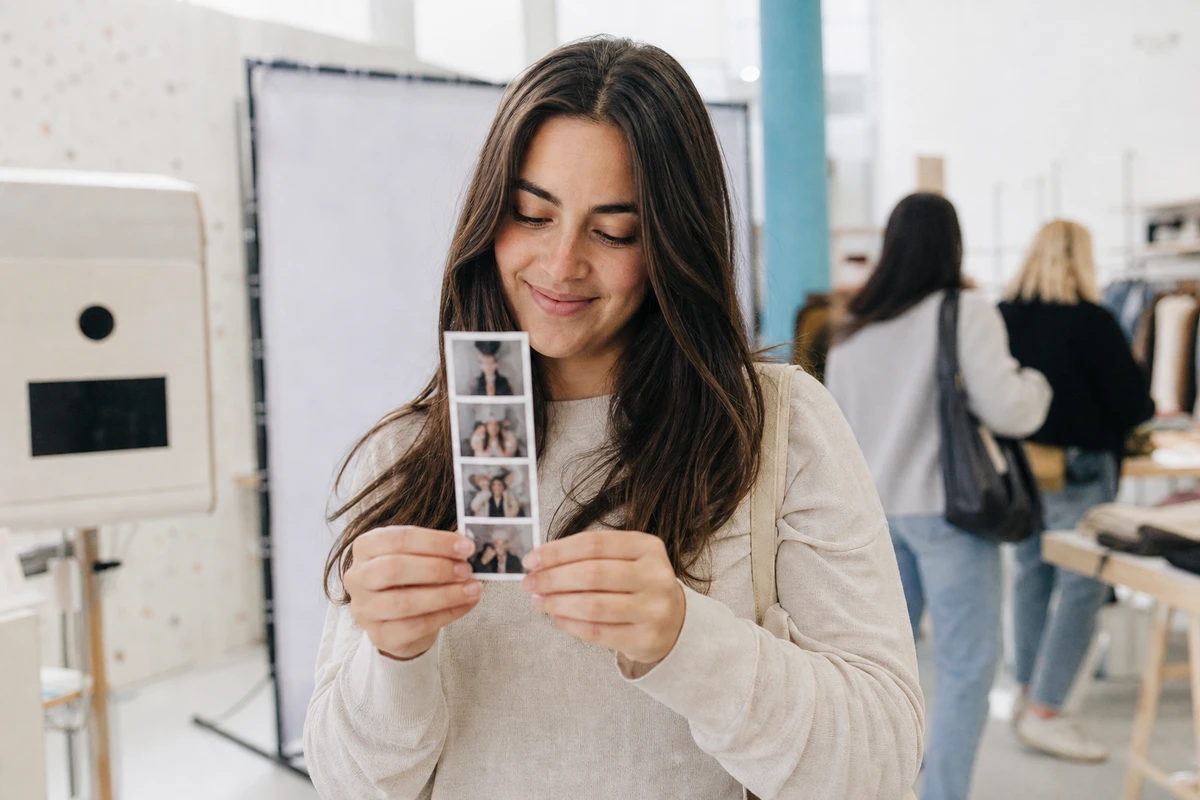
Two of these ideas deserve a closer look because they do double duty. A photo or shareable moment (a branded backdrop, a small installation, a seasonal set) gives visitors a reason to post and gives the store content to reuse, and it is also the most natural point in the whole event to capture a contact. A cause tie-in (partnering with a local nonprofit for the weekend, donating a share of sales) does double duty on the traffic side: the nonprofit’s supporters become the store’s weekend visitors, and the store earns a reason to be in front of them that does not read as an ad.
The destination weekend is also the strongest customer-acquisition tool a store has. Ahna Tillmanns, director of operations at the apparel brand Monday Swimwear, has described a Los Angeles pop-up that drew 60 percent of its sales from new customers, who also spent 8 percent more than existing ones (Shopify, 2025). A weekend built as a destination does not just move stock to regulars. It puts the store in front of people who were not going to walk in otherwise, which is only worth something if the store can reach them again.
Pop-up ideas for testing a new neighborhood
A pop-up does not have to happen in or near the home store. For an operator weighing a second location, or an online retailer that wants a weekend of real-world signal before signing a lease, a pop-up somewhere new is a cheap experiment. Capital One Shopping’s 2025 data shows the split: 40 percent of pop-ups come from brick-and-mortar stores, 32 percent from e-commerce businesses, and 28 percent from companies that already sell both ways. All three use the format to test a market they do not yet serve.
Three formats fit this purpose. A mobile pop-up, a van or trailer, follows weekend foot traffic and can sample several neighborhoods across a season before the operator commits. A mall kiosk or short-term storefront places the store inside a higher-traffic district than its home base for a defined run, with short-term-lease marketplaces making the booking straightforward. A festival- or event-adjacent placement borrows a crowd that already exists, which works only when the store’s goods genuinely relate to the event, because a borrowed crowd with no reason to care converts at close to zero.
The logistics here are duller than the ideas, and the idea lists tend to skip them. A pop-up in a new location generally needs three things: a business or temporary business license, which JDJ Consulting’s 2026 permit guide puts at $50 to $500 depending on the city; a seller’s or sales-tax permit, required before the first sale in any state that collects sales tax; and zoning approval confirming retail use is allowed at the address. Outdoor or public-property setups add vendor and event permits. The US Chamber of Commerce’s pop-up planning guide stresses that promotion cannot be an afterthought either, because a short run leaves no time for word of mouth to build on its own. A new neighborhood that never hears the pop-up is happening returns a clean but useless result.
The idea every pop-up list skips: capturing the weekend so it repeats
Ask an operator how a past pop-up went and the answer is usually about the crowd: it was packed, or it was quiet. That instinct hides the real question. A busy pop-up and a successful pop-up are not the same thing, and treating them as one is the most expensive mistake in the format. Foot traffic that walks in, buys or does not, and leaves without a trace is traffic the store paid to acquire once and will pay to acquire again. The weekend was the acquisition event. If nothing was captured, nothing was acquired.
Contact capture
Capturing the weekend means leaving with a way to reach the people who came: an email or text opt-in, a new follower, a piece of customer content the store can reuse, or a concrete reason for the visitor to return. Professional event marketers already treat this as the main job. Event Marketer’s 2025 EventTrack research found that leads and data collection rank as the single most important metric for consumer events, and that 92 percent of marketers plan to strengthen post-event follow-up specifically to improve return. The pop-up is not finished at teardown. The follow-up list is where the return is earned.
Take a store whose weekend pop-up draws 250 visitors and whose average order is $60. Industry KPI guides put a pop-up’s walk-in rate, the share of passersby who actually enter, at 20 to 40 percent (The Storefront, 2026), but the number that compounds is different: how many of those visitors leave contact details. No independent study pins down the in-person opt-in rate for retail pop-ups specifically. The closest published figure comes from Event Marketer, which cited an 18 percent capture rate at one festival activation as “higher than industry standard.” A pop-up visitor has already chosen to walk into a store, unlike a festival crowd there for the music, so a store offering a real incentive (a discount code, a prize entry, a copy of a photo taken at the event) can reasonably plan in that range, 15 to 25 percent. At 20 percent, 250 visitors produce 50 contacts.
Contact capture
Fifty names is a quiet result for one weekend, and that is the point. The number changes when the pop-up recurs. A first-Saturday slot run every month produces roughly 600 contacts over a year, every one of them a person who chose to walk in. A single follow-up email to that list, at Klaviyo’s benchmark campaign conversion rate of about 1.5 percent (Klaviyo, 2026) and the $60 average order, returns around nine orders, or $540, from one send to a list that costs nothing to email again next month. The send-by-send return is modest. The list is the asset, and the store can mail, text, or invite it back indefinitely.
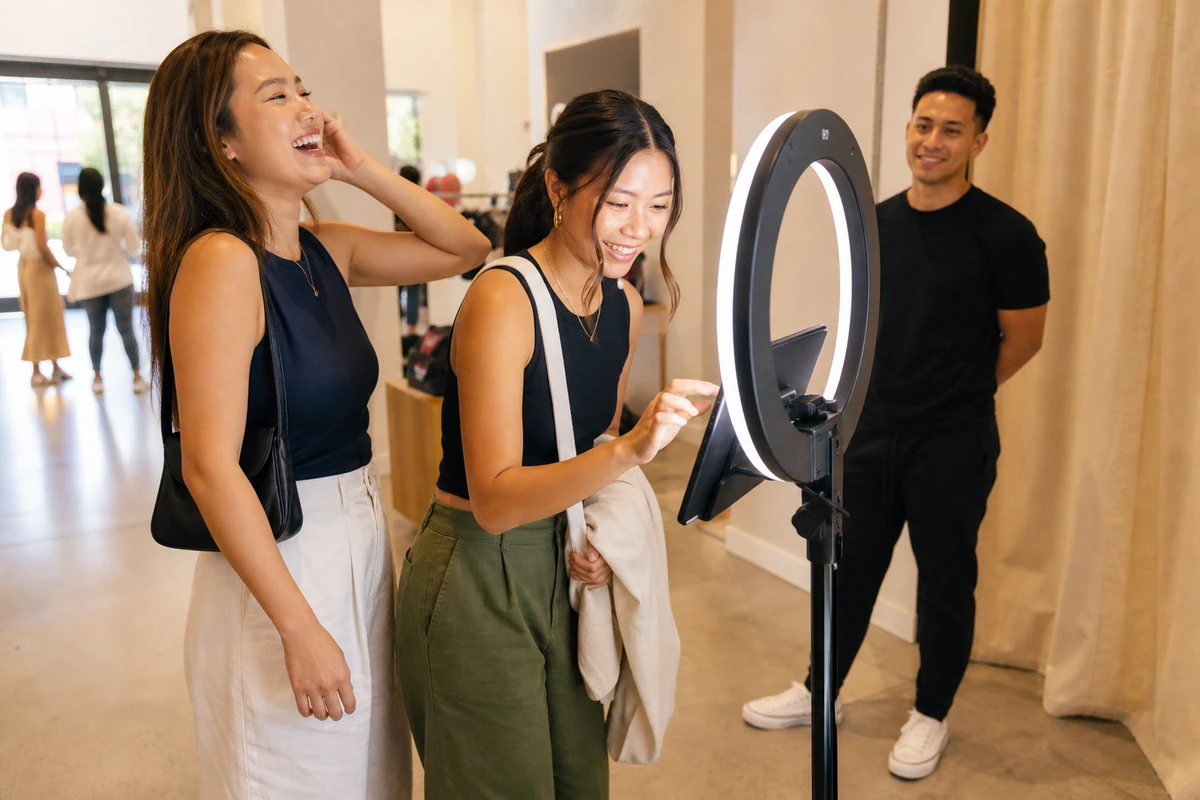
Operators already improvise this instinct without a system. First-time vendors are told to bring a look-book and an order pad so a sold-out style becomes a logged order rather than a lost sale. QR codes pointing to “see the full collection online” appear at booths for the same reason. Each is a hand-built version of one idea: turn a moment of interest into a record the business keeps. A photo or shareable activation does this at scale, because it gives the visitor a reason to hand over an email or phone number, to receive the photo, at the exact moment they are most engaged.
The fun moment and the captured contact become the same action. Simple Booth’s HALO kit is one off-the-shelf version of this: a visitor takes a photo at the station and enters an email or phone number to receive a copy, and the booth logs that contact, with its opt-in, as a record the store keeps. The nonprofit Arizona Opera built a list of roughly 1,000 email addresses with that kind of capture across a handful of events.
How to tell if a pop-up actually worked
The hardest part of running a pop-up is knowing afterward whether it was worth doing. The honest measure runs in a specific order. Foot traffic is the input, not the result. Conversion rate, the share of visitors who bought, shows whether the merchandising worked. Contacts captured shows whether the weekend will repeat. Cost per captured contact, total pop-up cost divided by the number of contacts collected, turns the event into a figure an operator can compare against other marketing spend. Follow-up sales and repeat visits, tracked in the weeks after, are the actual return. The Storefront’s KPI guide frames pop-up return on investment as total revenue minus total costs, divided by total costs, and argues the measure must include data capture and long-term customer value, not same-day sales alone.
This reorders the operator’s most common complaint
This reorders the operator’s most common complaint. “It was busy but I barely sold anything” sounds like failure and often is not. A pop-up that captures 80 contacts and sells modestly is a paid list-building event, and that list will produce sales for months. A pop-up that sells well on the day but captures nothing is the one that should worry the operator, because it has no second act: it cannot be repeated with a warmer audience, because there is no audience to warm.
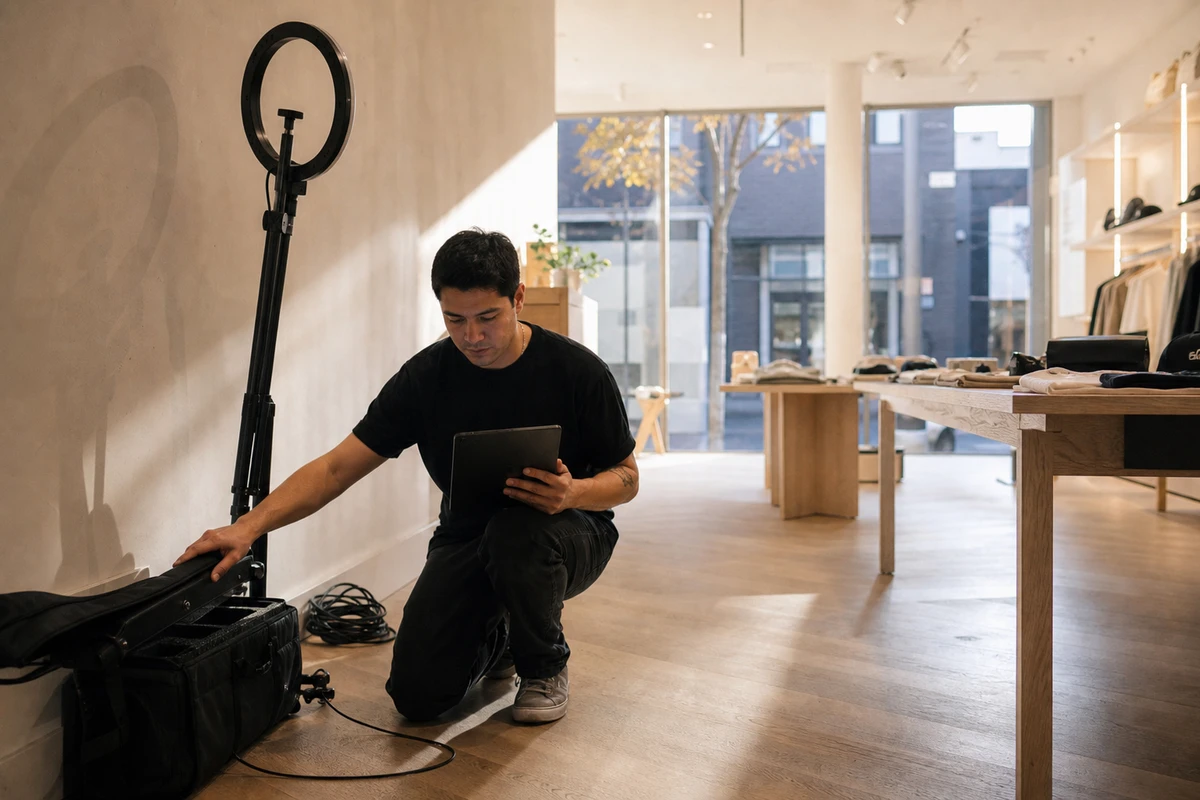
A short post-event routine protects the result. Before teardown, the operator records five things: a traffic count, a tally of opt-ins, a note on which vendors or ideas pulled the most interest, a scheduled date for the follow-up message, and a booked date for the next pop-up. The follow-up send matters most, and it should be scheduled before the store is even cleaned up, because a list contacted within days of the event still remembers it.
The best pop-up idea, in the end, is not the most clever activation on any list. It is the one an established store can run again next month, in the same slot, to a list a little larger and a little warmer than the month before.
Sources
- National Retail Federation (2024). “157 Million Consumers to Shop on Super Saturday.” https://nrf.com/media-center/press-releases/157-million-consumers-to-shop-on-super-saturday
- Khetarpal, M., et al. (2024). “‘Limited Time Offer’: Impact of Time Scarcity Messages on Consumer’s Impulse Purchase.” Journal of Promotion Management. https://www.tandfonline.com/doi/full/10.1080/10496491.2023.2253228
- Adyen (2025). “Retail Report 2025: The Adyen Index, Chapter 3.” https://www.adyen.com/index-reports/retail/chapter-3
- Capital One Shopping (2025). “Pop-up Retail Statistics.” https://capitaloneshopping.com/research/pop-up-retail-statistics/
- Deloitte (2024). “Q3 2024 Emerging Retail & Consumer Trends.” https://www.deloitte.com/us/en/Industries/consumer/articles/q3-2024-retail-consumer-trends.html
- SeenMarkets (2025). “How to Price Your Market Booth Fees: A Complete Guide.” https://seenmarkets.com/blog/how-to-price-market-booth-fees
- Shopify (2025). “14 Popup Shop Ideas and Examples.” https://www.shopify.com/blog/pop-up-shop-ideas (vendor-published; Monday Swimwear figures attributed to Ahna Tillmanns, director of operations, Monday Swimwear)
- JDJ Consulting (2026). “Pop Up Shop Permits USA: Licenses, Costs & Requirements Guide.” https://jdj-consulting.com/pop-up-shop-permits-usa/
- US Chamber of Commerce. “A Guide to Planning a Pop-Up Shop.” https://www.uschamber.com/co/grow/marketing/pop-up-shop-planning
- Event Marketer (2025). “EventTrack 2025 Research.” https://www.eventmarketer.com/article/eventtrack25/
- The Storefront (2026). “How to Measure Pop-Up Shop Success: KPIs, Metrics and ROI Guide.” https://www.thestorefront.com/mag/how-to-use-data-and-insights-to-measure-your-pop-up-stores-success/
- Klaviyo (2026). “Email Marketing Benchmarks 2026: Open, Click and Conversion Rates by Industry.” https://www.klaviyo.com/uk/blog/email-marketing-benchmarks-open-click-and-conversion-rates
- r/smallbusiness (2024). “pop up shops.” https://www.reddit.com/r/smallbusiness/comments/1cnjc12/pop_up_shops/