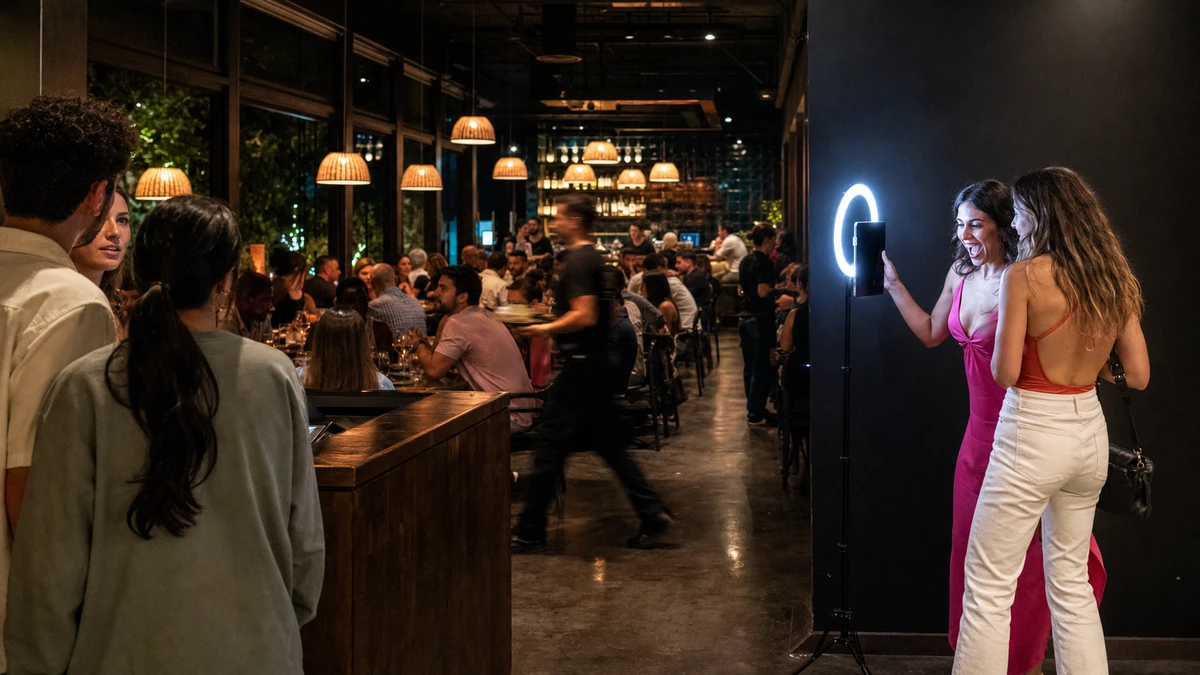
A new restaurant’s opening day has a familiar shape. The room fills by seven, a line forms at the host stand, the kitchen runs hot, and the owner stands near the pass watching tables turn over, thinking: this worked. By eleven the last table pays, the staff break down the dining room, and the day is over. The covers are counted, the deposit is real, and then nothing.
That last part is the problem. A full room on opening night feels like proof, but the covers rung up that day are finite and come mostly from people who already knew the place existed: friends, family, neighborhood regulars, anyone who watched the build-out through the paper-covered windows. The number that decides whether the opening mattered is a different one. It is how many people who were never in the room see the restaurant because of that day.
That second number, reach, does not happen on its own. The grand opening ideas that actually move it are not a longer party or a bigger banner; they are a deliberate system for turning one day of service into content that travels to people who were not there. “Guarantee,” in the sense this article means it, is a repeatable method, not magic. Reach is the output of a few numbers an operator controls, and the rest of this is about controlling them.
Attendance Is Not Reach, and Most Grand Opening Advice Confuses Them
In June 2024, an operator posted to the r/restaurateur forum that their food truck of fifteen years was moving into a brick-and-mortar space, and asked how others had run a grand opening worth calling an event. The blunt top reply: with a following like that, stop stressing, just open and the regulars will come. Another operator described their own night: normal menu, friends and family in the door, packed until close, a write-up in the local paper the next morning.
That advice is correct, and it is a trap
That advice is correct, and it is a trap. It is correct for the operator who asked, a business with fifteen years of regulars and a neighborhood that knows the name. “Just open, they will come” works when “they” is a list that already exists. For a genuinely new restaurant, the entire problem is that no such list exists yet. The room on opening day is small because the audience is small. Filling it is not the achievement. Making it broadcast is.
This is the distinction every ranking article on the topic quietly skips. Search “restaurant grand opening ideas” and the first page is a row of near-identical lists: exclusive deals, a launch party, invite influencers, run a giveaway, build an Instagrammable backdrop. The word holding them together is “buzz,” and “buzz” hides two different metrics. Attendance is covers in the room on opening day, a one-time number capped by how many people already knew to come. Reach is impressions delivered to people who were not there. A grand opening happens once. Its compounding value is not the single day of service; it is the content the day leaves behind and how far that content travels.
Reach matters more for a new restaurant than for an established one because of how diners find places to eat now. MGH, a marketing agency that surveys U.S. diners, found in 2019 that 45% of people who eat out at least monthly had tried a restaurant for the first time because of that restaurant’s own social media post. The behavior has only intensified: MGH’s 2024 survey found 58% of TikTok users had visited a restaurant after seeing it on the app, up from 38% two years earlier. A new restaurant’s first growth channel is strangers deciding to try it on the strength of something they saw, and the grand opening is the best chance to manufacture that something.
The Reach Math: What One Opening Day Is Actually Worth
Most operators never put a number on the reach a grand opening produces, which is why it is easy to overspend on the room and underspend on what leaves it. The arithmetic is simple, and running it once changes how the budget gets split.
Posting Rate Drives Reach
Take a new bistro that seats 60 and turns 150 covers across opening day. If 20% of those guests post a photo or a story, that is 30 posts, each reaching that guest’s followers. No platform or research body publishes a median follower count for an ordinary, non-influencer account, and the “150 to 300” figures repeated on marketing blogs have no traceable source. Mention’s 2023 analysis of 37 million Instagram posts found 76% of tracked accounts had under 10,000 followers, which at least bounds the range. Using 250 as an illustrative figure, 30 posts reach roughly 7,500 people.
Now hold the room at exactly 150 guests and lift the posting rate from 20% to 50%. Same covers, same spend on food and staff, and the day produces 75 posts and about 18,750 impressions. The guest count did not move. The reach more than doubled.
That is the point. Reach from an opening day is a product of four numbers: guests, the posting rate, followers per guest, and the attribution rate (the share of posts that actually name the restaurant). Guest count is the input every competitor article fixates on, and it is the hardest and most expensive to grow: a bigger space, more ad spend, more staff. Followers per guest is fixed; a restaurant gets the guests it gets. That leaves the posting rate and the attribution rate, both nearly free to improve and both almost entirely ignored. The 20% and 50% figures are illustrative inputs, not measured averages, since a restaurant opening is not a produced brand activation. For scale, Event Marketer’s EventTrack 2016 benchmark found 98% of consumers create digital or social content at branded experiences, though those are facilitated, content-designed events, a ceiling rather than a baseline.
Reach leaks at three points between a guest’s phone and a stranger’s screen. Capture: the guest has to make the photo at all, which means there must be something worth pointing a camera at. Post: a photo sitting in a camera roll reaches no one, and most photos stay there. Attribution: a posted photo that does not name the restaurant reaches people who cannot act on it. Every grand opening idea worth running plugs one of these three leaks. The next three sections take them in order.
Engineer Moments Worth Posting, Not Just a Backdrop
The most repeated grand opening idea in the niche is a version of “build an Instagrammable backdrop and ask guests to tag the restaurant.” A decorated wall, a neon sign, a flower installation, a logo step-and-repeat. Operators build the corner, then watch most guests walk past it.
The backdrop fallacy is a misread of why people post. A backdrop is a set, and people do not post sets. They post things that say something about themselves: that they were somewhere new first, that they were treated well, that they were part of something. A photo of a pretty wall says nothing about the person holding the phone, so it gets taken and forgotten. Plugging the capture leak means designing moments where the guest is the subject, not a spectator standing in front of decor.
That changes how familiar opening-day ideas get built. A live chef’s station produces reach when guests are pulled into it and handed a torch to finish a dish, not when they watch from across the room. A ribbon-cutting produces reach when attendees hold the scissors or are counted into the room, so the photo is of them at the opening rather than of a banner. An opening-day-only dish, served that day and never again, is a small flex to have tried; plated to be photographed before it is eaten, it gives the guest a reason to post that is about their own taste and timing.
Chick-fil-A runs the clearest worked example
Chick-fil-A runs the clearest worked example. For new-restaurant openings the chain uses a program it calls Community Heroes, described on its own customer-support site and the successor to its older overnight-campout mechanic: the local operator picks 100 community members and gives each a year of free entrees. The reach engine is not the free food. It is that the story belongs to the 100 recipients, who each tell their own networks, and local news outlets routinely cover the recipient announcements before the doors open. The restaurant designed an opening in which the most shareable story is about the guests.
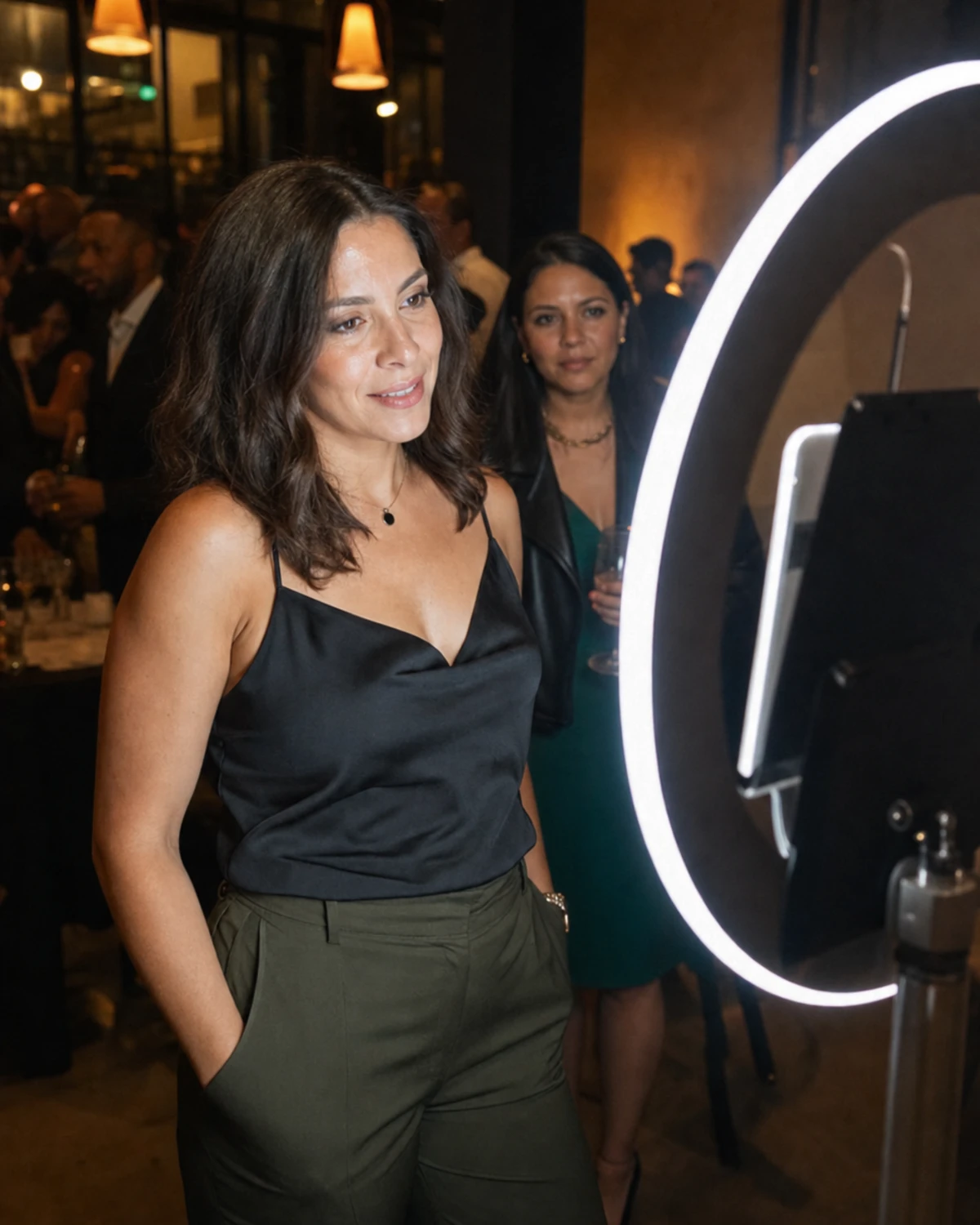
The principle applies to any centerpiece an operator is already planning: build it so the guest can post a photo in which they are the subject. That is what turns a photographed moment into a posted one.
Remove the Friction Between “Phone Out” and “Post Live”
A guest at the opening holds up a phone, takes the photo, looks at it, and slides the phone back into a pocket. The intent was there. The post never happened. On a crowded opening day, drink in one hand and a conversation going, a guest’s tolerance for any work between taking a photo and sharing it is close to zero.
The intent is not the scarce part
The intent is not the scarce part. Stackla, a user-generated-content firm, surveyed consumers in 2019 and found 85% said they would share photos or video of a positive restaurant experience. If the intent is that common, the job of the grand opening is not to talk guests into posting. It is to remove the small obstacles that stop an intended post from becoming a real one. Those obstacles are specific:
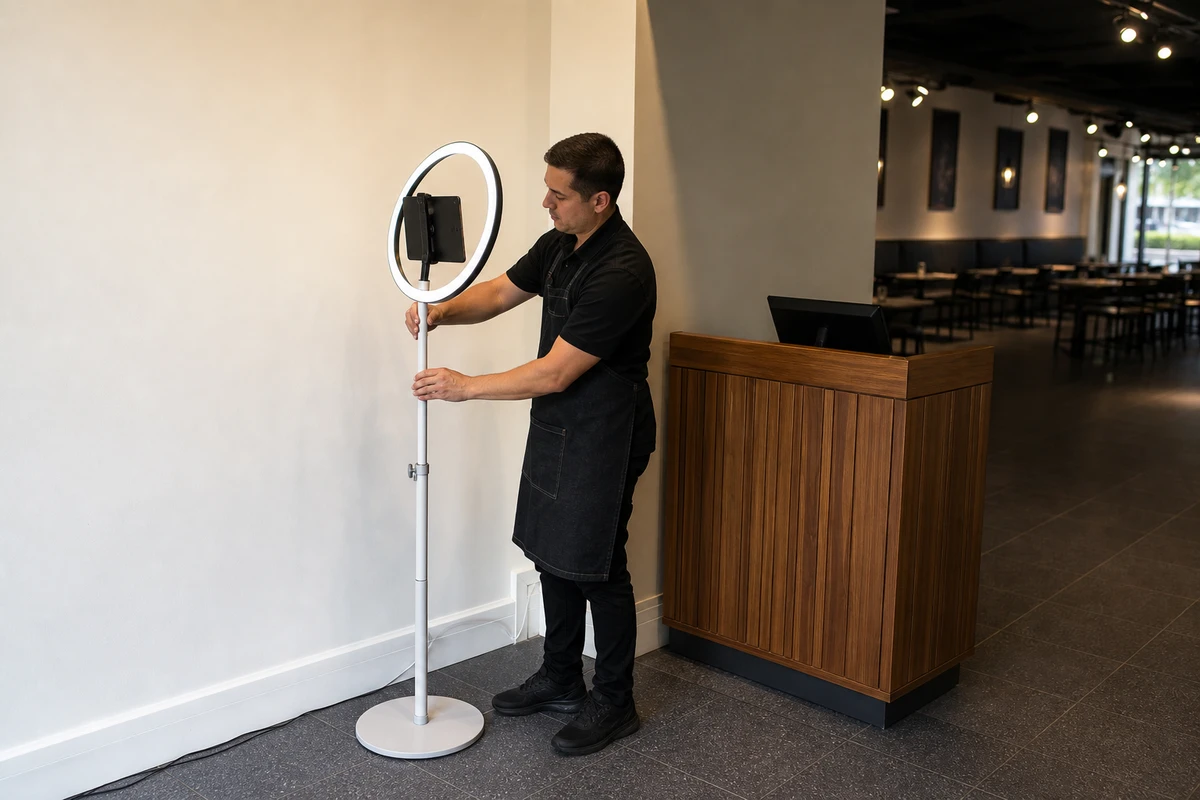
- Bad lighting. A photo from a dim corner looks mediocre, and mediocre photos stay in the camera roll. A dedicated, well-lit spot for content beats a passive backdrop wherever there happened to be room.
- Slow or missing connectivity. A guest who cannot upload now will promise to post later. Visible, frictionless guest wifi removes the excuse.
- Not knowing the handle. A guest willing to tag the restaurant often just does not know its exact username. The handle and one short hashtag belong everywhere a guest already looks: table cards, menus, the content spot, the receipt.
- The photo is not good enough. Some guests will not post an ordinary phone snapshot of themselves. A setup that hands the guest a genuinely good, finished image in seconds removes that hesitation, which is where an on-site photo or content station earns its place.
- Delay. The largest leak. A post a guest means to make later, at home, mostly never happens. The on-site window, while the guest is still in the room and still feeling the moment, is the only one that reliably converts.
The mechanism under all five is the same: every second and every decision between “I want to share this” and “it is posted” is a place reach leaks out. Design the opening so the post goes live before the guest leaves, and the leak that matters most is closed.
Make Every Post Point Back to You
A guest posts a beautiful shot of the opening-night plating. It collects 400 views, and not one of those viewers can tell which restaurant it was, because the post carries no tag, no location, and no name in the caption. The reach happened. It was wasted. Every viewer who might have wanted to visit has nothing to act on and nothing to search.
This is the attribution leak, and it separates reach
This is the attribution leak, and it separates reach that compounds from reach that expires. A tagged, geotagged post keeps working after the opening-day feed scrolls past it, surfacing in the restaurant’s location feed and in hashtag results for anyone scouting the neighborhood weeks later. An un-attributed post reaches its viewers once and then disappears. Making every post traceable is mostly a matter of removing ambiguity:
- Claim the location first. Set up the restaurant on the major platforms before opening day, named correctly, so a guest who tries to tag the spot can find it. A location that does not exist yet cannot be tagged.
- Use one handle and one hashtag, everywhere, with no second variant. A campaign hashtag competing with the restaurant’s name splits the trail in two.
- Brand the image itself. A subtle logo or frame baked into the photo travels with it. Unlike a caption tag, on-image branding survives a screenshot, a re-share, and a repost to another platform, which is how most content actually moves.
- Train staff to ask. A server who already asks for a review can ask for the tag in the same breath, while the guest still has the phone out.
- Tie any incentive to posted, tagged content, not to attendance. A dessert or a prize-draw entry handed over in exchange for showing a live, tagged post rewards the exact behavior the opening is built to produce. An incentive for simply showing up rewards a number that was already capped.
Attribution earns this much attention because guest-posted content does work a brand cannot do for itself. Bazaarvoice’s 2023 shopper survey found 74% of consumers trust user-generated content more than the content a brand produces about itself. A stranger’s tagged photo of the new restaurant is more persuasive than the restaurant’s own announcement, but only when that photo can be traced back to a name a viewer can search.
Turn Guest Content Into a Second Wave
By the end of opening day, a well-run restaurant has more than a deposit. It has a folder of photos and clips that guests made, and, if it was set up to collect them, a list of contacts. Most operators let both evaporate: the photos stay on guests’ phones, the contacts were never asked for, and the opening becomes a memory instead of a supply.
The first move is to treat guest content as
The first move is to treat guest content as raw material the restaurant can keep using. A guest who tagged the restaurant has, in effect, handed over a piece of marketing it can repost to its own channels, usually after a quick permission reply that most guests grant happily. One well-engineered opening can supply several weeks of feed content, which is why the reach of the day need not end with the day. Reposting pays the guest back, too: Stackla’s 2019 research also found consumers are 2.4 times more likely to call user content authentic than brand-produced content, so a feed of real guest photos reads as more credible than a feed of staged shots.
Contact capture
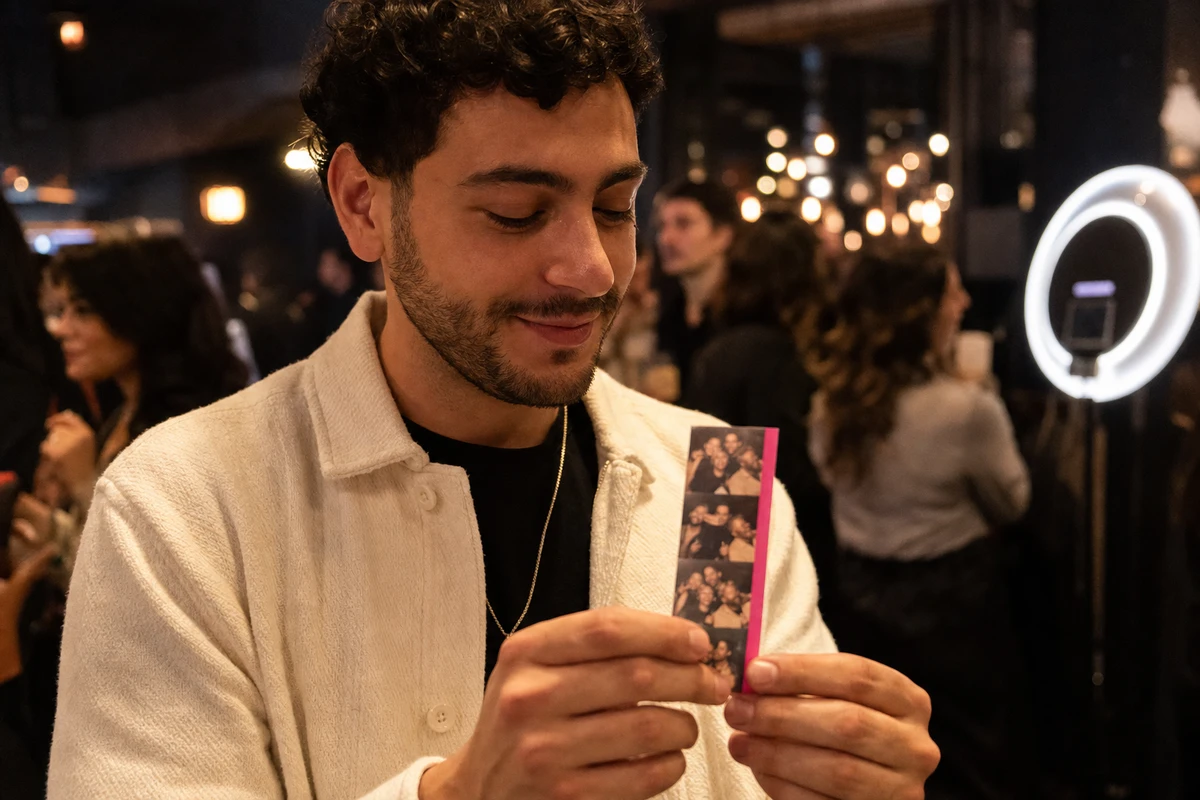
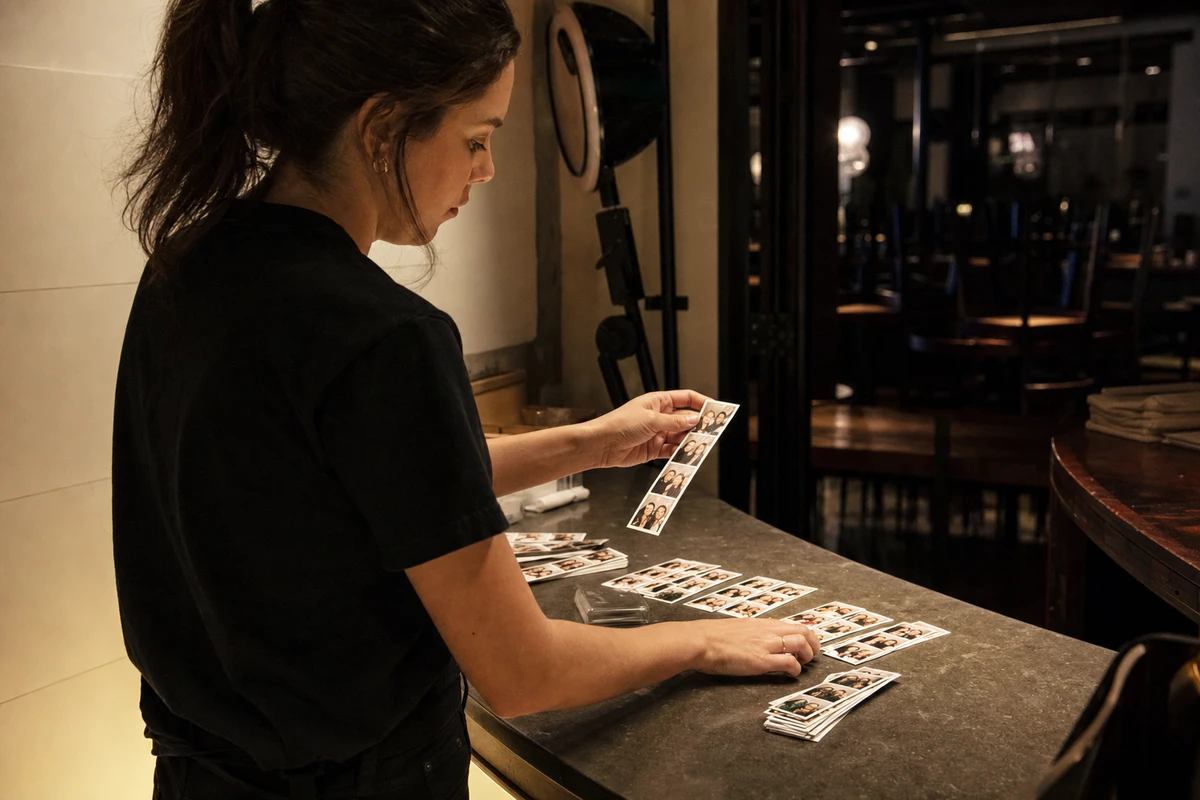
The second move is to convert borrowed reach into an owned audience. An impression on a stranger’s feed is rented and works once. A guest who leaves an email address or a phone number becomes an audience the restaurant can reach again, for free, on its own schedule. A content or photo station that sends the photo to the guest by email or text captures that contact as a side effect of the thing the guest already wanted. One version of that station is Simple Booth’s HALO kit, where the guest types in an email or phone number to receive the photo and that address lands in a list the restaurant can export. The arts nonprofit Arizona Opera built a roughly 1,000-address email list across a few events that way. Opening day is the highest-traffic day a new restaurant will have for months, which makes it the best single day to build an owned list.
The framing worth keeping: rented reach is good, an owned audience is better, and a grand opening is the rare day a restaurant can build both at once.
Measure What Reached, So the Next Opening Is Better
Most operators judge a grand opening by feel. The room looked full, the staff were slammed, the night had energy, so it worked. A first-time operator almost never counts what the day actually reached, which means the next event, the one-year anniversary or the patio launch, gets planned on a memory instead of a result.
Start with eligible moments
The opening produced a measurable output, and the scorecard is short enough to run in an afternoon a week later:
- Tagged-post and hashtag-post count for the opening window: the raw number of guests who posted something traceable.
- Location-tag check-ins on the major platforms.
- Follower growth, as a clean before-and-after: followers the week before the opening against followers the week after.
- Reach or impressions on the posts that tagged the restaurant, pulled from each platform’s native post insights.
- Contacts or opt-ins collected during the event.
None of this needs a tool the restaurant does not already have. It needs someone to write down five numbers and keep them.
Those numbers also reframe the spend. A grand opening costs real money. Published budget ranges come mostly from vendor blogs rather than industry data, so they are worth treating with caution, but many operators set aside several thousand dollars for the day. A spend that size judged only on whether the room looked full has no evidence behind it. The same spend judged on tagged posts, follower growth, and contacts collected becomes a test the operator can run again and improve.
That is the real argument here. A grand opening is a one-time cost, but a grand opening engineered for reach is not a one-time event. The covers from opening day are spent by midnight. The tagged posts, the new followers, and the contacts keep delivering people who were never in the room, for weeks after it emptied. Design the day for what it leaves behind, and the opening keeps paying out long after the deposit clears.
Sources
- MGH (2019). “MGH Survey Finds Nearly Half of U.S. Diners Have Tried a New Restaurant Because of Its Social Media Posts.” https://www.prnewswire.com/news-releases/mgh-survey-finds-nearly-half-of-us-diners-have-tried-a-new-restaurant-because-of-its-social-media-posts-300833965.html
- MGH (2024). “Survey: TikTok Drives Restaurant Sales.” https://mghus.com/insights/survey-tiktok-drives-restaurant-sales-2/
- Mention (2023). “Instagram Engagement Report 2023.” https://mention.com/en/reports/instagram/followers/
- Event Marketer (2016). “EventTrack 2016: Experiential Marketing Content Benchmarking Report.” https://www.eventmarketer.com/reports/event-track/
- Stackla / Nosto (2019). “Bridging the Gap: Consumer and Marketing Perspectives on Content in the Digital Age.” https://www.nosto.com/blog/stackla-survey-reveals-disconnect-between-the-content-consumers-want-what-marketers-deliver/
- Bazaarvoice (2023). “Shopper Experience Index, Vol. 17.” https://www.bazaarvoice.com/press/bazaarvoice-shopper-experience-index-77-of-shoppers-say-theyre-reducing-their-spending-on-non-essential-items-due-to-the-economy/
- Chick-fil-A (2025). “How does Chick-fil-A celebrate a new restaurant opening?” https://www.chick-fil-a.com/customer-support/events-and-promotions/first-100/how-does-chick-fil-a-celebrate-a-new-restaurant-opening
- Reddit, r/restaurateur (2024). “Grand opening ideas?” https://www.reddit.com/r/restaurateur/comments/1dgqgsf/