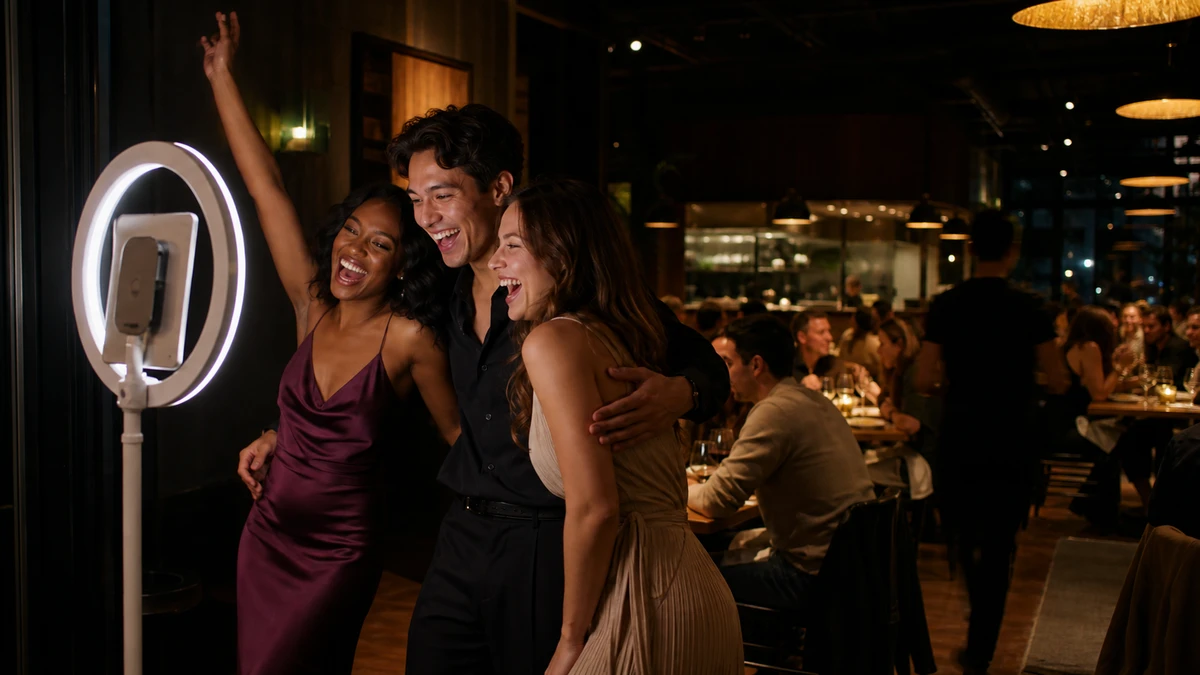
A four-top near the host stand is celebrating a birthday. The dessert arrives with a candle, three phones come up at once, and someone leans in for the photo. Thirty seconds later the moment has passed, and that photo either disappears into a private camera roll or it becomes something the restaurant can use.
The best photo booth for a restaurant is whichever unit reliably produces the second outcome. It runs unattended for months, captures a consented email address or phone number from the guests who opt in, and sends a branded photo to their social feed without a server ever touching it. Props, print speed, and screen size matter far less than uptime and data capture.
This guide is a decision framework, not a product ranking. Page-one search results fail restaurant operators because they answer a different question. They sell a specific unit, or they list three reasons a booth is “fun,” or they coach someone who wants to run booths at events as a business. None of that helps a manager deciding what to install in a dining room corner for the next three years. The mistake underneath all of it is treating the booth as entertainment or as a short-term event rental. Correct that frame and every buying criterion changes.
What a Restaurant Photo Booth Is Actually For
Most operators picture a photo booth the way the rental industry sells it: a novelty parked near the restrooms with a basket of props, booked for a slow night and judged by whether guests laughed. Measured that way, the booth is a cost with no line on the P&L to defend it, and it gets cut at the first budget review.
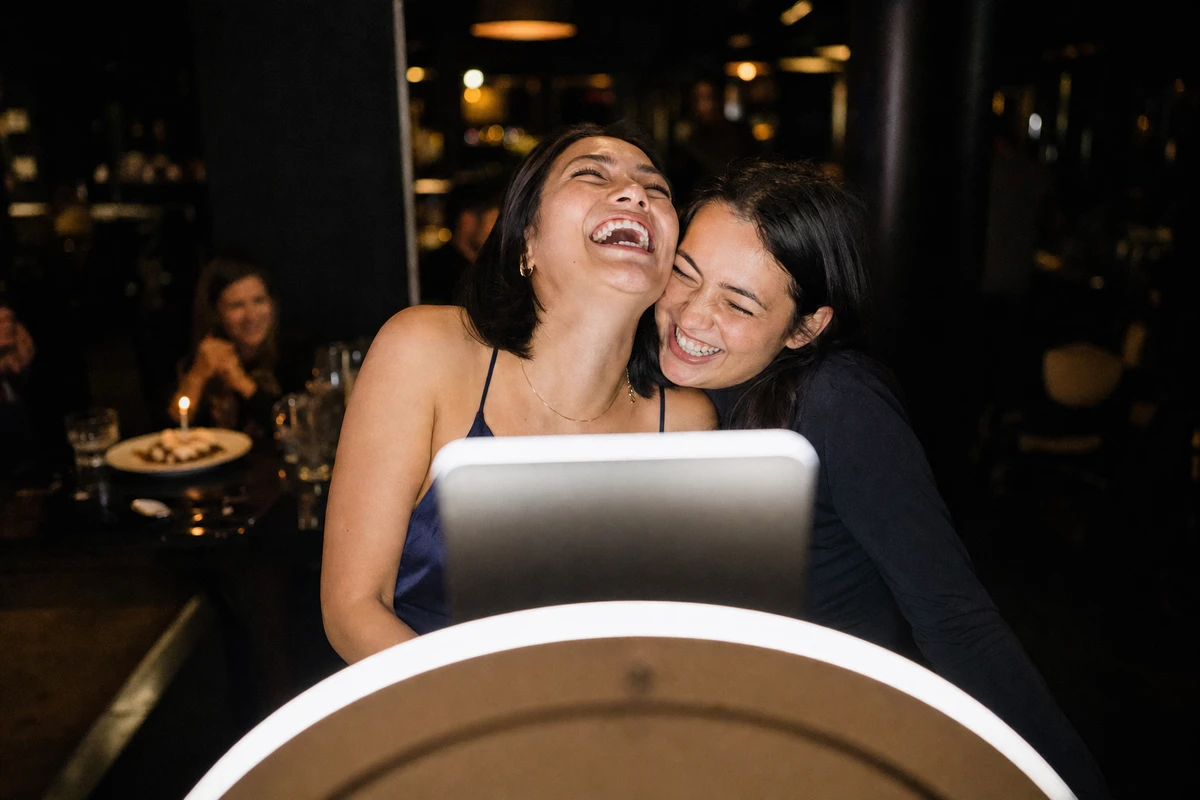
A permanent restaurant booth does a different job. It converts a paying cover into three things the restaurant can keep: a marketing contact the guest agreed to hand over, a branded photo that travels into that guest’s social feed, and a prompt to leave a review delivered at the high point of the meal.
The mechanism is timing
The mechanism is timing. A guest will trade an email address for a photo of a moment they already care about, in the ten seconds after it happened, far more readily than they will fill out a comment card or scan a loyalty code on the receipt. That trade produces zero-party data: information a customer hands over deliberately, rather than behavior a business has to infer. Marketing-data firm Epsilon calls zero-party data “gold to marketers” because it “leaves no room for inference,” and reports that 60% of the brands it surveyed are shifting toward first-party data strategies as third-party tracking identifiers degrade, with first-party-led advertisers seeing roughly twice the return on ad spend. A photo booth collects that consented data with less friction than a loyalty program.
The branded photo is the second asset, and it lands where restaurant decisions now get made. Toast’s 2026 consumer research found that 42% of guests prefer social media over search engines when discovering a new restaurant, and 74% use social media to decide where to eat. A 2025 compilation from Restroworks puts 62% of diners checking a restaurant’s social account before choosing it, and 22% saying that social presence directly affects whether they return. The National Restaurant Association reports that 76% of consumers consider social media a reliable source of information about nearby restaurants. The surveys disagree on the exact figure, but they converge: somewhere between half and three-quarters of potential guests choose restaurants through social feeds, and every booth photo carrying the restaurant’s name enters that feed as content the restaurant did not produce or pay to place.
The third asset is the review
The third asset is the review. A guest asked to leave one while still at the table, dessert finished and the night going well, is far more likely to actually do it than the same guest three days later, when a receipt-bottom QR code competes with everything else in their inbox. Volume is the mechanism: more reviews move a rating over time, and the rating is what moves revenue. Harvard Business School economist Michael Luca found that a one-star increase in a restaurant’s Yelp rating produces a 5 to 9% rise in revenue, an effect concentrated entirely among independent restaurants rather than chains.
That change of frame decides what to evaluate. An operator shopping for entertainment evaluates props, attendant polish, and print speed. An operator shopping for marketing infrastructure evaluates uptime, opt-in capture, branded sharing, and floor-space cost. The rest of this guide uses the second list.
Rent or Buy: Which Model Fits a Permanent Restaurant Install
An event-rental company will quote a restaurant a three-month install without blinking, and several sell packaged 1, 3, 6, and 12-month restaurant terms. That is the first real decision: lease a unit on a fixed term, or buy one outright.
Renting carries a low upfront cost, usually includes service, and removes the risk of buying before anyone knows whether guests will use the booth. It has one genuine use for a restaurant: a single validation quarter. But renting has two structural problems for a permanent fixture. The monthly fee compounds, and at the end of the term the restaurant owns nothing, not the hardware and not the contact list it built. And most event-rental hardware is tuned for staffed parties, so the unit that arrives is built around an attendant the restaurant will not have.
Buying costs more upfront, between $2,000 and $3,500 for the compact format most restaurants should install. In exchange, the restaurant owns the data pipeline and every contact the booth captures, and on a permanent install the hardware amortizes quickly against years of use.
The decision rule is straightforward
The decision rule is straightforward. Rent a unit for one quarter to confirm two things: that guests actually use the booth, and that they opt in at a workable rate. Once those counts are real rather than guessed, buy. Permanent installs favor ownership past roughly 6 to 12 months of continuous operation, so for most restaurants the answer to “best photo booth” ends in a purchase, just not before a low-cost validation period has removed the biggest unknown.
One honest gap: public fixed-term rental pricing is hard to pin down. Vendors offering multi-month restaurant leases quote custom rates by market and term length, so an operator weighing rent against buy has to request quotes directly and build the comparison on a real figure rather than a published rate.
The Booth Formats, and Which Ones Survive a Restaurant Floor
A restaurant has one corner to give up, and giving it up costs money. Every square foot of dining floor carries a revenue figure, so a booth’s footprint is a line item, not a detail.
Five formats reach restaurant operators
Five formats reach restaurant operators. Their baseline footprints, before any guest queuing space, run roughly as follows (Clear Choice Photo Booth, 2025): a compact iPad or selfie station needs about 9 square feet (3 feet by 3 feet); an enclosed booth about 25; an open-air booth about 48; a mirror booth 24 at a minimum but realistically closer to 100 once backdrop and lighting clearance are counted; and a 360 booth 100 or more.
That footprint carries a cost. Full-service restaurant revenue runs $250 to $325 per square foot in the moderate-profit range, according to WhippleWood CPAs citing 2026 National Restaurant Association benchmarks, and every square foot the booth stands on is a square foot not earning that. For a 9-square-foot compact station the exposure is small, $2,250 to $2,925 a year, and placement shrinks it further: a host or waiting corner earns below the dining-room average anyway. For a 100-square-foot 360 booth the exposure is $25,000 to $32,500 a year, an amount no working dining room can quietly absorb, before the hardware costs a cent.
That arithmetic decides most of the format question. The compact iPad or selfie station wins for a permanent restaurant install: smallest footprint, designed to run in kiosk mode without an attendant, and unobtrusive enough to sit in a dining room. The enclosed and open-air formats are bulkier and were built around event backdrops. The mirror booth is visually striking but collects fingerprints across an entire service and usually needs an attendant for calibration. The DSLR booth delivers the best image quality but needs setup by someone who knows the camera. The 360 booth needs a platform, an attendant to position guests, and active monitoring, which makes it incompatible with a permanent dining-room install unless the restaurant has a dedicated private event room.
The pattern is clean: formats that need an attendant or a large platform are event-rental formats. They were designed to be trucked in, staffed for four hours, and trucked out. A permanent restaurant install needs the opposite, something small, fixed, and able to run alone.
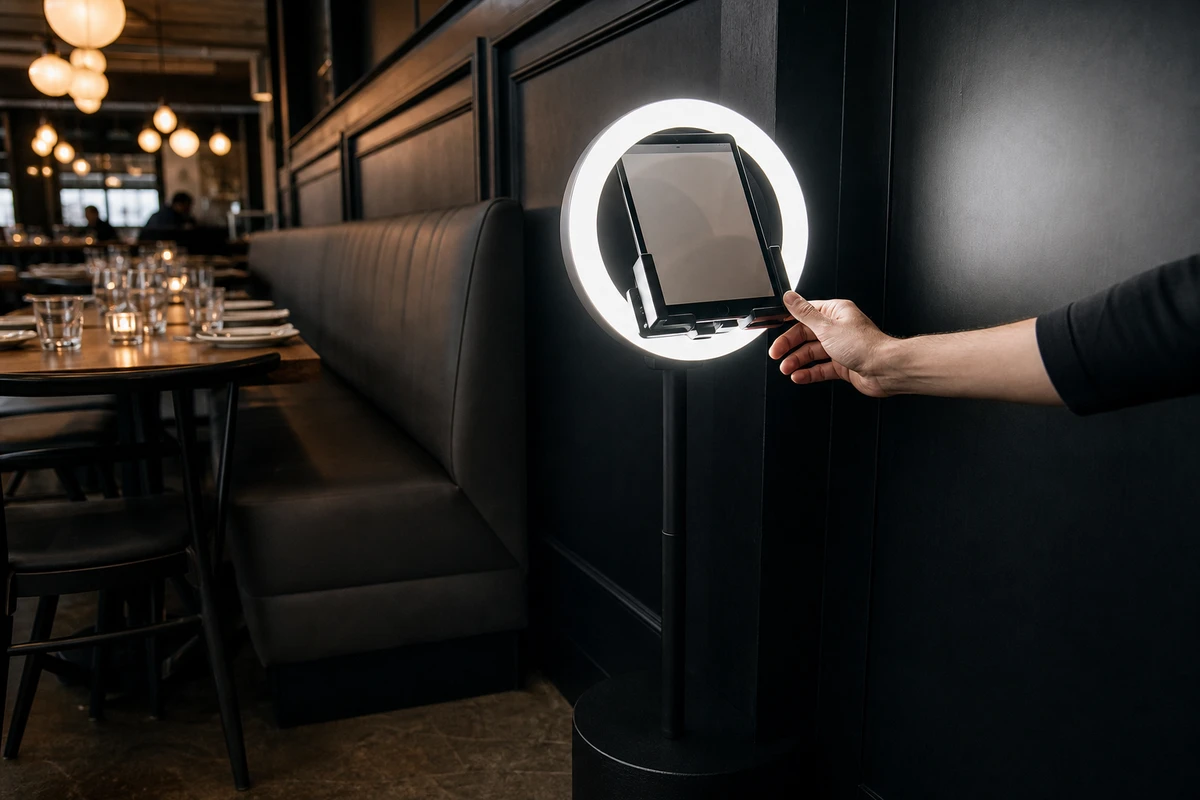
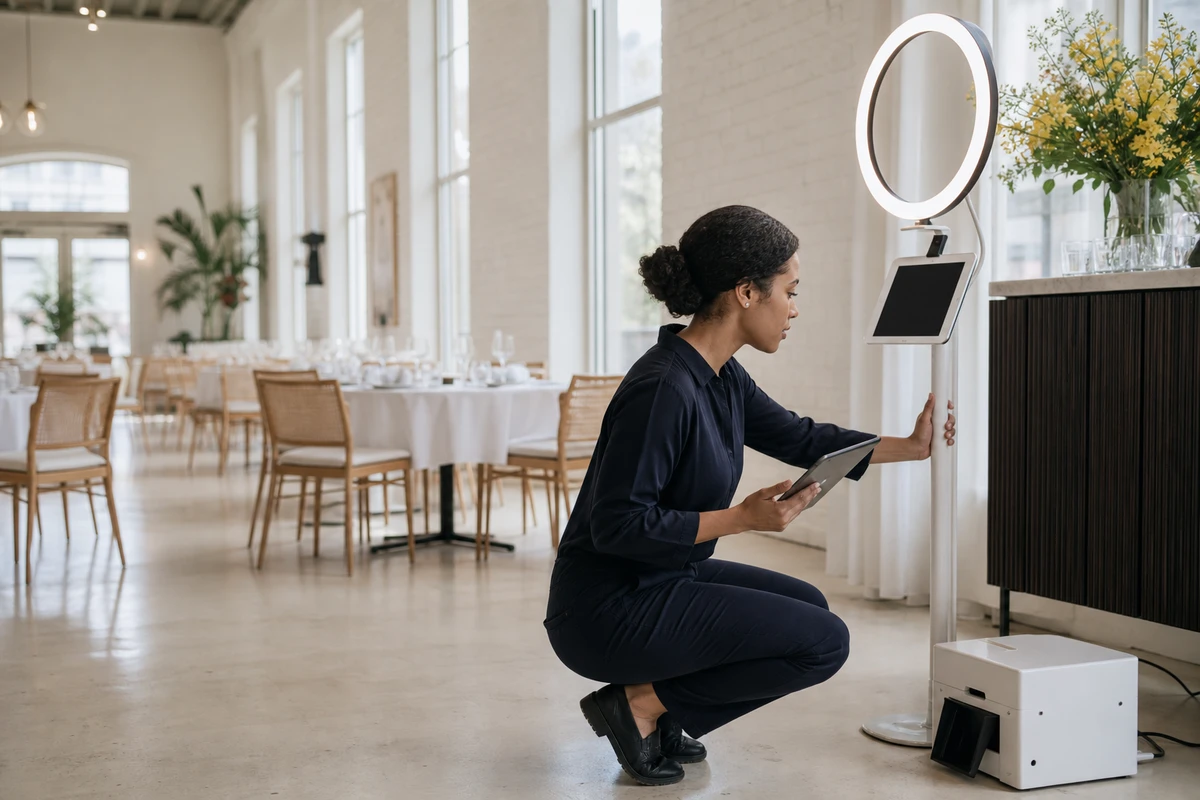
Simple Booth’s HALO kit is one unit built to that shape: an iPad in a compact ring-light stand that runs in kiosk mode without an attendant. Its offline upload queue holds captured sessions when the restaurant’s internet drops mid-service and delivers them once the connection returns, so a lost signal during a busy Friday does not become lost contacts.
The Features That Matter When Nobody Is Staffing the Booth
The booth crashes at 8 p.m. on a Friday. With no attendant, the screen sits frozen through the busiest service of the week, and the operator finds out on Monday. Every feature decision for a permanent install should be tested against that scenario.
In priority order, the criteria that matter
In priority order, the criteria that matter:
- Unattended reliability. A single-app kiosk lock (on an iPad, Guided Access mode) so a guest cannot swipe out of the booth app. Automatic restart after a crash. Remote monitoring so a manager can confirm the booth is alive without walking over to it. A physically secured tablet and mount, because an unsecured iPad in a public corner is a theft target. This is the category competing content skips, and it is the one that decides whether the booth is an asset or a frozen screen.
- Data capture and handoff. The booth has to record consent, deliver the photo by email or text, and move that contact cleanly into whatever tool the restaurant uses to send email and SMS. Five hundred contacts trapped inside a booth app are worth far less than 500 contacts in the restaurant’s marketing platform, so a clean export or sync matters more than a long feature list.
- Branded sharing. A logo overlay on every photo, a custom landing page for the digital copy, and the restaurant’s social handle and hashtag on the share screen. An unbranded photo is a nice memory for the guest and nothing for the restaurant.
- Digital-first delivery. A cost and reliability decision, covered next.
- Analytics. A simple view of sessions, opt-in rate, and shares. Without it, the operator cannot tell a working booth from a decorative one.
- Engagement features. GIFs, boomerangs, and filters lift how often guests use the booth, which feeds everything above. They are the means, not the point.
The prints-versus-digital call deserves its own paragraph because operators get it wrong. A printer turns a self-running booth into a machine with a consumable and a moving part. Photo-booth media costs about $0.155 per 4-by-6 print in raw dye-sublimation material, based on Event Printers pricing for the common DNP DS620A media kit, and operators typically budget $0.25 to $0.50 per print once the printer’s own cost, power, and waste are amortized. The harder problem is jams. Non-OEM media carries a reported failure rate of 6.7 to 9.4%, against under 1.2% for genuine media.
At a staffed event, a jam is a minor annoyance. At an unattended restaurant booth, every jam is a session that stops dead until a staff member opens the printer and clears it, which defeats the entire unattended premise. Digital-only delivery removes the printer, the consumable, and the failure point at once, and it strengthens data capture, because a guest who wants the photo has to enter a real email or phone number to receive it. For a permanent restaurant install, digital-only is the default, and a printer belongs only where the restaurant has a specific reason and someone to mind it.
What a Restaurant Photo Booth Costs
The sticker price is the hardware, and the hardware is the part operators overestimate. The rest is the part they forget.
Hardware ranges by format, drawn from vendor-published 2025 pricing (Selfie Booth Co., cross-checked across vendor sites): compact iPad and selfie stations run $2,000 to $3,500; mirror booths $3,000 to $5,000; 360 booths $6,000 to $12,000 and up; premium DSLR units $8,000 to $15,000. Prices broadly span $2,000 for a basic portable setup to over $10,000 for a commercial-grade fixed unit.
Software is the recurring cost
Software is the recurring cost. Cloud photo-booth software runs roughly $49 to $100 per month per device on published vendor pricing. This is the line operators most often leave out of the first budget, and it is what turns a one-time purchase into an ongoing one.
Consumables apply only if the booth prints: the printer itself ($1,200 to $1,500 for a dye-sublimation unit), media kits at about $124 per 800 prints, and the staff time to refill and unjam it. A digital-only booth carries none of this.
Then the forgotten line items: the iPad or tablet itself if it is not bundled, a secure mount or stand, a dedicated and reliable internet connection (a booth that loses its connection mid-service stops capturing data), and occasional support or repair.
A three-year total for a representative setup makes the picture concrete. A compact, digital-only iPad station costs roughly $3,000 for the booth hardware, $500 for the iPad, and $200 for a secure mount, about $3,700 one time. Software at the midpoint, around $75 a month, adds $2,700 over three years. With no printer and no consumables, the three-year total lands near $6,400, or about $2,130 a year. That is the number to hold against the ROI model below, and against any rental quote. A fixed-term rental has to beat roughly $178 a month, all in, to win on cost alone, and at the end of three years the buyer owns both the hardware and the contact list while the renter owns neither.
The ROI Math: Turning Covers Into a Marketing Channel
A manager handed this budget request wants one number: how long until it pays for itself. The honest answer is a model, not a number, because the inputs depend on the restaurant. Here is the model, built on one worked example.
Take a 90-seat full-service restaurant turning roughly 3,000 covers a month at a $45 average check. The booth produces value on three levers, and only the first can be modeled cleanly.
Lever one is the contact list
No firm published benchmark exists for how many covers use a permanent restaurant booth; it depends on placement, signage, and whether staff mention it at greeting. A deliberately conservative assumption is that 5% of covers interact with the booth, which is 150 sessions a month. The opt-in rate is better documented: photo-booth industry data (PopLife Photo Booth, vendor-published) puts standard email capture at 30 to 50%, rising toward 80% and above when the booth requires an email or phone number to deliver the photo and gives an immediate reason to enter it. Take the conservative floor of 30%: 150 sessions multiplied by 30% is 45 new opted-in contacts a month, or 540 a year.
Those contacts are only worth something if the list is worked. Klaviyo’s 2026 food-and-beverage email benchmarks show automated flows, such as a welcome series or a win-back message, placing orders at 2.46% per send against 0.26% for one-off campaign blasts, roughly ten times the conversion. A restaurant that captures 540 contacts and never builds an automated flow has bought a frozen asset. This matters because, as restaurant-data firm Bloom Intelligence reports, about 80% of guests who visit a restaurant never return, usually because nothing reached them after the meal.
A consented contact is the channel that makes reaching them possible at all. Assume a basic welcome-and-win-back flow converts a conservative 8% of those contacts into one return visit they would not otherwise have made: 540 multiplied by 8% is 43 incremental visits a year, at $45 each, about $1,935 in directly attributable revenue. Against the booth’s $2,130 annual cost, the contact list alone nearly covers the booth on its own, even on these deliberately conservative assumptions.
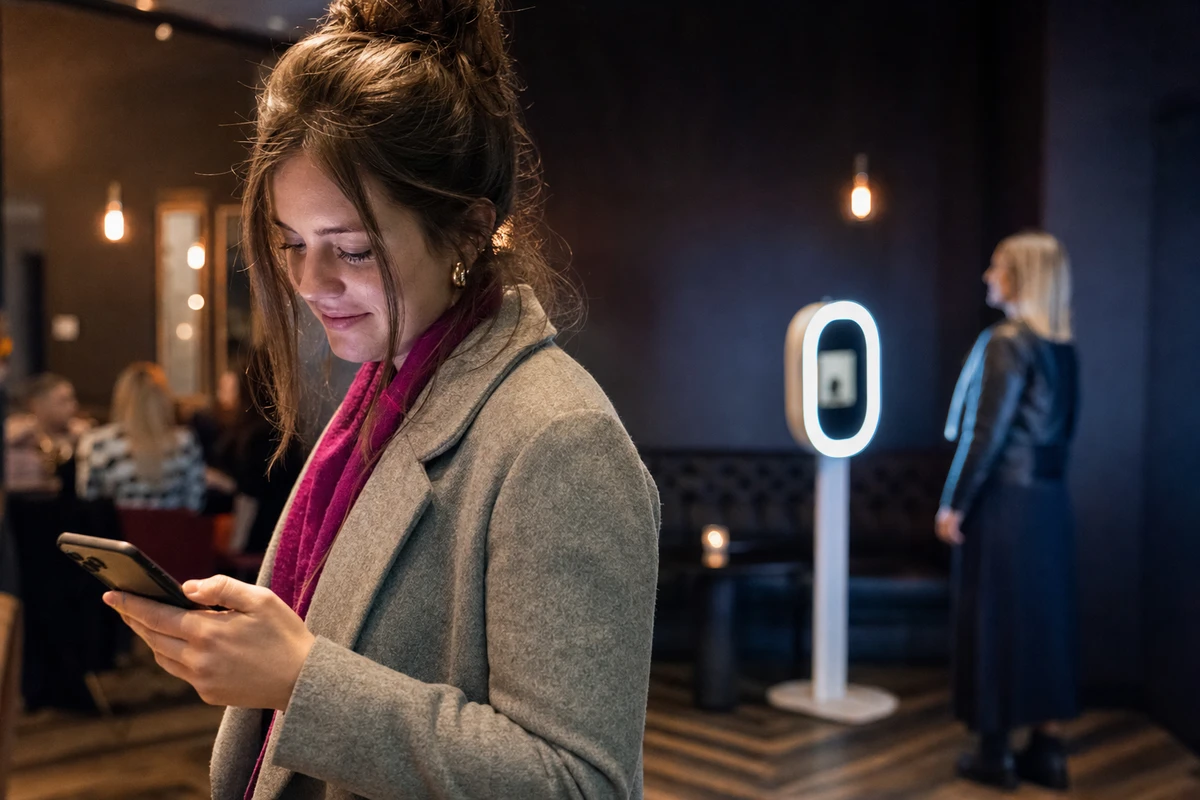
That conservative case is not the reason to buy. The reason is the two levers that ride on top of it for free.
Lever two is reach
Every branded photo a guest shares is an impression placed into the exact channel where 74% of diners decide where to eat, and the restaurant paid nothing for the placement. If half of the 540 yearly contacts share their branded photo, that is 270 pieces of restaurant-named content reaching those guests’ friends, repeating every year the booth runs.
Lever three is reviews, and it is the largest
A booth prompt that nudges a seated guest to leave a review lifts review volume, and review volume moves a rating over time. Luca’s Harvard research priced a full one-star Yelp increase at 5 to 9% of revenue for an independent restaurant. The 90-seat example restaurant turns roughly $1.6 million a year, and it does not need a full star. A steady stream of peak-moment reviews that lifts the rating by even three-tenths of a star is worth, scaling Luca’s per-star range, somewhere around $24,000 to $43,000 a year. That lift is not guaranteed, since ratings move slowly and depend on the underlying experience, but it shows where the real money in this purchase sits. It is not the entertainment. It is the rating.
One caveat carries the whole model: the 5% session rate and the 30% opt-in rate are the two assumptions that swing every figure above, and neither has a firm published benchmark for permanent restaurant installs. That is the strongest argument for the rent-to-validate quarter. One quarter of real counts replaces both guesses with the restaurant’s own numbers and turns the model from a projection into a forecast.
Where to Put It and How to Launch It
A booth installed in the wrong corner gets used by nobody, and it still costs the floor space it stands on. Placement is the cheapest lever on usage and the easiest to get wrong.
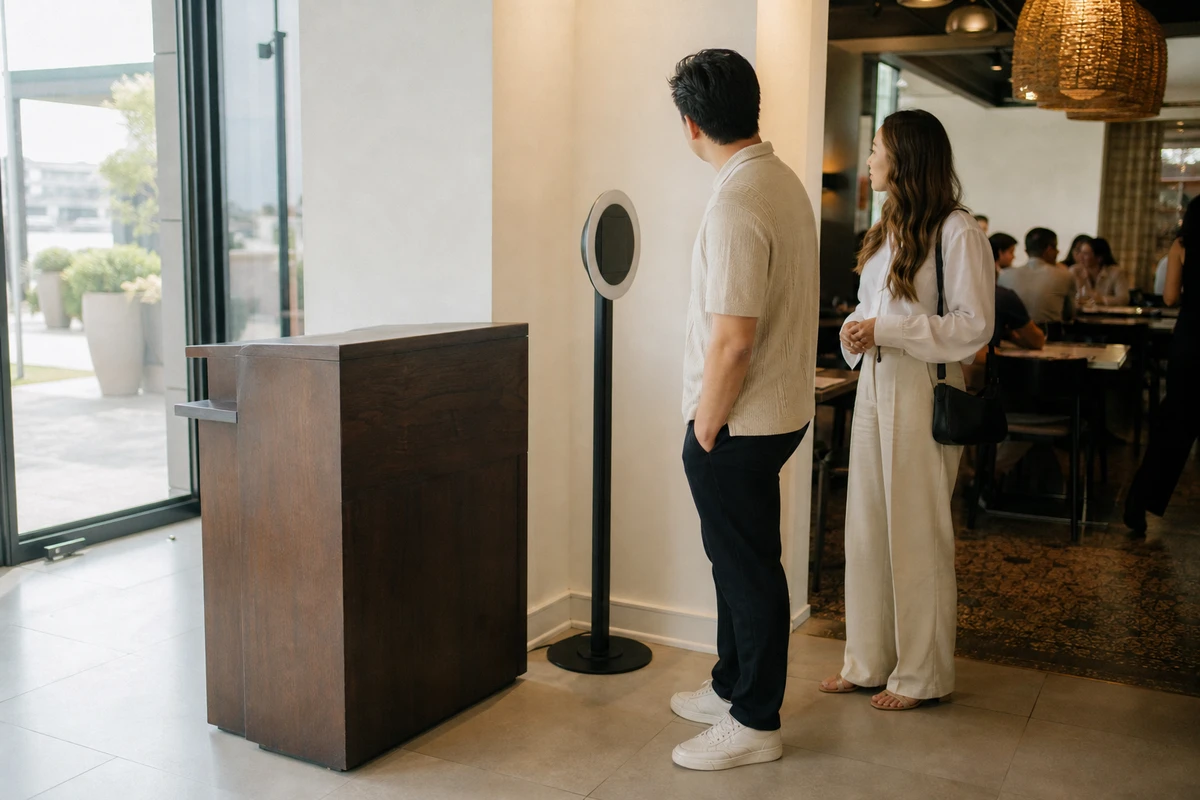
Put the booth where traffic and idle time overlap and where it blocks nothing: the waiting or host area (guests with time before a table), the entry, the bar, or a private-event corner. Keep it off the route between kitchen and dining room, and away from any spot a server has to detour around while carrying plates.
An unattended booth needs a trigger, because no attendant is there to invite anyone in. Clear signage with a specific reason to use the booth beats a booth that simply exists. That reason can be an incentive (a small discount, a contest entry, a dessert draw) or an occasion prompt tied to what is happening in the room. Keep the opt-in form to a single field, email or phone, not both, and place it before photo delivery so the contact is captured by the natural flow rather than as an optional extra. A brief staff mention at greeting or check drop, something as light as “there’s a booth by the bar if the table wants a photo,” lifts usage at no cost. The restaurant’s handle and hashtag belong on every output.
For ongoing operation, refresh the on-screen overlay and branding seasonally so regulars see something new, and tie booth prompts to in-venue occasions. Keep this light; the booth should not need monthly reinvention.
Measurement is where most operators drift
Measurement is where most operators drift. Review opt-in rate and shares once a month. The metric for this asset is contacts captured and photos shared, not whether guests laughed. An operator who tracks the right two numbers will know within a quarter whether to expand, reposition, or pull the booth, and that decision should rest on the count, not on a feeling.
Frequently Asked Questions
Do I need a staff member to run a restaurant photo booth?
No. Compact iPad and selfie-station formats run unattended using a single-app kiosk lock (Guided Access on iOS), which stops guests from exiting the booth app, plus automatic restart and remote monitoring. Mirror, DSLR, and 360 booths are built for staffed events and need an attendant for setup and calibration, which is why they fit a permanent restaurant install poorly.
How much floor space does a restaurant photo booth need?
A compact iPad or selfie station needs about 9 square feet (3 feet by 3 feet), plus a few feet of standing room. Open-air, mirror, and 360 formats need 48 to more than 100 square feet. At $250 to $325 per square foot in annual restaurant revenue, every square foot the booth occupies is a real cost, so the smallest format that does the job wins.
Should a restaurant choose prints or digital-only delivery?
Digital-only, for most permanent installs. A printer adds a machine costing $1,200 or more, ongoing media costs, and a jam rate of 6 to 9% with non-OEM media. At an unattended booth, every jam freezes the booth until staff clear it. Digital delivery also forces a real email or phone entry to receive the photo, which strengthens data capture.
Is a photo booth worth it for a single-location or small restaurant?
It can be, but the honest move is to test rather than assume. Rent a unit for one quarter, count how many guests use it and opt in, then run those real numbers through the contact-list, reach, and review levers. A small independent restaurant often benefits most, since the documented Yelp-rating effect on revenue is concentrated among independents rather than chains.
How do I stay compliant when collecting guest emails and phone numbers?
Capture consent at the booth itself, with clear opt-in language on screen before the guest enters an email or phone number, so the contact is consented zero-party data from the start. Follow standard email and SMS marketing rules, such as CAN-SPAM in the US, including an easy unsubscribe, and only message guests who agreed to hear from the restaurant.
Should I rent or buy?
Rent first, then buy. Rent a unit for one quarter to confirm guests use the booth and opt in at a workable rate, since those two figures decide everything else. Once the counts are real, buy. Permanent installs favor ownership past roughly 6 to 12 months, and the buyer ends up owning both the hardware and the contact list, while a renter owns neither.
Sources
- Epsilon (2025). “What is first-, second-, third-, and zero-party data?” https://www.epsilon.com/us/insights/blog/what-is-first-second-third-and-zero-party-data
- Toast (2026). “How Guests Discover New Restaurants in 2026.” https://pos.toasttab.com/blog/data/how-guests-discover-new-restaurants
- Restroworks (2025). “Restaurant Social Media Statistics 2025: Engagement Trends, Platform Insights & Marketing Impact.” https://www.restroworks.com/blog/restaurant-social-media-statistics/
- National Restaurant Association (2026). “2026 State of the Restaurant Industry Report.” https://restaurant.org/research-and-media/research/research-reports/state-of-the-industry/
- Luca, Michael, Harvard Business School (2016). “Reviews, Reputation, and Revenue: The Case of Yelp.com.” NOM Unit Working Paper No. 12-016. https://www.hbs.edu/faculty/Pages/item.aspx?num=41233
- WhippleWood CPAs (2026). “Financial Benchmarks for Restaurants.” https://whipplewood.com/insights/financial-benchmarks-for-restaurants/
- Clear Choice Photo Booth (2025). “How Much Space Do You Need for a Photo Booth?” https://clearchoicephotobooth.com/blog/how-much-space-for-a-photo-booth/
- Selfie Booth Co. (2025). “How Much Does a Photo Booth Cost to Buy?” https://www.selfieboothco.com/blog/how-much-does-a-photo-booth-cost-to-buy/
- Event Printers (2025). “DNP DS620A 4x6 Media.” https://eventprinters.com/products/dnp-ds620a-4x6-media
- Klaviyo (2026). “Email marketing benchmarks 2026: open rates, click rates and conversion rates by industry.” https://www.klaviyo.com/uk/blog/email-marketing-benchmarks-open-click-and-conversion-rates
- Bloom Intelligence (2026). “8 in 10 Restaurant Guests Never Come Back. Here’s What That’s Costing You.” https://bloomintelligence.com/blog/restaurant-guest-lifetime-value-ltv-gap/
- PopLife Photo Booth (2026). “Event Data Capture Explained: How Photo Booths Turn Guests Into Marketing Leads.” https://poplifephotobooth.com/event-data-capture-explained-how-photo-booths-turn-guests-into-marketing-leads/