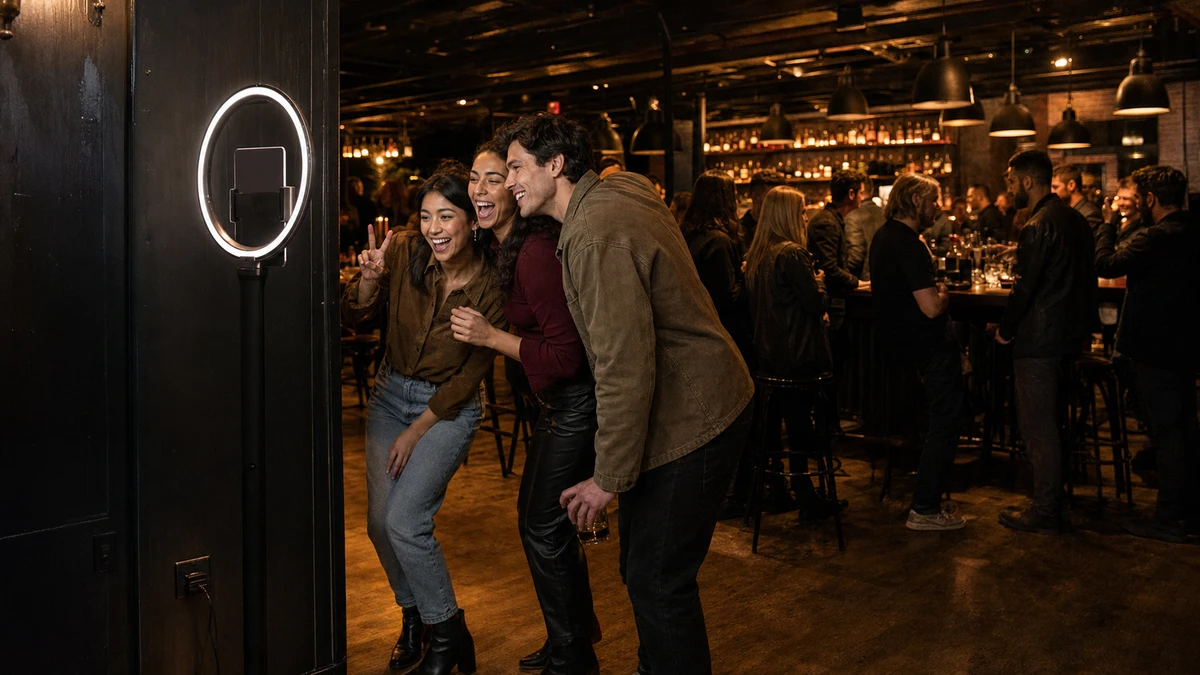
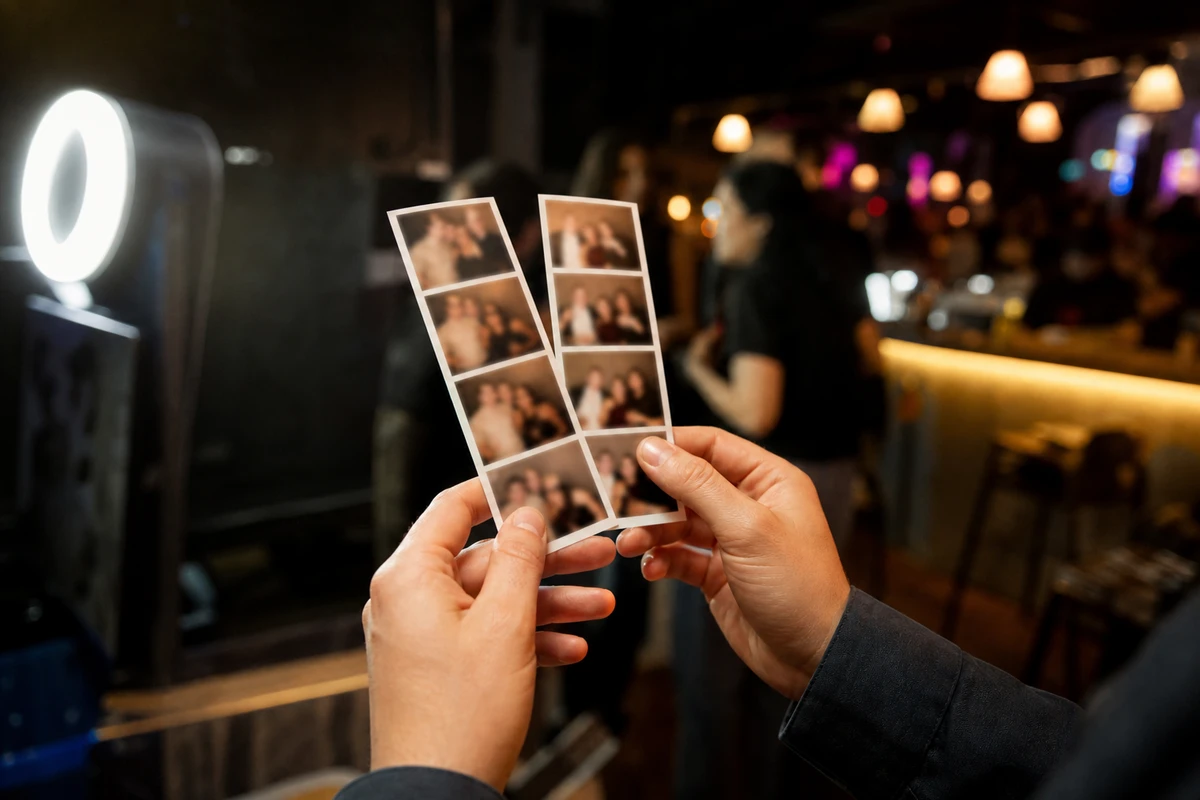
It’s a Friday at 11 p.m. in a neighborhood bar. The room is full, a group at the corner booth is three rounds in, and someone pulls out a phone to get a picture. They huddle, take one dark, blurry shot, and the moment is gone. A photo booth in that corner would have caught it, printed two strips with the bar’s logo, and collected five dollars for the trouble.
So how much does a photo booth cost for a bar? Anywhere from $0 to about $15,000 upfront. Where an operator lands has almost nothing to do with the booth itself and everything to do with one decision: place someone else’s booth, or own one. The cost guides that rank for this search answer a different question: the price of a three-hour rental for a single event. For a bar, a booth is not an expense with a sticker price. It is a vending asset, like a jukebox or an ATM, and the real question is which of four ownership models fits the room, and what each one pays back.
Why the photo booth cost everyone quotes is the wrong number for a bar
Search “how much does a photo booth cost” and the top results answer with confidence. Captured Celebrations, a Los Angeles rental company, puts it at “$475 to $3,200 depending on the type of booth, rental duration, and features included” (Captured Celebrations, April 2026). The number is accurate. It is also useless to a bar, because it prices a booth dropped off for one night and hauled away before morning.
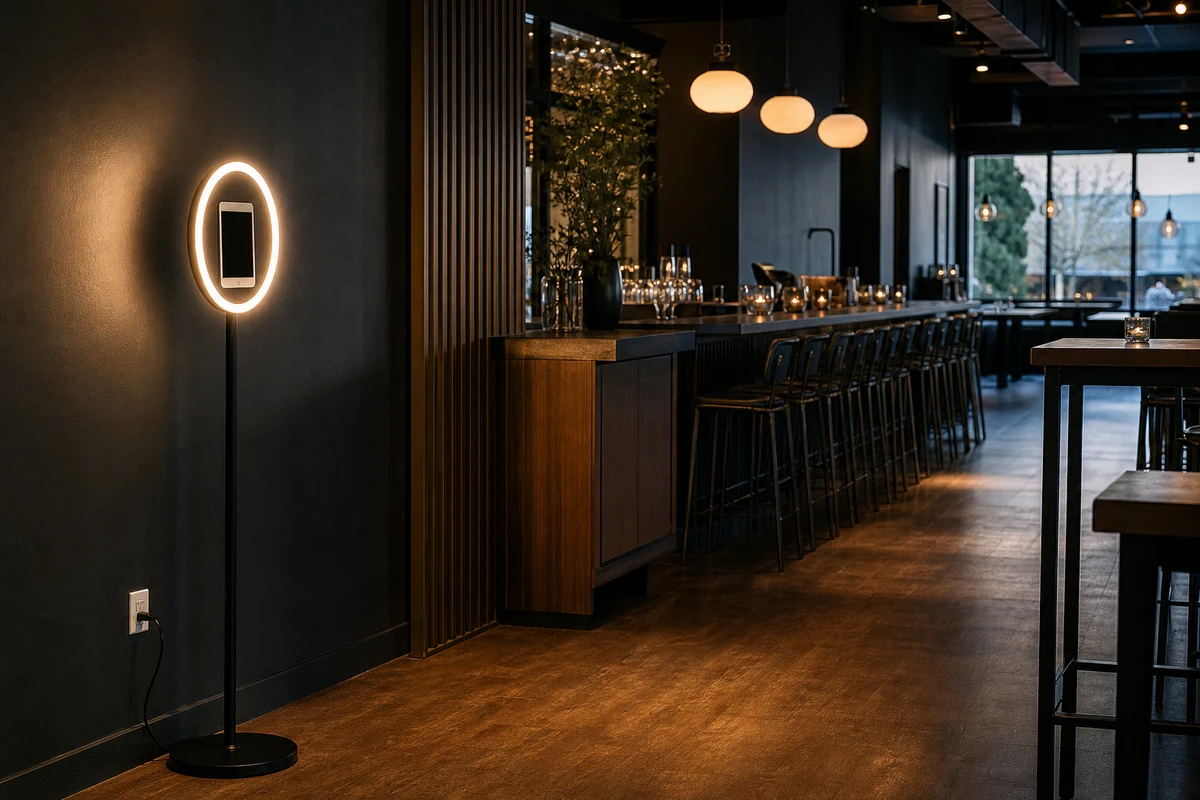
A bar wants the opposite: a fixture that earns every weekend. Paying a rental rate of $475 to $795 a night, plus roughly $150 for each hour past the base block, across eight weekend nights a month, runs past $4,000. Ownership covers that once.
This is why “cost” misleads a bar. A photo booth is not really bought or rented so much as positioned, the way a jukebox or an ATM is positioned: it takes a few square feet, runs on a revenue split, and pays back over a known period. The real cost is the answer to two questions. How much goes in upfront, and how is the per-photo revenue divided afterward? Four models answer those differently.
| Model | Upfront cost | Owns and maintains the booth | Bar’s share of vend revenue |
|---|---|---|---|
| Free placement | $0 | The operator | Minority, around 20% or less |
| Profit-share buy-in or lease | A few thousand (around $3,500) | The operator, after a bar buy-in | Bigger than free placement, varies by deal |
| Buy outright | $3,500 to $15,000 | The bar | 100% |
| One-off rental | $475 to $2,500 per night | The rental company | Not applicable, flat fee per night |
Model 1: Free placement, $0 upfront
A bar owner who just sank the season’s spare cash into a new walk-in cooler has nothing left for a photo booth, and no appetite for one more thing to fix. Free placement is built for that owner.
How Placement Splits Revenue
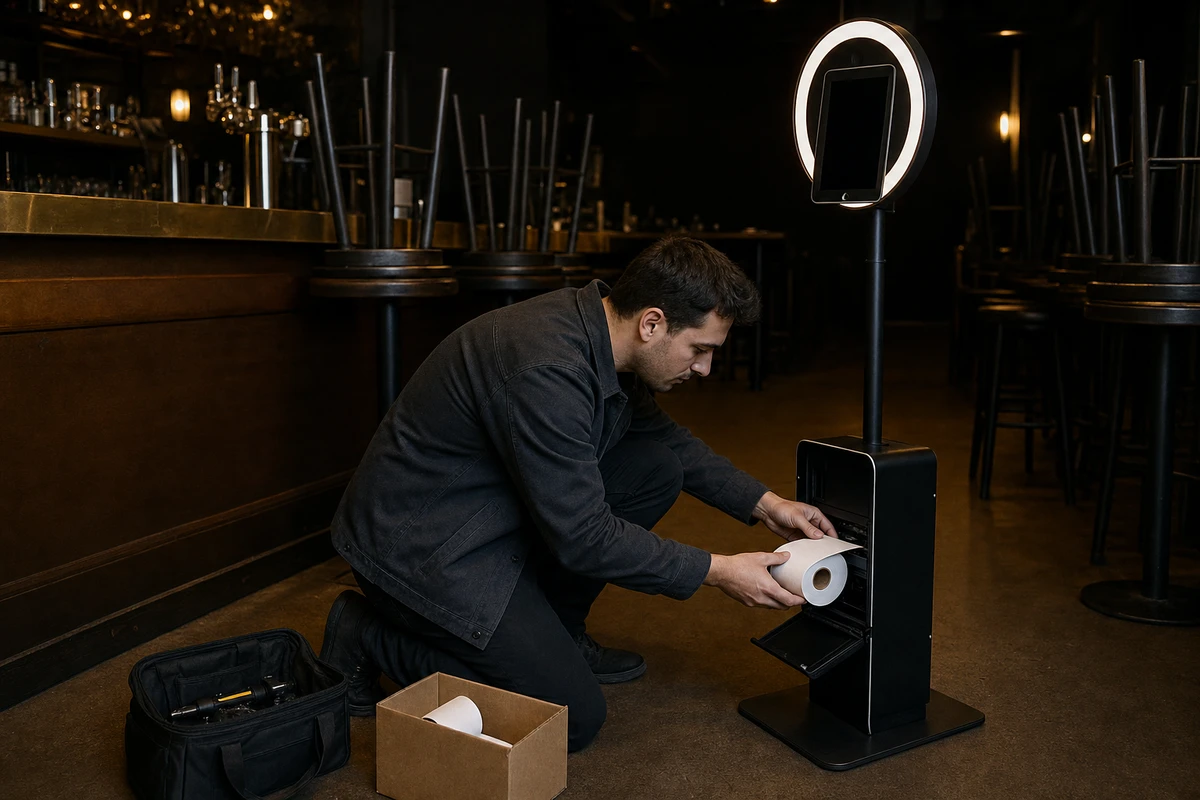
An operator owns the booth, installs it, maintains it, restocks paper and ink, and covers repairs and sales tax, then mails the venue a check each month. Classic Photo Booth Co. states the deal plainly: “You don’t pay us anything, we actually pay you a share of the profits every month … We maintain them and cover all costs” (Classic Photo Booth Co., 2026). The Flash Pack, which installs revenue-share booths in bars and nightclubs, frames it as adding a booth “without the financial burden” of conventional rental (The Flash Pack).
The cost to the bar is small and physical: a few square feet of floor, a wall outlet, and the majority of the vend revenue. That last item is the catch. The venue keeps the minority share. Magbooth’s published profit-share terms split net revenue “80% to Magbooth and 20% goes to you” (Magbooth, 2022). An operator on r/photobooth was blunter about the going rate: “We typically do a $1 flat profit share with the venue. The rest of it goes to us” (Reddit, 2025). A dollar out of a $4 to $5 vend is a fifth of the take, or less.
Free placement also settles a worry bar owners raise early. One owner on r/BarOwners dismissed an in-bar device as “more trouble than it’s worth” in a room of “basically drunk toddlers” (Reddit, 2025). A booth owned by someone else shifts that breakage risk off the bar. The model fits venues testing the idea, those with no capital to commit, and multi-location groups piloting before a wider rollout. The tradeoff is honest and plain: zero risk, zero upkeep, the smallest slice of the upside, and the least control over branding and customer data.
Model 2: Profit-share buy-in or a long-term lease
Between owning nothing and owning everything sits a bar that believes in its weekend traffic and wants more than a fifth of the take, but is not ready to buy hardware.
The profit-share buy-in answers that. The bar pays a modest fee, and the revenue split tilts in its favor. Magbooth’s version is a $3,500 buy-in against its $13,500 outright price, which the company says is “easily paid off within 15 months or less” (Magbooth, 2022). The buy-in is structured to self-liquidate. The bar is not buying a booth, it is buying a better cut, while the operator still carries maintenance and restocking.
A long-term lease is the same instinct in another shape: a fixed monthly fee, a contract term, and the operator still responsible for the equipment. Bar owners tend to evaluate technology in monthly terms rather than upfront prices, which should make a lease an easy sell. It often is not. One owner on r/BarOwners priced a monthly-fee booth device at “over $100 a month” and passed, calling it “too rich for my blood” (Reddit, 2025). A lease competes against two alternatives with little or no monthly cost: free placement charges the bar nothing, and an owned booth carries only its software subscription once the hardware is paid off. To win, a lease has to be cheap enough per month that the bar still clears a profit after the split. Before signing a buy-in or a lease, a bar should read four terms closely: the split percentage, the contract length, any exclusivity clause that blocks a second device, and the exit terms if the booth underperforms.
Model 3: Buying the booth outright, $3,500 to $15,000
A bar with a line at the door every Friday and Saturday, and a manager who already reloads the receipt printer without being asked, is the one that should run the ownership math.
Hardware comes in tiers
Hardware comes in tiers. Photo Booth International’s January 2026 breakdown puts a tablet-based commercial booth with built-in lighting at $3,500 to $5,000, a DSLR open-air booth at $5,000 to $10,000, and an interactive mirror booth at roughly $8,999 (Photo Booth International, January 2026). A full custom enclosure sits at the top: Magbooth prices its enclosed bar booth at $13,500 (Magbooth, 2022).
The sticker price is not the whole bill, and this is the part most comparisons skip. A photo printer adds $300 to $1,200. Booth software carries an upfront license of $150 to $250 and then a subscription of $30 to $100 a month that never goes away (Photo Booth International, January 2026). At the top of that range, software alone is $1,200 a year. Add print media consumed with every session, business insurance of roughly $100 to $500 a year, the occasional repair, and the minute of staff time it takes to reload paper on a busy night. A DSLR setup adds a camera and lens on top.
What ownership buys in return is the whole picture: the bar keeps 100% of the vend revenue, owns the customer data the booth collects, and controls the branding on every strip. A tablet booth like Simple Booth’s HALO kit collects that data through fields a guest fills in to receive the photo, and the entertainment-venue chain Treetop Golf built a 150,000-address email list across its locations the same way. The model fits an established bar with reliable weekend traffic and someone on staff willing to own light upkeep.
Model 4: Renting a booth for a one-off bar night
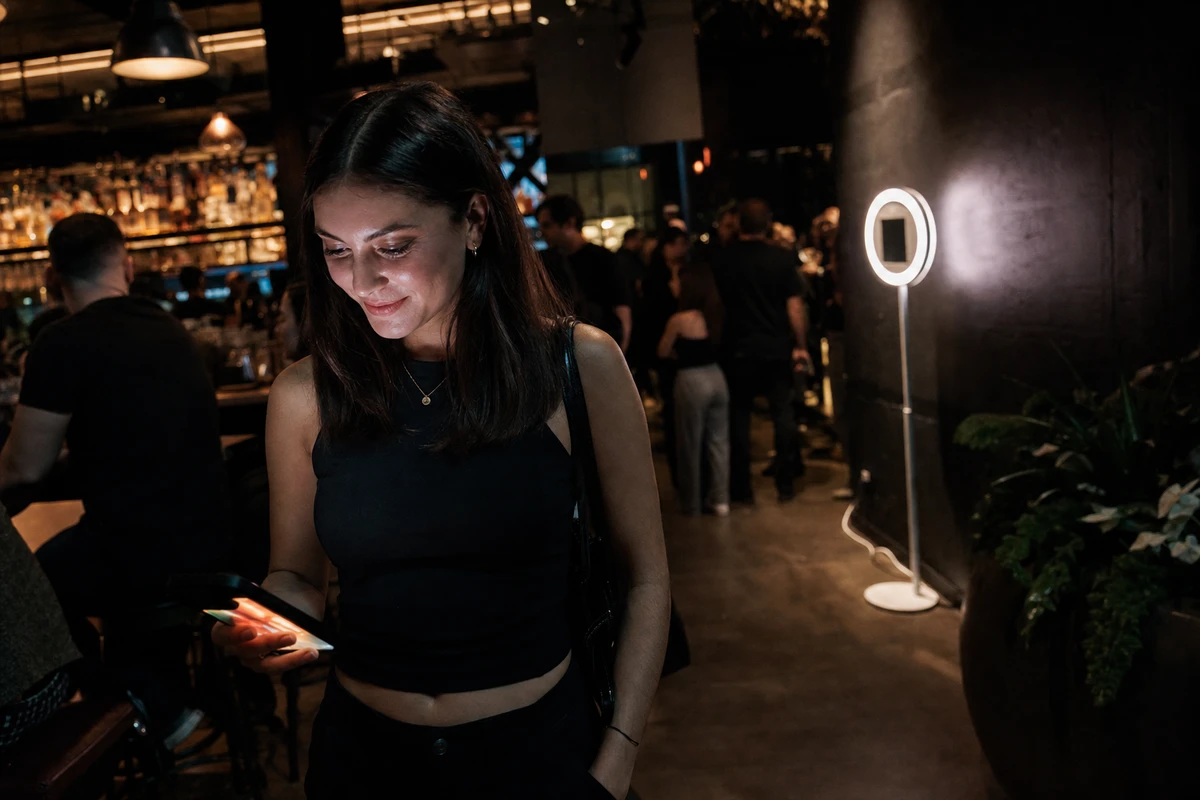
There is one situation where the rental rate the cost guides quote is exactly the right number. A bar planning a single big night, a tenth-anniversary party, a New Year’s Eve, a private buyout where the client asks for a specific booth, does not need to own anything. It needs a booth for one night.
Current event-rental tiers, from Captured Celebrations’ April 2026 guide, run from an open-air booth at $475 to $795 for three hours, to a retro mirror booth at $850 to $1,350, a glam setup at $1,100, a 360 video booth at $1,400 to $1,700, and an AI booth at $1,500 to $2,500, with extra hours about $150 each (Captured Celebrations, April 2026).
For one occasion, that is money well spent. As a standing arrangement it collapses. Eight weekend nights a month at those rates is the $4,000-plus figure from earlier, paid forever, for equipment that leaves with the vendor each time. Rental is an event line item, not a venue strategy.
The number that actually matters: payback and per-photo economics
Every model above leads to the same arithmetic, and a bar can run it before signing anything.
Vend Price and Volume
Two numbers drive it. The first is the vend price. Documented bar installations cluster tightly: Chipper Booth lists “$4 for two prints” across named Denver venues including Mile High Spirits and the Oriental Theater (Chipper Booth, 2026), and Classic Photo Booth Co. sets its booths at “$5 per two strips” (Classic Photo Booth Co., 2026). Call it $4 to $5 a session. The second number is volume. Magbooth benchmarks a bar install at 500 paid sessions a month, which it calls below average, up to 800 for a high-traffic unit (Magbooth, 2022). Those are a vendor’s figures, and a quieter bar should discount them, but they set a usable frame.
Take a bar that runs the booth Thursday through Saturday and lands 500 paid sessions in a month at $5 each. That is $2,500 in gross vend revenue. Subtract software at the top of its range, $100 a month, plus print media. Paper and ink for one session cost a fraction of the $5 a customer pays, so even a generous monthly allowance leaves monthly net revenue close to $2,000.
Run that against each model
Run that against each model. A bar that bought a $5,000 tablet booth recovers its hardware and setup costs in roughly three months, then keeps the full sum every month after. A $13,500 enclosure pays back in under seven. Both land inside, or below, the 6-to-15-month payback window Magbooth and Photo Booth International cite (Photo Booth International, January 2026), and a bar can do better than those vendor figures, because their break-even math carries marketing, travel, and website costs that a bar with existing foot traffic does not. The free-placement bar, by contrast, collects its 20% of the $2,500, about $500 a month, for $0 down and zero upkeep. The gap between $500 and $2,000 is the price of letting the operator absorb all the risk.
The booth earns a second way the per-photo math misses. On a normal night it takes paid vends. On a private buyout it becomes a perk: Magbooth notes a venue can “offer the booth for free if someone rents out your entire space” and “charge a premium” to that event client (Magbooth, 2022). The same hardware lifts buyout pricing without a second purchase.
One last line item is not a cost at all. Every strip prints with the bar’s logo and leaves on someone’s phone case or refrigerator, and the booth captures customer emails and phone numbers as it goes, building a marketing list, the angle The Flash Pack builds its revenue-share pitch around (The Flash Pack). Under free placement, that data sits with the operator. Under ownership, it belongs to the bar.
How to choose the model for a bar
The decision is not about which booth is best. It is about four honest answers.
How certain is the foot traffic
How certain is the foot traffic? A bar that cannot predict a Tuesday should not buy hardware. How much capital is free? A booth bought with money the bar needed elsewhere is a bad booth regardless of payback. How much upkeep will the staff tolerate? Reloading paper is minor, but it is not nothing. And how much does control over branding and customer data matter? Ownership keeps both; placement gives most of it away.
The rule of thumb falls out of those answers. Uncertain traffic or no spare capital points to free placement: it costs nothing and proves the concept. Strong, predictable weekend traffic plus a desire to keep the full margin and the data points to buying outright. A bar in between, confident but cautious, fits the profit-share buy-in. Renting at event rates belongs on the calendar, not in the business plan, reserved for the one night that warrants it.
Once the model is settled, the next decision is the booth itself, tablet, open-air, mirror, or enclosure, and that hardware comparison is where a bar owner should spend the next hour of research.
Frequently Asked Questions
How much does a photo booth cost for a bar?
Between $0 and roughly $15,000 upfront, depending on the ownership model. Free placement costs nothing, since an operator owns and maintains the booth and pays the venue a share. A profit-share buy-in runs a few thousand dollars. Buying outright costs $3,500 for a tablet booth up to $13,500 or more for a custom enclosure (Photo Booth International, January 2026; Magbooth, 2022).
Can I get a photo booth in my bar for free?
Yes. Free-placement operators install and maintain a booth at no upfront cost, restock paper and ink, and cover repairs and sales tax, then pay the venue a monthly share. The catch is the split. The venue typically keeps 20% or less of vend revenue, with the operator keeping the majority (Magbooth, 2022; Classic Photo Booth Co., 2026).
How much money can a photo booth make in a bar?
At a documented vend price of $4 to $5 per print pair, and Magbooth’s benchmark of 500 to 800 paid sessions a month, a booth grosses roughly $2,000 to $4,000. A bar that owns the booth keeps nearly all of that after software and print media. A free-placement venue keeps only its minority share, closer to $400 to $800.
Is it better to rent or buy a photo booth for a bar?
For a permanent fixture, buy the booth or place an operator’s. Renting at event rates ($475 to $795 a night, per Captured Celebrations, April 2026) makes sense only for a single occasion, like an anniversary night. Renting every weekend would cost more than $4,000 a month, far above the one-time price of owning a booth.
What ongoing costs come with owning a bar photo booth?
Booth software runs $30 to $100 a month (Photo Booth International, January 2026), and print media is consumed with every session. Add business insurance, roughly $100 to $500 a year, the occasional repair, and a minute of staff time to reload paper on a busy night. None of these apply under a free-placement deal, where the operator absorbs them.
Does a bar photo booth need a staff member to run it?
No attendant is required. Modern booths are self-serve: customers tap a screen, pay, and collect their strips. The only staff task is reloading paper and ink when they run low, a few minutes’ work. Under a free-placement deal, even that falls to the operator rather than the bar.
Sources
- Captured Celebrations (2026). “How Much Does a Photo Booth Cost? 2026 Pricing Breakdown.” https://www.capturedcelebrations.com/post/how-much-does-a-photo-booth-cost
- Chipper Booth (2026). “Photo Booths in Bars.” https://chipperbooth.com/vintage-photo-booth-for-sale-or-profit-sharing/
- Classic Photo Booth Co. (2026). “Vending Photo Booth Installs.” https://www.classicphotoboothco.com/vending-photo-booth-installs
- Magbooth (2022). “Bar Booth.” https://magbooth.com/bar-booth
- Photo Booth International (2026). “Is a Photo Booth Business Profitable? Real Numbers.” https://photoboothint.com/photo-booth-business-profitable-real-numbers/
- The Flash Pack (2024). “Revenue Share Photo Booths: Capturing Content, Creating Value.” https://itstheflashpack.com/the-lens/the-power-of-revenue-share-photo-booths/
- Reddit, r/photobooth (2025). “Photobooth deals with taverns/bars/etc.” https://old.reddit.com/r/photobooth/comments/1jy2bq7/photobooth_deals_with_tavernsbarsetc/
- Reddit, r/BarOwners (2025). “Buzzy Booth experience.” https://old.reddit.com/r/BarOwners/comments/1i85t5f/buzzy_booth_ezperience/