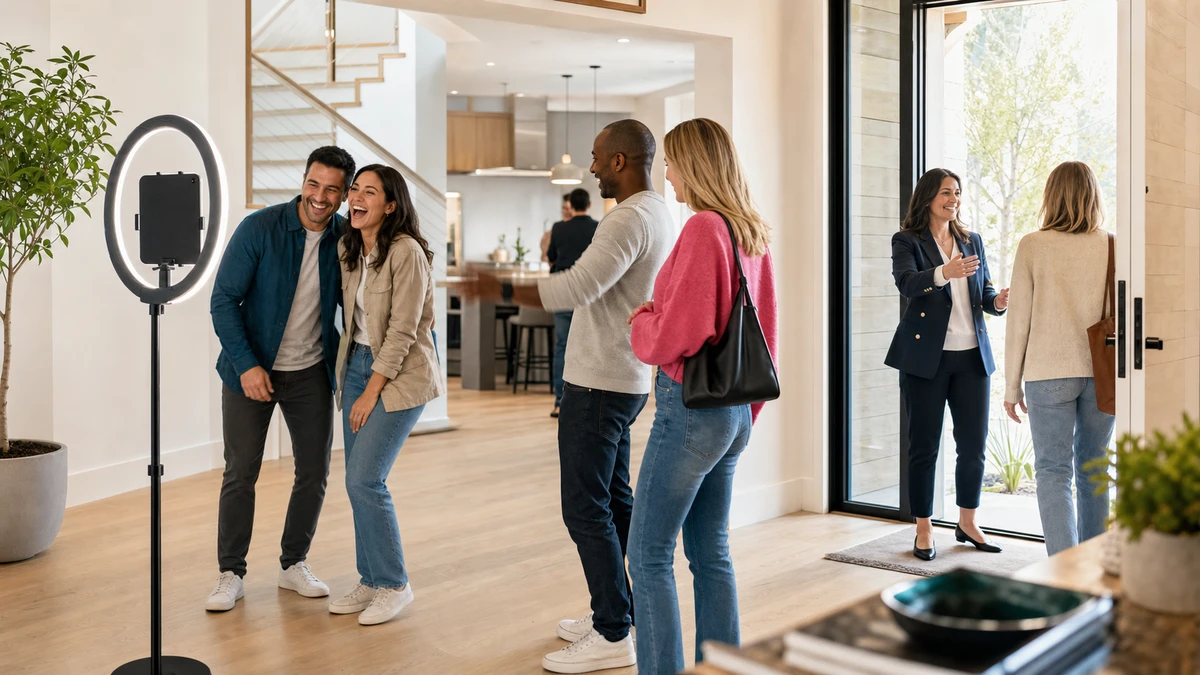
On a Saturday afternoon, a clipboard sits on a console table just inside the front door of a listed home. A couple steps in, glances at the sheet, and walks straight past it toward the kitchen. The next visitor picks up the pen, writes “Sarah,” leaves the phone and email lines blank, and follows them in. By the end of the day the agent has forty signatures-worth of foot traffic and a list that can reach maybe a dozen of those people.
The modern alternative to the sign-in sheet is not a nicer sheet or a faster tablet. It is a different transaction. Agents who swap the paper clipboard for an iPad still watch half their entries come back as ”a@a.com” and “555-1212,” because the device never changed what the visitor is being asked to do: hand a stranger a working phone number before receiving anything in return. Better open house lead capture starts by fixing that order. What follows is four capture models, ranked by how much the visitor gets before being asked to give, and the arithmetic to price what the current method leaks at every event.
Why the Sign-In Sheet Leaks More Than Agents Think
The sheet does not fail in one place. It fails in three, and most agents only notice the last one.
Three places the contacts disappear
The first loss is the walk-past: a visitor reads the clipboard as a sales gate and steps around it. The second is the partial entry, a first name on the page with the phone and email lines left empty, technically signed in and completely unreachable. The third is the junk entry, a complete-looking row built from a fake number and a throwaway address. Only the third loss stays invisible until the agent sits down to follow up, which is why the total damage gets underestimated.
An agent in a 2023 r/realtors discussion put it plainly: “90% of the people either try to walk past and ignore it or they put down their name and leave the phone/email section blank” (operator commentary, r/realtors, 2023). The same thread describes what happens when an agent presses harder for completion: the lines fill with “Mickey Mouse,” ”a@a.com,” and “555-1212.”
A forty-visitor Saturday that produces twelve contacts the agent can actually call is not a traffic problem. The home drew a crowd. It is a capture problem, and it is an expensive one, because open houses are one of the few channels where buyers arrive in person without being chased. American Housing Survey data, as cited by FollowUpBoss, puts open house attendance at roughly 48% of buyers during their search, and the National Association of Realtors 2025 Profile of Home Buyers and Sellers found 88% of buyers still purchased through an agent. The people walking past the clipboard are the channel.
Why visitors fake it
The clipboard asks for something valuable, a real way to reach the visitor, and offers nothing back at the moment of the ask. A visitor who is not ready to be called by an agent has one rational move: skip the sheet, or write something false. That is not rudeness. It is a sensible response to a one-sided trade.
The standard fix is a pretext. “Sign in please, the seller asked me to have everyone sign in.” Buyers see through it. One agent in the same r/realtors thread recalled attending a peer’s open house and hearing that exact line: “I immediately knew it was a lie and I thought that was a really cheesy sales sentence.” A pretext changes the wording of the ask. It does not change the math. The visitor is still being asked to give a working contact in exchange for nothing.
Paper vs. Digital Is the Wrong Comparison
Every ranking guide answers the same question, paper sheet or sign-in app, and the honest response is that the device barely affects whether the data is real. One agent in the r/realtors thread tracked it directly. On paper sign-ins, false or inaccurate contact information ran about 50%. After switching to an iPad sign-in, it stayed at about 50%. The number moved only when the agent changed when and how the capture happened, entering details into a phone during conversation after some rapport had formed. Then inaccurate data fell to under 20%. The tablet was never the variable. The order of the interaction was.
Digital capture does earn its place, just not where agents expect. It removes handwriting errors, so a correct number is not lost to a misread “7.” It cuts the data-entry time between the event and the follow-up. It can sync a contact straight into a CRM with the listing address attached. Those gains are real. They are efficiency gains. They are not accuracy gains. A tablet records a clean, instantly-synced copy of a fake number just as smoothly as a real one. Conflating the two is what sells tablets and leaves the leak in place.
The variable that actually predicts accurate data is whether the visitor received something they wanted before being asked to identify themselves, and whether that thing has to be delivered to their device, which quietly requires a working number or email to land.
The Capture Spectrum: From Toll Booth to Exchange
The useful way to think about open house lead capture is not a catalog of devices. It is a spectrum of capture models, ranked by one thing: how much the visitor receives before being asked to give. At one end sits the toll booth. At the other sits an exchange the visitor actually wants. Accuracy climbs as a model moves from the first toward the second, and the device used at any point matters far less than the position on the spectrum.
Model 1: The mandatory toll
A sign-in placed as a gate, paper or iPad, positioned so visitors must pass it to see the home. It is the cheapest model to set up and carries the highest junk rate, and it produces the salesy first impression operators dislike. The visitor has received nothing, so the visitor protects the contact. This is the baseline the rest of the article measures against, not a recommendation.
Model 2: Frictionless digital
A QR code on a stand, or a sign reading “Text OPEN to this number.” This model lowers physical friction: no shared pen, no clipboard passed between strangers, no line at the door. Completion rises, and the contact syncs cleanly into a CRM. But it is still extraction. The visitor still gives before getting anything. Friction and accuracy are separate problems, and this model solves only the first. Better completion, marginally better accuracy.
Model 3: Value-gated capture
The visitor signs in to receive something specific and useful: the full listing packet, the three most recent comparable sales on the street, a neighborhood market report. The contact information is now the price of a thing the visitor wants. Accuracy jumps, because a fake number means the report never arrives and the visitor knows it. This is the first model on the spectrum where the give-before-ask order is corrected rather than disguised.
Model 4: Experience-first capture
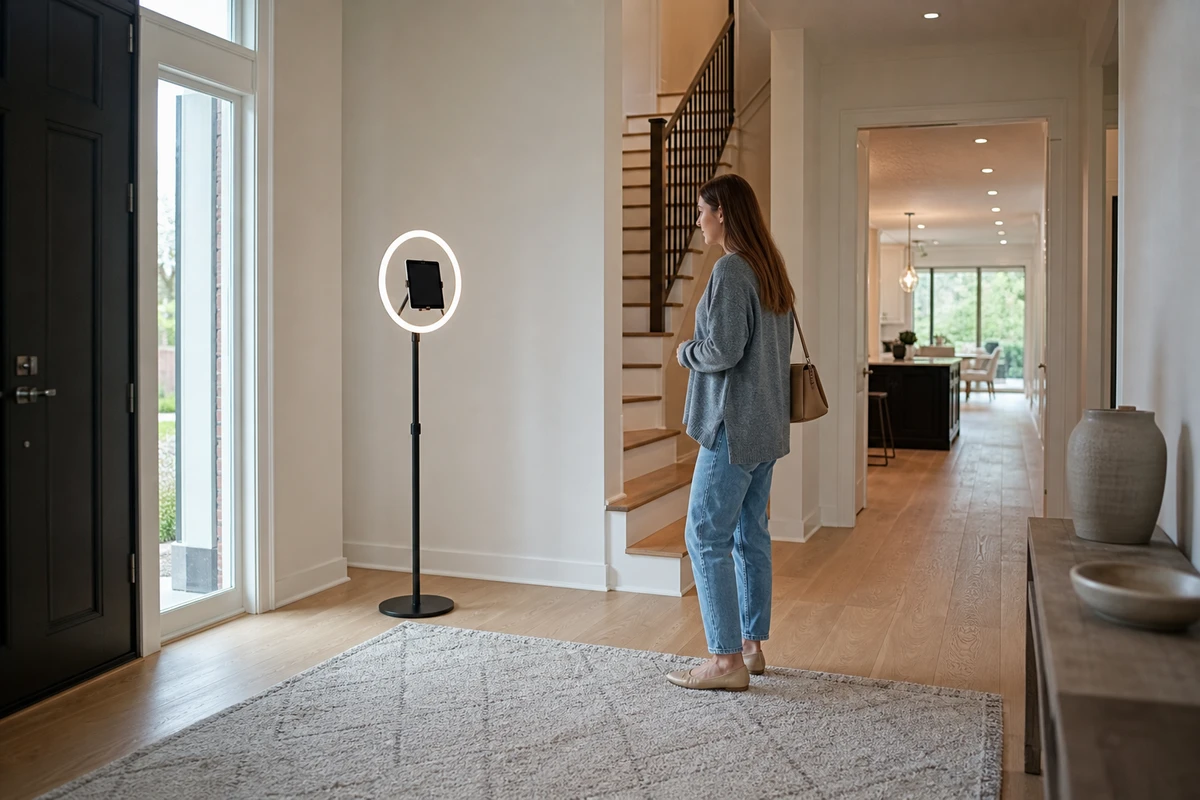
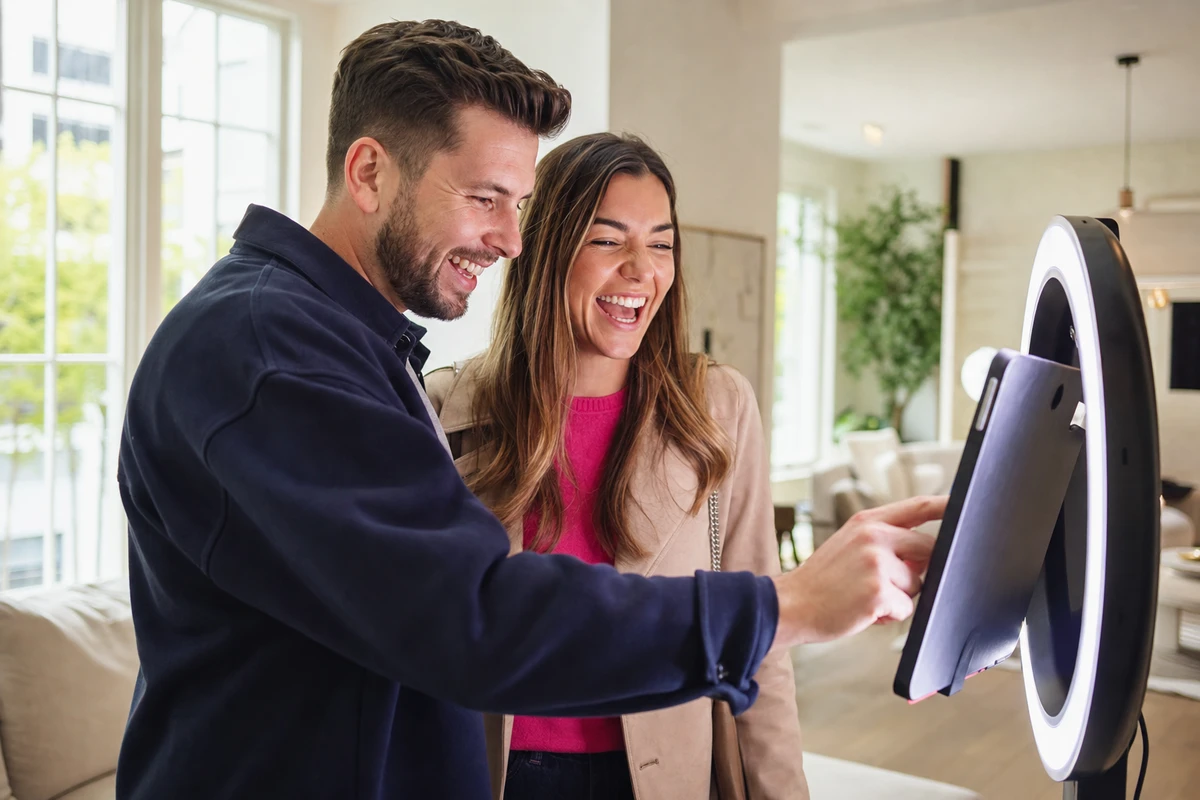
At this end, the contact information is a byproduct of something the visitor came to enjoy. The r/realtors thread offers two field-tested examples. One agent ran a giveaway where “everybody wins a bottle of wine and thinks they are the only winner,” and credited it with adding “at least a deal a month.” Another used a short feedback card, checkboxes and a one-to-five scale on the kitchen and the home’s condition, and found “it’s opened the conversation up.” In both cases the visitor is doing something they want to do, entering a draw or giving an opinion, and a working contact is required only because that is how the reward or the result reaches them. A photo station fits the same pattern: a visitor takes a quick branded photo at the open house and gets it sent by text or email, so the capture rides along with something the visitor wanted anyway. Simple Booth’s HALO kit is one packaged form of this model: an iPad photo station that records the visitor’s contact alongside the photo, with an offline upload queue that holds sessions when the open house Wi-Fi drops and releases them once the connection returns. The capture is structural, not requested.
Accuracy rises as a model moves from toll to exchange, and the device is close to irrelevant to that climb. An iPad running Model 1 still leaks. A paper card running Model 3 holds. The decision to make first is the position on the spectrum. The hardware is the decision after that.
What the Current Method Actually Costs
The gap between a toll and an exchange is easy to feel and hard to picture until it is priced. Take a single Saturday open house with forty visitors and run the same crowd through both ends of the spectrum.
The reachable-contact gap
Real estate coaching sources commonly cite structured-process capture rates of 60% to 75% and passive-process rates under 30% (Jamil Academy and others; these are practitioner-reported industry estimates, not controlled studies). Pair those with the operator-reported accuracy figures from the r/realtors thread.
A toll-booth path captures perhaps 45% of forty visitors, and roughly half of those entries are accurate: 40 visitors, then 18 sign-ins, then about 9 contacts an agent can actually reach. An exchange path captures perhaps 70% at roughly 85% accuracy: 40 visitors, then 28 sign-ins, then about 24 reachable contacts. The difference is fifteen reachable contacts from the same forty visitors and the same house.
Carrying it to a closed deal
A reachable contact is not a closed transaction. Industry practitioners estimate that 2% to 5% of open house contacts transact within twelve months (Jamil Academy); that range is coaching-circuit lore rather than a verified study, so an agent should track it against the leads they actually close. At a 3.5% midpoint, fifteen extra reachable contacts produce about half an additional transaction per open house.
The value of that half-transaction depends on price and commission. The U.S. median existing-home sale price was $403,700 in March 2025 (HousingWire, reporting NAR data). At a buyer-agent commission of 2.5%, a deliberately conservative modeling assumption rather than a market rate (since the August 2024 NAR settlement, buyer-agent fees are negotiated directly and vary), a closed deal is worth roughly $10,093. Half a transaction is about $5,000.
An agent running two open houses a month is leaving close to $10,000 in monthly pipeline on the console table next to the clipboard. An agent whose price point or close rate differs will land on a different figure, but the structure of the calculation holds: capture rate, then accuracy rate, then close rate, then value per deal.
Building a Value-Exchange Capture Station
Knowing the exchange model wins does not tell an agent what to physically set on the table Saturday morning. Here is what the station needs.
What goes on the table
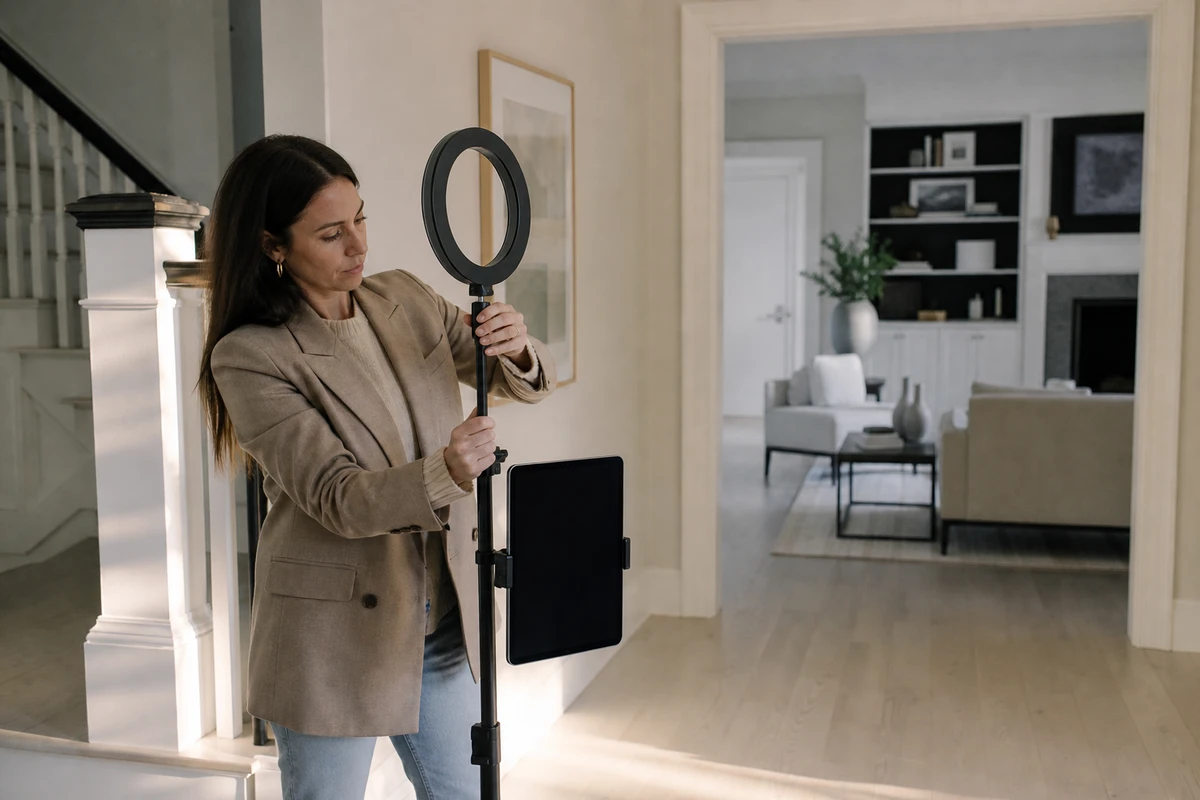
Place the capture point at a natural greeting position just inside the door, where the agent can reach a visitor before they drift toward the kitchen. The primary method is whichever model the agent chose from the spectrum, ideally Model 3 or 4. Beside it sits a low-tech backup, an offline-capable form or a simple printed card, for the Saturday the open house Wi-Fi fails. A capture model that depends entirely on a live connection is one outage away from becoming a paper sheet again.
Replace the ask with an offer
The greeting decides whether the model works. “Please sign in” is a toll. The replacement is an offer: “Want me to text you the full listing details and the three most recent sales on this street?” The same data gets captured, but the transaction has reversed. Coaching practitioners reach the same conclusion from a different angle; Tom Ferry’s guidance frames the sign-in as a conversation opener rather than an extraction gate (Tom Ferry, 2025).
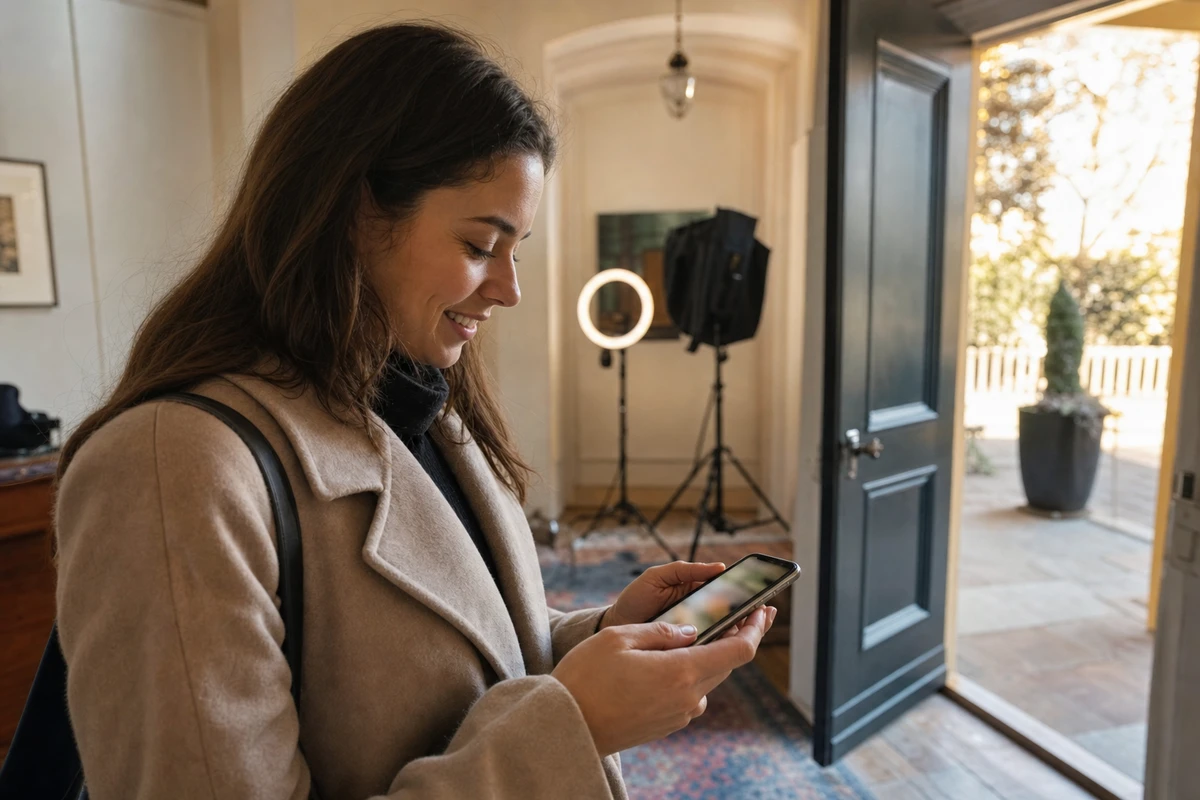
The offer also explains why accuracy climbs. Because the packet, the comps, the giveaway result, or the photo is sent to the visitor’s phone or inbox, an accurate contact is required for the visitor to receive what they were promised. The visitor polices their own data, not out of goodwill, but because a fake number breaks the delivery. That is the structural reason the numbers improve. It is not willpower and it is not a better pen.
Sort buyers from neighbors at the door
One question at the point of capture sorts the list before the visitor leaves: “Are you in the neighborhood, or out looking?” A neighbor and an active buyer need different follow-up, and asking later means guessing later. Tagging the answer while the visitor is still standing there sets the right track from the start.
Turn Capture Into Pipeline: The First 48 Hours
By Sunday evening the open house is over and the captured contacts sit in a CRM, doing nothing on their own. What the agent does in the next two days decides whether those rows turn into showings or go cold. Three moves matter most.
Make contact within two hours
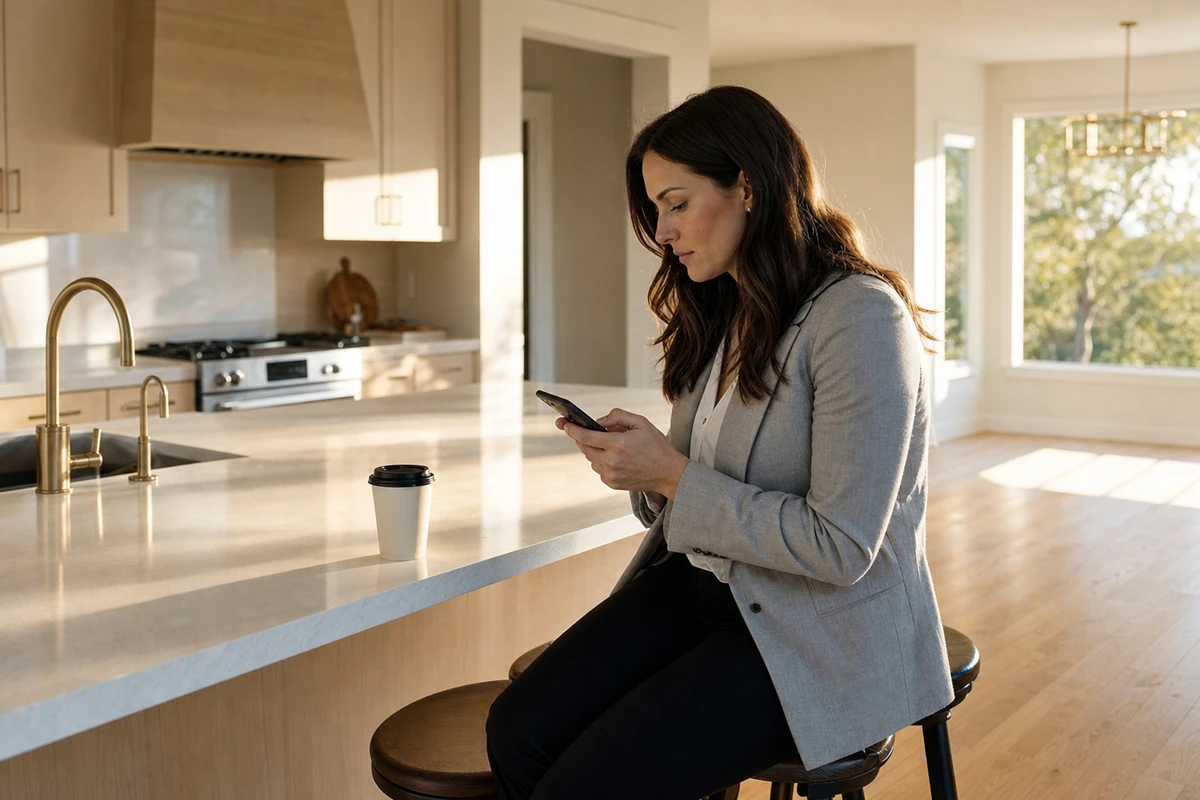
Speed decays sharply. Harvard Business Review’s analysis of online sales-lead data found leads contacted within the first hour were seven times more likely to qualify than those contacted even an hour later (HBR, 2011). That study was run on B2B web leads rather than open house visitors, so the multiplier is illustrative, not exact, but the direction transfers cleanly: a personal text within roughly two hours, while the visit is still fresh, beats a polished email sent Monday.
Split the follow-up by lead type
Buyer leads get listing-focused follow-up: similar homes, financing next steps, a second showing. Neighbor leads get market reports, recent comps, and a longer nurture, because a curious neighbor today is a listing appointment in six to twelve months. That nurture matters more than it looks. NAR’s 2024 Generational Trends data found 81% of sellers contacted only one agent before choosing one, which means the listing is usually won by the agent already in the relationship, long before the property goes on the market.
Tag the source so automation can fire
Every captured contact should carry a source tag, “open house, listing address,” so CRM automation routes it to the correct track without manual sorting. A tag is only as good as the data under it, which is the whole point of fixing the capture model first. Clean, accurate contacts are what let any follow-up sequence work at all.
The sign-in sheet was never the problem worth solving. The order of the transaction was. An agent choosing a capture method this week should pick the model that fits next weekend’s listing, run it, and then count the contacts that are actually reachable, not the signatures on the page.
Sources
- National Association of Realtors (2025). “First-Time Home Buyer Share Falls to Historic Low of 21%, Median Age Rises to 40.” https://www.nar.realtor/newsroom/first-time-home-buyer-share-falls-to-historic-low-of-21-median-age-rises-to-40
- National Association of Realtors (2024). “Home Buyers and Sellers Generational Trends Report.” research.nar.realtor
- HousingWire (2025). “Existing-Home Sales, March 2025.” https://www.housingwire.com/articles/existing-home-sales-march-2025/
- Harvard Business Review (2011). “The Short Life of Online Sales Leads.” https://hbr.org/2011/03/the-short-life-of-online-sales-leads
- Tom Ferry (2025). “Open House Sign-In Sheet Tips.” https://www.tomferry.com/blog/open-house-sign-in-sheet-tips/
- Jamil Academy (2026). “How to Convert Open House Visitors Into Buyer Clients.” https://www.jamilacademy.com/blog/how-to-convert-open-house-visitors-into-buyer-clients
- FollowUpBoss. “Turn Every Open House Into a Lead-Generation Machine.” https://www.followupboss.com/blog/turn-every-open-house-lead-generation-machine
- r/realtors (2023). “Sign in sheets at open houses?” https://www.reddit.com/r/realtors/comments/14cmert/sign_in_sheets_at_open_houses/