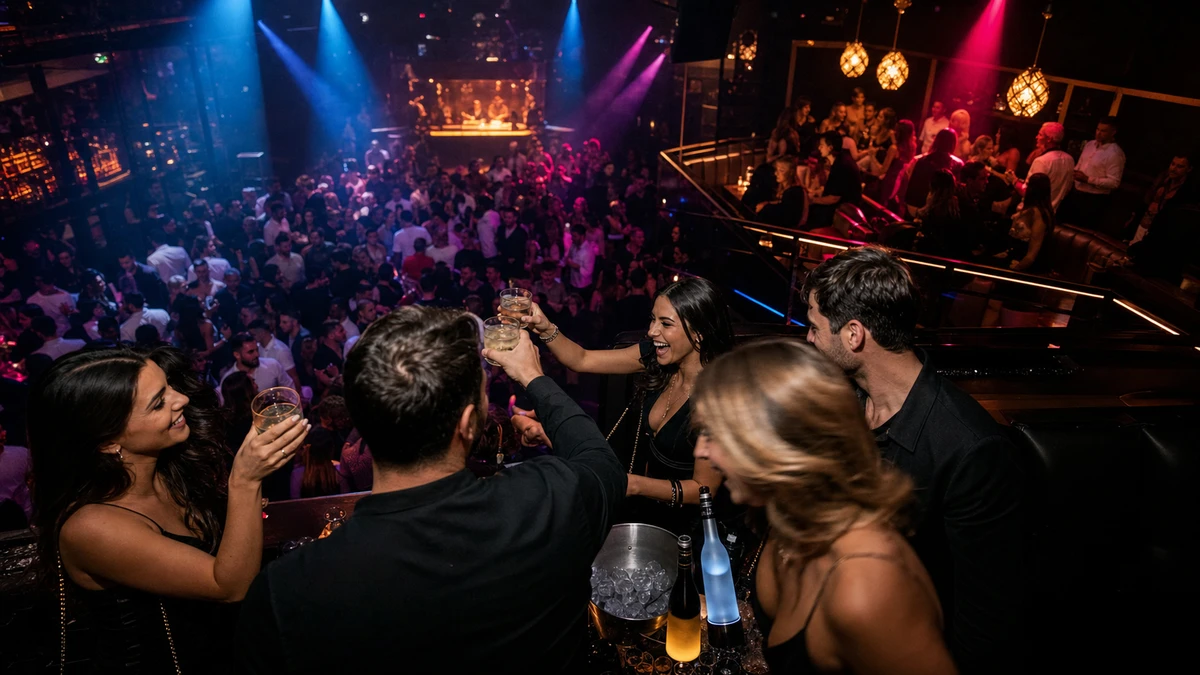
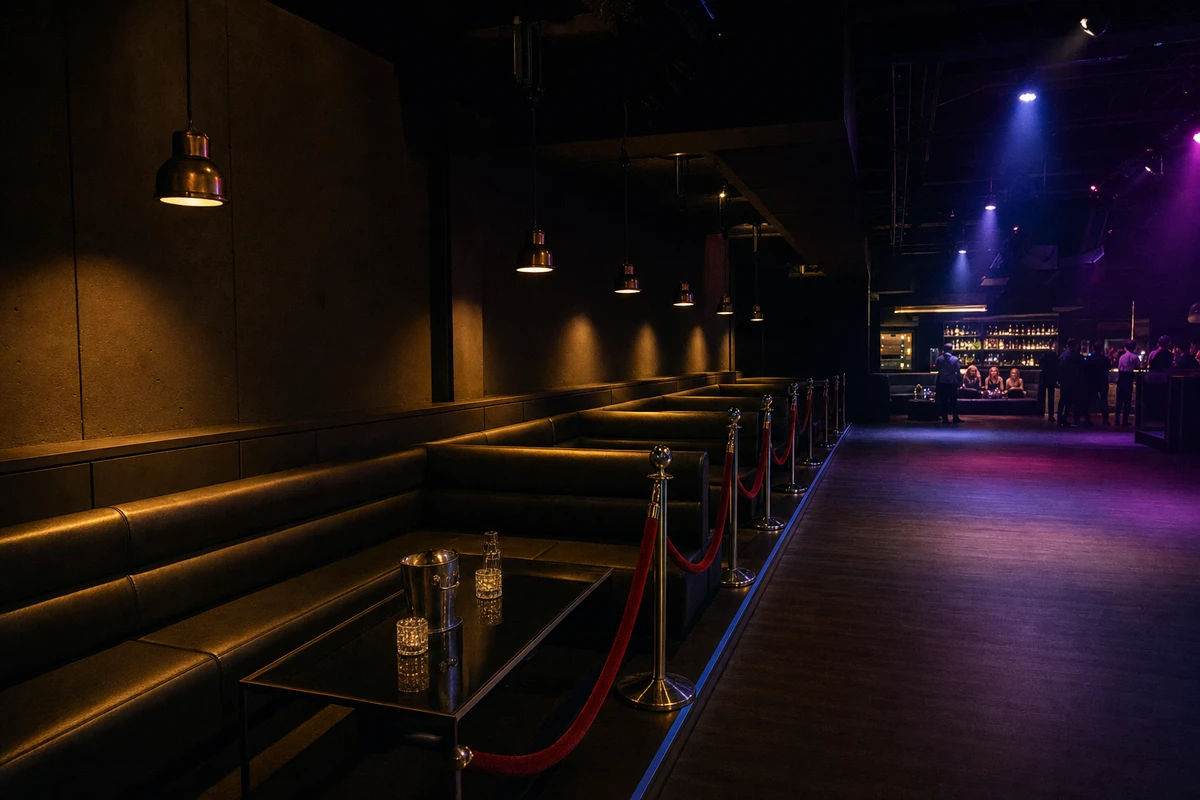
It is 11 p.m. on a Tuesday and a mid-size club has maybe forty people standing on a floor built for three hundred. The DJ is good. The lighting is dialed in. The bar is fully staffed. Two VIP tables are working; the other ten sit roped off, lit, and earning nothing.
A theme night is the standard fix for that picture. Most “nightclub theme night ideas” lists treat the fix as a costume: pick a vibe, buy the decor pack, write a playlist, and hope. That advice fills a calendar slot. It rarely fills those ten empty tables.
A theme night raises VIP spend for three specific reasons, and decoration is none of them. It works when it gives a group a reason to reserve a table before they leave the house, a reason to spend past the minimum once they sit down, and a moment other tables can see and want to answer. This article sorts theme ideas by which of those levers each one pulls, lays out five formats built to drive bottle-service pre-booking, and works the math on a real floor.
Why Most Theme Nights Don’t Move VIP Spend
Plenty of the roughly 20,000 nightclubs in the U.S. (IBISWorld data, cited by the American Nightlife Association) run a themed calendar. Far fewer can say what any given theme did to revenue, and that gap is the real problem.
The decoration-pack trap
A veteran DJ on r/BarOwners described a retro night that went nowhere. The venue, he wrote, “basically bought a trope 80’s decoration pack” and hired a host who “had no clue about the music.” His verdict was blunt: “if you do a retro night, put a bit of effort into it.” The room looked themed. Nothing about it gave a group a reason to call ahead, and nothing gave a seated group a reason to order a second bottle. The decor was a cost. It never became a revenue lever.
The format itself was sound. The same DJ noted that the older crowd a retro night pulls “spends more money, causes fewer problems, and usually tips pretty well.” A nostalgia night built for that crowd is a credible VIP play, not just a door-count one. This one failed on execution, not concept: it dressed the room and skipped the reservation.
Three levers, and decor pulls none of them
A theme night converts to VIP revenue through three levers. The first is a pre-booking reason: a dated, named occasion a group can plan around and reserve a table for. The second is an occasion lift: a celebration framing that pushes a group’s willingness to spend above the table minimum. The third is a visible spectacle: a moment, usually a bottle reveal, that nearby tables see and want to answer.
A generic theme pulls none of them. It changes what the room looks like without changing what a group decides to do. The fix is a reframe. A theme night is not a costume for the room. It is a bookable product: a name, a date, a package, and a reason to commit money in advance. The strongest themes double as the venue’s identity for the night, something a guest can describe in one sentence and a group can plan around. Before picking from any list of ideas, an operator has to know which lever a given theme is built to pull.
Door-Count Themes vs. VIP-Conversion Themes
The most expensive mistake in theme programming is assuming a fuller room is a richer room. It often is not.
Two different levers
Door-count themes maximize bodies and bar volume. Genre nights, ladies nights, Latin and reggaeton nights, viral-trend nights: these pull a crowd to the floor and move general-admission and bar revenue. They are worth running, and Latin nights in particular sit on real cultural momentum. Latin music was the fastest-growing genre in the U.S. in early 2025 and accounted for 8.44% of all audio streaming, more than one in every twelve streams (Luminate, 2025).
VIP-conversion themes maximize table reservations and bottle-service spend. Occasion-anchored nights, milestone galas, and competitive-spend formats are built to get groups to pre-book a table and overspend the minimum once they are seated.
Why a packed floor can still underperform
A packed floor of walk-up bar guests can gross less than a half-full room with ten pre-booked tables. Operator-facing revenue guides put a general-admission guest at roughly $50 to $100 across a night and a VIP table at $1,000 to $5,000. Ten VIP tables clear $10,000 at the bottom of that range; matching that on walk-up guests alone takes well over a hundred people through the door, with the staffing and security load that crowd carries.
Discounting to drive door count widens the gap. One operator on r/BarOwners described advertising daily drink specials all summer: “all it did was lower transaction totals and didn’t seem to bring anyone new in.” A discount cuts check size. An occasion raises it.
Both theme types belong on the calendar, programmed on purpose. Door-count themes build the crowd energy and social proof that make a VIP table worth buying. VIP-conversion themes monetize that energy. A calendar that is all door-count themes is busy and underpaid.
| Theme example | Primary lever | What it grows | Best calendar slot |
|---|---|---|---|
| Reggaeton / Latin night | Door count | GA and bar volume | Slow weeknight |
| Ladies night | Door count | GA and bar volume | Slow weeknight |
| Zodiac birthday-season night | VIP conversion | Table pre-bookings | Any night |
| Venue anniversary gala | VIP conversion | Pre-bookings and minimums | Fixed scarce date |
| Bottle-sign competition night | VIP conversion | Bottle-service check size | Weekend peak |
Five Theme Night Formats That Drive Bottle-Service Pre-Booking
Each format below wins on a booking trigger or a spend trigger, not on decor.
1. Zodiac and birthday-season nights
Anchor each month to its zodiac sign and every guest born under it has a built-in birthday occasion. Why it converts: birthday groups self-organize, reserve tables, and reliably push past the minimum. The occasion-spending pattern shows up in consumer research. SevenRooms’ 2025 U.S. Restaurant Trends Report surveyed 1,000 consumers about dining out: 63% said they would spend more than they would on a typical meal for holiday menus and celebrations, and 47% named birthday and anniversary promotions as the perk they most want. That survey covered restaurants, not nightclubs, but the willingness to open the wallet wider for a celebration is a consumer habit rather than a restaurant-specific one, and it carries straight to a VIP booth. The operator move: a named, pre-bookable birthday-season table package promoted to the sign of the month.
2. Milestone galas and holiday nights
New Year’s Eve, Halloween, and a venue’s own anniversary share one trait: a fixed, scarce date. Why it converts: a date that cannot move, paired with a dress-up occasion, compresses demand into a single night, which justifies higher table minimums and deposits. The venue’s own anniversary is the strongest of the three, because every club on the strip competes for New Year’s Eve, but only one can run the anniversary. The operator move: open table reservations weeks out with tiered, dated pricing, so the scarcity does the selling.
3. Artist tribute and album-release nights
Build a night around one artist, a tribute set or an album release. Why it converts: shared fandom creates group cohesion, and cohesive groups book a table together rather than arriving as loose singles. A loose single buys a drink; a committed group of eight buys a section. The operator move: theme the table packages to the artist and let the fan identity sell the section.
4. Table-versus-table competitive nights
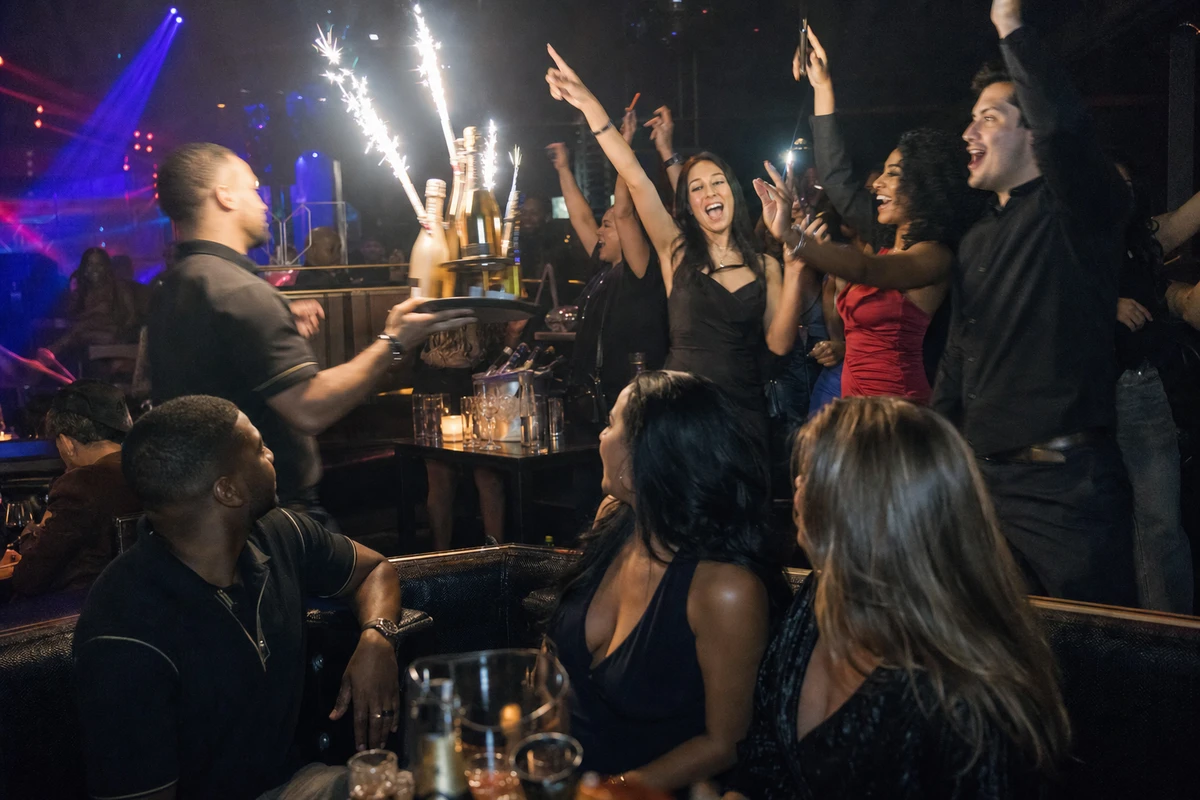
Turn spending into a visible game: best presentation, biggest group, a light bottle-reveal competition with a perk for the winner. Why it converts: this is the spectacle lever. As the beverage publication Punch Drink documented in its 2014 history of bottle service, the sparkler-topped bottle parade is “a very clear effort to be conspicuous.” What the buyer pays for is the table and the signal, not the liquor: as one club publicist told the publication, “what they were really paying for wasn’t the bottle; it was the table.” Economists call this conspicuous consumption. A 2001 paper in the Annals of Economics and Statistics modeled the same dynamic: spending made visible to signal status to a peer group. One table’s bottle reveal becomes an advertisement the next table wants to answer. The operator move: a simple competitive mechanic built to be filmed and shared.
5. Liquor-partner takeover nights
Hand the night to a premium spirits brand. Why it converts: the partner co-markets the event, and a premium bottle becomes the night’s anchor product, lifting the average bottle price. Tequila is the credible category to name. It was the only traditional spirits category to grow revenue in the U.S. in 2024, up 2.9% to $6.7 billion, while overall spirits sales fell 1.1% (Distilled Spirits Council, 2025). That growth sits in the premium and prestige tiers, exactly the bottles a VIP section sells. The operator move: a co-branded VIP package built around premium tequila, not budget product, with a named signature serve.
The Math: What a VIP-Converting Theme Night Does to a 12-Table Floor
A worked floor plan
Take a club with 12 VIP tables and a $1,000 minimum spend. On an ordinary night, 5 of those tables get booked, most of them walk-up and unpredictable. At the minimum, that is $5,000 in table revenue.
Now run an occasion-anchored theme: a zodiac birthday-season night, named, promoted three weeks out, with pre-bookable packages. In a strong case, pre-bookings reach 10 of 12 tables. Because birthday groups tend to spend past the minimum, average table spend rises to $1,500 in this example. That is $15,000, before the one or two walk-up tables the bottle-reveal spectacle pulls in.
The arithmetic is simple to redo for any floor: tables booked, multiplied by average spend per table. The instructive part is the two mechanisms behind the jump. The theme moved booking from the door to the calendar, which turns uncertain walk-up revenue into committed revenue. The occasion moved spend above the minimum, which raises check size. Door count alone did neither of those things.
The cost side
A theme night is not free. Promotion, a host or a name DJ, decor, and extra staff all carry real cost. The honest claim is not that themes are costless. It is that an occasion-anchored theme returns measurably against that cost, because it changes booking behavior and check size, while a decoration-pack theme mostly spends the budget and hopes. One bar owner on r/BarOwners put the spread plainly: “a good theme can be double the sales of a bad one.”
Make the Theme a Bookable Product Before the Doors Open
A theme that a guest first discovers on arrival has already missed its highest-value job. The pre-booking lever only works if the theme exists as something a group can reserve in advance.
What makes a theme bookable
A bookable theme night has five things: a name, a fixed date announced two to four weeks out, table packages named to the theme, deposit-secured reservations rather than soft holds, and clear tiered pricing. Deposits matter most on high-demand dates. The common industry pattern is no deposit for ordinary weekends and a deposit of 25% to 50% of the minimum spend for nights like New Year’s Eve, with refunds for cancellations made a couple of days out and forfeited deposits for no-shows.
Promotion follows the same logic. The theme should run as an event with its own page and reservation link. Promoters and hosts should carry table inventory they can actually sell. The venue’s existing guest contacts should hear about the section before the night relies on walk-ups.
Pre-selling the slow weeknight
Slow weeknights are the problem theme nights are most often hired to fix. Operators say so directly; a recurring question on r/BarOwners is what would make someone “stop in on a Tuesday or Wednesday night.” A one-off novelty night does not answer that. A recurring, named, occasion-anchored theme does, because it gives a group both a reason to come and a reason to bring a table budget instead of arriving solo.
A recurring format also lowers the promotion cost. A new one-off event restarts marketing from zero every time, while a named monthly fixture lets the venue reuse the same promotional template, reservation page, and audience month after month. Pre-booking also lets the operator staff and stock the night correctly, because the revenue is forecastable before the doors open.
Turn One Theme Night Into the Next One
The best-run theme nights are not isolated events. They feed each other.
The content-and-contact loop
Every spectacle moment on a themed night (a bottle reveal, a dressed-up group, a competitive presentation) is something guests photograph and post on their own. That is free reach aimed at the exact audience that books tables. If the venue captures guest contact details at the same moment, it also builds a guest list it owns, instead of renting reach from a platform every promotion cycle. Rented reach is unpredictable: a social post reaches whatever share of followers the platform decides to show it to, while a message to a past VIP booker reaches the booker.
This matters most for VIP. The groups worth contacting again are the ones that already booked a table once. A known, contactable list of past VIP bookers is what lets the next theme night pre-sell its section before opening night. SevenRooms’ 2025 report also found that 74% of consumers return after a unique experience. The underlying preference for memorable occasions over ordinary spending has held since Eventbrite and Harris Poll first measured it in 2014, when 78% of millennials said they would rather spend on an experience than on a thing.
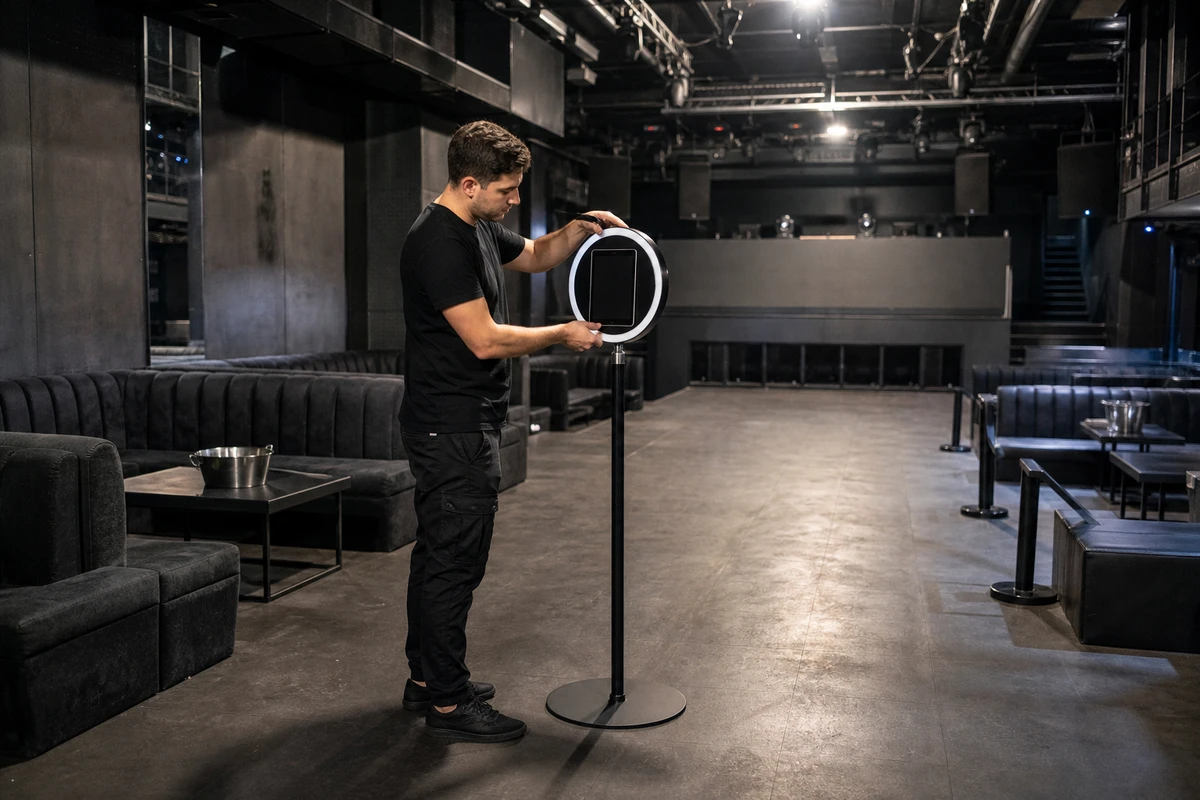
The practical move is to build one repeatable capture moment into the themed experience (a branded photo or share station at the VIP section) so content and contacts are collected by default rather than chased afterward.
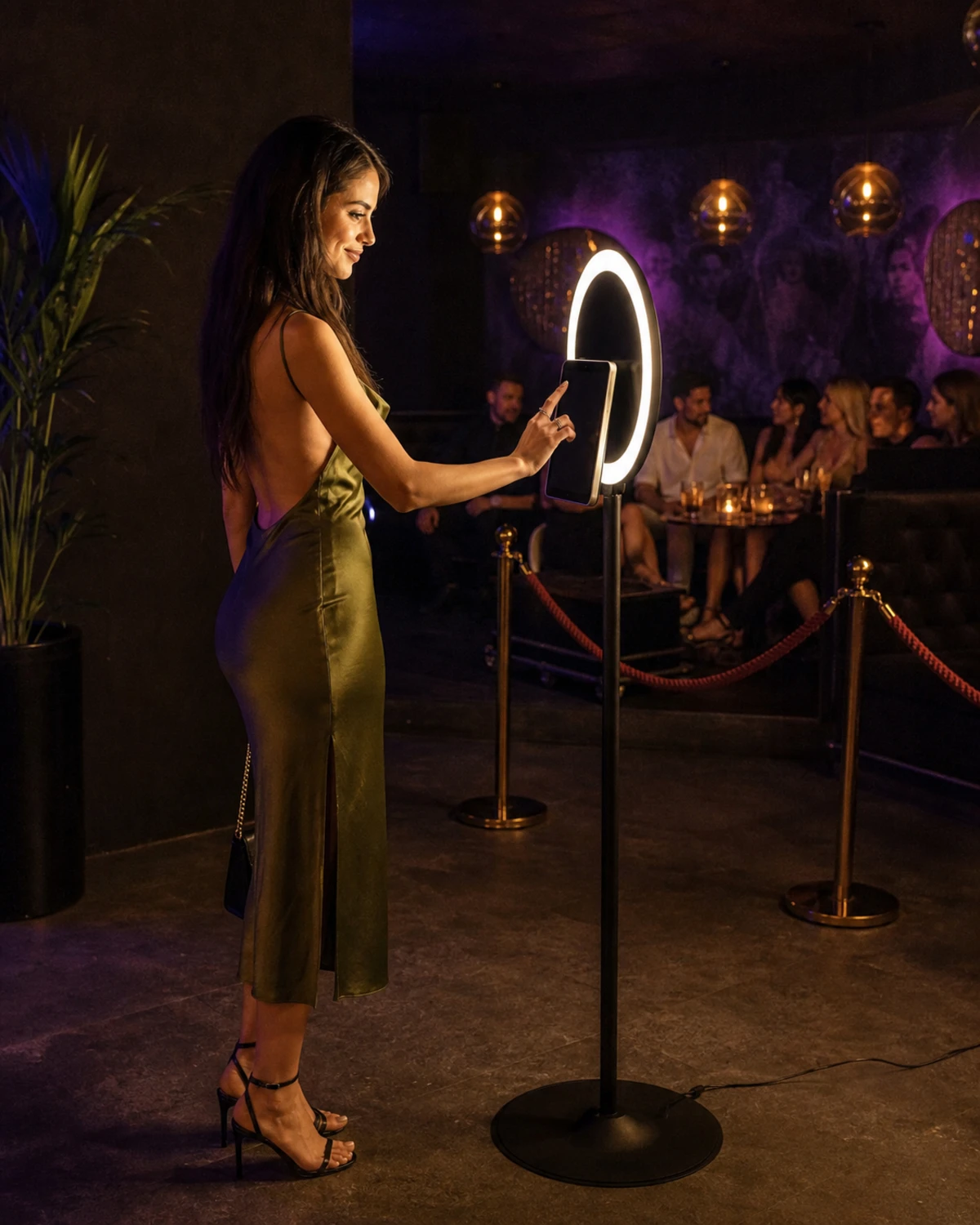
A branded photo station such as Simple Booth’s HALO kit handles both halves of that moment at once: a guest takes the photo they want, and a custom lead-capture field on the same screen records an email or phone number before the photo sends. The entertainment chain Treetop Golf used that capture to build 150,000 unique email addresses across its locations, the kind of owned list a venue can message before the next theme night’s section goes on sale.
Past the calendar gimmick
Programmed this way, a theme night stops being a line on the calendar. Chosen for the lever it pulls, sold as a bookable product, and run as a loop that produces the audience for the next one, it becomes a compounding source of VIP revenue. That is the difference between a venue that decorates a room and one that books it.
Sources
- American Nightlife Association (2023). “Market Overview” (citing IBISWorld data). https://www.nightlifeassociation.org/market-overview
- Distilled Spirits Council of the United States (2025). “Spirits Industry Holds Steady in Market Share Amid Economic Challenges in 2024.” Annual Economic Briefing. https://distilledspirits.org/news/distilled-spirits-council-annual-economic-briefing-spirits-industry-holds-steady-in-market-share-amid-economic-challenges-in-2024/
- Eventbrite, in partnership with Harris Poll (2014). “Millennials Fueling the Experience Economy.” https://www.eventbrite.com/blog/academy/millennials-fueling-experience-economy/
- Luminate (2025). “Latin Music Grows the Most Among Genres in Q1.” https://luminatedata.com/blog/latin-music-grows-the-most-among-genres-in-q1/
- Punch Drink (2014). “Is Bottle Service Growing Up or Fading Away?” https://punchdrink.com/articles/is-bottle-service-growing-up-or-fading-away/
- r/BarOwners (2022). “How big is happy hour or themed nights (Taco Tuesdays) to your bottom line?” Reddit. https://old.reddit.com/r/BarOwners/comments/scyk34/
- r/BarOwners (2026). “Retro-themed events.” Reddit. https://old.reddit.com/r/BarOwners/comments/1sbnvjt/
- SevenRooms (2025). “2025 U.S. Restaurant Trends Report.” https://sevenrooms.com/press/2025-US-data-report/
- Annals of Economics and Statistics (2001). “Conspicuous Consumption, Social Status and Clubs.” https://ideas.repec.org/a/adr/anecst/y2001i63-64p321-344.html