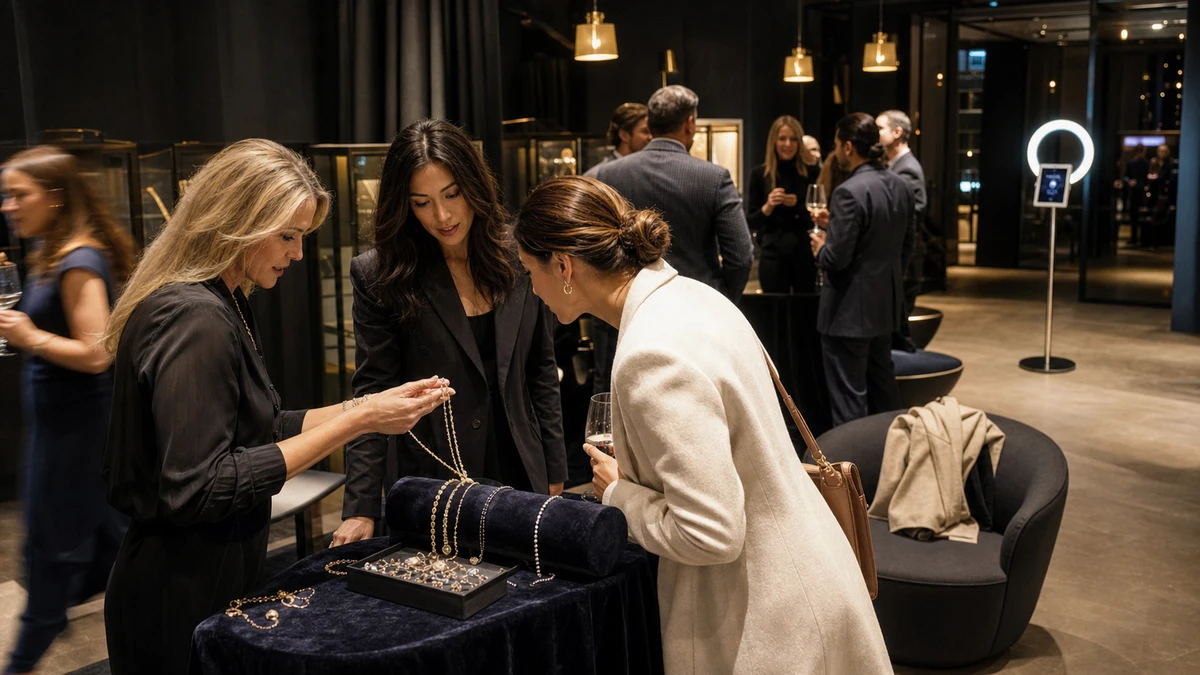
A jewelry designer flies in on a Thursday with a velvet roll of pieces and sets up on a side table the boutique cleared that morning. Wine is poured. By six o’clock the floor holds two dozen regular clients, the ones who get a call when something arrives in their size. The register runs steady for three hours. At nine the designer packs up, the staff sweep, and everyone agrees it was a lovely night.
Then the owner sits down with the day’s total and asks the only question that matters: what did that evening actually return?
A luxury boutique trunk show, and the client appreciation event built around it, is not a feel-good gesture or a one-day sales bump. It is the most concentrated clienteling opportunity a boutique gets all year: a curated room of its highest-spending clients, in a buying mood, with their attention undivided. Operators who waste that evening treat it as the deliverable. Operators who profit treat it as a relationship-and-data engine that keeps paying for two months after the designer flies home. What follows is a model a boutique owner can run against an actual invite list, attendance history, and average order value.
What a Trunk Show and a Client Appreciation Event Are, From the Host’s Side
Nearly every guide to trunk shows is written for the visiting designer, the person trying to get booked into stores. A host boutique reading that advice is reading someone else’s playbook. The economics look different from the owner’s chair, so both formats are worth defining from there.
The trunk show, and why the host carries almost no risk
A trunk show is an event where a designer or brand brings a collection into the boutique for a short window, often a single afternoon or evening. The name comes from the old practice of merchandise arriving in trunks, as Wikipedia’s entry on the format notes.
Accessories and jewelry vendors generally bring sellable stock, so a client pays and takes the piece home that night. Apparel vendors bring samples, take orders on the floor, and ship the finished garments four to eight weeks later. The boutique pays a wholesale price only on the pieces that sell, and sets its own retail price. Retail Minded’s guide to the format confirms these mechanics and names the host’s structural advantage: a shop can run a trunk show even after spending its open-to-buy budget for the season, because the event costs nothing upfront. The risk a boutique carries is not inventory. It is an empty floor.
The client appreciation event, and what it shares with the trunk show
A client appreciation event is broader and entirely the host’s: the boutique’s own clients, its own floor, refreshments and styling and a reason to come in, with no third-party designer required. It can stand alone or wrap around a trunk show for a marquee draw.
Both formats do the same core thing. They put a boutique’s existing clients in one room at one time. The trunk show adds a maker and a collection a client cannot get elsewhere; the appreciation event adds nothing but the boutique and the relationship. A visiting designer judges the night on the order book leaving the building. A host has to judge it on what the designer barely thinks about: the lifetime value of the clients who walked in, and the quality of what the boutique knows about them the next morning.
Why the Format Works: The Mechanism Behind the Room
A trunk show reliably outsells an ordinary week on the same floor. Knowing why tells an operator which parts to protect when time and budget run short.
A real deadline, and a maker in the room
The collection is in the building briefly, sometimes only for the evening, and many pieces are special-order only. A client who likes something faces a genuine choice: commit now, or lose the piece when the samples leave. That is real scarcity, not a countdown invented for an email, and it removes the option to deliberate forever.
The designer’s presence does the rest. A purchase stops being a transaction and becomes a conversation. The client meets the maker, hears why a piece was cut a certain way, and can ask for a customization on the spot. People buy from people they have met. Event Marketer’s EventTrack 2026 study, drawn from surveys of more than 1,000 marketers and attendees, found that 61% of consumers are more inclined to purchase after attending a brand event. The lift itself is not in doubt. Whether the host captures it is the open question.
The real lever: high-value attention in one room
The deepest reason the format works is the one operators name least. A trunk show concentrates a boutique’s highest-lifetime-value clients into one space, in a buying mindset, away from the endless distraction of online shopping.
Luxury spend is extraordinarily top-heavy. The 2025 Luxury Goods Worldwide Market Study from Bain & Company and Altagamma found that the top 0.1% of luxury customers account for 37% of total personal luxury market value, and that Very Important Clients, roughly the top 1%, drive 20 to 25% of the market. A boutique’s own client book tends to follow a similar shape. A trunk show is the rare evening when a large share of that top slice stands in the building at once. It is the most valuable evening on the calendar, whatever the operator does with it.
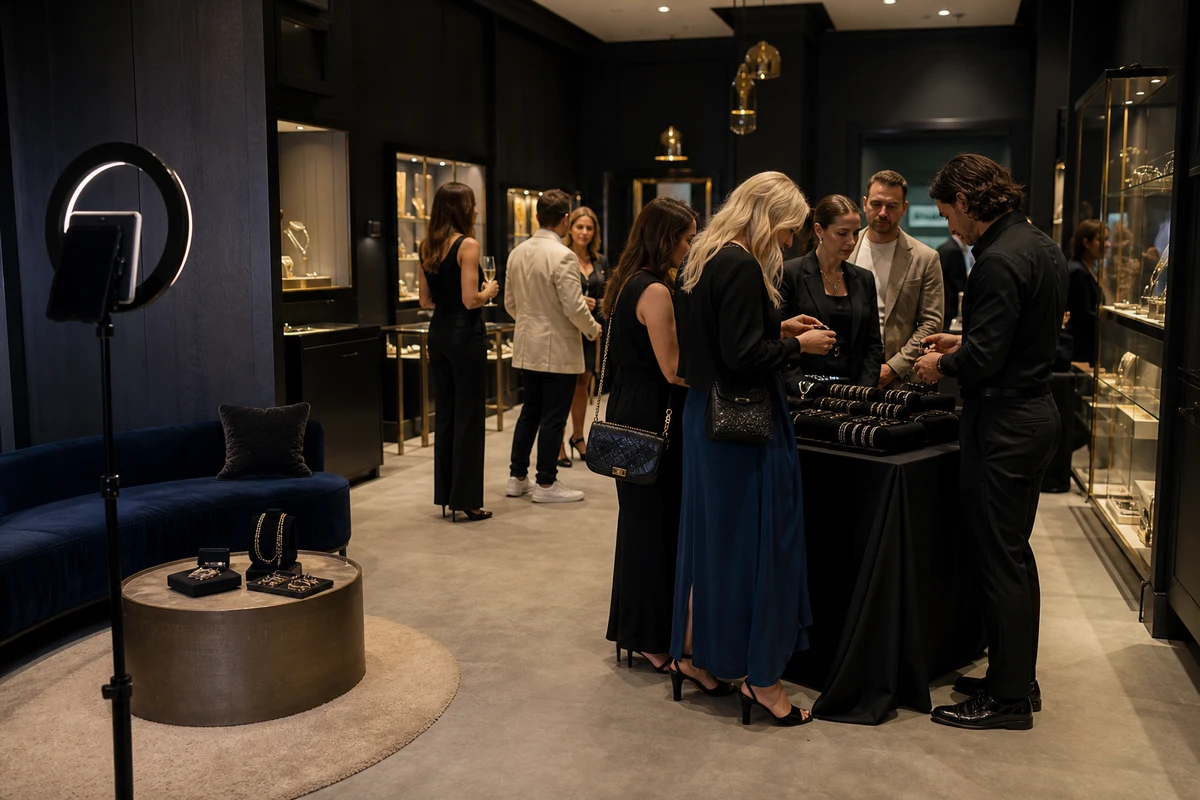
The Mistake That Wastes the Event: Treating the Day’s Sales as the Return
The most common way to waste a trunk show is not poor turnout. It is a good night the boutique never converts into anything durable.
The failure mode operators describe
Ask boutique owners about events that disappointed them and a pattern emerges: the designer flew in, the wine was poured, and the floor stayed quiet. Kelley Hoffman, a trunk show vendor with years of events behind her, described it plainly in a 2019 comment on Fashion Brain Academy: the store was so empty that vendors ended up selling to each other and filling dead time on Instagram. The trade press has said the same for over a decade. Retail Minded put it bluntly in 2012: “The old days of showing up with your line on the appointed day and waiting for customers to walk in the door are OVER.”
The instinct is to fix attendance by adding a service, a styling workshop or personal-shopping reservations. That helps. A fuller room beats an empty one. But it treats turnout as the whole problem, and turnout is only half of it.
The day’s till is the smallest part of the return
The misconception, in one sentence: turnout is the scoreboard and the day’s till is the return. Both halves are wrong.
The day’s sales are the smallest and least durable part of what a trunk show produces. The durable return is twofold: deepened relationships with named, high-value clients, and first-party data, meaning a record of who attended, what each client tried, what they asked about, and explicit permission to follow up.
Picture two trunk shows. One rings $4,000 and records nothing about who came. The other rings $2,000 and leaves the boutique with a logged, annotated profile for every attendee. At closing the first looks better. The arithmetic that follows shows why, twelve months on, it is not close.
A Payback Model in Two Parts
Most trunk-show advice stops at “set a sales target.” StartUp Fashion’s planning guide is typical: it tells the operator to create a sales target, then, on a miss, to ask what other benefits the night delivered. That hand-wave is what this section replaces. A real payback model has two parts, and both carry arithmetic.
Part one: the revenue on the night
Take a boutique with a client book of about 400 names that sends 120 invitations to its strongest clients for a Thursday trunk show. Suppose 35% attend. (Attendance for invitation-only retail events is not well documented in public benchmarks, so 35% is an illustrative figure here; a boutique’s own RSVP history is the number to trust.) That puts 42 guests on the floor.
If 40% of those guests buy on the night, again a rate each operator can take from past events, that is roughly 17 purchases. At an average order value of $700, the night rings about $12,000. That is where most operators stop counting. It is real money, and it is the least interesting number in the model.
Part two: the data asset and the sixty days after
The same evening produced 42 identified attendees, assuming the boutique ran an RSVP list and a check-in. Of the 42, 25 did not buy that night. They are not failures: many tried two or three pieces, asked about sizing, or mentioned an occasion coming up. With one line of styling notes per client and a marketing opt-in collected at the door (not every guest opts in), the boutique leaves with roughly 34 opted-in profiles, each annotated with what that person engaged with.
The annotation is what makes the follow-up work. McKinsey’s 2021 research on personalization found that tailored marketing typically drives a 10 to 15% revenue lift, rising toward 25% for the strongest performers, and that the lift scales with how specifically the message matches the individual. A note that names the navy coat a client tried, now back in her size, is a different instrument from a newsletter. Klaviyo’s 2024 email benchmarks sharpen the point: automated, behavior-triggered email flows earned up to 30 times the revenue per recipient of one-time campaign blasts.
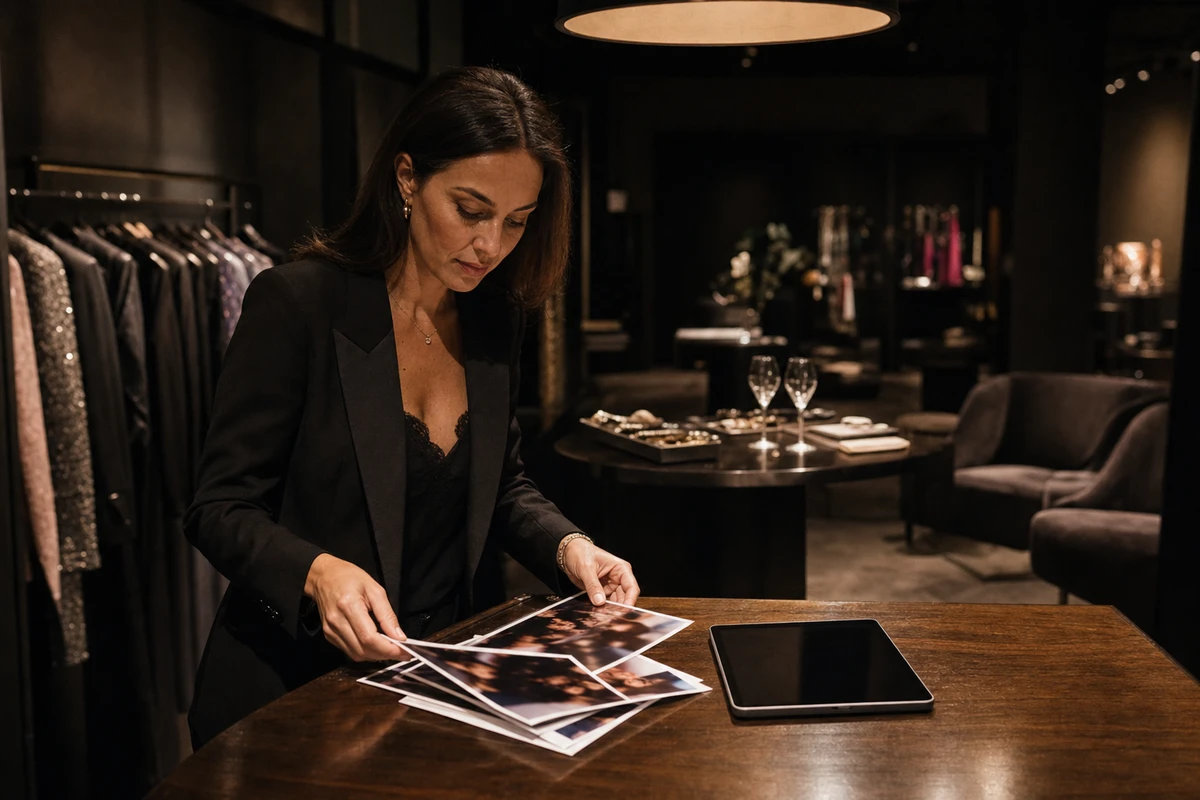
Apply that to the 25 non-buyers. A personalized note within two days, written to what each client tried, plus the natural second contact when special orders arrive four to eight weeks later, will convert part of that warm cohort. Recovering a quarter of them inside sixty days, a conservative assumption for known clients with a recorded interest, is 6 more purchases, about $4,200 on top of the night’s total.
The two numbers side by side
The captured event returns about $12,000 on the night and roughly $4,200 over the next sixty days, and it leaves behind 34 annotated, opted-in profiles that seed the next event. An uncaptured event that rings $13,000 returns $13,000 and nothing else: no record of who tried what, no opt-in, no reason to call. The captured event passes it inside two months and keeps compounding while the uncaptured one ended at closing time.
Planning the Room: Guest List, Invitations, Targets, Staffing
The model only works if the right people are in the room and the boutique is set up to record the night. Both are decided before the designer arrives.
Curate the guest list, do not broadcast it
The guest list is not the whole email database, and it is not walk-in foot traffic. It is the boutique’s top clients by spend, plus a second tier whose purchase history resembles the top tier in category and frequency. The quality of the room is fixed before anyone arrives. A trunk show of jewelry averaging $1,200 a piece wants the forty clients who buy at that level, not the four hundred who once bought a $40 scarf.
The invitation is the first data point
Invitations should be personal and individually tracked, with an RSVP and two reminders. A tracked RSVP is not a formality. It is the boutique’s first data point on the event, its attendance forecast, and its check-in list for the night. An operator who knows who said yes can staff correctly, prepare pieces in known sizes, and greet people by name at the door.
Set two targets, not one
A boutique should leave the planning meeting with two targets. One is the sales target for the night. The other is a capture target: the number of client profiles, with styling notes and a marketing opt-in, the boutique intends to walk away with. Forty guests should produce close to forty profiles. If the team hits the sales number but captures twelve profiles, the event underperformed, whatever the register says.
Promotion and staffing
Promotion is shared work. The visiting designer is expected to carry signage, email invitations, reminders, and social posts. The host should still co-promote to its own client book and consider neighboring businesses, because the calendar slot fills nothing on its own.
On the night, dress the staff in the line so the product moves on real people, and assign one person to work the room as host rather than stand behind the counter. That person is also responsible for making sure the night gets captured.
Capturing the Event and the Follow-Up That Compounds
The trunk show puts dozens of high-intent clients on the floor for one evening. What the boutique does with that fact the next morning decides most of the return.
Record the room, or rent it and give it back
Without a record of who attended, what they tried, and how to reach them with permission, the boutique keeps only a register total and a memory that fades within a week. The most sophisticated luxury houses refuse that waste. FashionBI’s 2025 reporting on VIP client programs describes how brands like Hermès, Cartier, and Loro Piana run private events and trunk shows as relationship infrastructure, built to deepen connection and generate data for personalized follow-up. An independent boutique cannot match a global house’s CRM, but it can copy the principle.
What to capture, without slowing the night
Capture does not mean clipboards and friction. Four things matter:
- Who came: the RSVP list, confirmed by a quick check-in at the door.
- What each client engaged with: the pieces they tried on, asked about, or special-ordered.
- An explicit marketing opt-in, so the follow-up is welcome rather than a surprise.
- Any photos of clients in the pieces.
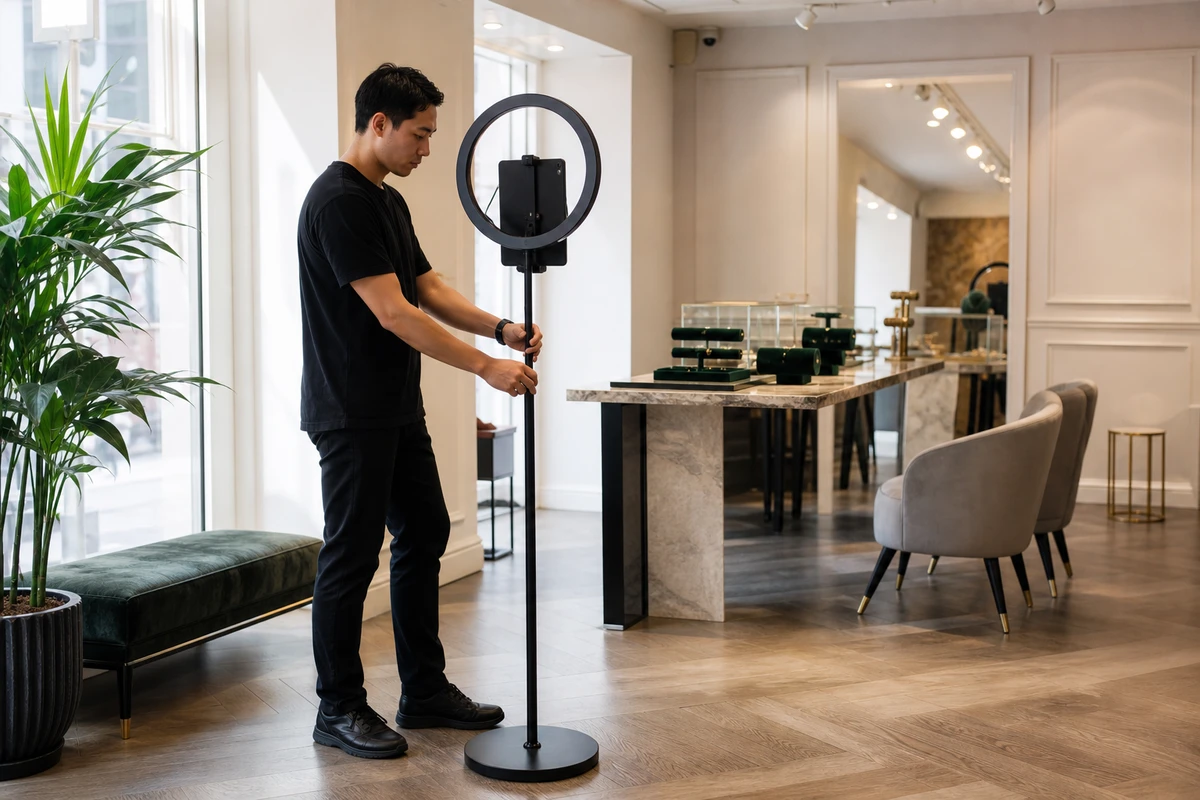
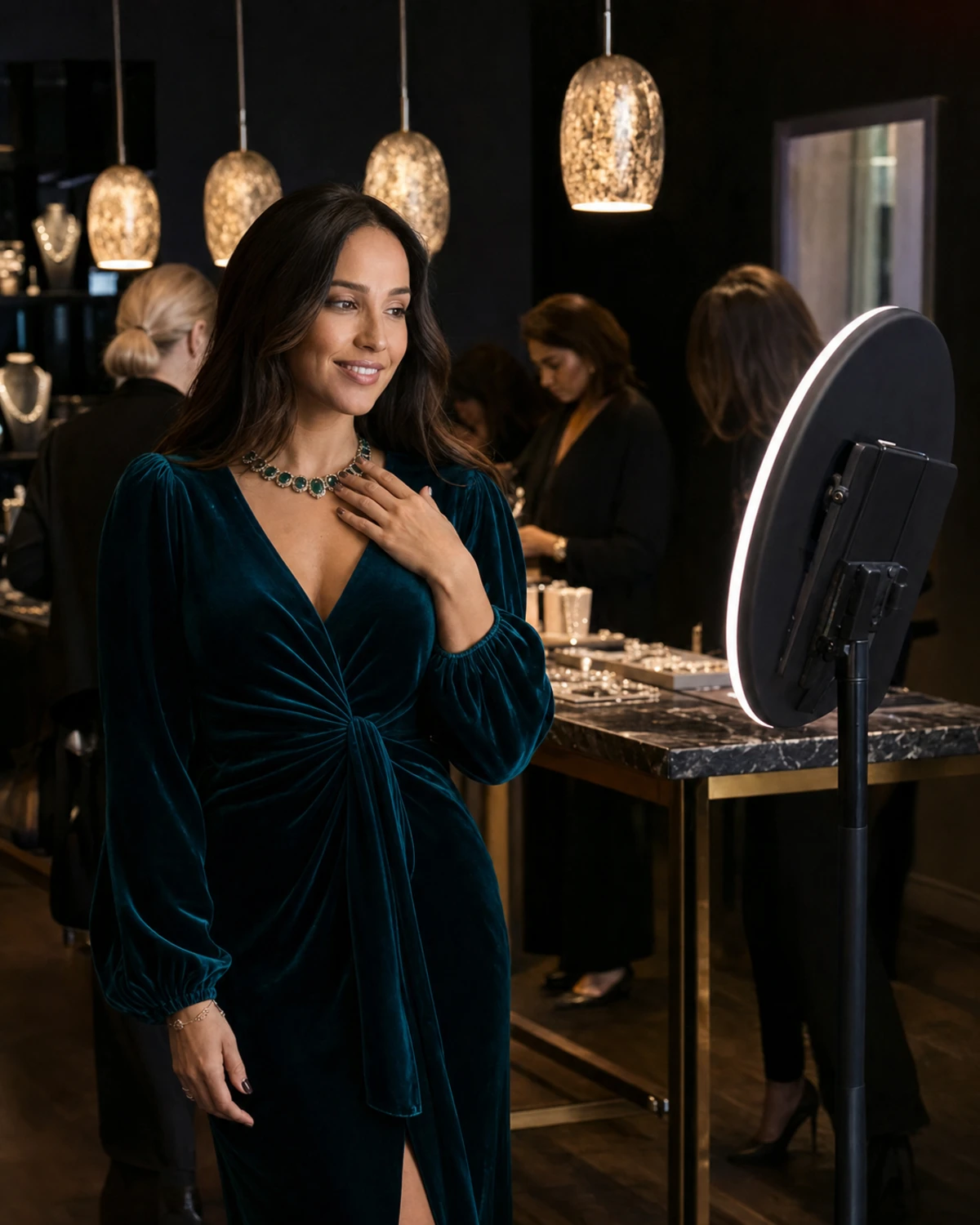
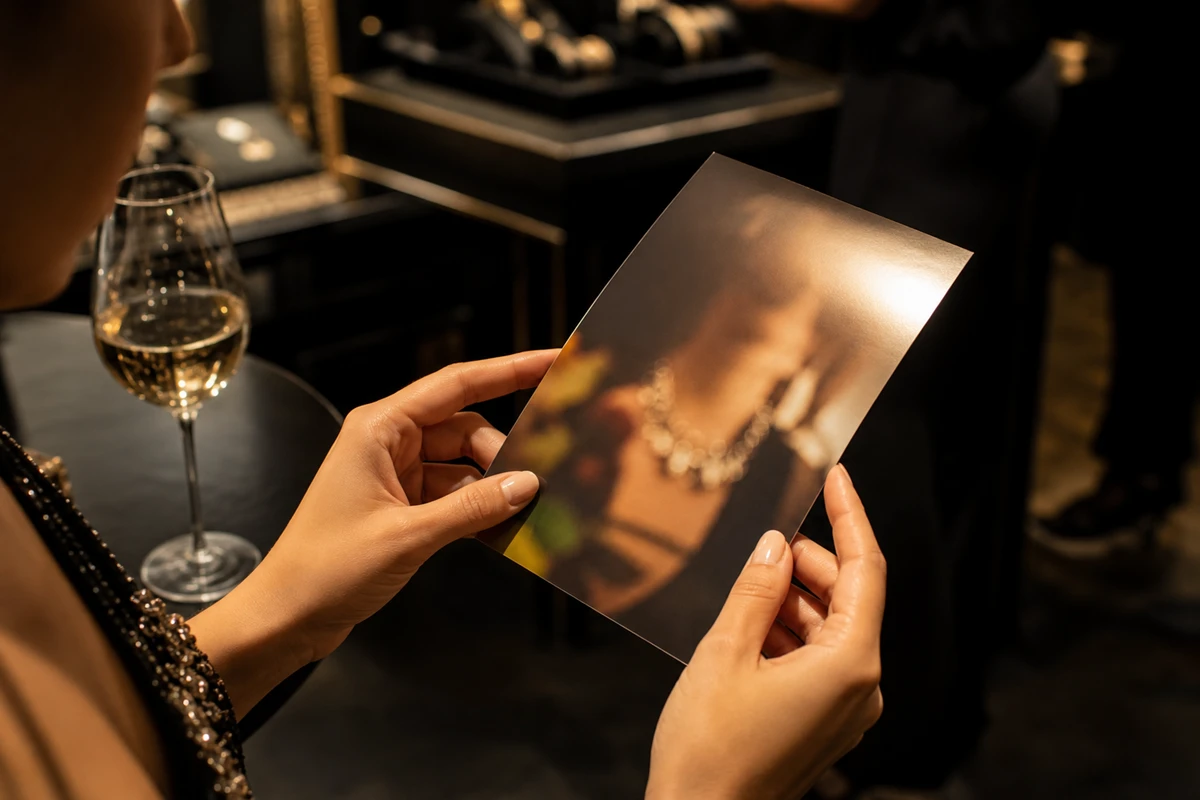
The methods stay light. A check-in against the RSVP list takes seconds per guest. A single line of styling notes, jotted by the staff member working the room, records what each client engaged with. A shared photo moment near the collection, the kind of thing clients enjoy anyway, doubles as a natural place to record opt-in and reuse permission. A photo station can carry that step on its own: the client poses with a piece, enters an email to receive the image, and ticks a marketing opt-in box in the same motion, so no staff member has to work a clipboard. Simple Booth’s HALO kit runs this flow with custom data fields and opt-in checkboxes on the capture screen, the same lead capture Arizona Opera used to grow an email list by roughly 1,000 addresses across a handful of events. None of this slows an evening that is mostly conversation.
Consent belongs to the night, not to paperwork after
A boutique cannot pull a client’s photo from social media into an ad because the client tagged the store. Permission has to be recorded before content becomes marketing material, not after a manager finds something useful. The same holds for the follow-up itself: the marketing opt-in collected at the event is what makes the sixty-day model welcome rather than intrusive. A client list gathered with consent is a trust asset; the same list used carelessly burns the relationship the event existed to build.
The follow-up that compounds
The follow-up is where the data turns back into revenue. Within 24 to 48 hours, every attendee should get a message written to what they actually did at the event, not a blast. The client who tried three coats and bought none is a warm lead with a recorded interest, not a loss. The four-to-eight-week delivery window on apparel special orders is a built-in second contact: the call that a piece has arrived is a reason to bring the client back onto the floor, where the next conversation starts.
This is also where a known gap closes. Bain and Altagamma’s 2025 study found that fewer than 20% of luxury’s most valuable clients feel consistently recognized, and that a typical top client buys from around ten brands but feels recognized by only two or three. The brands in that small set earn the loyalty; the rest get occasional transactions. A trunk show followed by a specific, personal message is one of the clearest moves a boutique can make to land in the recognized set.
Make it a quarterly engine
Each event’s captured data seeds the next one. Annotated profiles sharpen the next guest list. Styling notes tell the boutique which clients to call when a particular designer returns. A trunk show run once a year is a nice evening. Run quarterly, with capture and follow-up in place, it becomes an engine that improves every cycle, because each event starts with better data than the last. The boutique that treats the trunk show as a collection mechanism, not a one-night sale, is the one still compounding returns long after the designer has flown home.
Sources
- Bain & Company and Altagamma (2025). “Global Luxury Stays Resilient Despite Economic Headwinds and Shifting Consumer Trends That Reshape Market.” https://www.prnewswire.com/news-releases/global-luxury-stays-resilient-despite-economic-headwinds-and-shifting-consumer-trends-that-reshape-marketbain—company-and-altagamma-302620818.html
- FashionBI (2025). “Inside the World of Luxury Retail: VIP Clients & VIC Experience.” https://www.fashionbi.com/insights/inside-the-world-of-luxury-retail-vip-clients-vic-experience
- McKinsey & Company (2021). “The Value of Getting Personalization Right—or Wrong—Is Multiplying.” https://www.mckinsey.com/capabilities/growth-marketing-and-sales/our-insights/the-value-of-getting-personalization-right-or-wrong-is-multiplying
- Klaviyo (2024). “Email Marketing Benchmarks by Industry 2024.” https://www.klaviyo.com/marketing-resources/email-benchmarks-by-industry-2024
- Event Marketer and Sparks (2025). “Exclusive Research: EventTrack 2026.” https://www.eventmarketer.com/article/exclusive-research-eventtrack-2026/
- Fashion Brain Academy (2019). “The Secrets of Trunk Shows: What is a Trunk Show and Why Should I Do One?” https://fashionbrainacademy.com/what-is-a-trunk-show-and-how-do-i-make-one-work-for-me/
- Retail Minded (2012). “3 Tips for Successful Trunk Shows.” https://retailminded.com/tips-trunk-shows/
- StartUp Fashion (2016). “The Ultimate Guide to Planning a Trunk Show for Your Fashion Brand.” https://startupfashion.com/the-ultimate-guide-to-planning-a-trunk-show-for-your-fashion-brand/
- Wikipedia (2025). “Trunk show.” https://en.wikipedia.org/wiki/Trunk_show