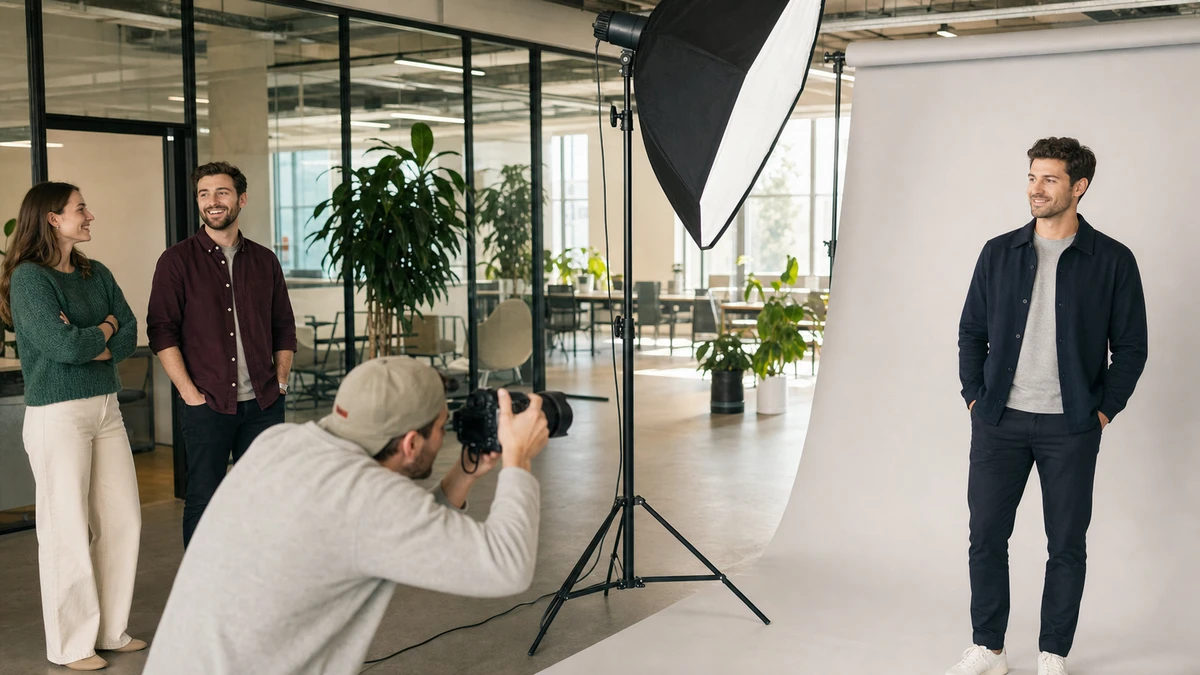
On a Tuesday afternoon, a coworking space clears its largest conference room, brings in a photographer with a softbox and a plain gray backdrop, and members book fifteen-minute slots between their calls. By five o’clock, forty people have a sharp new professional portrait, and the operator has a budget line that reads as money spent. A coworking headshot day is exactly that event: a scheduled block when a space brings in a photographer so members can get a professional headshot on-site, free or at a discounted rate. Most operators run it as a member perk and stop there. The day ends, the members are pleased, the spreadsheet shows a cost. That is the wrong way to read the day. A headshot day is the lowest-cost content shoot a coworking space can run, and the portraits it produces are the most under-used marketing asset in the building.
What a Coworking Headshot Day Actually Is, and the Version Most Operators Run
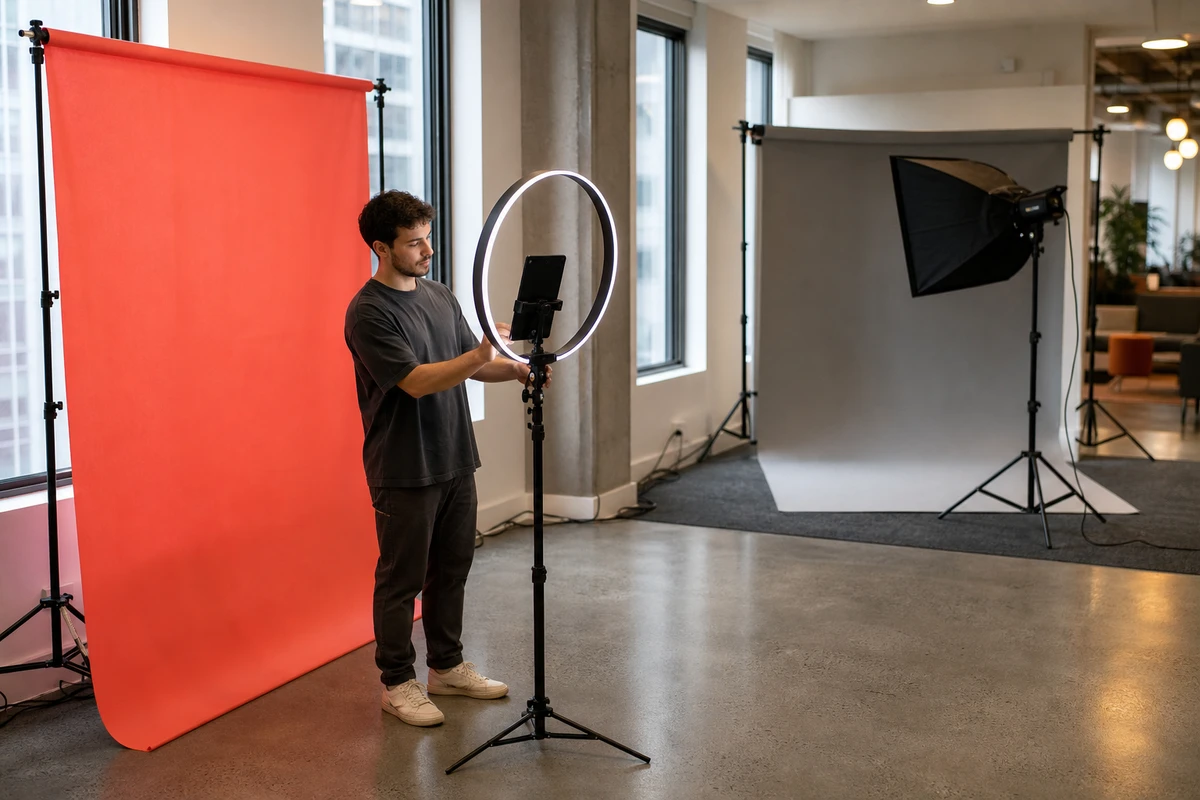
Across spaces that run it, the format barely changes. A photographer is booked for a fixed block, usually a half or full day. Members claim slots of fifteen to thirty minutes and rotate through a simple setup (a backdrop, lighting, and a photographer) staged in a conference room or a quiet corner of the lounge. Edited galleries arrive a few days later. FLUX Photobooth, an event-photography vendor, puts the minimum footprint at roughly eight by ten feet for a complete setup and distinguishes a fast headshot station, which suits short slots and higher volume, from a longer bespoke session that moves fewer people through the day (FLUX Photobooth, 2025). For a space photographing dozens of members in an afternoon, the station format is the better match.
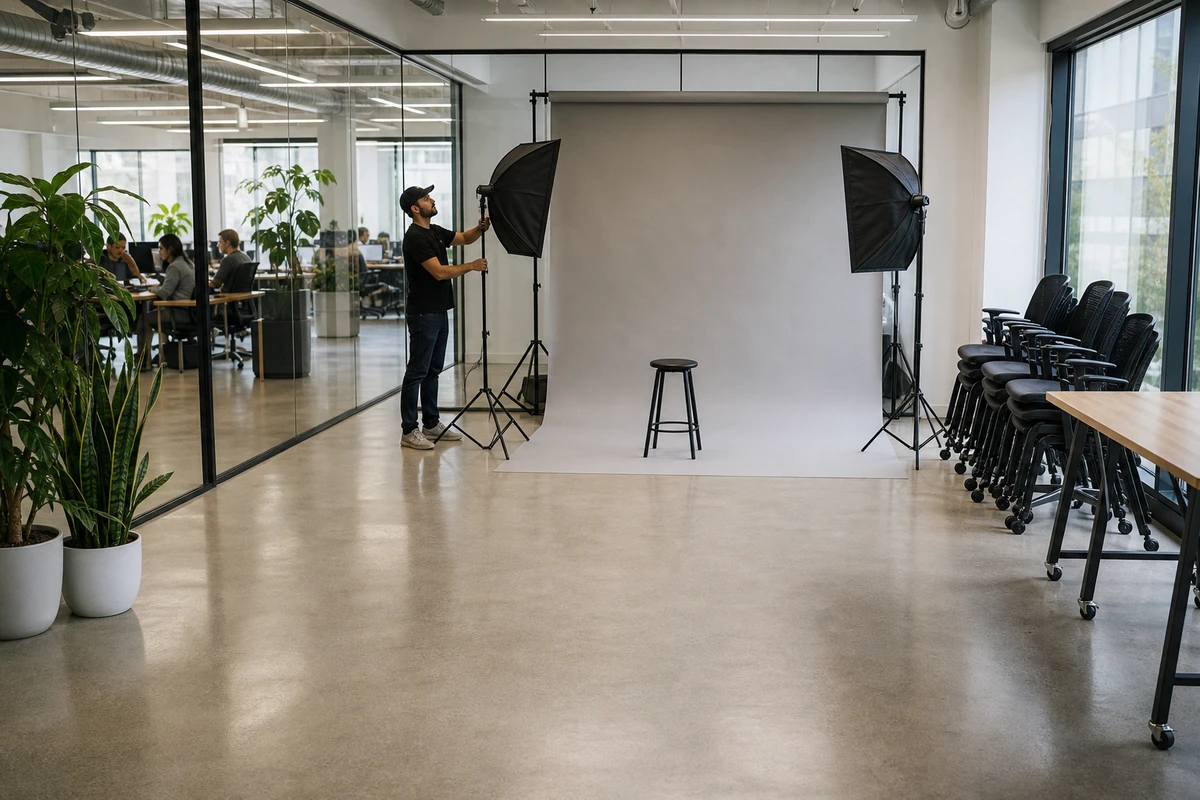
The economics usually run on a photographer deal. Cowork Frederick, a non-profit coworking space, describes the mechanic plainly: the space guarantees the photographer a minimum fee for the day and takes on all the scheduling and promotion, and in exchange the photographer drops the per-member rate. Cowork Frederick’s members pay $100 for a basic session (twenty minutes, two backdrops, two edited images) or $150 for a deluxe one (thirty minutes, three backdrops, three images). The space names the member problem directly: “finding room in the budget for new headshots every few years can be tough” (Cowork Frederick). Other spaces run the day free, with the photographer fee sponsored or absorbed, as CO+HOOTS in Mesa, Arizona has done with a free-headshots event for members.
Across every version of this standard model, the value flows one direction, outward to members. The space books the day, pays for or coordinates it, and keeps one thing: goodwill. That goodwill is real and worth having. It is not the whole return available, though, and the rest is sitting in plain sight.
The Asset Most Operators Leave Behind
Cat Johnson, the most widely-cited independent writer on coworking event programming, lists the headshot day among more than 120 event ideas and notes, in a single clause, that it “gives your coworking brand great visuals to share.” That clause is correct, and it is also where most operators stop thinking. What the portrait does after the day ends is where the value actually sits.
A member headshot is not consumed on the afternoon it is taken. It is deployed. It becomes the member’s LinkedIn photo, the bio image on their company’s website, the picture beside their name on a conference speaker page, the shot a journalist runs with a quote. A good professional portrait often stays in service for two or more years before anyone replaces it, and over that span it is seen by professional contacts, recruiters, clients, and audiences a great many times.
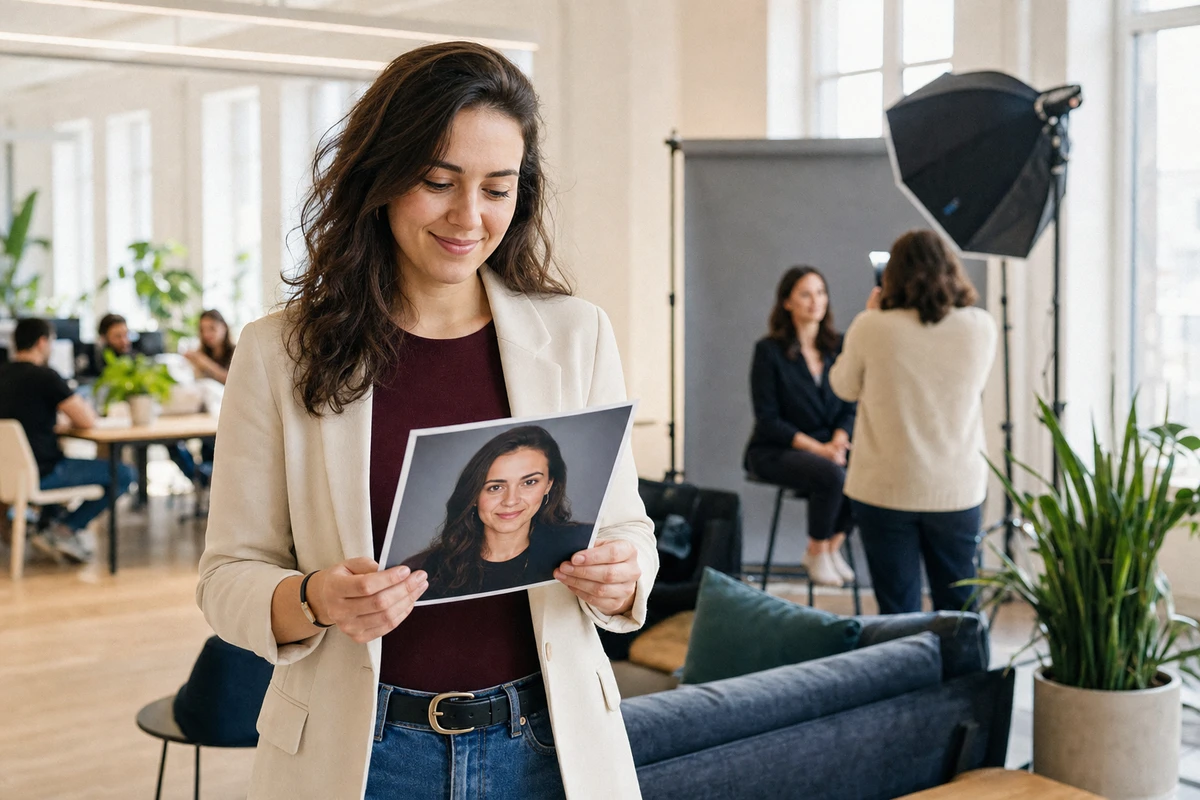
Those views matter because of how fast a face registers. In a study published in Psychological Science, Willis and Todorov (2006) showed people faces for as little as 100 milliseconds and found that the trait judgments formed in that instant (competence, trustworthiness, likeability) correlated closely with judgments made under no time limit at all. More looking refined the impression; it did not replace it. A professional portrait is the version of that snap verdict a member can actually control, and a member who has a good one tends to use it everywhere.
Here is the operator consequence
Here is the operator consequence. A coworking headshot day is the one occasion on which a space manufactures dozens of long-lived, widely-distributed images at once. Designed well, the day produces three distinct things the space can keep: the portraits themselves, the contact and consent data of everyone who signed up, and the content of the day itself, meaning candids, behind-the-scenes clips, and member reactions.
Designing the Day to Capture Three Asset Types
A space that runs a headshot day with no plan for the output gets one thing back: a folder of images it has no clear right to use, and a sign-up sheet it throws away. Capturing all three assets takes three specific decisions, made before the photographer arrives.
The portraits
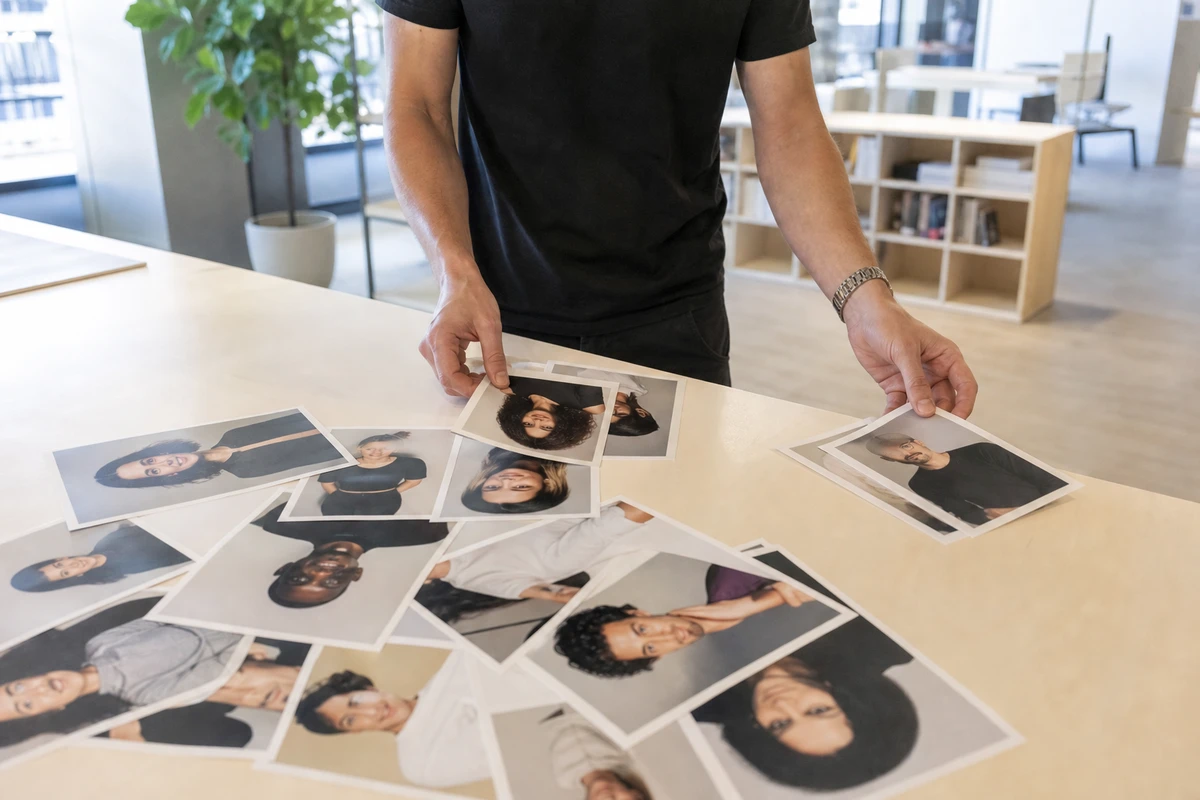
The portraits. Decide in advance what claim the space has on the images, a question settled in the paperwork covered below. Then standardize the output: one digital gallery, a consistent edit, and the space’s name credited on the gallery page and in the delivery email. A portrait that reaches the member through a gallery and email clearly carrying the space’s name fixes the association while it forms: this is where the good headshot came from. At delivery, ask members to tag the space when they post the new photo. Most will, if asked at the right moment.
The contact and consent data
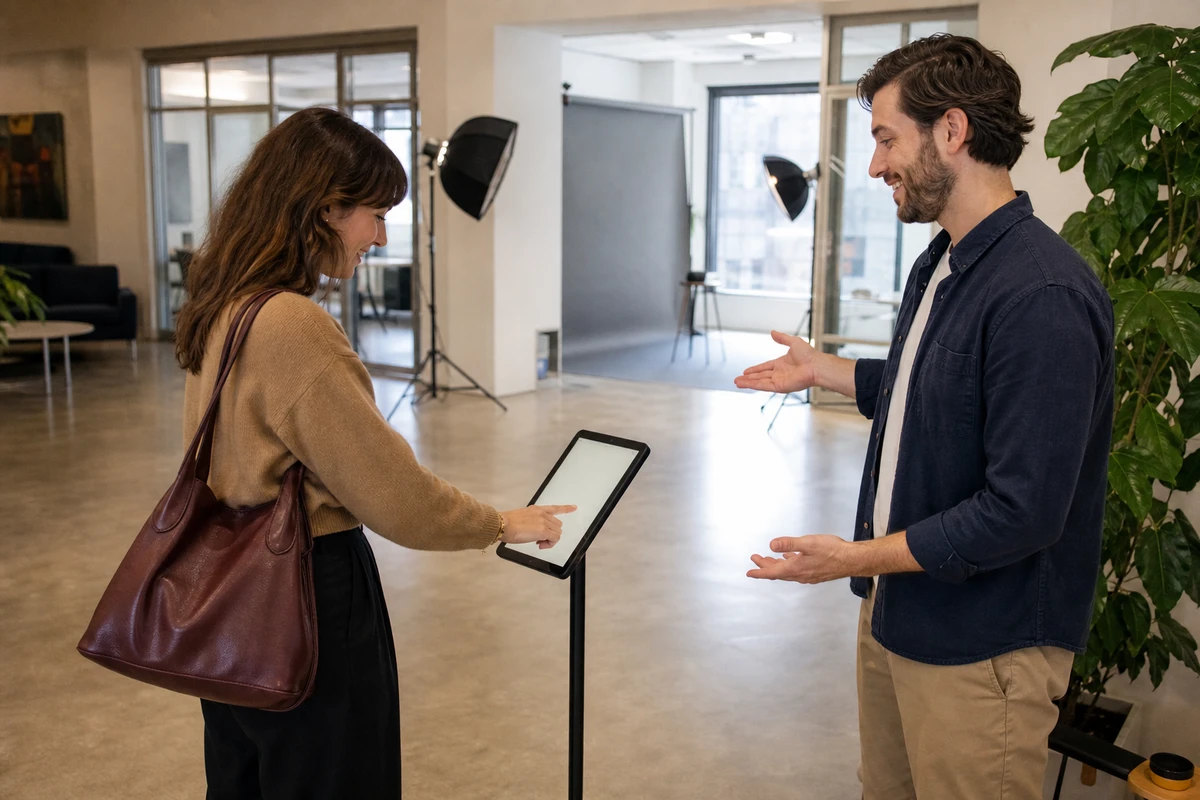
The contact and consent data. Sign-up is the data-capture moment, and a paper list on the front desk wastes it. A digital sign-up, a short form or a QR code that opens one, should collect a name, an email, and an explicit opt-in for marketing and image use. Check-in on the day confirms who actually attended. What the space ends up with is zero-party data: contact details a member handed over willingly in exchange for a clear, concrete benefit. It is cleaner and better-consented than any list a space could buy.
The event-day content
The event-day content. The portraits are not the only images worth keeping. Assign one staff member, or a second shooter, to capture the day itself: members chatting in line, the lighting setup, someone seeing a gallery preview for the first time. Record one or two short testimonials on camera while members are still pleased with their new photo. This is the social proof and channel content the formal headshots, neutral and member-first by design, will never provide.
The Backdrop and Branding Decision
Here is where most headshot days quietly go wrong. The space wants its brand visible in the images, the images are about to travel across LinkedIn for two years, and so someone hangs a logo wall behind the backdrop. The result is a portrait with a company logo floating beside the member’s head. The member glances at it once and keeps using their old photo. Every impression the space was counting on has evaporated, because a branded portrait is a portrait nobody uses.
The two goals only look opposed
The two goals only look opposed. A member wants a clean, neutral headshot that works anywhere. The space wants its brand to travel. Both are satisfied by branding the environment and the artifacts around the portrait, never the portrait itself.
Keep the headshot neutral and member-first, and put the brand everywhere else: a branded check-in area, a branded digital gallery, a delivery email that carries the space’s name and look, a visible credit line on the gallery page. Offer members an optional second frame alongside their clean headshot, a candid at a branded backdrop, theirs to keep or skip.
This is also where the technology choice is made. The capture and delivery layer decides whether the day produces a tidy, branded, trackable set of assets or a slow email of raw files a week later. A QR sign-up, a tablet check-in, same-day digital delivery, a branded gallery page, and optional on-the-spot sharing turn the logistics into an asset pipeline. A capture station or branded photo experience can run that layer alongside the photographer’s formal headshots, handling the sign-up, the data, and the branded environment shot while the photographer concentrates on the portrait.
Simple Booth’s HALO kit is one iPad-based version of that station: it runs the QR sign-up and check-in, records custom data fields and an image-use opt-in at the moment of capture, and sends the candid frame to members by email or text the same day. Arizona Opera used HALO’s lead capture to add roughly a thousand email addresses across a few events, the kind of consented list a recurring headshot day is built to grow. The principle holds whichever tools a space picks: brand the system, not the subject.
Get the Consent and Rights Layer Right Before the Day, Not After
A manager scrolling LinkedIn a month after the headshot day sees a member’s excellent new portrait and wants to run it in an ad for the space. The manager cannot, not legally, and the fact that the photo was taken inside the space changes nothing. This is the most common misconception about headshot days, and the operator guides that list the event rarely raise it: a business cannot use an individual’s likeness in its own marketing, on its website, its social channels, its ads, or its brochures, without that individual’s explicit written permission. The location of the shoot grants no rights at all.
Two documents settle this, and both belong in place before the day rather than improvised after it.
The member usage release
The member usage release. Build a short, plain-language image-use opt-in into the sign-up form: a check box granting the space permission to use the member’s headshot and event photos in its marketing, with the member keeping their own copy and full personal use of the portrait. It should be a genuine opt-in, clearly worded, not buried in fine print. A release a member did not understand they granted is worth little.
The photographer agreement
The photographer agreement. The booking contract should state plainly who owns and may license the images, whether the space may use them, how the photographer is credited, and the delivery format and timeline. Operators routinely assume the images are theirs because they paid. That assumption is not safe.
Without these, the marketing-asset case for the headshot day collapses, because the space owns nothing it can publish. With them, every portrait the day produced is a usable asset. Members who decline the marketing opt-in are still welcome at the day; the space simply tracks consent per person and leaves the decliners out of any reuse. Image-use law varies by jurisdiction and by what a space’s own member agreement already says, so an operator with any doubt should run the release past local counsel.
What the Day Is Worth: The Arithmetic
Every event program eventually meets a budget review. The headshot day shows up there as a line item with nothing in the revenue column beside it, and someone asks whether it earns its slot next quarter. That question is not hypothetical. Allwork.Space, in a 2025 piece on event marketing for coworking spaces, describes community events as having moved from a nice-to-have to a strategic, measurable selling point that operators are now expected to justify. So here is the headshot day, justified, read as three separate returns instead of one cost.
Consider a space that guarantees a photographer $1,200 for a full day and photographs forty members.
Branded reach
Branded reach. The neutral portrait does its work for the member, not as a billboard for the space, so the space’s reach comes from the moments around it. Asked at delivery to tag the space when they post the new photo, most members will; suppose thirty of the forty do. Each tagged post lands in one member’s professional network of several hundred to a few thousand local contacts, and thirty of them put the space’s name in front of tens of thousands of professionals in the week after the event, none of it paid for. The portraits also become the space’s to publish: with the release signed, it can run them in member spotlights, on its website, and in its own ads for the year that follows. Against the $1,200 fee, that is a season of credited content and social proof at a fraction of the cost of equivalent paid placement.
The list
The list. Forty sign-ups, each with a name, an email, and an explicit marketing opt-in, is a warm, local, fully-consented contact list. Valued at even a modest figure per consented contact, it offsets a real share of the photographer fee before a single portrait is counted.
Retention
Retention. This return dwarfs the others. A member’s lifetime value is the monthly fee times the months they stay: a member paying $400 a month who stays fourteen months is worth $5,600 in gross revenue. If the day, as one of several community touchpoints, keeps even one or two members from leaving who otherwise would have, the renewed revenue runs several times the day’s cost. Deskmag’s Global Coworking Survey found social atmosphere, interaction, and community among the top reasons members choose a space (Deskmag, 2017), and a headshot day is programming aimed straight at those attributes. OfficeRnD, a coworking software vendor, reports that structured events programs can add 20 to 30 percent of revenue above base membership fees (OfficeRnD, 2024), a vendor figure, though a directionally useful one.
Add the three together
Add the three together. Priced as a perk, a one-off headshot day looks like a cost. Measured across reach, data, and retention, the same day usually reads as cash-positive, and the paid models recover cost directly on top of that: twenty members booking Cowork Frederick’s $100 basic package put $2,000 of member payments against the photographer guarantee by themselves. None of this is a promise. It is a way to read the day with every return it actually produces on the page.
Running It as a Recurring System, Not a One-Off
A single headshot day is a perk. The same day on a fixed cadence, once a quarter or twice a year, is a system. Each repeat refreshes the asset library before the portraits age out, photographs every member who joined since the last one, and gives the space a dependable content-production date already on the calendar instead of an event someone has to remember to organize.
The cadence also makes the day a recruitment asset, not only a retention one. Member acquisition is the hardest problem most operators face: Deskmag’s 2019 survey work placed it at the top of operators’ challenges. A recurring headshot day gives a tour or a sales conversation something concrete to point to. Tying a priority or complimentary headshot slot to new-member onboarding puts a tangible, professional-grade benefit inside a member’s first weeks, while their impression of the space is still forming.
A recurring system also has to be measured, or it gets run on faith until a budget review kills it. The figures worth tracking are specific: sign-ups and the marketing opt-in rate among them, attendance against sign-ups, portraits published with the space tagged or credited, event-day content posted and how far it reached, tours or inquiries that trace back to the day, and the renewal rate of members who attended against those who did not. Those numbers feed straight back into the arithmetic and turn the next budget conversation into a settled question.
The headshot day is a template
The headshot day is a template. An operator who runs it once gets a pleasant afternoon and a folder of files. An operator who designs it for assets (neutral portraits, a consented contact list, branded delivery, day-of content, a release signed in advance, and a fixed cadence) gets a content engine for roughly the price of a perk.
Sources
- Willis, J. & Todorov, A. (2006). “First Impressions: Making Up Your Mind After a 100-Ms Exposure to a Face.” Psychological Science. https://pubmed.ncbi.nlm.nih.gov/16866745/
- Cowork Frederick. “Headshot Day.” https://coworkfrederick.com/headshot-day/
- FLUX Photobooth Company (2025). “How to Prepare for Corporate Headshots.” https://www.fluxphotoboothcompany.com/photoboothlibrary/2025/10/8/how-to-prepare-for-corporate-headshots
- Allwork.Space (2025). “7 Creative Event Marketing Ideas for Coworking Spaces.” https://allwork.space/2025/05/7-creative-event-marketing-ideas-for-coworking-spaces/
- Cat Johnson. “Coworking Space Event Ideas.” https://catjohnson.co/coworking-space-event-ideas/
- Deskmag. “Global Coworking Survey” (2017 and 2019 editions). https://www.deskmag.com/en/coworking-spaces/
- OfficeRnD (2024). “Coworking Financial Benchmarks.” https://officernd.com/blog/coworking-financial-benchmarks/