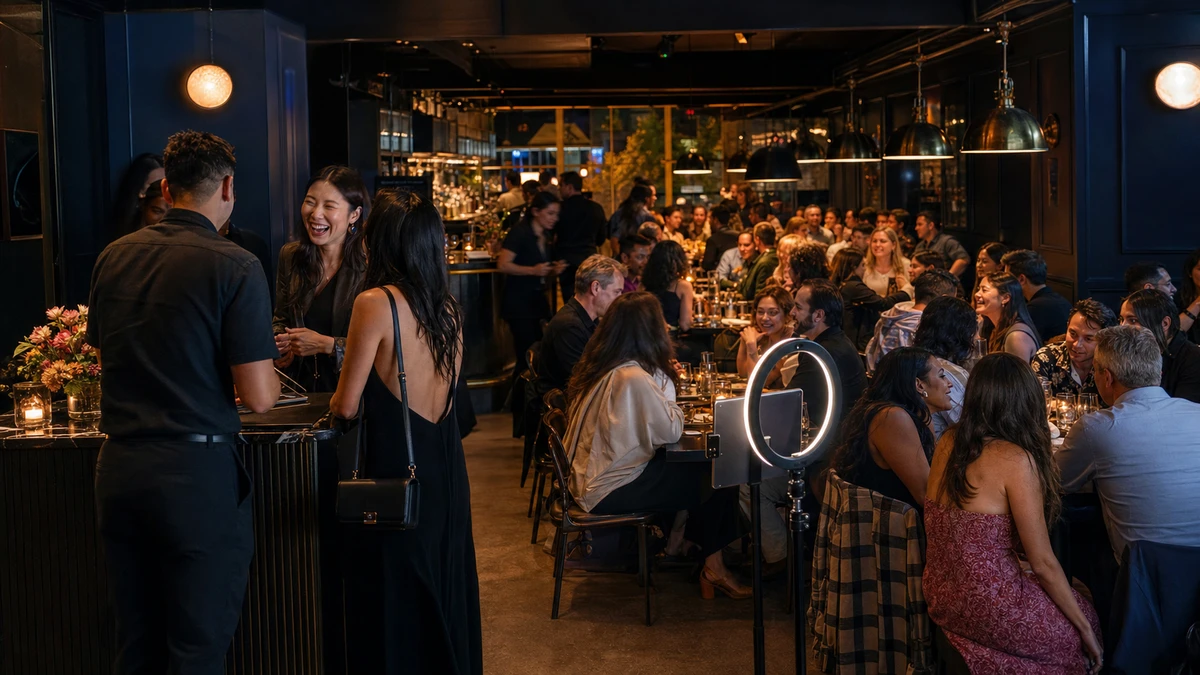
A casual restaurant with 60 seats does most of its business in a 48-hour window. Friday and Saturday the dining room is full, the kitchen is slammed, and the wait runs an hour. Tuesday at 7pm the same room holds maybe twenty guests, the host has nothing to do, and a line cook is leaning on the pass. The food did not get worse between Saturday and Tuesday. Demand simply concentrates on the weekend, and it does so for almost every restaurant.
Events fix the weeknight because they change the question a customer asks. “Should we go out tonight?” is a decision, and decisions default to staying home. “It’s trivia night” is a reason, and reasons get put on the calendar. Most lists of restaurant event ideas hand operators thirty options and no way to choose among them. What follows sorts twenty events by the job each one does for a slow weeknight, and starts with the number competitors skip: what an empty Tuesday actually costs.
What a Slow Tuesday Actually Costs
An operator looking at twenty covers on a Tuesday tends to read the night as a loss and reach for the obvious fix: trim the weeknight schedule, cut hours, maybe close Mondays. That reading misjudges where the money is.
Fixed Costs
Most of what a restaurant spends does not move with the cover count. Rent, salaried management, insurance, equipment leases, and base utilities are what Restaurant Business Online’s Jonathan Deutsch calls “24/7 expenses” (Restaurant Business Online, 2022): they accrue whether fifteen guests or eighty-five come through on Tuesday. The weekend already paid them.
So the cost of serving one more mid-week guest is mostly food. The National Restaurant Association’s 2025 Operations Data Abstract puts fullservice food cost at a median of 31% of sales for operators above $2M in annual revenue and 33.7% for smaller ones (National Restaurant Association, 2025). Labor runs higher, a median of 36.5% of sales by the same NRA survey, but most of a quiet Tuesday’s labor is the salaried manager and the prep cooks already on the clock. An extra table on a slow night therefore contributes a far larger share of profit than the headline margin suggests, because the costly part of keeping the doors open was already covered by the weekend.
Tuesday Scenario
Consider a 60-seat restaurant that averages 20 covers on a Tuesday at a $35 check. A weeknight event that lifts the room to 55 covers adds 35 guests, or $1,225 in sales. Take out food cost at roughly 32%, about $390, and the night clears close to $830 in contribution before any added hourly labor, money that goes straight against rent and salaries the restaurant owed regardless. One Tuesday is a rounding error. Fifty slow Tuesdays a year is a five-figure line item: the same restaurant is leaving something north of $40,000 on the table annually. (The figures are illustrative; the structure is the point, not the exact dollars.)
A weeknight event does not have to look like a Saturday to be worth running. It has to clear a much lower bar, and that changes which events make sense.
Why Recurring Events Beat One-Off Events for Mid-Week Traffic
A guest-chef dinner is the event most operators reach for first. It sells out, the dining room buzzes for one night, photos go up, and the following Tuesday the room is back to twenty covers. The event worked and changed nothing.
Recurring Events
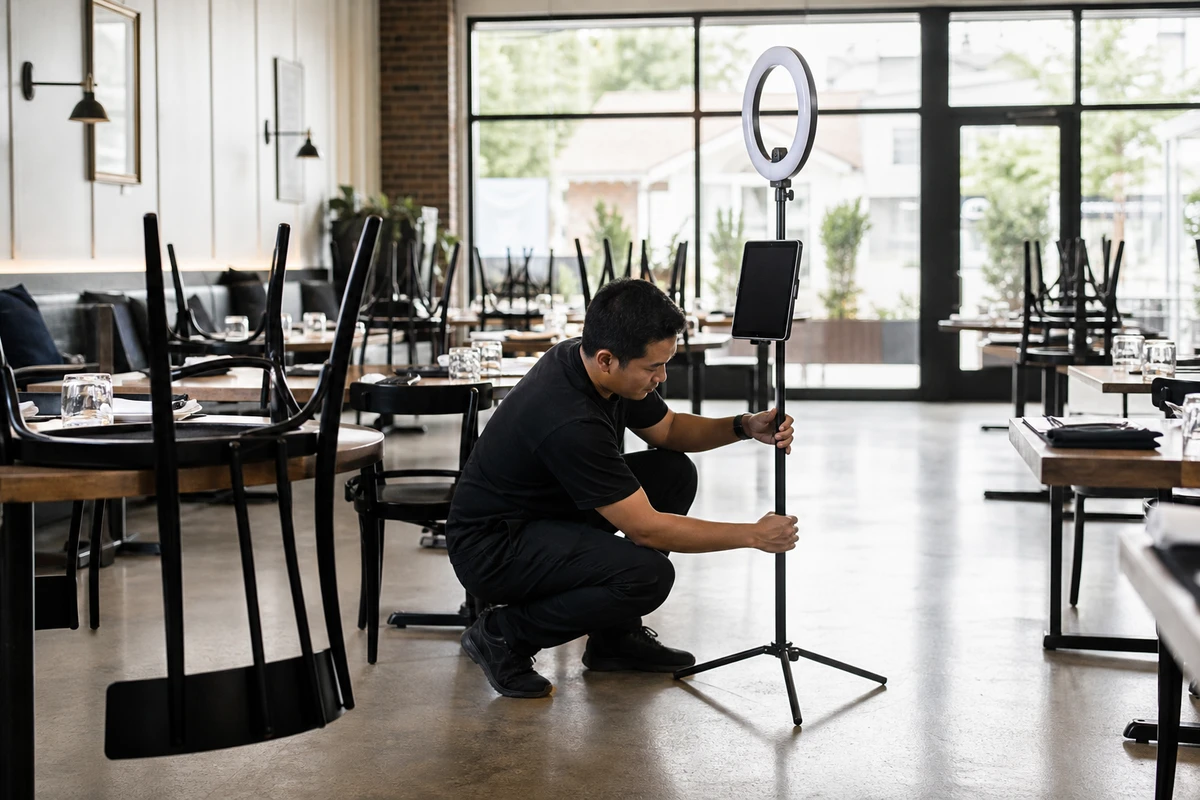
That is the gap between a one-off and a recurring event, and it matters more than the choice of theme. A one-off spikes attention once, then attention resets to zero. A recurring event compounds: each week’s trivia night markets the next one, and after two or three months “Wednesday is trivia at this place” becomes a standing line in a regular’s week.
The mechanism is plain. A recurring event converts a visit from a decision into a habit. Decisions have to be re-won every week with fresh promotion. Habits sustain themselves cheaply, because the customer has already done the deciding. That is why operators who run weekly theme nights describe regulars planning their week around them: the visit stopped being a question.
When One-Offs Still Work
One-off events still earn their place for buzz, seasonal content, and a reason for lapsed regulars to return. But for steady mid-week traffic they are the seasoning, not the meal. The list below puts the weekly habit anchors first, because they do the heaviest lifting for a slow Tuesday.
20 Restaurant Event Ideas, Sorted by the Job They Do
Each idea notes what it is, why it works on a weeknight, a suggested cadence, and one execution detail the standard listicles skip.
Build a Weekly Habit (Recurring Anchors)
The workhorses: same night, every week, aimed squarely at the slowest point in the schedule.
1. Trivia Night
The default weeknight event, and it earns the spot. CNBC documented The Tap Yard in Milwaukee running roughly 30% more revenue on trivia nights, and Brooklyn’s Talea Beer Co. clearing nearly double a normal weeknight (CNBC, 2023). Ignore the “40-60% traffic lift” figures that circulate online; those trace to trivia vendors selling their own services, not to independent measurement. Trivia works, but only run well: it needs a competent host, licensed or written questions, and reliable Wi-Fi. Most trivia companies charge a flat fee rather than per head, which keeps the cost predictable. Cadence: weekly, on the slowest night.
2. Run Club Or Fitness Meetup
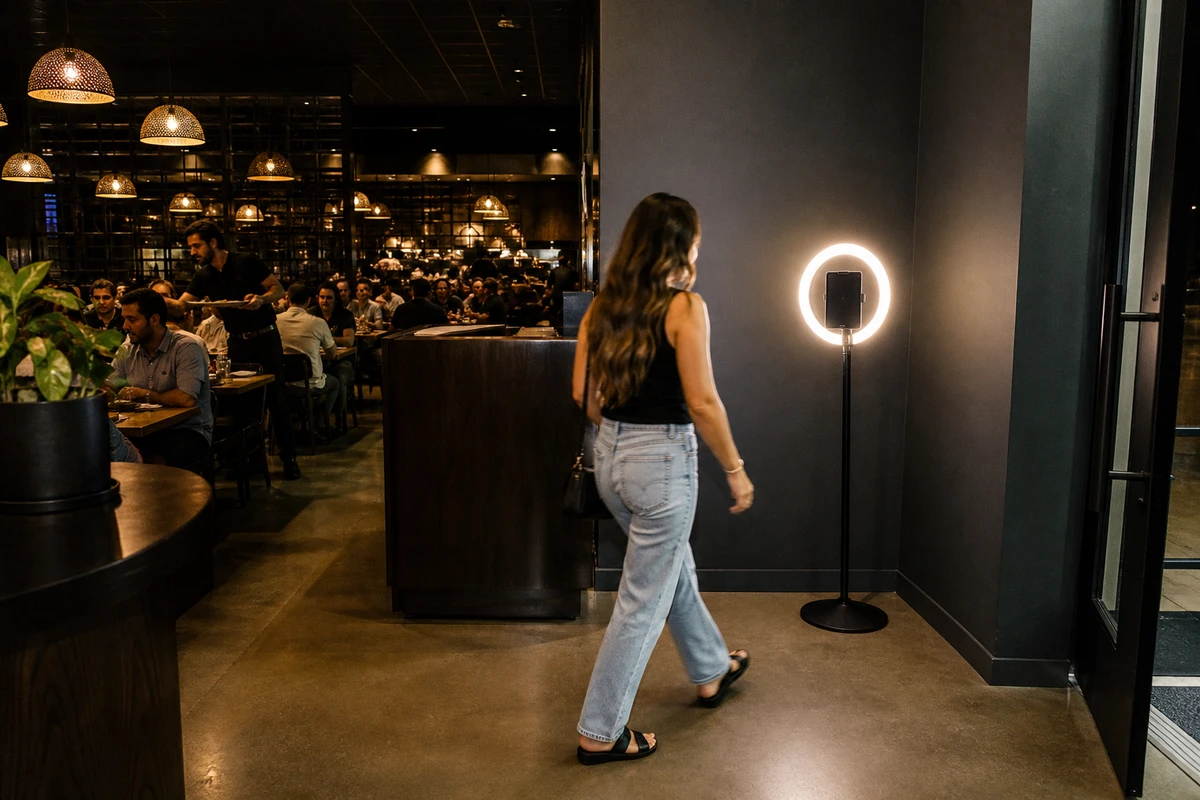
A group run or walk that finishes at the restaurant for food and drink. The timing is good: running-club participation rose 59% year over year and the number of new clubs tripled in 2024, per Strava’s 2024 Year in Sport report, as cited in a Mindbody analysis (Mindbody, 2025). A club arrives as a pre-formed group, hungry, on a fixed weeknight. Cadence: weekly.
3. Open Mic Or Live Acoustic Night
Production cost is low and the performers do the promotion. Each musician or comedian invites a small audience, and a rotating lineup keeps the crowd fresh. Pay a host or a feature act to hold the quality bar. Cadence: weekly or biweekly.
4. Industry Night
Hospitality workers are off on Mondays, the deadest night of all, and they spend freely on a night out. A standing industry night courts cooks, bartenders, and servers from nearby venues, who become both regulars and word-of-mouth amplifiers in a tight local network. Cadence: weekly, usually Monday.
5. Family Night
A kids-eat-free deal or a simple activity, a craft table or a magician, pulls families into the early 5-to-7pm window that sits empty mid-week. It reaches a segment that rarely dines out on a packed Saturday. Cadence: weekly.
6. Board Game Or Tabletop Night
A shelf of games and a no-rush policy. Cost is near zero, dwell time is long, and guests run the night themselves with little staff load. Long dwell time means steady drink and dessert orders. Cadence: weekly.
Sell a Premium Experience (Ticketed, Monthly Cadence)
A higher check average, sold by ticket in advance so the kitchen knows the headcount before the day arrives.
7. Tasting Menu Or Wine-Pairing Dinner
A multi-course prix-fixe at a set price, sold by ticket. The fixed menu lets the kitchen prep precisely, and the fixed seat count caps the risk. Cadence: monthly.
8. Cooking Class Or Chef’s Table
Diners become participants in a pasta-making class or a knife-skills session. Cap the seats, and send guests home with a recipe card or a small jar of something. Cadence: monthly.
9. Cocktail Or Mixology Masterclass
A hands-on session built around high-margin beverages. The bar program leads instead of the kitchen, which suits venues where the kitchen is the bottleneck. Cadence: monthly.
10. Guest Chef Or Four-Hands Dinner
A visiting chef cooks alongside the resident kitchen. The collaboration borrows the guest’s following, and the novelty pulls back regulars who had drifted. Cadence: every month or two.
11. Supper Club Or Single-Seating Themed Dinner
One seating, one menu, a set time. The constraint creates a sense of occasion and makes the night straightforward to staff and prep. Cadence: monthly.
Across this group, the operational point worth stressing is prepayment. Selling tickets or taking deposits in advance turns a speculative weeknight into a known headcount the kitchen can order and schedule against, which removes the main reason operators fear committing labor to a slow night.
Borrow Another Audience (Partnerships and Community)
Each of these brings a crowd through the door that is not already part of the regular base.
12. Charity Or Fundraiser Night
The restaurant donates a share of the night’s covers to a local cause, and the cause promotes the night to its own supporters, who arrive as guests. Cadence: monthly or quarterly.
13. Local-Business Networking Night
A standing mixer for professionals who work nearby. A business district empties at 6pm, and a structured reason to stay converts that into covers. Cadence: monthly.
14. Brewery, Winery, Or Distillery Partnership
A co-promoted tasting with a local producer. Both businesses market it, costs are shared, and the restaurant taps the partner’s following. Cadence: monthly.
15. School Or Sports-Team Dine-To-Donate
A team or school picks a weeknight, families turn out in force, and a percentage of sales goes back to the group. Volume skews early-evening, filling the same dead window as family night. Cadence: a few times a year per group, rotating groups.
16. Local-Maker Pop-Up Or Producer Dinner
A farmer, baker, or cheesemaker appears in person alongside a menu built around their product. The maker brings their audience and adds a story guests want to retell. Cadence: monthly.
Manufacture an Occasion (Themed and Seasonal One-Offs)
Fewer of these per year. Their job is buzz and shareable content, used to punctuate the calendar between the recurring anchors.
17. Decade Or Costume Theme Night
A ’90s night, a disco night, a noir night. When guests dress the part they become part of the show, and a costumed room photographs far better than a normal one. Cadence: a few times a year.
18. Off-Calendar Celebration
Lunar New Year, Día de los Muertos, the summer solstice, the restaurant’s own anniversary. Claiming an occasion most competitors ignore means owning it locally instead of fighting for a Valentine’s reservation. Cadence: seasonal.
19. Viewing Party
An awards show, a championship match, a series finale, with signature menu items tied to the broadcast. The schedule is set by someone else, which makes promotion simple. Cadence: as the calendar offers.
20. New-Menu Preview Night
Guests taste dish candidates before they reach the menu and weigh in. It fills a weeknight and doubles as menu research, turning regulars into a tasting panel. Cadence: each menu change.
How to Match the Right Events to a Restaurant
A list of twenty events is only useful if an operator can rule most of them out fast. The filter is the restaurant’s own constraints, not the appeal of the idea.
Start with the kitchen. A 28-seat bistro with a small line cannot absorb a high-volume trivia crowd, but it can sell forty tickets to a monthly tasting dinner at a premium price. A 120-seat bar-forward room has the opposite problem and should favor the weekly habit anchors that fill volume. Match next to the neighborhood: a residential area with families rewards family night and dine-to-donate evenings, while a business district rewards networking and industry nights. Then match to staff and budget. A board game night or a run club costs almost nothing to launch; a multi-course tasting dinner needs real kitchen capacity and weeks of planning.
Sequencing matters as much as selection. Pick one recurring anchor, commit to it for eight to twelve weeks, and judge it on the trend line rather than the first night. Once that night is genuinely working, layer a monthly premium event on top, then use the occasional one-off for seasonal buzz. An operator running one solid recurring night beats one running five half-hearted ones.
How One Event Becomes a Month of Marketing
The covers served on event night are the obvious return. They are also the smaller one.
Content and Contact Data
A well-run event produces two things that outlast the night. The first is content: photos and video of a full, lively room. The second is contact data, the email addresses and phone numbers of guests who signed up to book a seat, enter a contest, or get a reminder for the next one.
Content Compounds
The content compounds the next event. Footage from this week’s trivia night is the advertisement for next week’s, and a photo of an empty room is anti-marketing. The cheapest way to fill next Tuesday is to show people that last Tuesday was worth showing up for. A 2025 vendor survey by the reservation platform SevenRooms found 74% of consumers return, or plan to return, to a restaurant after a memorable experience (SevenRooms, 2025). Proof that the experience was good is exactly what the content supplies.
Owned Audience
The contact data is an audience the restaurant owns. A social post reaches whatever fraction of followers an algorithm decides to serve; an email or a text reaches the whole list. The same SevenRooms survey reported personalized email generating roughly 12 times the revenue per send of mass email, and text marketing returning 24 times its cost. Those multiples are vendor figures and deserve a degree of skepticism, but the direction is not in dispute: a list a restaurant collected itself is cheaper to reach than an audience it has to rent.
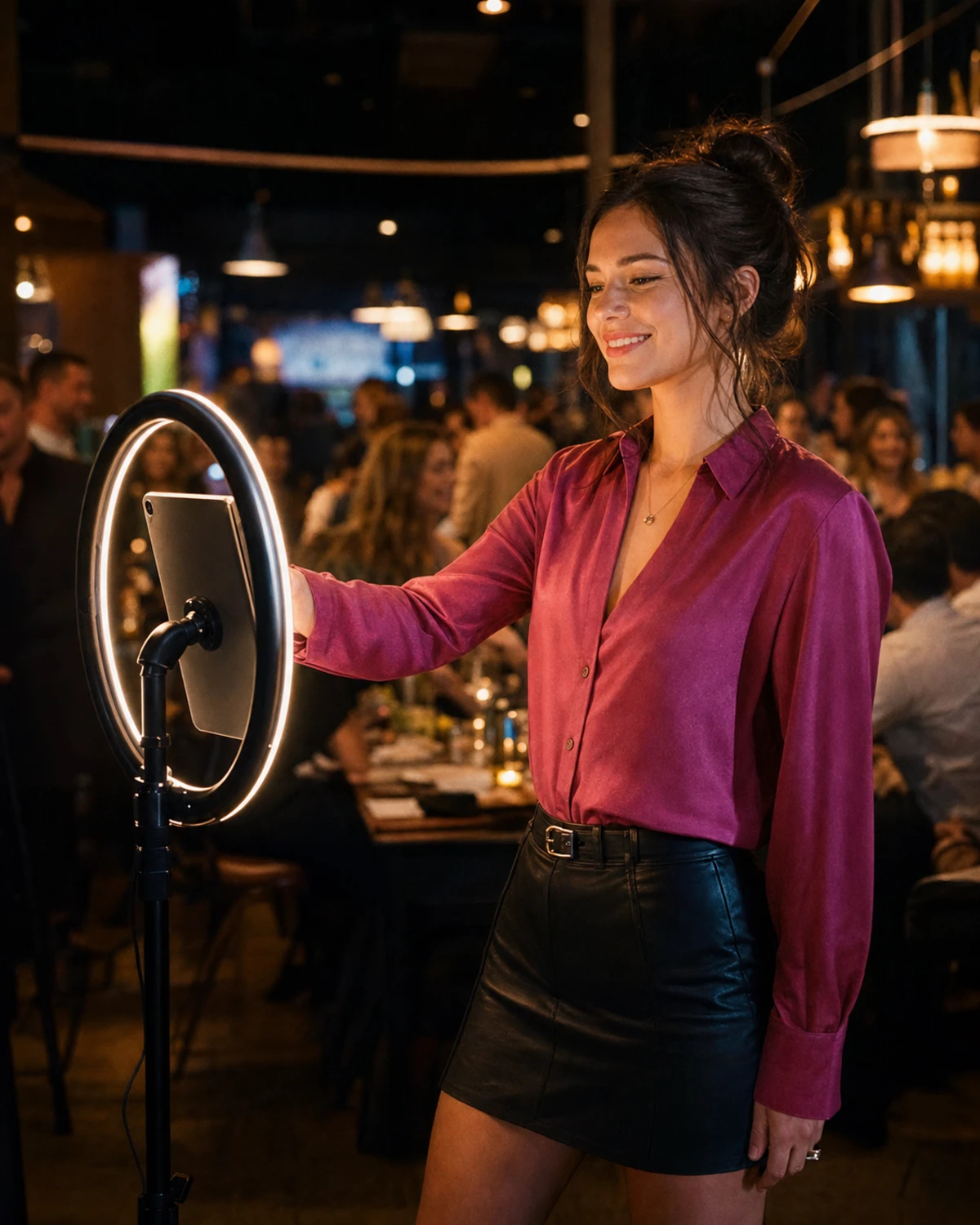
Photo Stations Capture Both
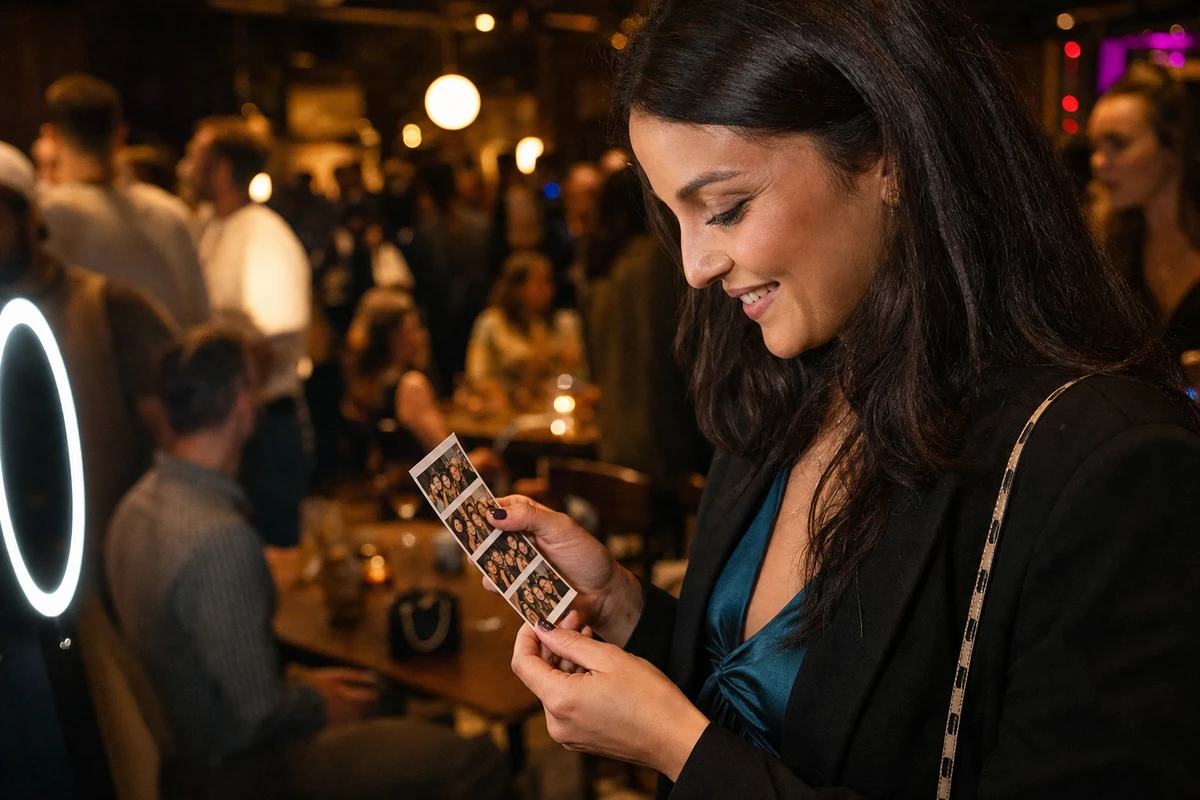
When guests operate a photo station themselves, the content and the contact arrive together: a guest takes a picture, asks for it by email or text, and the restaurant records the address and the opt-in in the same step the guest already wanted to complete. Simple Booth’s HALO kit is one such setup for venues, and the arts nonprofit Arizona Opera used it to add roughly 1,000 email addresses across a handful of events.
The Revenue Loop
The arithmetic ties the two together. A 100-guest event with a 40% sign-up rate adds 40 contacts the restaurant can invite back, at no media cost, every week after. Run an event weekly and capture properly, and each occurrence feeds content and contacts into the next, so the marketing cost of filling a weeknight falls the longer the event runs. That is the deeper reason recurring beats one-off: not just the habit in the customer’s head, but the library of photos and the contact list growing with every occurrence.
Why Mid-Week Events Fail
Most weeknight events that fail do not fail because the idea was bad. They fail in predictable, avoidable ways.
Do Not Discount the Event
The most common is treating the event as a discount. A slow-night price cut trains regulars to wait for the deal and shrinks the check average, so the restaurant serves a few more covers at lower spend and often nets less. Jonathan Deutsch put it plainly in Restaurant Business Online: “Solving the problem with a discount-oriented promotion is not a good answer. With a discount, you would still likely serve fewer covers than you would on a weekend, and the problem will be exacerbated by a lower check average” (Restaurant Business Online, 2024). An event adds a reason to visit instead of subtracting from the price.
Do Not Quit Too Early
The second is quitting too early. A recurring event judged on its first night and dropped never gets the chance to become a habit. The early weeks are a build, not a verdict; read the trend, not the opening count.
Build the Promotion Runway
The third is no promotion runway. An event needs several weeks of lead time across the restaurant’s channels and the partner’s. A great event nobody heard about is just a quiet night with extra labor on the schedule.
Choose the Right Night
The fourth is the wrong night. Running the event on a Thursday that was already decent wastes it. The event should be aimed at the genuinely dead night, where the empty seats are.
Capture Something
The fifth is capturing nothing. Letting guests leave with no way to invite them back forfeits the owned-audience asset entirely, and turns a recurring system back into a string of disconnected nights.
Pick for the Guest
The last is picking the event for the operator instead of the guest. An owner who loves vinyl may run a listening night the neighborhood does not want. The honest test is whether the local audience would choose it, not whether the owner enjoys hosting it.
A slow mid-week is structural, but it is not fixed in place, and the fix does not require discounting the margin away. The move is narrow: pick one recurring event that fits the room, the neighborhood, and the kitchen, commit to it for a full season, and treat every night of it as content and contacts for the next. Filled weeknights are not won with a clever idea. They are built, one repeated Tuesday at a time.
Sources
- National Restaurant Association (2025). “Higher-Volume Restaurants Reported Lower Food-Cost Ratios in 2024.” https://restaurant.org/research-and-media/research/restaurant-economic-insights/analysis-commentary/higher-volume-restaurants-reported-lower-food-cost-ratios-in-2024/
- National Restaurant Association (2025). “Elevated Labor Costs Had a Significant Impact on Restaurant Profitability in 2024.” https://restaurant.org/research-and-media/research/restaurant-economic-insights/analysis-commentary/elevated-labor-costs-had-a-significant-impact-on-restaurant-profitability-in-2024/
- Restaurant Business Online (2022). “Should You Close Your Restaurant on Slower Days of the Week?” https://www.restaurantbusinessonline.com/advice-guy/should-you-close-your-restaurant-slower-days-week
- Restaurant Business Online (2024). “Here Are Some Tips for Boosting Slow Days at Your Restaurant.” https://www.restaurantbusinessonline.com/advice-guy/here-are-some-tips-boosting-slow-days-your-restaurant
- CNBC (2023). “Trivia Night Boosts Profit for Bars, Restaurants.” https://www.cnbc.com/2023/04/07/trivia-night-boosts-profit-for-bars-restaurants.html
- SevenRooms (2025). “2025 U.S. Restaurant Trends Report” (vendor-published survey of 1,000 U.S. consumers and 250+ operators). https://sevenrooms.com/research/2025-US-restaurant-trends/
- Mindbody (2025). “Running Clubs and How Businesses Can Get in on the Trend” (citing Strava’s 2024 Year in Sport report). https://www.mindbodyonline.com/business/education/blog/running-club-trend