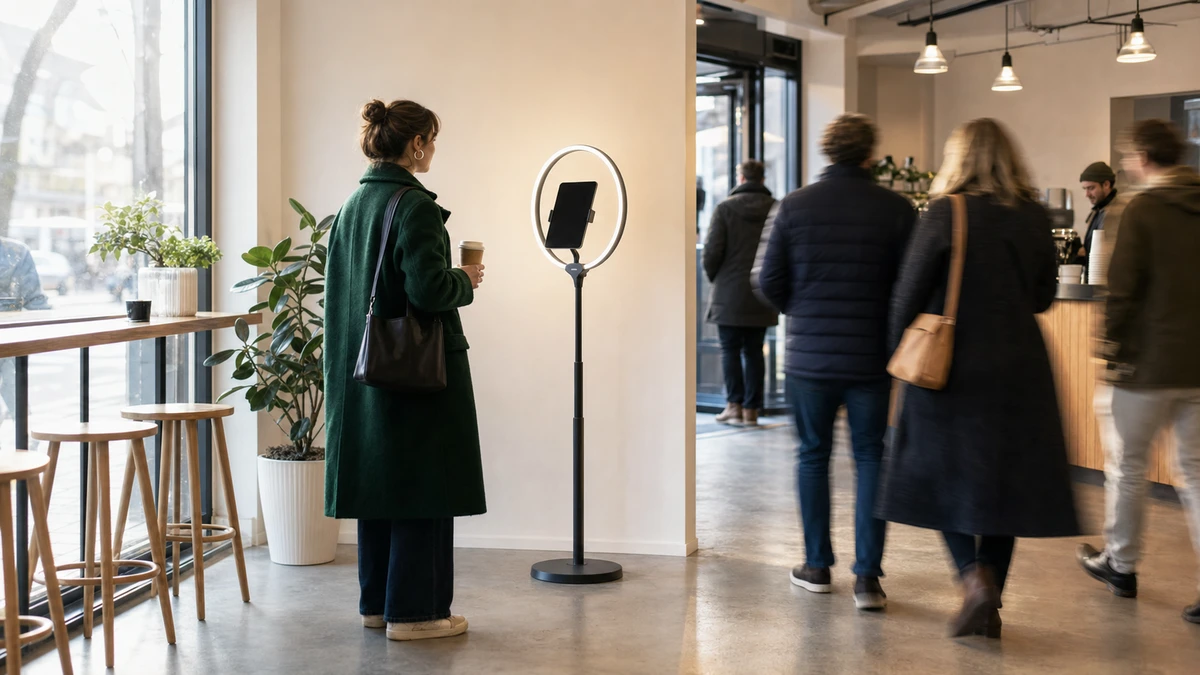
At 7:40 on a Tuesday, the same dozen faces move through a coffee shop in under a minute each. A regular orders “the usual” before reaching the counter, taps a card, takes the cup, and is back on the sidewalk. Multiply that by forty people across a few hundred mornings a year, and the shop has the most loyal audience in its neighborhood standing right in front of it every day. Almost none of them will ever post about the place.
That gap is a marketing channel sitting idle. A regular who posts about a coffee shop is a recommendation from a trusted friend, delivered to a local audience that can physically walk in, at no cost. The reason it rarely happens has nothing to do with how customers feel about the shop. Their visit is thirty seconds long and entirely habitual. The job is not to chase posts in general. It is to build a moment worth capturing and put a prompt in the customer’s hand the second the cup changes hands. What follows is that system, with the math to size it.
Why a Regular Outperforms an Influencer
A coffee shop owner with $400 to spend on marketing this month faces a choice: pay a local influencer with 20,000 followers for one post, or do something deliberate with the forty regulars who already come in every morning. The instinct is to spend it on the influencer. For an independent shop, that is usually the weaker buy, and the reasons are mechanical, not sentimental.
The recommendation reads as genuine
A regular posts because they like the place. Nothing was paid, so nothing reads as a placement. That distinction is the whole asset. Nielsen’s long-running Global Trust in Advertising research has found that 92% of consumers trust recommendations from friends and family above every other form of advertising, far ahead of paid formats like search ads (40%) or banner ads (33%). An influencer post, however well produced, is a transaction the audience can usually sense. A regular’s photo carries no such discount.
The audience can actually walk in
Instagram is no longer a niche. Pew Research Center’s Social Media Fact Sheet puts Instagram use at 50% of US adults, and 80% among adults aged 18 to 29. A regular’s followers are mostly friends, coworkers, and neighbors clustered around where that person lives and works, which is near the shop. An influencer’s reach is geographically scattered, and a large share of it can never become foot traffic. A modest post seen by a couple hundred locals beats a polished post seen by 20,000 people spread across three states.
One influencer posts once, a regular posts all year
Micro-influencers charge $150 to $500 per Instagram post, according to Influencer Marketing Hub’s 2026 rate survey, and that buys a single placement. A regular visits four or five mornings a week and may post every few weeks for as long as they keep coming, at zero cost. The contest the operator is actually running is not a contest for reach. It is a slow accumulation of trust, and regulars compound it for free.
The Real Reason Most Regulars Never Post
An operator who took over a friend’s coffee shop social accounts described the problem plainly in r/smallbusiness: there was little to post, almost no budget, and no clear sense of how often to post or what. The empty content calendar is the operator’s side of a problem that also sits on the customer’s side of the counter. Regulars are not withholding posts out of indifference. The morning visit is built in a way that fights against content.
A morning visit works against posting
Coffee is a ritual, not an event. The National Coffee Association reported in September 2025 that 66% of US adults drink coffee daily, and 85% of daily drinkers have it at breakfast or in the morning. Three things follow from that. The visit is fast, often thirty to sixty seconds on the way to work. It is habitual, and habit is invisible, because people photograph the novel and ignore the routine. And the product itself is not inherently postable: a lidded paper cup is not a photo, and latte art helps but melts within minutes and varies from one barista’s shift to the next.
Two ingredients are missing
The standard advice (make a branded hashtag, run a contest) assumes the customer will do unprompted creative work in the middle of a rushed morning. They will not. Two specific things are absent, and naming them is the whole diagnosis. The first is a postable moment, something in the visit actually worth capturing. The second is a frictionless trigger, a reason and a prompt delivered at the right second. Everything below is built to supply exactly those two things.
Engineering a Postable Moment Into a Thirty-Second Visit
A barista hands over a flat white with a clean leaf in the foam. It looks good for about ninety seconds, then the lid goes on and the leaf is gone. Relying on the drink itself is the first mistake. A postable moment has to clear three bars: it must be repeatable on every shift rather than only when the best barista works, it must carry the shop’s identity so the brand travels with the photo, and it must cost staff almost no extra effort.
The cup, the name, the note
The cheapest postable moment is recognition made physical. A commenter in a small-business forum described a local coffee shop that began writing each customer’s name with a short note on their loyalty card. It cost, in the commenter’s words, “a few seconds and a pen,” repeat visits rose enough that it became part of the shop’s identity, and customers started posting their cards on Instagram without being asked. This is one forum account rather than a verified case study, but the mechanism is sound: a person who feels seen wants to show it. A distinctive cup design or a recognizable logo placement does similar work, because the brand rides along in every photo.
A named drink and a fixed visual anchor
When a barista calls a drink “the usual” and the regular hears it named, the order becomes a small story that person wants to tell. A signature drink, or an off-menu order quietly tied to a particular regular, gives them something to post that no other shop can claim. A fixed visual anchor does the same for the room: a mural, a bright window, a corner with good light, a spot that looks the same in every photo and is unmistakably this shop and not a competitor down the street.
A spot built to be captured
The cup, the named drink, and the visual anchor all still rely on the customer choosing to photograph something. The strongest option does not leave the photo to chance. It builds a moment whose whole purpose is to be captured: a dedicated, branded photo spot or a small in-store activation that a guest passes on the way out.
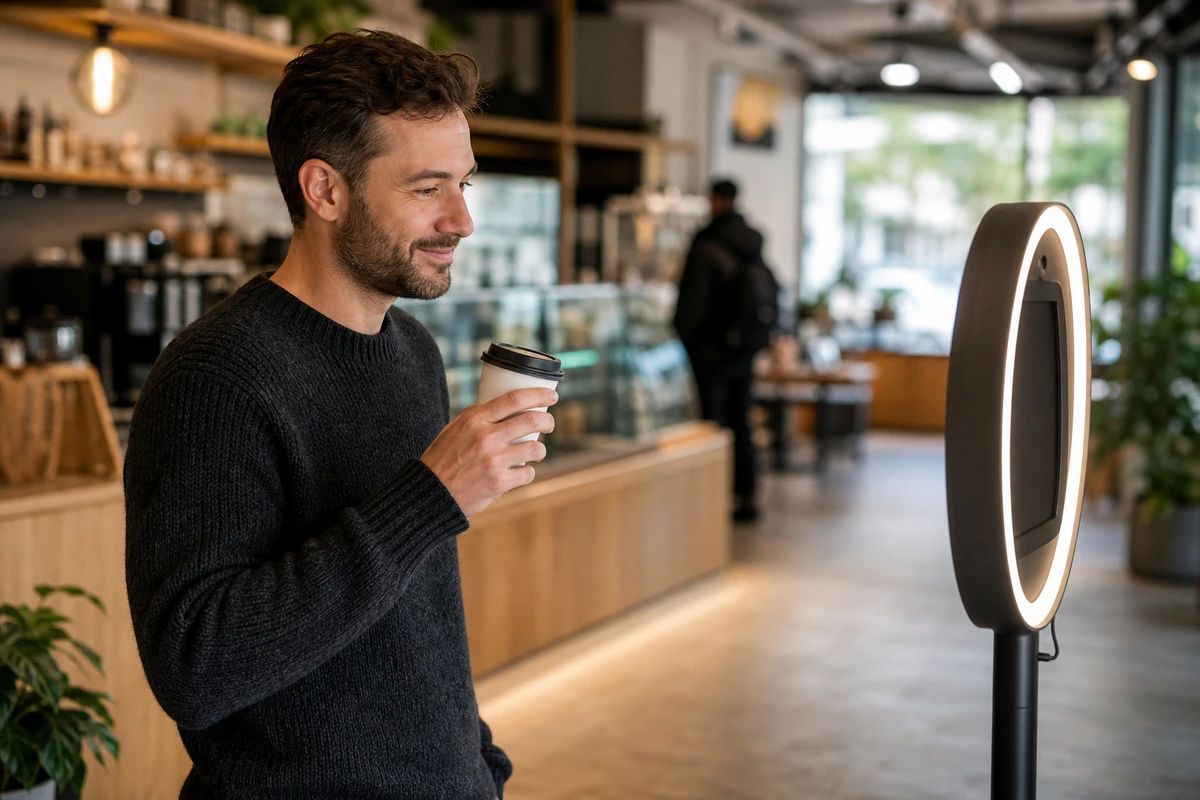
The advantage is that it does not depend on luck. Latte art depends on which barista is working that shift. A mural depends on the customer noticing it and bothering to frame a shot. A spot designed for capture from the start carries the shop’s name in the frame by default, looks the same on a regular’s first visit and their hundredth, and asks nothing of staff in the rushed seconds of handoff. It clears all three bars at once, and it is the one postable moment an operator fully controls.
One off-the-shelf version of that spot is a self-running photo station: Simple Booth’s HALO kit is a branded iPad booth with a 2,100-lumen ring light that delivers each photo to the customer’s phone by QR code, email, or text within seconds of capture. It runs without a staff member attending it and looks identical on a regular’s first visit and their hundredth, which is the consistency this whole channel depends on.
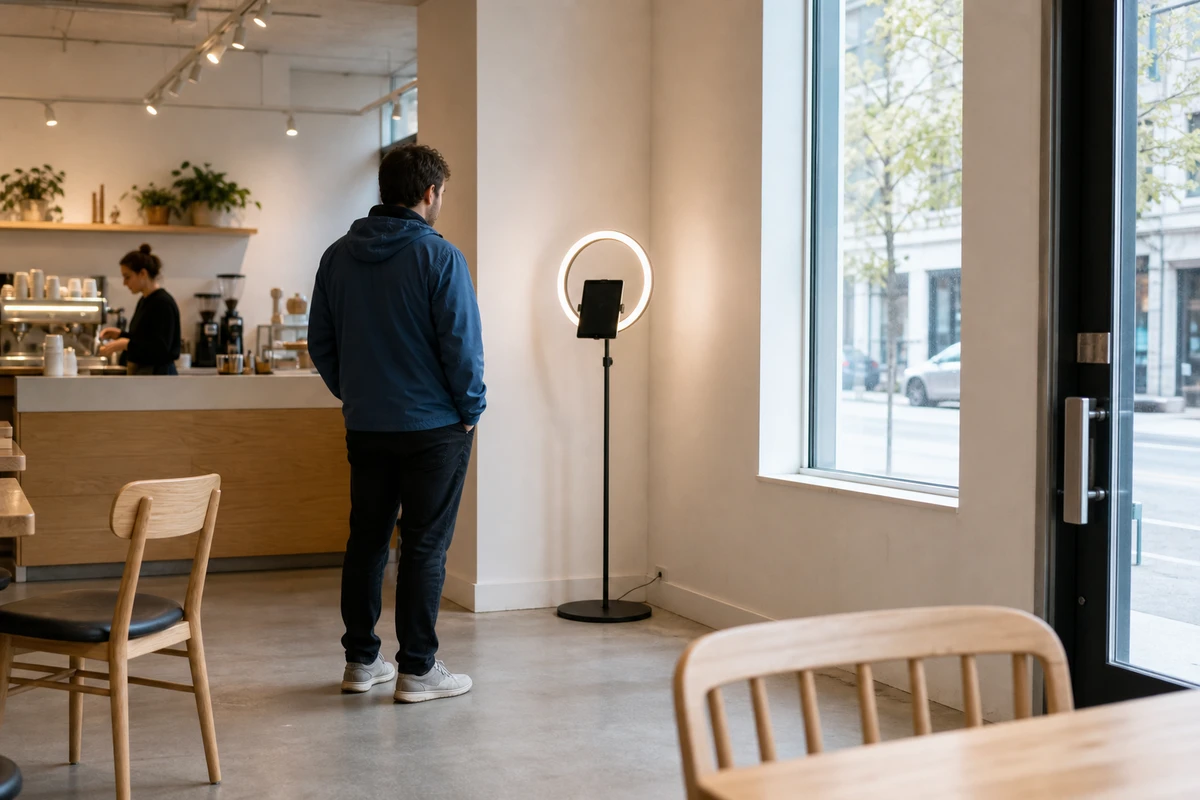
The principle underneath every option is the same: consistency beats spectacle. A modest moment that exists every single morning outperforms a spectacular one that happens occasionally, because the channel is built on volume of small posts, not the rare viral one.
Removing the Friction at the Moment of Handoff
A poster taped by the door is invisible to a regular already holding their cup and turning for the exit. A postable moment is wasted if the prompt to use it never lands. The trigger has to arrive in the two-second window when the cup changes hands and the regular is looking down at it.
Put the prompt where the eye already rests
The shop’s handle and a short invitation belong on the cup, the sleeve, the lid, or the pickup counter, the surfaces a customer is already looking at. A wall sign behind the register is behind the customer the moment they have their drink. Placement is not decoration; it decides whether the prompt is seen at all.
The barista line beats the sign
One short, warm, specific sentence from a barista who already knows the regular by name outperforms any printed sign. Staff need a line that does not feel like a sales pitch, something close to “we put a new mural up, tag us if you grab a shot, we love resharing regulars.” It works because it comes from a person the customer has a relationship with, and because it is specific enough to act on.
Ask for a Story and offer something back
A feed post feels like a commitment; an Instagram Story is a five-second, low-stakes decision that disappears in a day. Asking for the easy thing raises the yes rate sharply. Pair the ask with reciprocity: tell the regular the shop will reshare and name them. That turns a request into an offer. A standing hashtag can stay, but its real job is to be a collection bucket for the operator, not a motivator for the customer. The motivator is the moment, the cue, and the relationship.
Turning a One-Time Poster Into a Recurring Ambassador
A regular posts a photo of their cup on a Wednesday. The shop taps like and moves on. Three weeks later nothing has changed and the regular has not posted again. One post is content. A regular who posts every few weeks is a media channel, and building that recurring loop is the real aim of turning regulars into a UGC channel, a steady supply of customer-made photos and posts the shop can reshare.
The recognition loop
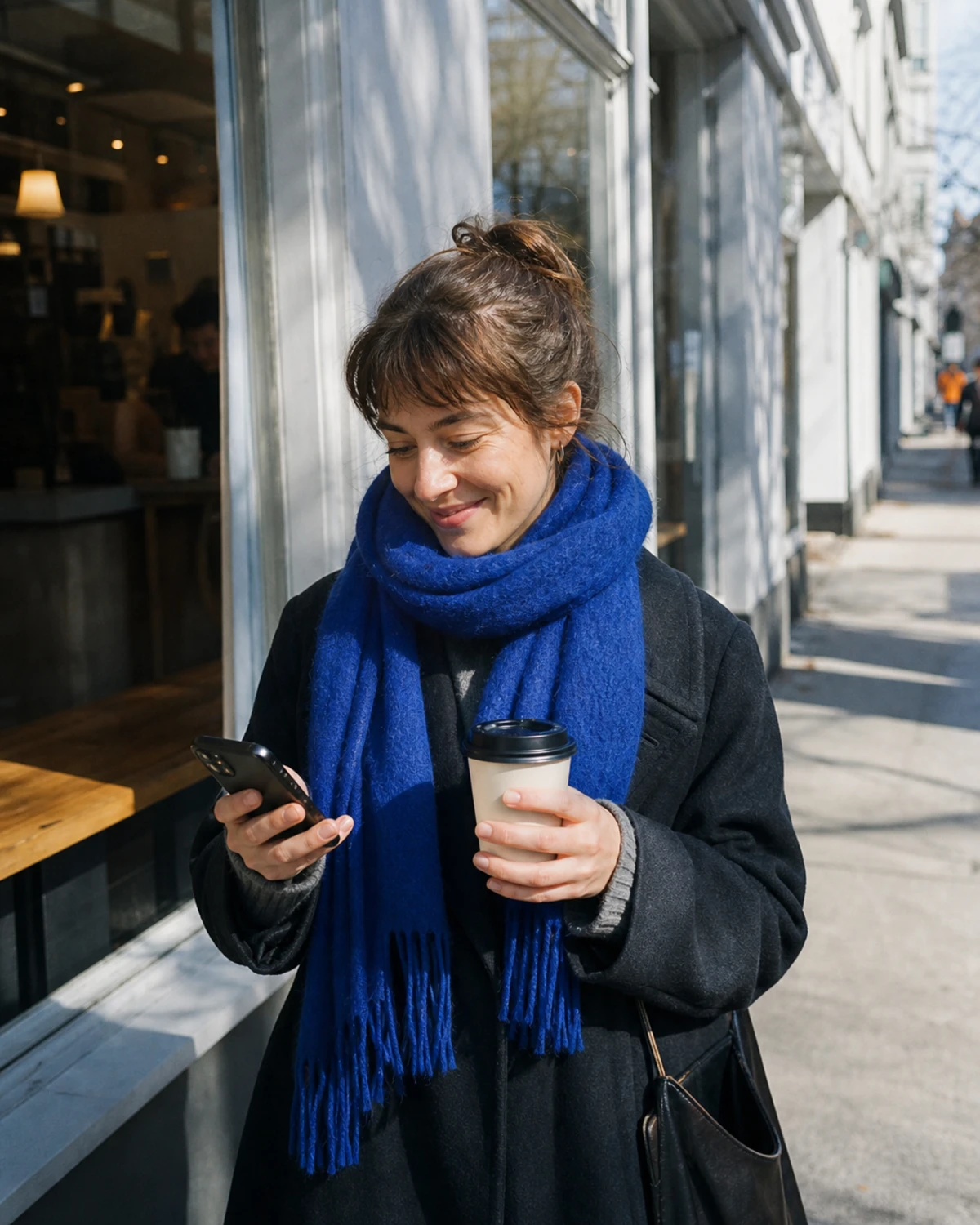
When a regular posts, the shop should reshare it, name the person, and say something genuine about why. That public recognition does double duty: it rewards the poster, and it shows every other regular that posting gets noticed here, which is what quietly pulls the next post out of someone else. Featuring regulars in the shop’s own content extends the loop: a short post about who a regular is, what they order, and how long they have been coming makes that person the protagonist and hands them something they want to reshare.
Permission is not optional
A tag is not consent. Later’s guide to user-generated content rules, updated in May 2025, is explicit that tagging a business does not grant the right to repost; the correct practice is to message the original poster, ask permission directly, and credit them by name in the caption. Resharing a public post without asking risks both the relationship and copyright exposure. Since the entire strategy runs on goodwill from regulars, skipping this step can sour the exact relationships it depends on.

Build a roster, not a campaign
A one-off contest produces a spike that decays. A roster does not. Operators should track who their reliable posters are and treat that list as a standing asset: a dozen named, recognized regulars is a channel that keeps producing. Recognition outperforms a discount here, because a free drink is a transaction that ends, while being seen and named is an identity the regular will keep performing.
What the Channel Is Worth, and How to Tell If It Works
A worked example
Take a shop running 200 transactions on a typical weekday, with a core of about 40 regulars who come in four or more mornings a week. Suppose the system above converts 10 of them into posting roughly once a month. That is 120 posts a year. Put a deliberately modest 300 local viewers on each post, a number operators can raise or lower to match their own following, and assume one or two of those viewers try the shop. That works out to 120 to 240 first visits a year from a channel that costs nothing to run.
Not all of those visitors stick. But a regular who comes in four mornings a week at a $6 ticket spends about $1,200 a year (6 × 4 × 50 weeks). If even one in ten of the new visitors becomes a regular, that is 12 to 24 new regulars worth roughly $14,000 to $29,000 in annual revenue. Set that against the alternatives: a single micro-influencer post runs $150 to $500 for one placement, and a month of local social ads costs a few hundred dollars and stops producing the day the budget runs out.
The retention economics sharpen the case further. Harvard Business Review, citing Bain & Company research, reports that lifting customer retention by 5% can raise profits by 25% to 95%, and that acquiring a new customer costs five to twenty-five times more than keeping an existing one. A regular who becomes a poster does both jobs at once. They stay, and they bring others in.
Measuring it without over-instrumenting
The single clearest signal is the count of tagged posts and mentions, tracked month over month. Beyond that, operators can ask new customers how they heard of the shop, through a quick point-of-sale prompt or a spoken question, and watch the share who name a friend or Instagram. Tracking the size of the named-poster roster over time shows whether the channel is growing or stalling. None of this needs a dashboard. The honest signal is mention volume plus new faces who cite a regular, and over-instrumenting a free channel mostly wastes the time the channel was supposed to save.
The channel is not something a coffee shop has to build from nothing. It is already in the room, sitting at the counter every morning, forty people deep. The work is not louder asking. It is a moment worth capturing, a cue placed where the eye already rests, and recognition that brings a one-time poster back. A shop that treats its regulars as its media team stops renting reach it could be growing for free.
Sources
- National Coffee Association (2025). “Grounds for celebration: Americans remain committed to coffee.” https://ncausa.org/Newsroom/Grounds-for-celebration-Americans-remain-committed-to-coffee
- Nielsen (2012). “Consumer Trust in Online, Social and Mobile Advertising Grows.” https://www.nielsen.com/insights/2012/consumer-trust-in-online-social-and-mobile-advertising-grows/
- Pew Research Center (2024). “Social Media Fact Sheet.” https://www.pewresearch.org/internet/fact-sheet/social-media/
- Influencer Marketing Hub (2026). “How Much Do Micro-Influencers Charge? Micro-Influencer Rates.” https://influencermarketinghub.com/influencer-rates/micro-influencer-rates/
- Harvard Business Review (2014). “The Value of Keeping the Right Customers.” https://hbr.org/2014/10/the-value-of-keeping-the-right-customers
- Later (2025). “The Complete Guide to User-Generated Content Rules.” https://later.com/blog/user-generated-content-rules/
- Reddit, r/smallbusiness (2025). “Asked to handle social media for a friend’s coffee shop.” https://old.reddit.com/r/smallbusiness/comments/1iu7wui/asked_to_handle_social_media_for_a_friends_coffee/
- Reddit, r/smallbusiness (2025). “For small business owners, what’s been your most surprising small change?” https://old.reddit.com/r/smallbusiness/comments/1nhin7z/for_small_business_owners_whats_been_your_most/