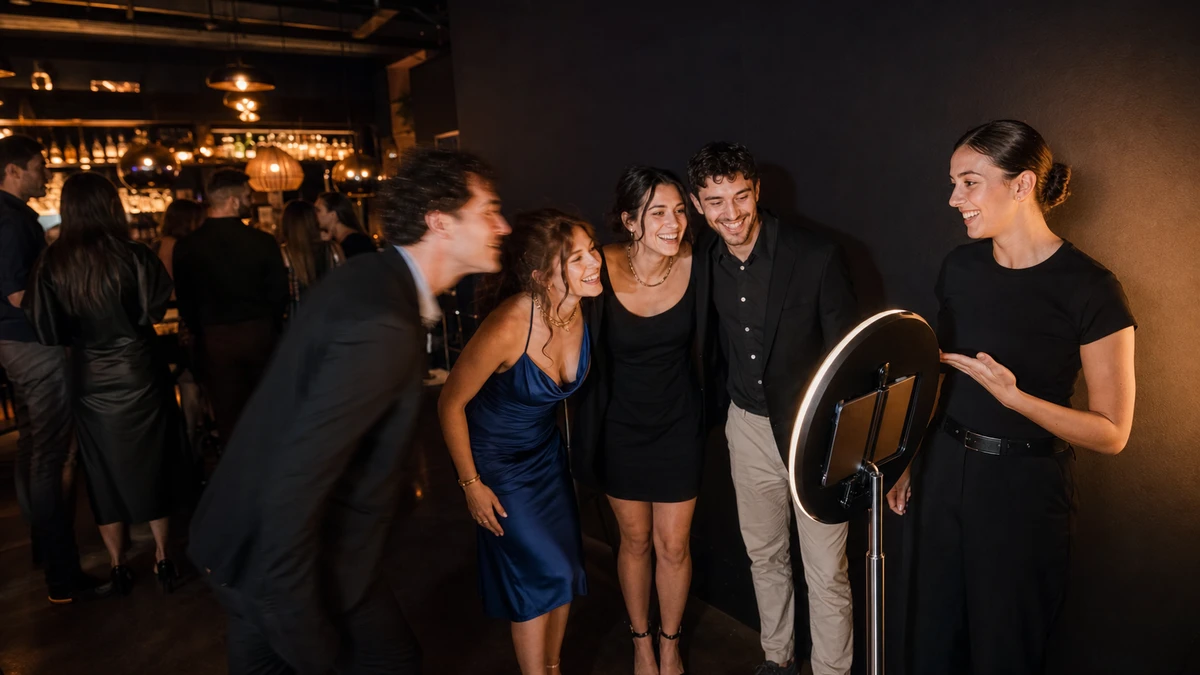
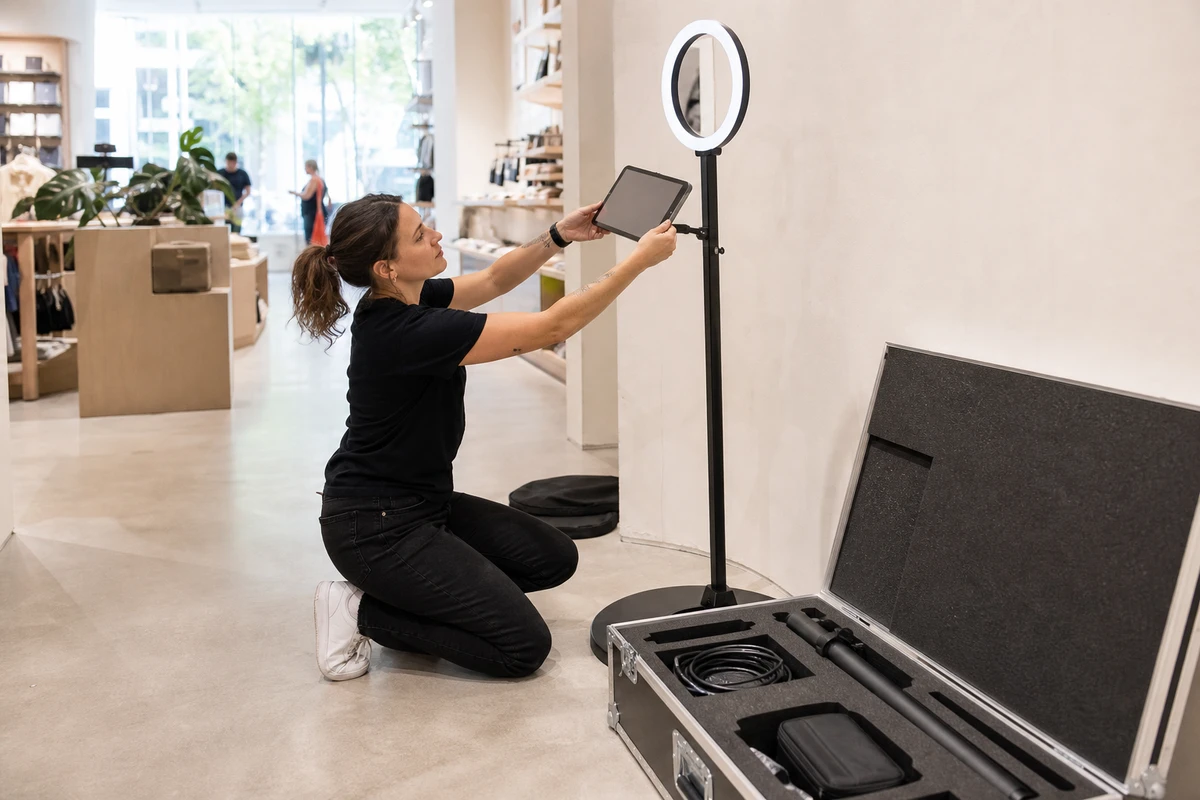
The activation is over. The crowd has thinned, a staffer is coiling a cable, and the tablet that collected email addresses all afternoon is going back into its case. The real takeaway sits in a spreadsheet or a CRM: a few hundred addresses, each one belonging to a person who walked up, engaged, and agreed to hear more from the brand.
What happens to that list over the next two weeks decides whether the activation was a good day or an acquisition channel. Most operators reach for the advice that dominates search results for “post event nurture sequence,” and almost all of that advice was written for a B2B sales rep following up a trade-show booth. It does not fit. What follows is the sequence that does: five emails, the timing each one needs, how to segment a list captured with no sales conversation behind it, and how to measure the whole thing in return visits instead of open rates.
Why an activation list is not a trade-show lead list
The trade-show follow-up template is specific and confident. It tells the operator to reference the booth conversation, send the case study that matches the prospect’s stated problem, and have a specialist call the hottest leads within a day.
None of those instructions survive contact with an in-person activation. A trade-show lead is a named prospect at a known company who had a recorded one-to-one conversation and named a pain point, and the goal is a booked demo. An activation opt-in is a warm but anonymous individual, captured alongside dozens or hundreds of others in a few hours, with no conversation, no notes, and no stated problem. The goal is not a signed contract. It is a return visit, a repeat purchase, or a recommendation to a friend.
The leads are genuinely warm
The leads are genuinely warm. EventTrack 2025, the experiential-marketing survey from Event Marketer, found that 66% of consumers say they are more likely to purchase from a brand after interacting with it at an event. Freeman’s Q1 2024 Trends Report, based on 2,094 respondents, reported that 77% of consumers say their trust in a brand increased significantly after a live interaction. The list is worth real effort. It just cannot be worked the way a sales rep works a booth scan.
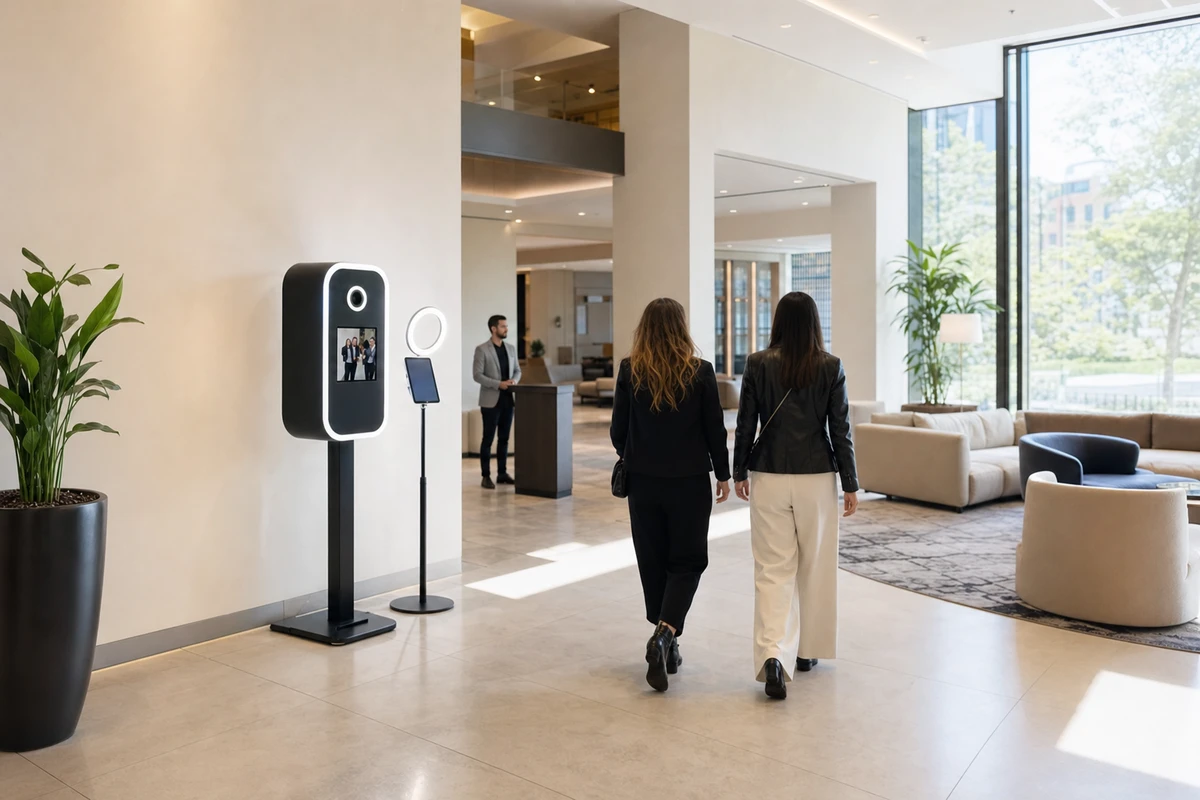
So the sequence has a harder job than the trade-show template admits. It has to manufacture the relevance that a sales conversation would normally supply, and it has to do that the same way for everyone on the list while still feeling personal to each reader. That job has three levers: speed, segmentation by behavior, and a clear arc.
The sequence starts the moment someone opts in, not back at the office
The common pattern is this: the operator returns to the office a day or two after the activation, opens the list, and starts drafting the first email. By then the most valuable hours have already passed.
Contact capture
An activation works by creating a memorable high point. The peak-end rule, established by Redelmeier and Kahneman in their 1996 study of medical patients, found that people remember an experience by its most intense moment and by how it ends, not by how long it lasted. The post-activation email is the brand’s one chance to author that ending. If no email arrives, the ending defaults to whatever the guest felt walking back to the car: traffic, fatigue, distraction.
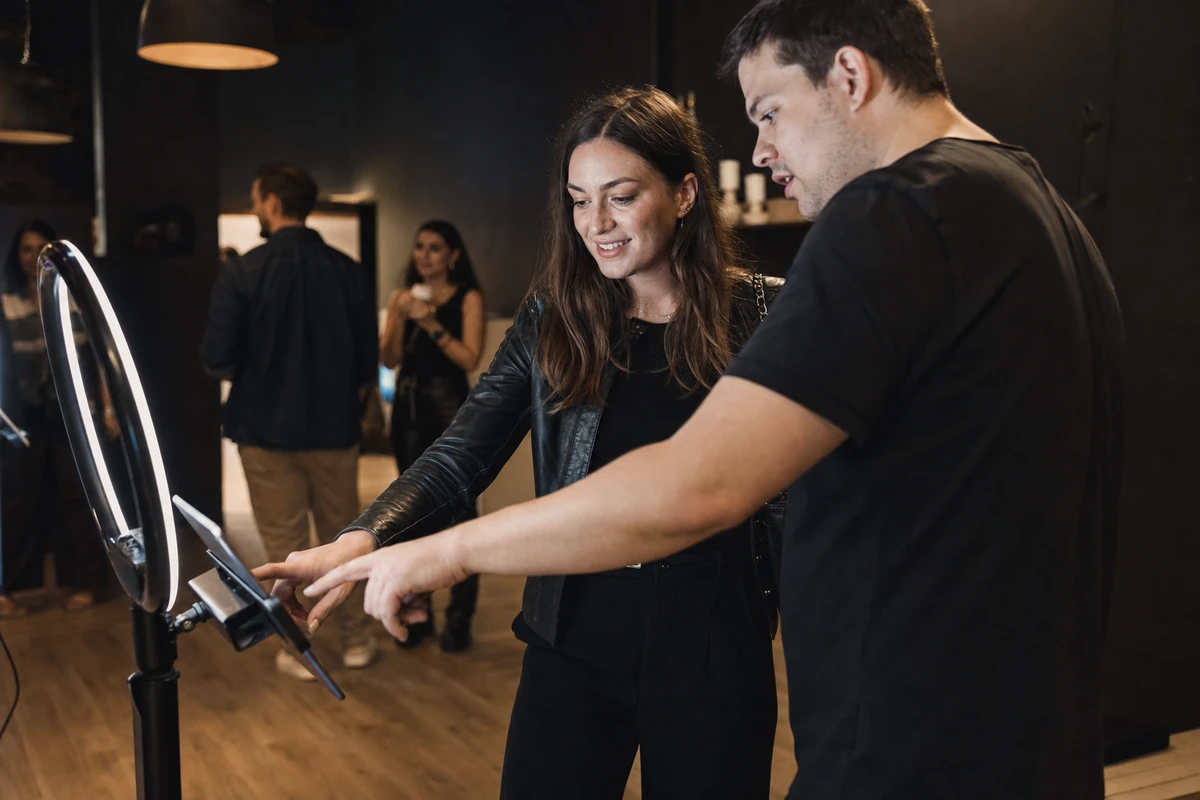
The high point also decays on a clock. Gibbons, Lee and Walker, in a 2011 paper in Applied Cognitive Psychology, documented the Fading Affect Bias and found that the positive emotional charge attached to a memory begins fading within 12 hours of the event. The guest is warmest on the day of the activation; by day three, the feeling has already flattened.
This is why the first email should go the same day, within minutes if the activation produced something the guest opted in to receive (a photo, a digital recap, a result, a code). Twenty-four hours is the outer limit. A trade-show rep who waits a day is fighting competitors’ follow-ups. An activation operator who waits a day is fighting plain forgetting, because the guest had no sales conversation to anchor the memory in the first place.
There is sales-world evidence pointing the same direction. The 2011 Harvard Business Review study The Short Life of Online Sales Leads found that firms contacting an inbound inquiry within an hour were nearly seven times as likely to qualify the lead as those that waited even an hour longer. That study measured people who filled out a web form, not guests at an event, so it is a parallel rather than a proof. For an activation, the clock is the memory, not the inquiry.
After the first email, the cadence should be front-loaded and then taper: several touches across the first two weeks while the memory is warm, then wider spacing. A flat weekly blast wastes the warm window and then overstays it. Frequency is also the single largest reason people leave a list. HubSpot’s consumer research, reported in 2025, found that 51% of consumers unsubscribe because emails arrive too often. A defined sequence is the discipline that prevents both failure modes, the silence and the bombardment.
Segment by behavior, because there are no conversation notes
The trade-show template’s next instruction is to sort leads by persona and stated pain point. The activation operator captured neither. There is no field in the spreadsheet for “what this person needs.”
Use Behavior as the Segment
But the activation itself recorded something better than a guess: what each guest actually did. That behavioral record is the segmentation input, and it does the work the sales conversation does in the trade-show model.
The signals are already there if the operator looks. Some guests engaged for a few seconds and moved on; others stayed, retook the photo, read the screen. Some shared or posted the asset they received, and most did not. Some entered a contest, claimed an offer, or pulled a friend into the activation. Once the first email lands, a new layer appears: who opened it, who clicked, who ignored it. Sorted together, those signals split the list into three rough tiers, a high-intent group that did several of those things, a low-intent group that did almost none, and a middle.
The sequence should branch on that split at least once. The high-intent tier can be moved toward a direct return offer sooner. The low-intent tier needs more proof and more value before any ask. This is not a theoretical nicety. Benchmark data from the major email platforms consistently shows that email triggered by behavior beats email blasted on a calendar. Klaviyo’s 2025 Benchmark Report found that automated flows generate nearly 41% of all email revenue from just 5.3% of sends. Omnisend’s 2026 benchmark report put the gap starkly: automated emails converted at 1.49% against 0.08% for one-off campaigns.
Most operators will run their first activation sequence un-branched, as a single arc sent to everyone, and that is a reasonable place to start. Behavioral segmentation is the upgrade, not the entry fee. Even one branch, splitting the list on whether a contact opened and clicked the first two emails, outperforms sending every guest the identical five messages. The point is the reframe: an anonymous list becomes a segmented one without anyone ever having a sales call.
The five emails, and the job each one does
Sitting down to write the sequence, the temptation is to make every email do everything: thank the guest, recap the event, explain the brand, share something useful, and ask for the return visit, all in one send. That instinct is what produces a five-email post-event nurture sequence that reads like five copies of the same email. The fix is a rule that holds for the whole arc: one job per email, one call to action per email.
Email 1, the delivery (minutes to same day)
If the activation produced an asset the guest opted in to receive, this email carries it, and it is the highest-open email of the entire relationship. Often the photo-station app sends it automatically. Simple Booth’s HALO kit captures the guest’s email at the booth and delivers the photo by email or SMS as the session ends, which means Email 1 can fire before the operator has opened a laptop. GetResponse’s 2024 benchmark analysis of more than 4.4 billion messages found welcome emails averaging an 83.63% open rate against 39.64% across all email types (open rates industry-wide are inflated by Apple Mail Privacy Protection, but the gap is real and large).

Most competitor advice treats this send as a transactional receipt. It is the first nurture touch. It should brand the moment, and it should state plainly what the guest will receive next and when. Setting that expectation matters: Omnisend’s 2026 data shows welcome emails also carry the highest unsubscribe rate of any automated type, because new subscribers have not yet calibrated what the brand will send. An email that says what is coming suppresses the early exit.
Email 2: Glad You Were There
This email converts a good feeling into brand recognition. A short, warm recap of the experience, and a plain statement of who the brand is and what it stands for. No offer. The guest remembers the experience more vividly than the brand behind it, and this email closes that gap while the memory is still warm.
Email 3: A Reason to Care
Something genuinely useful, tied to why the guest showed up in the first place, and not a pitch. This is the value deposit that earns the right to ask later. If the arc asks before it gives, the later ask reads as the only reason the brand ever made contact.
Email 4, proof and belonging (day 7 to 10)
Social proof drawn from the activation itself: the photo gallery, other guests’ posts, the size of the crowd. Seeing that the experience was a real, shared event and not a private transaction gives the guest a reason to want back in. The call to action stays soft.
Email 5, the clear ask (day 12 to 18)
One unambiguous request: come back, attend the next event, redeem the offer. Operators routinely lose their nerve here. In one r/marketing thread, an operator who had nurtured 600 event attendees reported converting only four, and the community’s verdict was blunt: the guest already raised a hand by showing up, and timidity only delays the action they were open to. Pair the ask with an easy opt-down, the option to hear from the brand less often, rather than only an unsubscribe link. A contact who would otherwise leave entirely will often stay at a monthly cadence when offered one, and a contact kept at low frequency is worth far more than one lost to a setting the brand never let them choose.
Across the arc, value should outweigh asks, and no single email carries the conversion. The arc does. A high-intent branch can compress emails 3 through 5 and ask sooner. A low-intent branch can add one more value email before Email 5.
What the sequence owes the leads who don’t convert
Two weeks after the activation, most of the list has not returned, booked, or redeemed anything. That is the normal result, not a failed sequence. A strong arc still leaves the majority unconverted on the first pass.
The sequence has an ending. The relationship should not. Contacts who finished the five emails without acting move onto the brand’s ongoing list at a steady, predictable cadence, not into silence and not into a daily blast. For the narrower group who opened the emails but never clicked, one more attempt is worth making, with a different angle or a stronger reason to return than the arc used the first time.
List hygiene is where the operator’s quiet fear about an in-person list, that it will draw spam complaints and damage deliverability, actually gets addressed. The fear is well founded when a list is mishandled. In one r/Emailmarketing thread, an operator who collected more than 900 addresses and sent nothing for two months was told plainly that the delay had likely wasted the list and would push complaint rates up. The protections are unglamorous and effective: send the first email fast so it is expected, make it obvious where and when the address was collected, suppress hard bounces, honor every opt-down, and let genuinely cold contacts go. Double opt-in is the industry-standard safeguard for any list gathered at volume. A clean list protects the sender reputation that the next activation’s list will depend on.
Measure return visits, not open rates
After the sequence runs, the operator opens the email platform and the first number on the screen is the open rate. For an activation sequence, that number is close to useless. A guest can open all five emails, feel warmly about the brand, and never come back. Apple Mail Privacy Protection has made the metric softer still, auto-loading images and registering opens that no human performed.
The metric chain that actually reflects the sequence’s job runs in four links: the email opt-in rate at the activation, engagement through the sequence, the return-visit or redemption rate, and finally revenue per attendee.
Consider a concrete case
Consider a concrete case. A two-hour activation draws 200 guests. Suppose 35% give a working email address. No trade body publishes a benchmark for activation opt-in rates, so 35% is an illustrative assumption rather than a sourced figure, though a plausible one for an activation with a digital incentive. That leaves 70 contacts. E-commerce welcome flows convert to a completed purchase at roughly 2% on average and near 10% for the best performers, per Klaviyo’s 2025 benchmarks. A return visit asks less of a guest than a checkout does, so a well-built sequence can reasonably aim at the higher end of that range. At a 10% return rate, those 70 contacts produce 7 return visits. If an average return visit is worth $80, the activation’s email list alone generated about $560, and revenue per attendee becomes a number the operator can compare from one activation to the next.
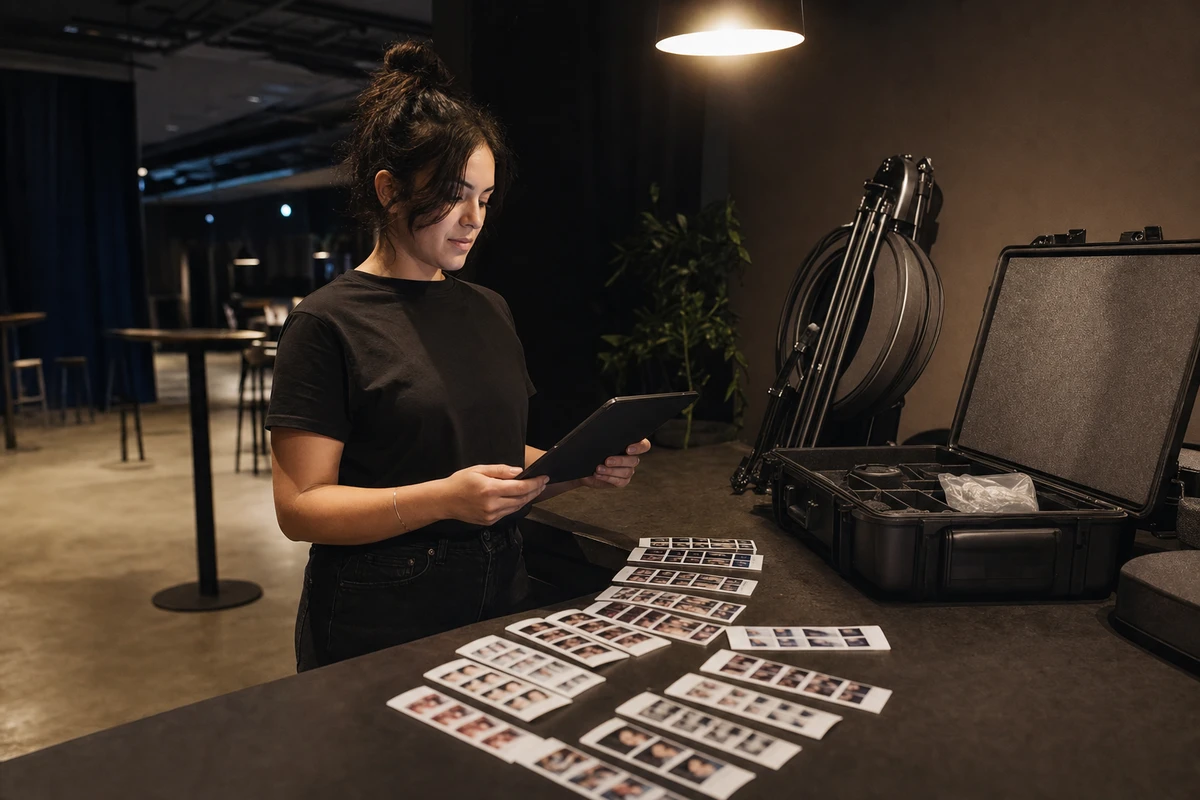
That figure understates the real value, because a return visit is the start of a relationship rather than a single transaction. Bain & Company’s 2001 study of online customer loyalty found that repeat apparel customers spent 67% more in months 31 to 36 of the relationship than in their first six months (a dated, sector-specific figure, but directionally durable). Reichheld’s retention research, cited by Harvard Business Review in 2014, put the cost of acquiring a new customer at 5 to 25 times the cost of keeping an existing one. The sequence is a retention instrument, and the return visit it produces is the cheap end of that math.
Build the sequence once, trigger it after every activation
The mistake left to name is treating the sequence as a one-time project, rebuilt by hand after every event. It should be built once and triggered automatically whenever a new activation list comes in.
What changes from one activation to the next is small and predictable: the asset the first email delivers, the offer in Email 5, the seasonal hook. What stays fixed is everything that took thought to design: the five-email arc, the timing, the behavioral branch. Built that way, the sequence is infrastructure, and infrastructure compounds. Omnisend’s 2026 benchmark report found that automated emails generated $3.41 in revenue per email sent against $0.155 for one-off campaigns, a 22-fold difference. The automated arc does the heavy lifting precisely because it runs the same disciplined sequence every time, without anyone redrafting it.
An activation without a nurture sequence is a party: a good day, a crowd, a cost, and a list that goes cold in a database. An activation with one is an acquisition channel. The operators who build the sequence once and let it fire automatically are the ones who can say what an activation is worth before they book the next one.
Sources
- Event Marketer (2024). “EventTrack 2025.” https://www.eventmarketer.com/article/eventtrack25/
- Freeman (2024). “Freeman Trends Report Q1 2024: Attendee Motivators and Expectations.” https://www.freeman.com/resources/freeman-trends-report-q1-2024/
- Redelmeier, D. A., & Kahneman, D. (1996). “Patients’ memories of painful medical treatments: real-time and retrospective evaluations of two minimally invasive procedures.” Pain, 66(1), 3–8. https://pubmed.ncbi.nlm.nih.gov/8857625/
- Gibbons, J. A., Lee, S. A., & Walker, W. R. (2011). “The fading affect bias begins within 12 hours and persists for 3 months.” Applied Cognitive Psychology, 25(4). https://scite.ai/reports/the-fading-affect-bias-begins-VeNL6K
- Oldroyd, J. B., McElheran, K., & Elkington, D. (2011). “The Short Life of Online Sales Leads.” Harvard Business Review. https://hbr.org/2011/03/the-short-life-of-online-sales-leads
- Gallo, A. (2014). “The Value of Keeping the Right Customers.” Harvard Business Review. https://hbr.org/2014/10/the-value-of-keeping-the-right-customers
- HubSpot (2025). “Why Consumers Subscribe and Unsubscribe from Email [New Data].” https://blog.hubspot.com/marketing/why-consumers-subscribe-to-email
- GetResponse (2024). “Email Marketing Benchmarks & Statistics.” https://www.getresponse.com/resources/reports/email-marketing-benchmarks
- Klaviyo (2025). “2025 Benchmark Report (AMER).” https://klaviyocms.wpengine.com/wp-content/uploads/2025/02/2025-Benchmark-Report_AMER.pdf
- Omnisend (2026). “Email Marketing Benchmarks 2026 (2025 Data).” https://www.omnisend.com/blog/email-marketing-benchmarks/
- Bain & Company (2001). “The Value of Online Customer Loyalty and How You Can Capture It.” https://www.bain.com/insights/the-value-of-online-customer-loyalty-and-how-you-can-capture-it/
- r/marketing (2025). “How many post-event nurture emails do you send before asking directly if they want to have a demo?” https://old.reddit.com/r/marketing/comments/1lkcmdv/how_many_post_event_nurture_emails_do_you_send/
- r/Emailmarketing (2026). “Collected 900+ emails in 2 months, best way to start sending now?” https://old.reddit.com/r/Emailmarketing/comments/1q72mv5/collected_900_emails_in_2_months_best_way_to/