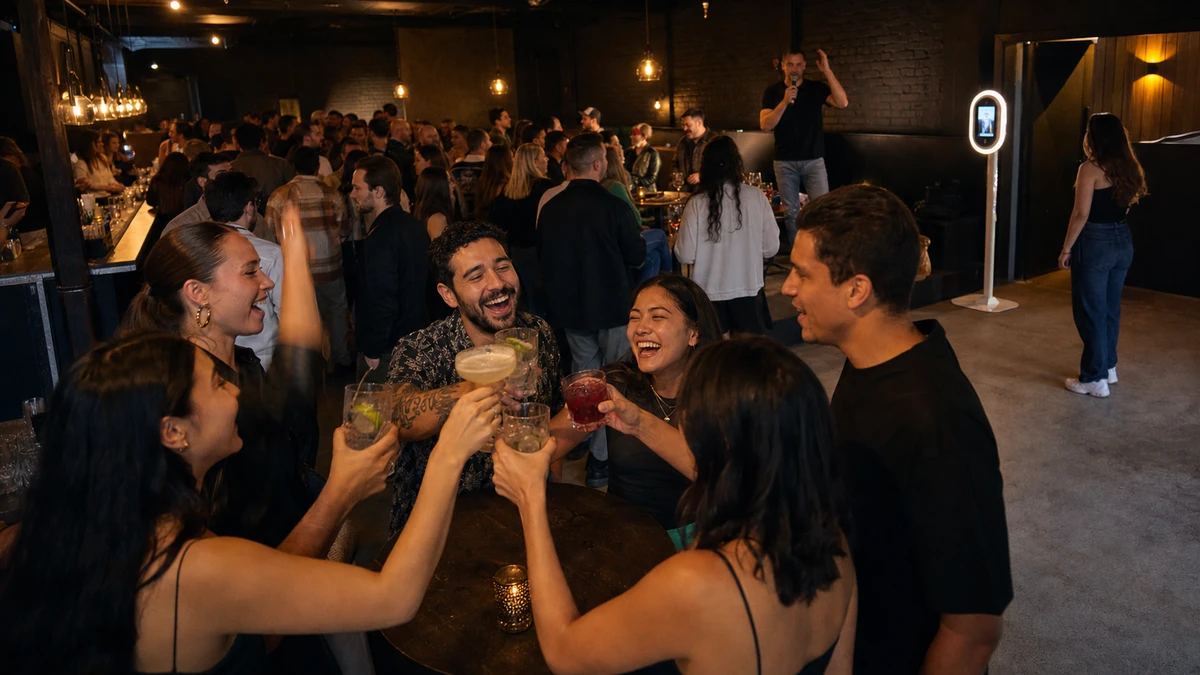
At eight o’clock on a Tuesday, a sports bar built for sixty has eleven people in it, and two of them are on the clock. The bartender is cutting fruit nobody has ordered. On Saturday the same room runs a forty-minute wait at the door. Most owners know this gap intimately and treat it as a fact of the calendar.
It is not. The 15 bar promotion ideas below are organized so an operator can choose two or three, anchor them to specific weeknights, and build a Monday-to-Thursday rhythm customers can predict. They come with one rule that separates the promotions that pay off from the ones that drain the schedule: a promotion that fills seats for a night is worth running, and a promotion that also captures who showed up is worth running for years. One good Tuesday is a sugar high. A good Tuesday plus the phone numbers of the locals who came is an audience the bar can call back week after week.
Why a dead Tuesday costs more than a slow Saturday
Most operators picture a slow night as a smaller version of a good one. It is not. A bar’s costs are mostly fixed. Rent, insurance, the minimum staff needed to open the doors legally, and base utilities do not shrink when the room is half empty. A slow Saturday still pulls enough traffic to cover that fixed cost and leave money on top. An empty Tuesday does not. It is not a thin profit. It is a loss billed against money the bar already committed.
The arithmetic is worth doing once. Take a bar open five hours on a Tuesday with two bartenders on minimum staffing. Rent, insurance, utilities for that window, and the two wages land somewhere near $500 before the first drink is poured. That is the floor. Beverage pour cost runs low, roughly 18 to 24 percent on liquor and 20 to 30 percent on beer, so a guest who spends $20 contributes about $15.60 toward fixed cost. At that rate the night needs roughly 32 covers just to break even.
Now run two outcomes. Eleven covers bring in $220, contribute about $172, and end the night $328 in the hole. Thirty-five covers bring in $700, contribute $546, and clear the floor with $46 left over. The same room on the same Tuesday swings by nearly $375 depending on whether 11 or 35 people walk in. The exact figures move with the lease and the market, but the shape does not: on a fixed-cost night, covers are not incremental gravy, they are the line between a loss and a profit. And weekend traffic does nothing to fix it, because the Saturday crowd and the Tuesday crowd rarely overlap. Filling Saturday harder leaves Tuesday exactly as empty.
The two jobs every mid-week promotion has to do
A trivia team of six finishes second on a Tuesday, closes a $160 tab, argues about a missed question on the way out, and is gone. The bar had a good night. It also just lost six people it will have to win back from scratch next Tuesday. That is the quiet flaw in most promotions: they do one job well and skip the second.
Job One: Give a Reason to Leave the House
Job one is to give a specific person a specific reason to leave the house on a specific weeknight. Every idea below does this, and it is not a hard sell. The National Restaurant Association’s 2023 State of the Restaurant Industry report found 52 percent of consumers say promotions and specials influence which restaurant or bar they choose. The reason to come out works. The problem is that it expires when the night does.
Job Two: Capture the Contact
Job two is to capture that person’s contact, a name with a mobile number or an email, so the bar can invite them back without a middleman. Competing promotion lists discuss only job one. Job two matters because of where reach now sits. SocialInsider’s 2025 reach study found the average Facebook Page reaches just 1.65 percent of its followers on an organic post. A bar with 2,000 followers reaches about 33 of them, and the post about Tuesday’s special often surfaces on Thursday. A text behaves differently.
SimpleTexting’s 2025 survey found 82 percent of people check a text within five minutes. Operators in r/BarOwners keep arriving at the same fix on their own: one put “Text WINGS to our number for a free appetizer” cards on the tables, built a list of 600 locals in a month, and now fills a rainy Tuesday by texting a two-for-one offer to that list. Read the 15 ideas through this lens. Each one is a moment when asking for a contact is natural rather than intrusive.
Recurring event nights that give people a standing reason to show up
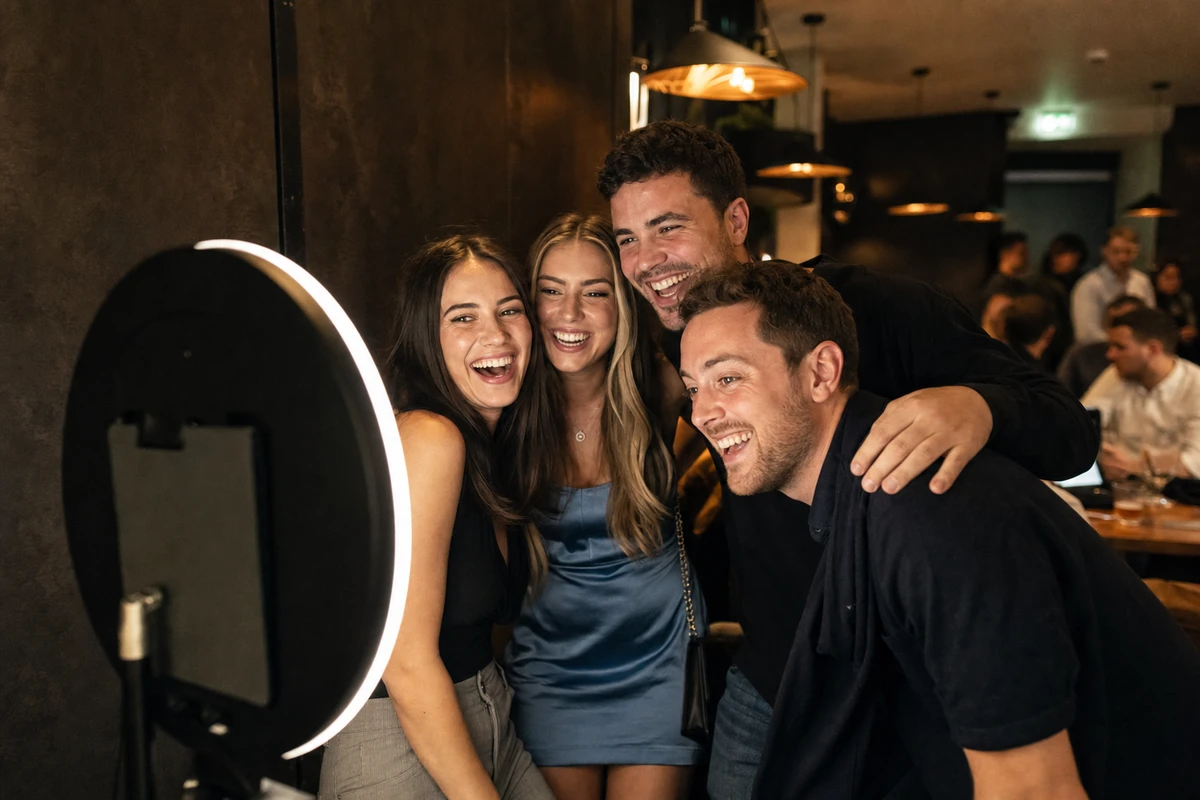
The strongest mid-week promotions are the ones a customer never has to decide on. Ask a regular where they are headed Tuesday and “trivia at the usual place” is an answer that took no thought. A recurring night removes the choice, and a removed choice is a booked seat. Five formats carry this load.
1. Weekly trivia night
Trivia is the format operators in r/BarOwners name more than any other when asked what actually fills a weeknight. People come in teams, teams stay longer and spend more than pairs, and the format repeats by nature. Run it the same night, same time, with the same host, and treat team registration as the capture point: a team name, a captain, a phone number. Keep prizes modest and useful, on the order of a $30, $20, and $10 house credit redeemable on a future visit with a 90-day expiry, so the prize pulls the winners back instead of walking out the door as cash.
2. Music bingo and classic bingo
Bingo, including the music-based “Singo” format, asks less of a crowd than trivia and reaches a wider age range. It is simple to staff and easy to repeat weekly. The bingo-card sign-up sheet, or a quick digital check-in for a free card, doubles as the contact list.
3. Karaoke, with a reason to pick this room
Karaoke is everywhere, so a generic karaoke night competes with every other bar running one. A host-led format, live-band karaoke, or a weekly leaderboard gives it an edge. Operators also warn that karaoke can draw singers who do not drink much, so it should be paired with a drink incentive that keeps the night a bar night and not a free stage.
4. Open mic and comedy night
Each performer arrives with a small audience of their own friends, which means the lineup markets the event for the bar. A multi-week competition format compounds this, since performers recruit their people to come and vote. The performer sign-up is the capture point.
5. League nights
Darts, pool, poker, and cornhole leagues turn attendance into a commitment. A four-team, sixteen-person dart league is sixteen guaranteed bodies, most of whom bring a friend, locked in for the full run of weeks. The league roster is a ready-made contact list.
Menu and pricing plays that make a weeknight the obvious choice
A bar marks down every drink on Tuesday, the room fills, and within a few months the regulars have learned to hold their spending for the discount. Traffic went up and margin went down. Some of the most durable weeknight promotions live in the menu instead, and the ones that last share a trait: they are named and bounded rather than open-ended.
6. A named, bounded weeknight deal
Not “drinks cost less Tuesday” but a specific, repeatable, branded combination: the burger-and-a-draft at one price, the Tuesday taco plate. A bundle protects margin better than a flat percentage off, because the high-margin drink subsidizes the food rather than the whole check sliding down. It also gives the offer a name customers repeat to each other, which is free promotion the bar never had to buy.
7. Reverse or late-night happy hour
A standard happy hour front-loads the early evening; a reverse happy hour builds a second one for the after-dinner mid-week lull, when the dining crowd has cleared and the room would otherwise empty. Data from Cake’s point-of-sale platform, reported by Nation’s Restaurant News across a 400-bar sample, found bars running happy hours saw revenue up 26 percent and transactions up 24 percent during those hours versus bars without one. The same data put peak bar revenue at 7 to 8pm, which is the argument for placing the discount window after dinner rather than across the peak, where it would only discount drinks the bar could sell at full price.
8. Service-industry night
Cooks, servers, and bartenders from other venues are off on the same mid-week nights the bar is trying to fill, and they spend well and tip well. A standing industry discount on a set weeknight turns that group into reliable regulars, and because they work in rooms full of other potential customers, into word-of-mouth amplifiers the bar does not pay.
9. Guided tasting flights
A featured-pour night built around a beer, whiskey, or agave flight can be sold as a small ticketed experience rather than a giveaway. Operators in the same community point to the lever that keeps it low-cost: enlist a distributor representative to host and supply the samples, so the bar provides the room and the captive audience while the supplier covers the product. The ticket creates direct revenue, and the night gives customers a clear reason to opt into a “tasting club” list for the next one.
Partnership promotions that borrow a crowd the bar does not have
A neighborhood running club needs somewhere to end its Thursday route. A bar with a quiet Thursday needs forty people. Putting those two facts together costs the operator close to nothing and fills the room. That is the whole logic of partnership promotions: rather than build a crowd slowly, borrow one that already exists.
10. Food-truck and local-business collaborations
Parking a food truck in the lot for a set weeknight gives both businesses something to promote, and each one markets to the other’s followers for free. The truck’s regulars learn the bar exists; the bar’s regulars get a reason to come on a night they normally skip.
11. Niche DJ or scene nights
A DJ tied to a specific genre or subculture arrives with a built-in, loyal following and is usually looking for a regular home venue. Handing that DJ a standing weeknight slot imports their scene wholesale. The capture point is the scene itself: its group chat, its mailing list, the sign-up at the door.
12. Dine-to-donate and charity nights
A set share of a night’s sales goes to a local cause, and in exchange the charity promotes the event to its own supporter list. That list is the asset. It delivers a values-aligned crowd the bar could not have reached, and the night earns local goodwill and attention on top of the covers.
13. Hosting community groups
Book clubs, hobby meetups, language exchanges, and existing trivia or game groups all need somewhere to meet, and a half-empty weeknight room is exactly that. The group runs its own gathering and promotes it to its own members. One operator in r/BarOwners described hosting book clubs of about 15 members across two locations and said it “makes a slow Tue/Wed worth it for the bar staff.” Near-zero effort, recurring, and self-promoting.
Promotions built to keep paying after the night ends
The first thirteen ideas fill a room. The last two are built so the night keeps returning value after the lights come up.
14. Themed and viewing-party nights designed to be seen
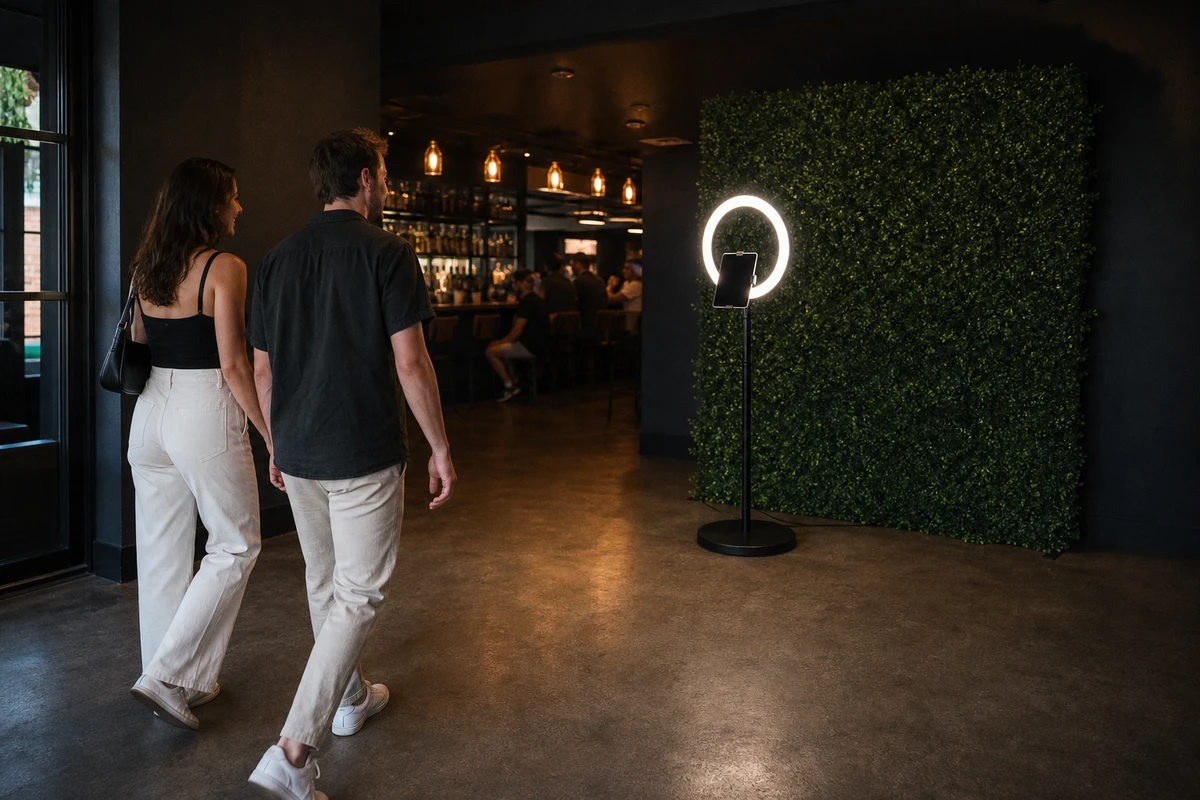
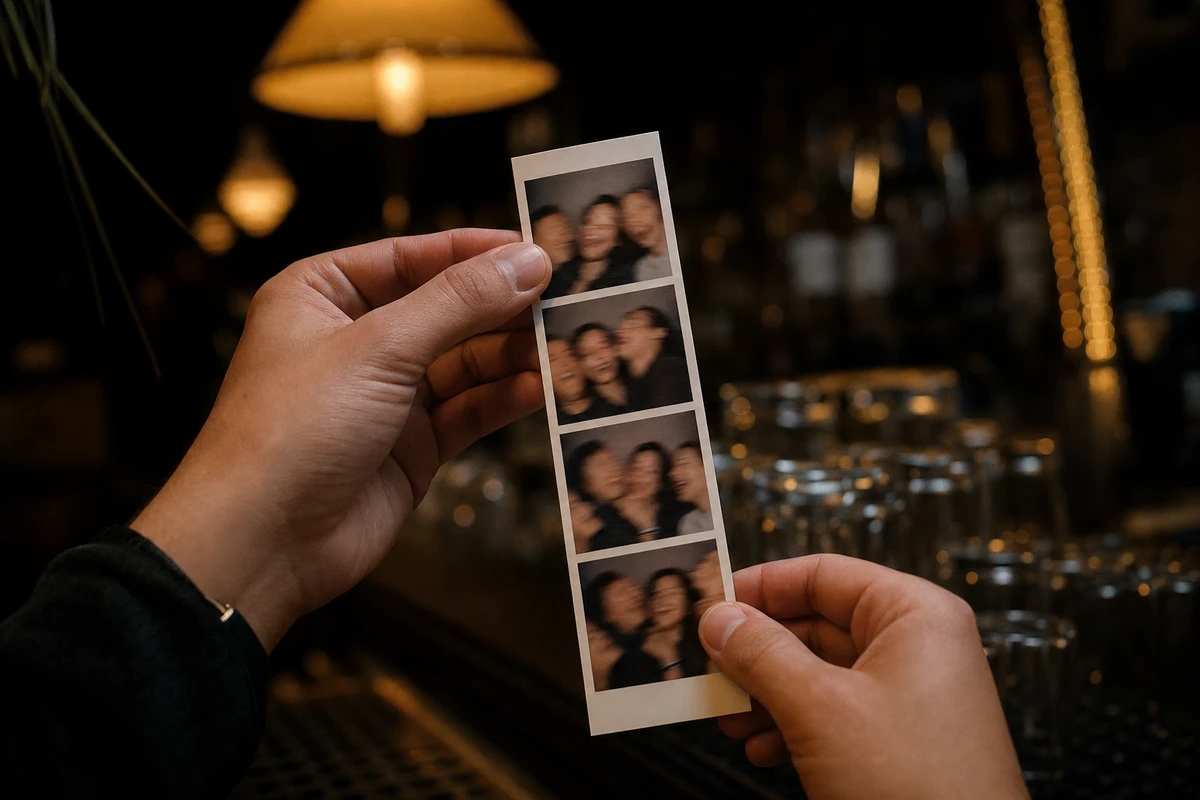
A season finale watch party, an awards-show night, a decade theme with a dress code. These work as events, but the deliberate addition competitors miss is a photogenic moment built into the room: a themed backdrop, a costume station, a set piece worth standing in front of. Guests photograph it and post it before and during the night, which turns the people already in the room into reach for the next mid-week event. It also creates a comfortable, obvious reason to collect a contact, since sending a guest their own photo is a fair trade for a phone number or an email. A photo station can run that trade on its own: Simple Booth’s HALO kit is an iPad booth that texts or emails a guest their photo and records the contact behind it in the same step, the same lead capture the entertainment chain Treetop Golf used to build a list of 150,000 email addresses across its venues.
15. A mid-week regulars tier
A loyalty mechanic scoped to weeknights, a points balance, a punch card, or a “Tuesday club” with perks that apply only Monday through Thursday, is the engine every idea above feeds. The business case is settled. Long-cited research summarized by Harvard Business Review puts the cost of acquiring a new customer at five to twenty-five times that of keeping an existing one, and analysis published by the Forbes Technology Council, tracing to Bain & Company, finds repeat customers spend 67 percent more than first-timers. A reachable list of past guests is the lowest-cost traffic a bar will ever have. It is what lets the operator quoted earlier fill a dead Tuesday “within an hour” by sending one message, instead of buying an ad and hoping.
Why most mid-week promotions quietly fail
An operator launches a Wednesday trivia night, watches a dozen people show up for three weeks, and quietly cancels it. The idea was fine. The execution had one of three flaws.
Quitting too early
The first is quitting too early. A new weeknight does not work by week four. Operators in r/BarOwners who built winning trivia and event nights describe a ramp measured in months, and the common advice is to give a new night a few months before calling it a failure. Untappd For Business, in a 2022 vendor-published guide to bar events, recommends three to four weeks of promotion lead time before a night even launches. The single largest growth lever is dull: same night, same time, same name, every week, long enough for it to become a habit.
Event-night roulette
The second is event-night roulette. The instinct to fix a slow week is to add more events, but the top-voted voice in one r/BarOwners discussion of bar events argued the opposite, and other operators agreed: running a different event every night burns out managers and staff and confuses regulars who just want a dependable place to drink. The fix is restraint. Choose two or three promotions, not seven, protect a couple of nights as plain bar nights, and commit to a lane.
Filling chairs but not tabs
The third is filling chairs but not tabs. A promotion that draws a crowd nursing one drink for three hours is a cost wearing the costume of a win. Trivia and karaoke in particular can pull people who came for the game rather than the bar. The screen is simple: judge an idea by spend per cover, not headcount, and design the prize structure, drink incentives, and ticket pricing so the night rewards customers who actually buy drinks.
How to tell whether a mid-week promotion actually worked
A room that looks busy is not a measurement. Competing lists hand over bar promotion ideas and never say how to judge them, which leaves operators running nights on a feeling. Four numbers settle it, tracked for each promotion.
Covers against a baseline weeknight
The first is covers against a baseline weeknight: how many people came compared with an ordinary Tuesday. The second is sales per cover, because forty people who each buy one soda is a worse night than twenty-five who each buy three drinks. The third is the incremental cost of the promotion: the host fee, prizes, comps, and any extra staff hours the night required. The fourth is net contribution, the revenue the night earned above what a normal weeknight would have produced, minus that incremental cost. The honest success metric is not a full room. It is contribution margin above an ordinary Tuesday.
One more number belongs on the list, and it is the one this article rests on: how many new contacts the promotion added to the owned list. That number is what makes next month cheaper. A promotion that nets close to zero on the night but adds forty reachable locals to a list can still be the best one the bar runs, because those forty are traffic the operator can summon for the price of a text.
The operator staring down a dead Tuesday does not need fifteen promotions. They need two or three, run consistently for six months, each one wired so the people who show up leave behind a way to reach them. The event fills the seat once. The list fills it on demand. The bars that beat the mid-week slump are not the ones with the cleverest idea on the calendar, they are the ones that turned every idea into an audience they own.
Sources
- National Restaurant Association (2023). “2023 State of the Restaurant Industry Report: A New Normal.” https://restaurant.org/research-and-media/media/press-releases/2023-national-restaurant-association-state-of-the-industry-report-a-new-normal/
- Nation’s Restaurant News (Informa). “Happy hour pays off for bar operators, data finds” (data from Cake point-of-sale, 400-bar study). https://www.nrn.com/beverage-trends/happy-hour-pays-off-for-bar-operators-data-finds
- SocialInsider (2025). “Facebook Organic Reach Study 2025.” https://www.socialinsider.io/blog/facebook-organic-reach/
- SimpleTexting (2025). “2025 Texting and SMS Marketing Statistics.” https://simpletexting.com/blog/2025-texting-and-sms-marketing-statistics/
- Harvard Business Review (2014). “The Value of Keeping the Right Customers.” https://hbr.org/2014/10/the-value-of-keeping-the-right-customers
- Forbes Technology Council (2024). “The Art of Repeat Purchases: Utilizing Data to Enhance Customer Journeys.” https://www.forbes.com/councils/forbestechcouncil/2024/07/16/the-art-of-repeat-purchases-utilizing-data-to-enhance-customer-journeys/
- Untappd For Business (2022). “The 16 Best Event Ideas to Increase Foot Traffic to Your Bar” (vendor-published). https://lounge.untappd.com/the-16-best-event-ideas-to-increase-foot-traffic-to-your-bar/
- r/BarOwners (2026). “Tuesdays are completely dead. Any ideas for quick foot traffic?” https://old.reddit.com/r/BarOwners/comments/1rwtx8g/tuesdays_are_completely_dead_any_ideas_for_quick/
- r/BarOwners (2025). “Any tips to fill in slow nights at a bar?” https://old.reddit.com/r/BarOwners/comments/1nufw4q/any_tips_to_fill_in_slow_nights_at_a_bar/