
A customer sets a $7 phone charger on the counter, taps a card, and reaches for the bag. The cashier, eyes already on the screen, asks for an email address. The customer says one out loud, something that ends in a stray number, invented in the half-second before the sentence finishes. Both people know it is not real. Neither says so. The transaction closes, the capture counter ticks up by one, and the marketing list has just absorbed a dead contact.
That is the quiet failure of in-store lead capture. It rarely fails by getting refused. It fails by getting answered badly, and no dashboard can tell a real address from a polite fake.
Customers do not hand over junk addresses because they hate being marketed to. They do it because the ask arrived at the wrong moment, on someone else’s device, for a reward that did not feel real. The capture moments customers genuinely enjoy share one trait: the contact detail is a byproduct of something the customer already wanted to do, not a faster version of a request they were merely tolerating.
Why Most In-Store Lead Capture Quietly Fails
The standard approach to in-store lead capture is a verbal ask or a shared tablet at the register, and it often runs on pressure. Reporting by the Philadelphia Inquirer (Reyes, 2018) described workers at the discount chain Five Below who said managers told them to collect emails from as many as 25% of the customers they rang up, with scheduled hours tied to whether they hit the number. One worker described the customers she was pressed to ask: people buying a slime kit or a bag of gummy worms for a few dollars, who would get defensive and ask what the email was for. She could not tell them. It had never been explained to her.
An ask delivered under that pressure does not produce consent. It produces compliance, and compliance has a tell. In a first-person account on the Data Axle blog (Gallant, 2020), a cashier offered, unprompted, to “just put a fake email in for you,” having already called the email program “just a scam.” When the person collecting the data volunteers to fabricate it, the moment has stopped working.
This behavior is not rare. Surveying people in the UK and Ireland who admitted to giving out false contact details, the data-validation firm Postcoder found 82% had used a disposable email address on a form, and 57% did so because they did not trust the company asking. That distrust is not paranoia: Salesforce’s State of the Connected Customer survey found 71% of customers feel increasingly protective of their personal information and 64% believe companies are reckless with the data they collect.
The cost lands later
The cost lands later. A refused ask costs nothing. A fake address costs on delivery: every campaign sent to it bounces or lands nowhere, attribution breaks because the list no longer maps to real people, and, as the marketing agency Tailored Edge Marketing puts it, “fewer opens and clicks from low-intent addresses drag down sender reputation, which hurts even your best subscribers.” A coerced capture moment can post a 25% yes rate and still hand the marketing team a list that is partly fiction.
Tolerated Capture vs. Enjoyed Capture
The common fix for all of this is friction reduction. Paper forms are slow and a shared counter tablet is awkward, so most in-store lead capture guides advise moving the ask onto a QR code the customer scans with their own phone. The ask gets faster. The thinking usually stops there.
But speed was never the real problem
But speed was never the real problem. A faster version of an ask the customer was only tolerating is still an ask the customer is only tolerating.
It helps to separate two modes of capture. In extraction, the contact detail is the point of the interaction, and the customer’s payoff is a separate bribe bolted on to make the handover worthwhile (a discount, a prize draw, a vague promise of future offers). In byproduct capture, the customer is doing something they wanted to do on its own terms, and the contact detail is simply how that thing gets delivered. Tailored Edge Marketing draws a related line, calling checkout “a tunnel, not a town square,” a place customers move through with one objective, where anything not required to finish the purchase reads as friction.
The distinction matters because the two modes produce different data, not just different feelings. Under extraction, faking the address costs the customer nothing; they still get the discount and still walk out. Under byproduct capture, the email has to work, because the email is how the customer receives what they came for. The receipt, the alert, the photo, the result: none of it reaches a fake address.
This also explains why the resistance is narrower than it looks. The same Postcoder survey found 75% would give a real address if simply told what it would be used for, and 70% if the company had a good reputation. Harvard Business Review reached a similar conclusion years earlier (Morey, Forbath, and Schoop, 2015): how a company designs its data collection, not merely what it collects, is what builds or erodes trust. Customers are not refusing marketing. They are refusing a bad trade at a bad moment.
The Four Conditions That Make a Capture Moment Enjoyable
An operator standing in their own venue still needs a way to tell whether a given capture moment is extraction or byproduct. Four conditions settle it. A moment customers enjoy meets most or all of them; a moment they tolerate usually fails three.
Timing
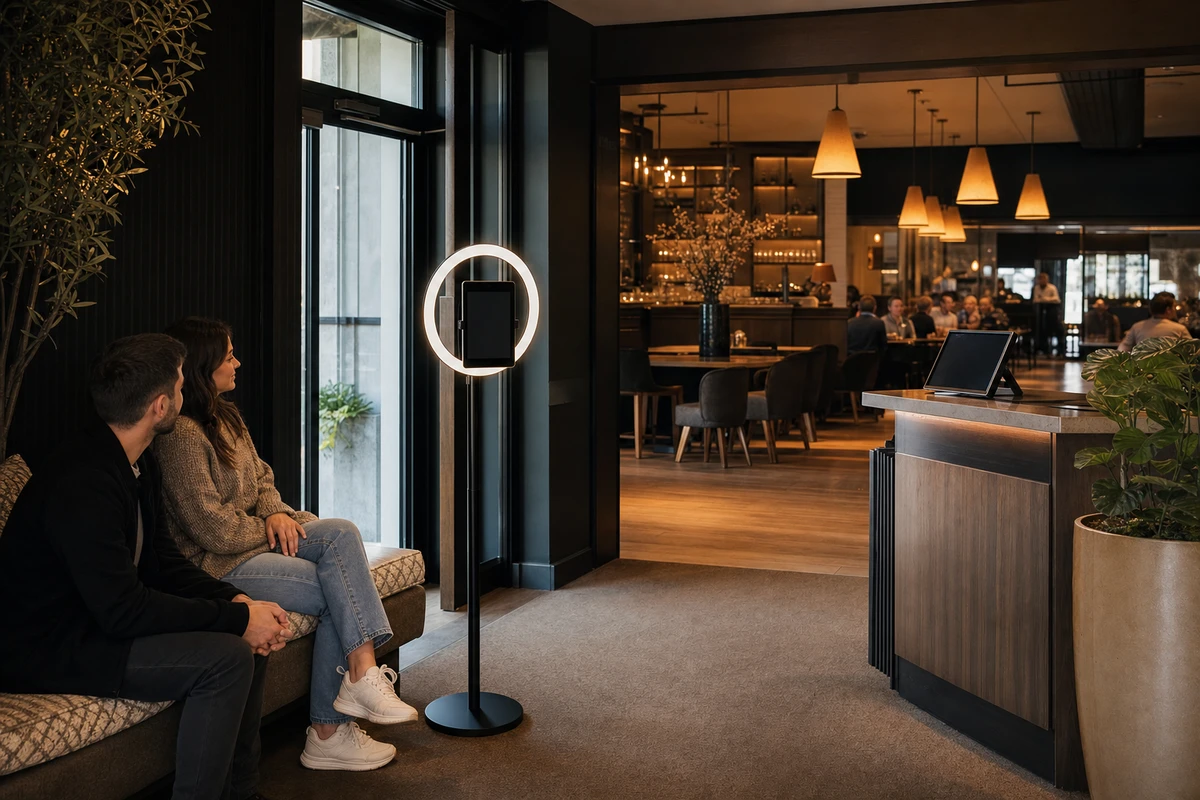
The ask lands during a genuine pause, not at the exit. A customer waiting for a fitting, watching a demo, or sitting in a service queue is still mid-visit and still curious. A customer holding a bag with their card back in their pocket is in exit mode, and their attention has already closed. The register ask fails this condition by definition.
Autonomy
The customer enters their own details, on their own screen, at their own pace, with nobody watching and nobody typing for them. This is the real reason the QR code shift works, and it is not speed. A person tapping an address into their own phone is making an unsupervised choice, with no cashier waiting and no small queue forming behind them. The social pressure that produces fake answers comes from the audience, and autonomy removes the audience.
A reward that is real, specific, and immediate
Not “join our list,” and not “10% off something, someday.” Something concrete the customer receives now or visibly soon, framed so the trade is obvious before they opt in. A relevant reward beats a generic coupon, because the coupon mostly attracts people who would never have paid full price anyway.
The data is a side effect of an experience
The strongest condition, and the rarest. The customer would do the thing even if no email were attached, because it is useful, fun, or worth showing other people. The contact detail rides along on a decision the customer already made.
These are diagnostic, not a checklist to bolt onto a weak moment. Adding a QR code (autonomy) to a register ask (bad timing, no real reward) still leaves a moment that fails three of the four conditions.
The Capture Moments Customers Actually Enjoy
Four tactic patterns meet the conditions reliably, and each has an annoying twin that looks similar and fails.
The genuinely useful utility
The first is the genuinely useful utility. A digital receipt, a back-in-stock or price-drop alert, a warranty or care registration: in each case the email is the delivery mechanism for something the customer actively wants, so the address tends to be real. The annoying twin is the same utility held hostage, a receipt the customer is told can “only be sent by email.” That is not a value exchange; it is the customer’s own proof of purchase used as leverage. The test is whether the customer would still want the email if a paper version were freely offered alongside it.
The experience-first moment
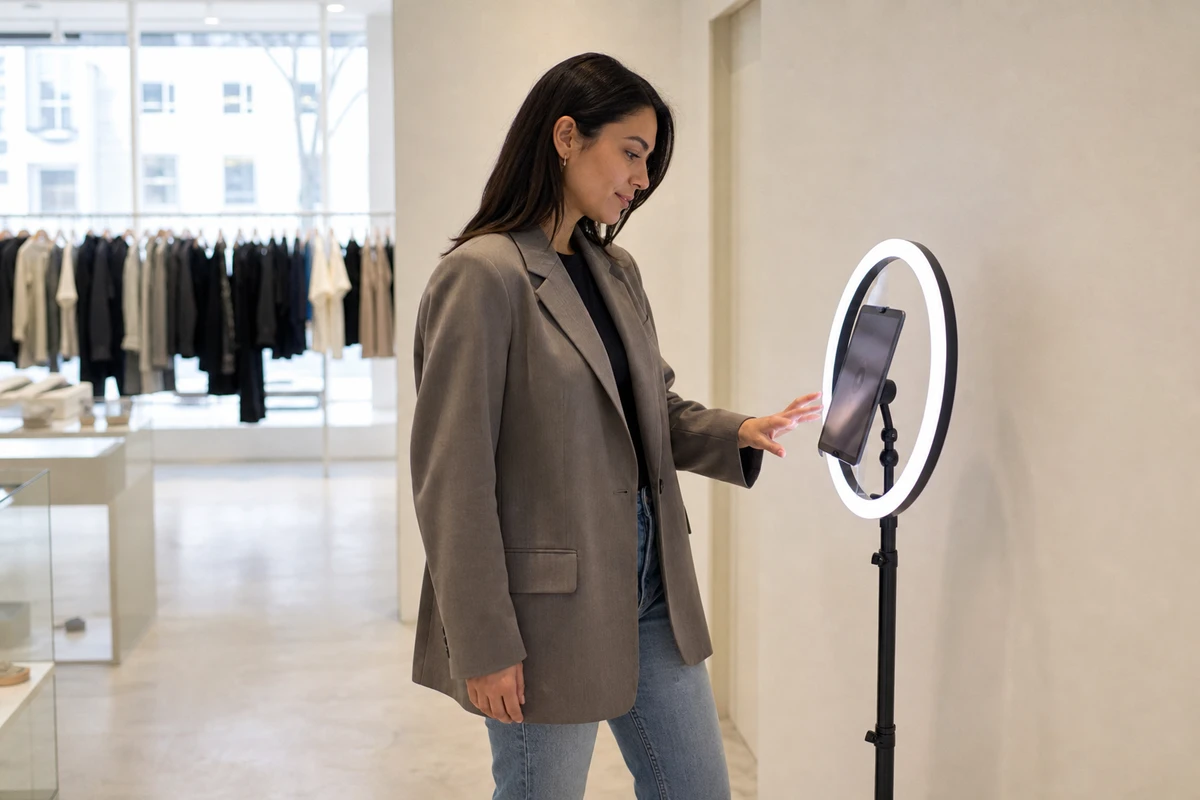
The second is the experience-first moment. Somewhere in the visit the customer does something they enjoy on its own terms: an interactive activation, a branded photo moment, a try-it station, a small contest tied to genuine buying intent. Opting in is simply how they collect their result, their photo, or their entry. This is the fourth condition made physical. Simple Booth’s HALO kit is one concrete version of this: an iPad photo station where the customer poses for a photo they wanted anyway, and the email is simply how it reaches them. The entertainment venue chain Treetop Golf ran that capture across its locations and built a list of 150,000 unique email addresses. The annoying twin is the same station with the experience stripped out, a screen that takes an email and gives back nothing worth standing there for.

The participation moment built on self-interest
The third is the participation moment built on self-interest. A short quiz or fit-finder returns a personalized result by email; a waitlist or early-access list reserves something genuinely scarce. The customer is buying something specific with their address, an answer or a place in line, and a fake address forfeits the purchase. The annoying twin is the quiz that harvests the address and returns a result the customer could have guessed, or the waitlist for something that was never actually limited.
The QR code most guides already recommend, placed correctly
The fourth is the QR code most guides already recommend, placed correctly. Not a generic code at the register that customers have trained themselves to ignore, but a code in a waiting zone with a specific, benefit-led prompt. Seen this way, the QR code is an autonomy tool, not a speed tool. What the four patterns share is plain once it is named: the customer is mid-visit, on their own device, receiving something concrete.
What Enjoyed Capture Is Actually Worth
Enjoyed capture is not only kinder. It produces more reachable contacts, and the arithmetic holds even when the enjoyed moment posts a lower headline opt-in rate.
Take a venue with 4,000 visits a month and two possible capture moments. The first is a register ask: fast, universal, tolerated. It posts a 25% opt-in rate, so 1,000 people give an address. But because many of those are fakes handed over to end the conversation, only about half are deliverable and stay reachable. That is 500 real contacts.
The Enjoyed-Moment Capture
The second is an enjoyed moment, a byproduct capture that meets the four conditions. Fewer people reach it, because it sits mid-visit rather than astride the only exit, and it posts a lower opt-in rate, say 20%, so 800 people opt in. But the email is how each of them receives something they wanted, so faking it is self-defeating, and roughly 90% of the addresses are deliverable. That is 720 real contacts.
The enjoyed moment shows the lower headline number (20% against 25%) and the larger real list (720 against 500). The difference is the fake-email tax, paid by the tolerated column and avoided by the enjoyed one.
The gap widens after capture
The gap widens after capture. A real address captured at a high-intent moment can be followed up while the experience is still fresh, and immediacy is measurable: research from InsideSales, drawing on more than 50 million sales interactions, found conversion rates roughly eight times higher when follow-up happens within five minutes of first contact. That figure comes from B2B sales rather than retail, so it signals direction rather than a retail rate, but the direction is the point. A fake address cannot be followed up at all.
Then there is compounding value
Then there is compounding value. The UK Data & Marketing Association’s Marketer Email Tracker (2020) put the return on email marketing between roughly $50 and $59 for every dollar spent. Whatever the exact multiple for a given operator, it applies only to addresses that receive mail. The 500 dead contacts in the tolerated column return nothing, and they drag deliverability for the 500 real ones beside them. A smaller enjoyed list does not merely match a larger coerced one. It wins twice, on reach and on the value of every contact reached.
How to Audit In-Store Lead Capture, Moment by Moment
The mechanism turns into action through a short audit any operator can run this week, with a notepad and a walk through the venue.
List every point in the visit where the business
First, list every point in the visit where the business currently asks for contact information: the register, the Wi-Fi splash page, the associate with a clipboard, the receipt insert. Most venues find three to five, and most have never seen them written down together.
Score each moment against the four conditions
Second, score each moment against the four conditions: genuine pause or exit, the customer’s device or a shared one, a real and immediate reward or a vague one, a side effect of something wanted or the whole point of the interaction. A moment that meets only one condition is not a moment customers enjoy.
For each weak moment, choose the cheapest available fix
Third, for each weak moment, choose the cheapest available fix. A moment with bad timing moves earlier in the visit. A moment with no autonomy moves onto the customer’s phone. A moment with a vague reward gets a concrete, immediate one. A moment that is pure extraction either gets attached to something the customer already wanted to do, or it gets cut.
That last option is the one operators skip, and it is often the most valuable. A single enjoyed capture moment beats five tolerated ones, and not only because it collects better data. Removing the bad asks improves the data quality of the good ones, because the customer who was about to invent an address at the register is not carrying that reflex into the demo station later in the visit.
In-store lead capture stops being a question of how to make customers say yes faster, and becomes a question of which moments in the visit were already worth saying yes to. The operators who win the next few years of foot traffic will be the ones who build those moments on purpose instead of bolting an ask onto the exit.
Sources
- Philadelphia Inquirer (2018). “Retail workers say they’re under pressure to get your emails.” https://www.inquirer.com/philly/news/retail-workers-say-theyre-under-pressure-to-get-your-emails-20180621.html
- Data Axle (2020). “3 strategies to collect customers’ emails in-store.” https://www.data-axle.com/resources/blog/3-strategies-to-collect-customers-emails-in-store/
- Postcoder (2019). “How do I stop site visitors signing up with fake email addresses?” https://postcoder.com/blog/stopping-sign-ups-with-fake-email-addresses
- Salesforce. “State of the Connected Customer.” https://www.salesforce.com/resources/research-reports/state-of-the-connected-customer/
- Tailored Edge Marketing (2025). “Why Collecting Customer Emails at Checkout Is a Missed Opportunity.” https://tailorededgemarketing.com/why-collecting-customer-emails-at-checkout-is-a-missed-opportunity/
- Harvard Business Review (2015). “Customer Data: Designing for Transparency and Trust.” https://hbr.org/2015/05/customer-data-designing-for-transparency-and-trust
- InsideSales (2021). “Response Time Matters.” https://www.insidesales.com/response-time-matters/
- Data & Marketing Association (2020). “Marketer Email Tracker 2020.” Figures via Mailmodo email marketing statistics roundup: https://www.mailmodo.com/guides/email-marketing-statistics/