A bakery sets out forty morning buns at seven. By half past nine the tray holds four, and the next person through the door can see exactly how few are left. Nobody printed “limited quantity” on a card. The shelf did the work.
That shrinking tray is FOMO marketing at a physical location, and it cost the bakery nothing in margin. An operator can manufacture genuine urgency in a physical space without ever cutting a price, and a physical location is better positioned to do it than any online store. Most operators reach for a discount instead, not because a markdown works best, but because it is the only urgency lever they were ever handed. What follows is the mechanism behind that pull toward missing out, why a physical space holds an honest-scarcity advantage a website cannot copy, four discount-free plays, and how to run them without burning customer trust.
Why the Discount Became the Default (and What It Quietly Costs)
Ask most operators to drive traffic this month and the first instinct is a sale. The reason is practical, not strategic: a markdown is the one urgency tool that needs no setup. No event to plan, no inventory to cap, no list to build. Sign in the window by Friday.
The Cost of Discount Traffic
A discount is also an expensive way to buy a visit, for three reasons. First, the markdown comes straight off gross margin. It is a transfer from the operator to the customer, not a clever lever that creates value out of nothing. Second, repeated promotions train the customer to wait. Marketing research on the long-term effects of promotion, notably Mela, Gupta and Lehmann’s 1997 study in the Journal of Marketing Research, established that frequent discounting resets a customer’s internal reference price downward, so full price starts to register as a penalty rather than the normal cost. Third, a steady discount selects for deal-seekers over loyal regulars, which is the opposite of the base most operators want to build.
The cost is easier to see with arithmetic. Take a counter-service business with a $40 average transaction and a 60 percent gross margin. Each ticket leaves $24 in gross profit. Run a 20 percent promotion and $8 comes off the price. The cost of goods does not move when the price drops, so the entire $8 comes out of gross profit: gross profit per ticket falls from $24 to $16. To hold total gross profit flat, the operator now has to drive 1.5 times the transactions ($24 divided by $16), a 50 percent jump in visits, just to break even on the promotion itself. A discount-free play that brings in the same extra visits keeps every dollar of that margin.
This is the first misconception worth correcting outright. “Creating urgency” is not a synonym for “running a sale.” Urgency is a property of time, supply, and access. Price is a fourth lever, and the only one that sends the operator a bill.
What FOMO Actually Is: The Mechanism, Not the Hype
A customer walks past a shop window, sees a single item marked as the last one, keeps walking, then turns around a block later and comes back for it. The product did not change in those ninety seconds. What changed is that the customer started picturing the item gone.
That picture is the mechanism
That picture is the mechanism. People work measurably harder to avoid a loss than to capture an equivalent gain. Kahneman and Tversky established the asymmetry in their 1979 paper on prospect theory: a loss is felt roughly twice as intensely as a gain of the same size. FOMO is that asymmetry applied to time. It is anticipated regret, the customer pre-living the feeling of having missed something. Przybylski and colleagues, in the 2013 study that gave the term its academic footing, defined the fear of missing out as “a pervasive apprehension that others might be having rewarding experiences from which one is absent.”
Most marketing content blurs three different things into that one word. They are worth separating, because each is a distinct lever with a distinct honesty test. Scarcity is limited supply: only so many exist. Urgency is limited time: the window closes. Exclusivity is limited access: not everyone is allowed in. An operator should always know which of the three they are pulling.
Which lever lands hardest depends on what the fear is actually about. A 2025 study by Rifkin, Chan and Kahn, reported by PsyPost, found that FOMO is driven less by the missed product than by social standing, the dread of being absent while others connect. For a physical location, that points one way: a signal about people (“the room was full of regulars on Thursday”) moves a customer more than a signal about the product itself.
None of this is manipulation, which is the second misconception to clear. The dividing line is whether the limit is real. A genuinely limited release is information a customer is glad to have. A countdown that quietly resets at midnight is a lie, and customers eventually catch it.
The Honest-Scarcity Advantage of a Physical Location
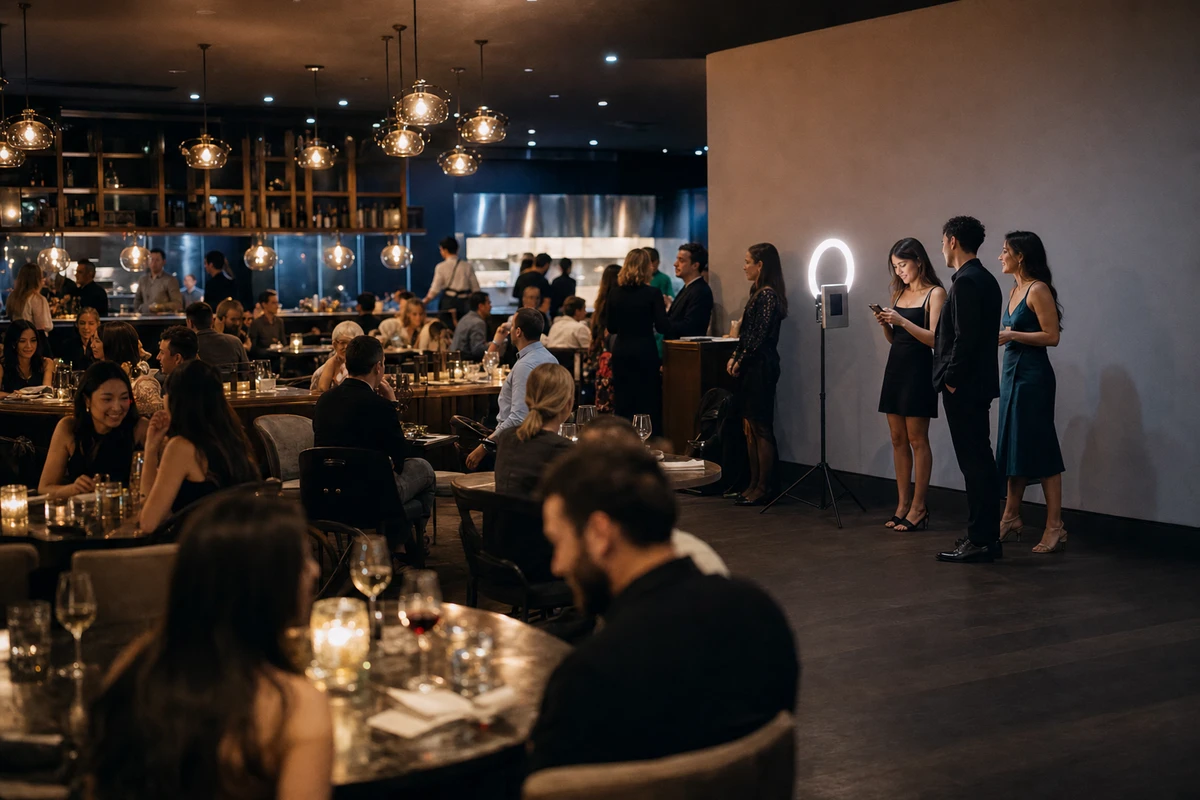
Two coffee shops sit on the same block. One has six people waiting; the other is empty. A new customer walks toward the line without reading a single review. The crowd already answered the question.
Real Crowds Beat Claimed Scarcity
That is the structural advantage a physical space holds, and it is the core of FOMO marketing for physical locations. Online scarcity is asserted. A website shows “only 2 left” and the shopper has to take it on faith, because the warehouse is invisible. In a room, scarcity is observed. The customer counts the seats, watches the display thin out, sees the last ticket go. Belief is free because the proof is in the room.
The crowd itself is the clearest case. A full room is a quality signal the operator did not write and cannot easily fake, customers reading other customers with no marketing copy involved. Kadence International, in its analysis of FOMO psychology, describes social proof, showing what everyone else is doing, as one of the three core ways brands trigger the effect.
The same analysis draws the line that matters for trust. Kadence separates authentic scarcity, a real capacity limit or a seasonal ingredient, from manufactured urgency such as a fake countdown, and notes that customers who feel tricked report lower brand trust and are less likely to return. An online store running invented scarcity is always one screenshot away from being exposed. A physical operator has nothing to fake, so there is no trust penalty to pay.
This reframes the operator’s job as design, not deception. The work is to arrange the space, the inventory, and the schedule so that genuine limits are visible: do not hide the line behind a wall, do not quietly restock the display in the middle of a rush, let the empty shelf be seen. The scarcity is already true. The only open question is whether a customer can see it.
Four Discount-Free Urgency Plays for Physical Locations
A print studio releases a numbered run of thirty screen prints on the first Saturday of each month and stops there. Regulars learn the rhythm and arrive early. That is the first of four plays, each pulling one of the three levers, each with an honesty test attached.
The recurring limited release
A product, item, or experience offered on a known cadence in genuinely capped quantity. It pulls scarcity, and because the cadence is predictable, it also builds a return habit: customers learn the rhythm and show up for it. Food & Drink Resources, writing on limited-time offer strategy, recommends telegraphing the end date in advance so regulars can plan their visits, which turns scarcity into anticipatory FOMO rather than a surprise. The data backs the play. Technomic’s State of the Menu 2025 report, covered by CSP Daily News, found limited-time menu items growing roughly three times faster than permanent ones, and Food & Drink Resources reports operators seeing traffic lifts in the range of 15 to 20 percent during scarcity-based limited-time periods. The honesty test is simple: the quantity has to be genuinely capped, or the cadence is just a schedule of ordinary launches dressed up as events.
The one-time event or activation
Something that genuinely happens once and cannot be repeated. An event carries a built-in, fully honest deadline that needs no discount; the urgency is structural, baked into the calendar. It pulls the time lever. Eventbrite’s own research puts a number on the pull: the company reports that 69 percent of millennials experience FOMO when they miss an event their peers attend. The value on offer is the experience itself, not a markdown.

Exclusive access and membership tiers
Early entry, members-only hours, a named list, a first look at something before the general public sees it. This pulls exclusivity, and the reward is belonging rather than a lower price. The honesty test: the access has to be real and the perk genuinely worth having. A “VIP” tier that everyone qualifies for is just a mailing list in a costume.
Visible, countable scarcity in the space itself
Limited seats, numbered editions, a stated daily make (“we make eighteen a day, and when they are gone, they are gone”). It pulls scarcity, and it is made honest by being countable in the room. This is the play an online store wants most and can credibly run least, because a website can only describe the count while a physical location can show it.
Two plays can be stacked, a one-time event with members-only early access, for instance. Stacking all four at once is a different matter, and the final section explains why restraint beats volume.
FOMO Compounds When It Is Witnessed
The customer who walked out with the last numbered print does not keep it quiet. They mention it at dinner, or they photograph it, and three or four other people now learn there was something they could have had and did not. The missed-out feeling has moved one person outward.
Competing articles treat social proof and customer content as
Competing articles treat social proof and customer content as topics separate from FOMO. They are the same loop. FOMO is socially transmitted: the customer who attended the one-time event or got the limited release becomes the next person’s source of the feeling. The 2025 Rifkin, Chan and Kahn research points to why this spreads so efficiently. If the fear is fundamentally about social standing, then a peer talking about what they did is not a side effect of the play, it is the play. Kadence International notes the same pattern from the brand side: FOMO-driven purchases are more likely to be shared, because the customer wants to signal to peers that they got in before it was gone. Nobody posts a photo of a coupon. People post the thing others could not get.
The reach math is worth seeing directionally. If a one-time event draws 100 attendees and even a third of them share it to a personal network of a few hundred people, the event has put itself in front of several thousand people who now know they were not in the room. The figure is illustrative, not a promise, but the direction is reliable: a witnessed scarcity moment compounds in a way a quiet markdown never does.
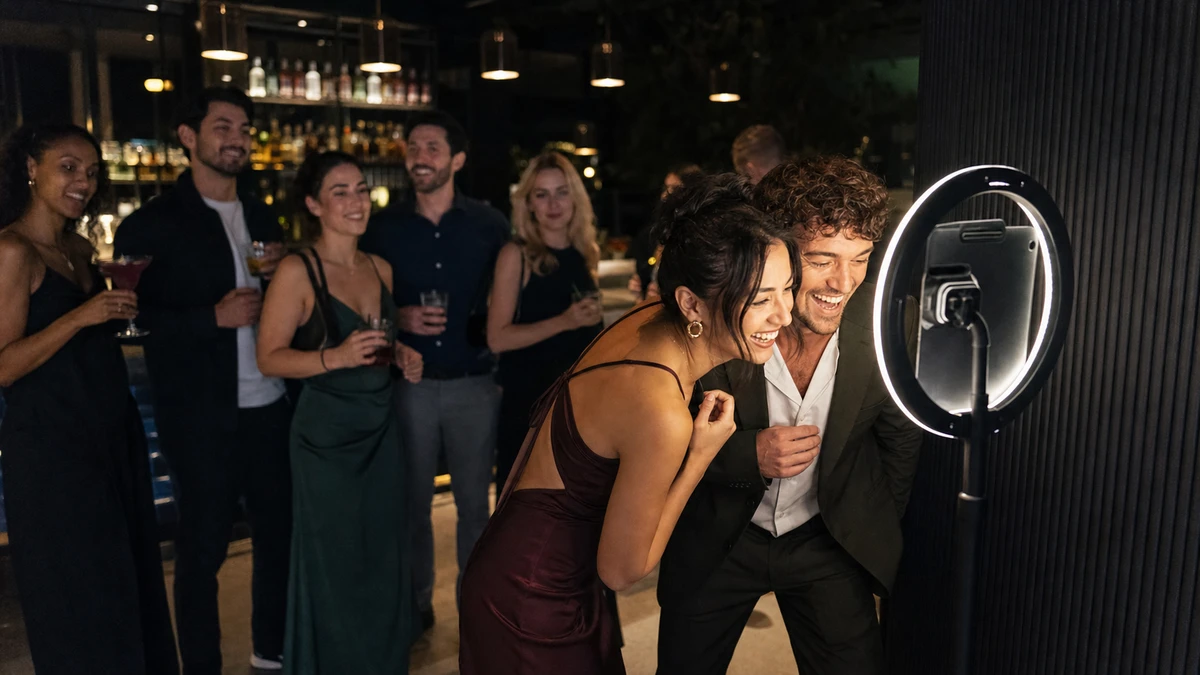
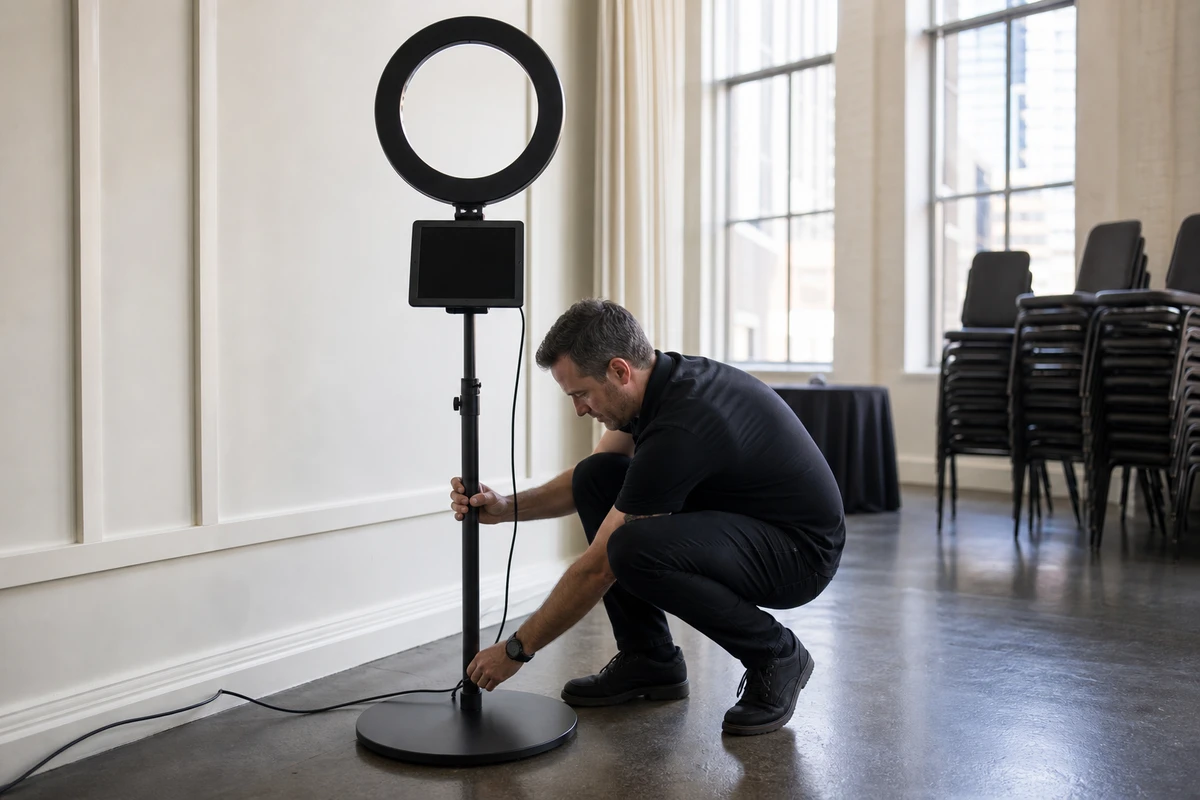
This is the reason to design the in-person moment to be worth capturing in the first place. A limited release that looks like nothing photographs like nothing. An event with a real moment built into it, something a guest actually wants to show, hands every attendee a reason to become the next person’s source of FOMO. Some operators make that capture deliberate with a branded photo station, where a guest takes a photo on the spot and the venue sends them a copy to keep and share. A single ongoing deployment of Simple Booth’s HALO kit at the W Hotel Austin drew 31,730 participants and 92,579 gallery views, the moment seen by far more people than ever stood in the room.

Running FOMO Without Burning Trust
A shop where every week is the “final week” of something teaches its customers one lesson fast: the sign means nothing. Once a regular has watched three final weeks come and go, the fourth one cannot move them.
Use Urgency Sparingly
Urgency is a finite resource, and overuse spends it. If everything in the space is a limited release, nothing reads as limited. The mechanism is the same one behind discount habituation: just as repeated promotions condition customers to expect promotions, a constant drumbeat of scarcity signals conditions customers to ignore them. Kadence International’s distinction between authentic and manufactured urgency applies here too, because an urgency signal that never resolves into a real limit is functionally manufactured even when each individual instance was true.
That argues for cadence discipline. A small number of well-spaced scarcity moments outperforms a constant stream of them. The recurring release works precisely because the rhythm is predictable and the gap between releases is real. The one-time event works because it is rare. Spacing is not a constraint on the strategy; it is the strategy.
Underneath all of it sits a single honesty test, which is the rule of the whole approach: every urgency signal has to map to something true. If the timer hits zero, the thing is actually gone. If the shelf says limited, it is limited. The moment a customer catches one fake limit, every real limit the operator runs afterward stops working.
A few situations call for leaving the lever alone. Manufacturing urgency around a core product a customer needs on their own schedule reads as pressure, not invitation. And a scarcity play that degrades the actual experience defeats itself: a real line is fine, a badly run one is not.
A physical location does not need to discount to create urgency. It needs to make its genuine limits visible. The discount spends margin to rent a visit. Honest scarcity earns the visit and keeps the margin.
Sources
- Kahneman, D. & Tversky, A. (1979). “Prospect Theory: An Analysis of Decision under Risk.” Econometrica, 47(2), 263-291. https://www.econometricsociety.org/publications/econometrica/1979/03/01/prospect-theory-analysis-decision-under-risk
- Przybylski, A. K., Murayama, K., DeHaan, C. R., & Gladwell, V. (2013). “Motivational, emotional, and behavioral correlates of fear of missing out.” Computers in Human Behavior, 29(4), 1841-1848. Definition confirmed via Gupta, S. & Sharma, M. (2021), World Journal of Clinical Cases. https://pmc.ncbi.nlm.nih.gov/articles/PMC8283615/
- Mela, C. F., Gupta, S., & Lehmann, D. R. (1997). “The Long-Term Impact of Promotion and Advertising on Consumer Brand Choice.” Journal of Marketing Research, 34(2), 248-261. (Paywalled via INFORMS PubsOnline.)
- Rifkin, J. R., Chan, C., & Kahn, B. E. (2025), reported by PsyPost. “New psychology research shows what’s really driving your fear of missing out.” https://www.psypost.org/new-psychology-research-shows-whats-really-driving-your-fear-of-missing-out/
- Kadence International. “The Psychology of FOMO and How Brands Use It.” https://kadence.com/en-us/knowledge/the-psychology-of-fomo-and-how-brands-use-it-2/
- CSP Daily News (2025). “Limited-Time Offers Surpassing Primary Menu Growth, Report Says.” https://www.cspdailynews.com/foodservice/limited-time-offers-surpassing-primary-menu-growth-report-says
- Food & Drink Resources (2026). “How Scarcity Drives Limited-Time Offer Menu Success.” https://www.foodanddrinkresources.com/how-scarcity-drives-limited-time-offer-menu-success/
- Food & Drink Resources (2016). “Limited-Time Offer Strategy for Restaurants.” https://www.foodanddrinkresources.com/limited-time-offer-strategy-restaurants/
- Eventbrite (2014). “How to Build FOMO for Your Events.” Vendor-published. https://www.eventbrite.co.uk/blog/how-to-build-fomo-for-your-events-ds00/