A first-year student props a laundry basket against the residence hall door and waves a parent over for a photo under the building sign. It is move-in morning, and that photo gets taken whether or not anyone at the university planned for it. By the end of the week the same student will have crossed a club fair, sat through a convocation, and photographed whatever large attraction the campus put on the quad. The entire incoming class is doing some version of this at once, in one place, cameras out, before any of them has decided whether the place is home.
Most campuses treat that week as a hospitality checklist. They run events, hope students show up, count heads, and move on. The freshers week event ideas worth running do two jobs at once: they help a nervous incoming cohort feel like it belongs, and they leave the institution with something it can use for the next twelve months. Photos that recruit next year’s class. Contacts for the enrollment or advancement system. Evidence the week actually worked. The ideas below are grouped by what each event produces, so a student-affairs or enrollment-marketing operator can build a lineup instead of copying a list of seventy-five.
What Freshers Week Is Actually Worth to a University
Consider the calendar. By October an incoming class of several thousand students is scattered across lecture halls, jobs, and residence rooms on schedules no two of them share. For one week in late August, that is not true. The whole cohort is on campus, mostly unscheduled, and paying close attention to first impressions. No other week of the academic year offers that.
It is also the week that does the most
It is also the week that does the most to shape who stays. The U.S. Department of Education reports that 81.7 percent of first-time, full-time students at four-year institutions returned for a second year (NCES, 2024). Close to one in five did not. Much of what those opening weeks decide runs through belonging. Terrell Strayhorn’s College Students’ Sense of Belonging (2019), the standard academic reference on the subject, frames belonging as a prerequisite for academic engagement, and as most fragile during the transition into college. A student who finds a friend group and a reason to stay in week one is a different retention prospect from one who spends September alone.
So every freshers week event has two jobs. The first is belonging, the work every competitor page describes. The second, almost universally skipped, is output: the event should leave the institution holding content, contacts, or proof it can reuse. An event that does only the first job is a cost. An event that does both pays for itself twice.
A note on terms, because the vocabulary splits across the Atlantic. UK institutions call this freshers week and usually run it for about a week. US institutions call it welcome week, Weeks of Welcome, or simply move-in, and usually run one to two weeks, occasionally longer (Virginia Tech’s 2019 welcome week ran eighteen days). The window and the operator’s problem are the same, and the ideas below apply to both.
Move-In Day Event Ideas
Walk a residence hall parking lot at nine in the morning on move-in day. Half the people carrying boxes are not students. They are parents, and this is the only day of the year they will be physically on campus. They will not come back for the club fair or the convocation. Move-in is the institution’s single chance to start a relationship with the families who influence transfer decisions, sign tuition checks, and eventually answer advancement calls.
Treat Move-In as an Event
Most operators do not see move-in as an event at all. The standard welcome-week guides treat it as a logistics problem, a stressful day students have to get through, with parents as traffic to direct rather than an audience to win. That framing misses both groups in the parking lot. Move-in is the highest-leverage event on the calendar precisely because the families are there and will not be again.
Make Move-In Produce Assets
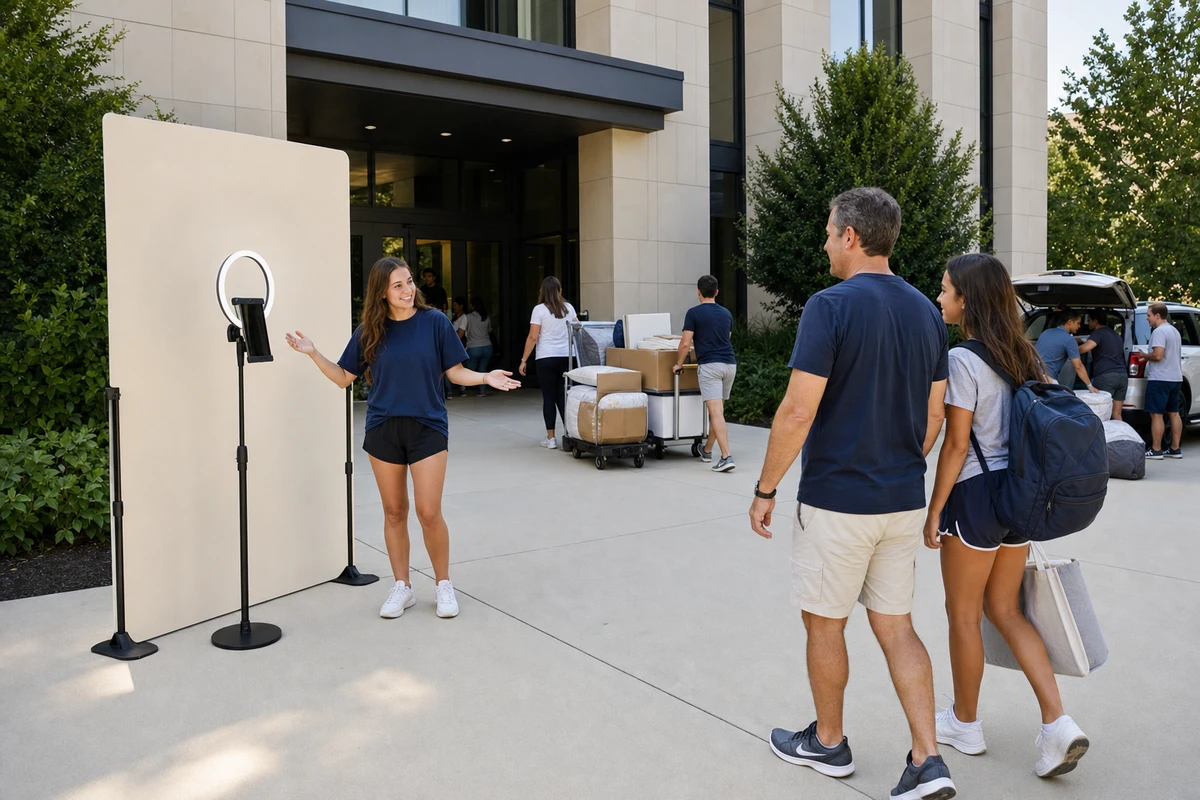
A few moves change what move-in produces. Branded move-in crews (upper-year volunteers in matched kit who carry boxes and answer questions) give every family its first warm human contact with the institution and put visible, photographable staff at every entrance. A simple photo backdrop at the residence hall door (a class-year sign or a framed “I made it” panel) captures the picture families are already composing on their phones, and lets the institution keep a copy, with permission, instead of letting it disappear into a private camera roll.
Welcome stations with maps, cold drinks, and current students answering questions turn a bottleneck into hospitality. A short “first 24 hours” checklist that routes new students past the dining hall, the library, and the health center does the work of a scavenger hunt with far less staffing. And a floor mixer the same evening, before parents have fully left town, converts a hallway of strangers into the first friend group, which is the belonging job done on day one rather than week three.
Welcome Event Ideas That Build Belonging Fast
A first-year student stands at the edge of a crowded lawn event holding a paper plate, knowing no one, deciding how long to stay before it is acceptable to leave. That moment is what belonging-focused events have to solve. The goal is not entertainment. It is the first real friendship, formed fast enough that the student has a reason to come back tomorrow.
The events that do this well share a structure: low pressure to perform, a built-in reason to talk to a stranger, and a short time commitment. A campus scavenger hunt works because it teaches navigation and forces small groups to solve something together, so conversation happens as a side effect rather than an assignment. Speed friending works for a related reason: a structured format does the introducing, so no student has to manufacture an opening line. Ice cream socials, lawn games, outdoor movie nights, comfort-animal visits, and silent discos all trade on the same mechanic. They give students something to do with their hands and eyes so the talking feels incidental. A silent disco in particular delivers a high-energy night with no alcohol, which matters for a cohort that is mostly under legal drinking age.
Here is where many calendars go wrong. The instinct is to run more events, on the theory that more chances to connect produce more belonging. They do not. An over-stuffed week splits attendance across thirty competing options, so every event looks half-empty, and it burns out the staff and student volunteers running them. The Washington and Lee Trumpet found scheduling conflicts among the leading reasons students skip events at all (The Trumpet, 2026). Belonging is measured in friendships formed, not boxes ticked. Three well-attended events that each run long enough for conversation beat fifteen thin ones.
Big-Tent Events That Generate Reusable Content
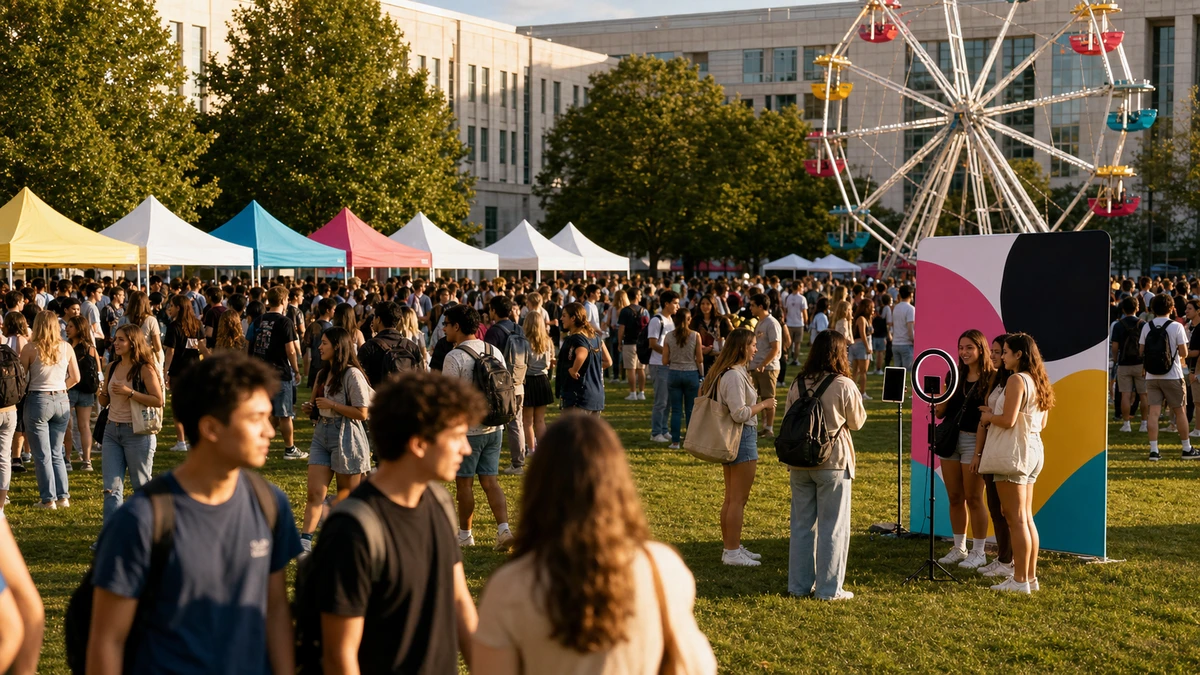
At Virginia Tech’s GobblerFest, a Ferris wheel goes up on the Drillfield (the open green at the center of campus) and several thousand students photograph it (Virginia Tech News, 2019). UConn opens the year with its Torch Lighting Convocation, and Emory gathers its incoming class and their families on the quad for the Share a Coke toast, a tradition rooted in the university’s century-old Coca-Cola connection. These are the events students photograph hardest, and they recur every year regardless of what the marketing office does.
Here is the question almost no institution asks: where
Here is the question almost no institution asks: where do all those photos go? Into private camera rolls and stories that vanish in twenty-four hours, mostly. The event produces a flood of authentic student content, and the institution captures almost none of it.
That matters because of where the next class is looking. Pew Research Center found that 95 percent of US teens use YouTube, 67 percent use TikTok, and 46 percent report being online “almost constantly” (Pew Research Center, 2022). Prospective students research colleges inside exactly those feeds. RNL’s annual E-Expectations Trends Report, the enrollment-marketing field’s standard benchmark for prospective-student media behavior, tracks how high schoolers use social platforms during the college search (RNL, 2025). And the content that persuades them is not the polished institutional kind. The Harvard Crimson, reporting on campus event attendance, found that the moment something “smacks of administrative planning,” students write it off (The Harvard Crimson, 2026). The same W&L Trumpet reporting concluded that students respond to short videos and candid photos far more than to “overdone Canva templates.”
Put those findings together and the mechanism is plain. A welcome week event happens, students photograph it, and that content is among the most persuasive recruitment material a university can hold, because it is peer-made and it lands in the feed where the next class already researches colleges. The flagship events are running free advertising for next year’s admissions cycle. The only operator decision is whether the institution captures a usable share of it or lets it evaporate.
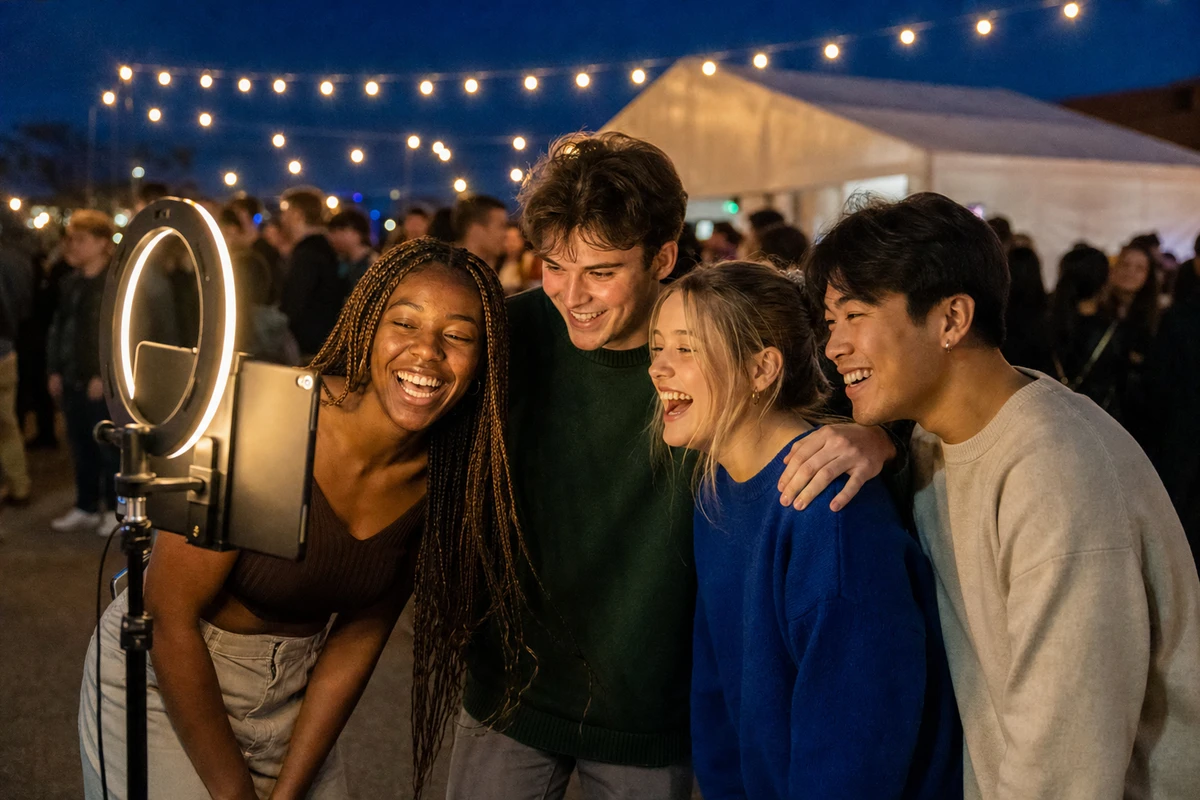
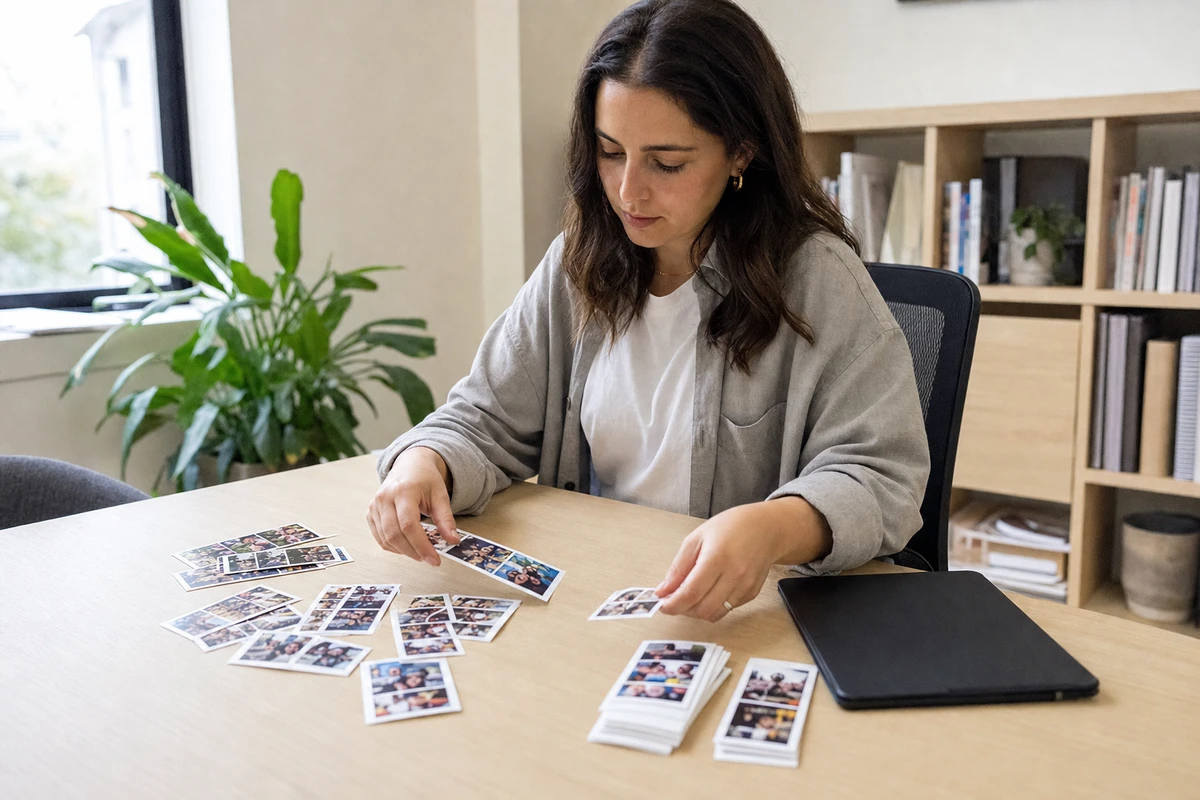
A branded photo moment at an event already on the calendar (a backdrop, a class-year sign, a station where a student gets the photo sent to them and grants reuse permission in the same step) is the difference between a recruitment library and nothing. Simple Booth’s HALO kit is one concrete version of that station. A student taps once to get the photo by QR code, email, or text, a checkbox on the same screen records reuse permission, and the kit’s offline upload queue holds each session when crowd-strained event Wi-Fi drops, then syncs it once a staff member is back in range.
Fairs and Showcases: Turning Involvement Events Into a Data Moment
At a typical involvement fair, sixty student organizations set up folding tables and put out paper sign-up sheets. A first-year student walks the rows, writes a name and email on the sheets that look interesting, and moves on. By the end of the afternoon each club holds a smudged page of contacts, and the institution holds nothing.
Look at what that student just did. Walking a club fair, a student voluntarily declares interests (the climbing club, the debate society, the pre-med association) by choosing which tables to stop at. It is the cohort’s first structured interaction with campus systems, and it is already shaped like an opt-in. Nobody has to be persuaded to share what they care about, because the event is built around the act of sharing it.
The waste is the clipboard. A single digital interest passport (one QR code a student scans at each table) replaces sixty paper sheets and gives both the club and the institution a clean record, collected with consent, of who engaged with what. A resource fair can run the same way as a stamp card, where students collect a digital stamp at the health center, the library, and the financial aid table, and the institution ends the day with a map of which services the new cohort actually visited. This is the lowest-friction place all week to build the contact records an enrollment or student-success team will use in October, gathered in a moment the student already understands as voluntary. Most campuses still run it on clipboards.
How to Choose a Freshers Week Lineup
A student-affairs office sits down in June with a list of forty event ideas, a fixed budget, and a student-staff roster that can realistically run a handful of things well. Modern Campus’s popular guide offers seventy-five welcome week ideas (Modern Campus, 2023). No campus can run seventy-five, and the honest planning question competitors avoid is which ones to cut.
Score the Lineup
Score each candidate event on three axes. Belonging impact: how well does it turn strangers into friends? Reusable output: does it leave the institution with content, contacts, or proof? Cost and staff load: how many staff and student-volunteer hours does it actually consume? Staff hours, not dollars, are usually the binding constraint, since a free event that needs forty volunteer shifts is expensive. Keep events that score well on at least two axes. A floor mixer is high belonging, low output, low cost, worth keeping. A branded photo moment at convocation is moderate belonging, high output, low cost, worth keeping. A catered gala is moderate belonging, low output, high cost, the first thing to cut.
Work the Output Math
The output axis is the one operators underrate, so the arithmetic deserves a worked example. Take a public university with an incoming class of 5,000. A flagship event (GobblerFest or its equivalent) draws 60 percent of them, so 3,000 students are on the lawn. Suppose a branded photo moment (a backdrop and a sign at an event already happening) captures 20 percent of attendees. That is 600 photos, each one sent to a student who shares it to a feed of, conservatively, 200 followers.
That is 120,000 organic impressions, and the feeds they land in still include the high schoolers who research colleges there. The university enrolled 5,000 students this year partly to replace the roughly one in five who will not return. The marginal cost of the backdrop that produced those impressions is a folding frame and one staffed table. A planner running the same numbers for a class of 2,000 or 12,000 reaches the same conclusion: that is the output axis earning its place in the score.
Measuring Whether Freshers Week Worked
When the week ends, most reports answer one question: how many students showed up. Concept3D’s welcome-week guidance is candid that capturing data on student engagement during welcome week helps make the next year better, but the method on offer rarely goes past a turnstile count (Concept3D, 2023). Headcount is the floor of measurement, not the ceiling. It tells an operator a room was full. It does not tell them the week did its job.
The Five-Part Scorecard
A fuller scorecard tracks five things. Attendance by event, still useful as a baseline. Content captured, meaning the count of usable photos and video the institution actually owns and has permission to reuse, the asset that pays for next year. Contacts added with consent, the opt-ins collected at fairs and photo stations and handed to the teams that will act on them. Social reach, the impressions and engagement on cohort-generated content, the free recruitment reach the week generated. And the leading indicator that matters most, whether this cohort still reports a sense of belonging by week six, measured with a short pulse survey and tracked against who re-enrolls.
Close the Loop
That last number closes the loop. Belonging at week six is the early read on a retention rate that will not be final for a year, and it is the input that should shape next August’s lineup. The events that correlate with students who feel they belong are the events to keep. The ones that drew a crowd and left nothing behind are the ones to cut. Freshers week is not a week of hospitality the institution performs and then forgets. It is the most concentrated belonging-and-content opportunity on the academic calendar, and the campuses that win it decide, before the first box is carried up the residence hall steps, what each event is supposed to leave behind.
Sources
- National Center for Education Statistics (2024). “Digest of Education Statistics 2024, Table 326.30: Retention of first-time degree-seeking undergraduates at degree-granting institutions.” https://nces.ed.gov/programs/digest/d24/tables/dt24_326.30.asp
- Strayhorn, Terrell L. (2019). “College Students’ Sense of Belonging: A Key to Educational Success for All Students” (2nd ed.). Routledge.
- The Harvard Crimson (2026). “Why Don’t Harvard Students Show Up?” https://www.thecrimson.com/article/2026/5/4/farbiarz-college-event-attendance/
- The Trumpet, Washington and Lee University (2026). “Why Campus Events Struggle to Get Attendance, and How to Fix It.” https://thetrumpetwlu.org/14016/just-for-fun/why-campus-events-struggle-to-get-attendance-and-how-to-fix-it/
- Pew Research Center (2022). “Teens, Social Media and Technology 2022.” https://www.pewresearch.org/internet/2022/08/10/teens-social-media-and-technology-2022/
- Virginia Tech News (2019). “Welcome Week and GobblerFest activities for new students.” https://vtnews.vt.edu/articles/2019/08/082019-dsa-welcomeweek.html
- University of Connecticut. “Torch Lighting Convocation Ceremony.” https://commencement.uconn.edu/
- Emory University. “History and Traditions.” https://www.emory.edu/home/explore/history-traditions.html
- Ruffalo Noel Levitz (2025). “E-Expectations Trends Report.” https://rnl.com/e-expectations/
- Concept3D (2023). “Planning College Welcome Week: 8 Ways to Increase Student Engagement During Welcome Week.” https://concept3d.com/blog/higher-ed/planning-college-welcome-week-8-ways-increase-student-engagement-welcome-week/
- Modern Campus (2023). “75 Welcome Week Program Ideas Your Students Will Love.” https://sapro.moderncampus.com/blog/75-welcome-week-program-ideas-your-students-will-love